
Fast, Reliable Spray Foam Insulation Across Duarte
Spray foam insulation in Duarte is most commonly installed to solve two problems this foothill community knows well: attics that bake past 140°F in summer, and ridge vents and gable openings that catch wind-driven embers during Santa Ana events. We install open-cell and closed-cell spray foam from Icynene and Demilec throughout the 91008, 91009, and 91010 ZIP codes, and we approach every Duarte job with an eye toward air-sealing first, foam second. Call us at (866) 271-1602 for a free estimate, and we’ll walk you through which foam type matches your home’s construction.
We’re not a franchise crew that shows up unfamiliar with the neighborhood. Our teams know the mid-century ranch homes off Mount Olive Drive, the stucco tracts near Duarte Road, and the low-slope roof designs common along Huntington Drive. That matters because spray foam done wrong in a 60-year-old vented attic creates condensation and delamination problems. Done right on a clean, sealed substrate, it transforms how the house handles Duarte’s inland heat.
Why Fontana Insulation Is Duarte’s Preferred Spray Foam Insulation Company
Fontana Insulation is led by Noel Arredondo, and his background is in material selection rather than pushing one product line. That’s why we stock eight brands across four insulation categories, including spray foam from Icynene and Demilec. When we recommend closed-cell foam for a Duarte roof deck, it’s because the assembly benefits from an air and moisture barrier. When we recommend open-cell for a garage ceiling, it’s because the homeowner wants sound dampening and thermal performance at a lower material cost. The recommendation follows the house, not our inventory. Noel’s team is trained on both foam chemistries and understands the fire-aware venting requirements that Duarte’s foothill location demands.
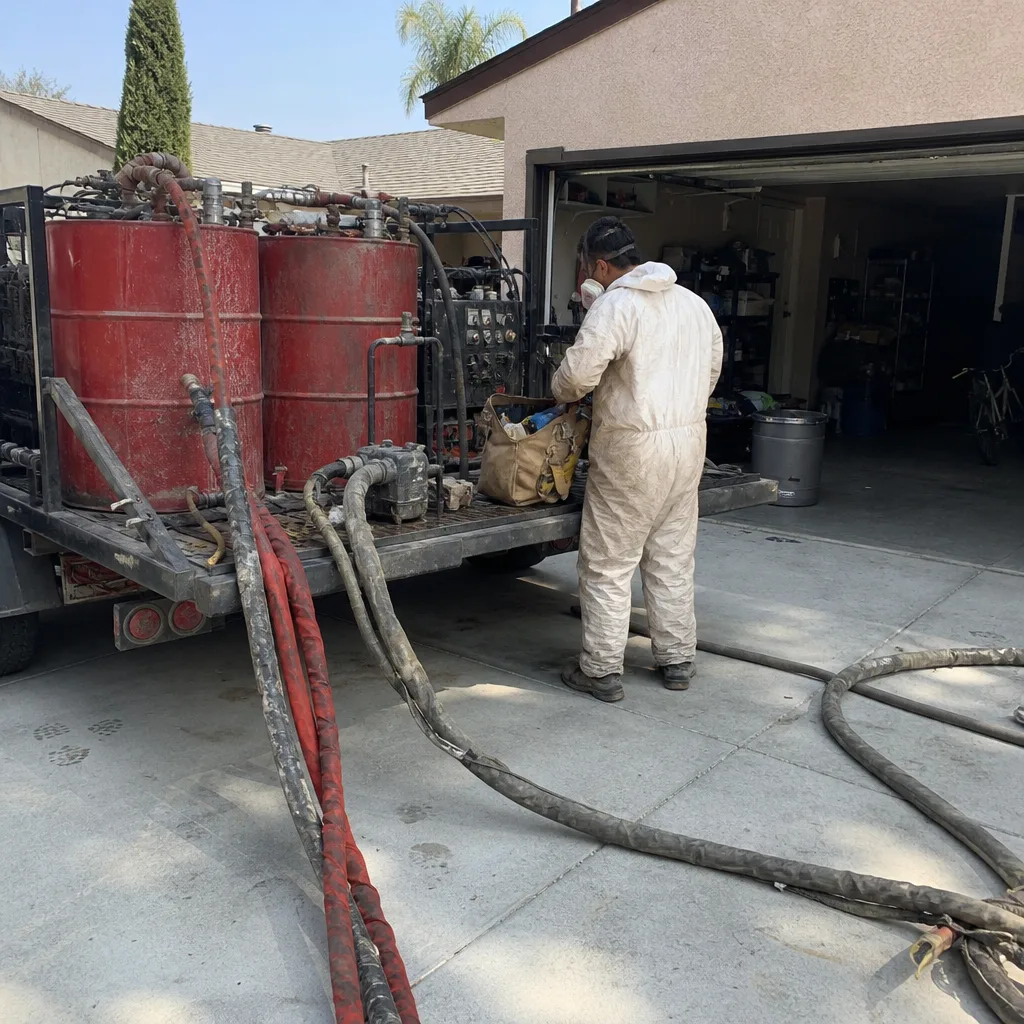
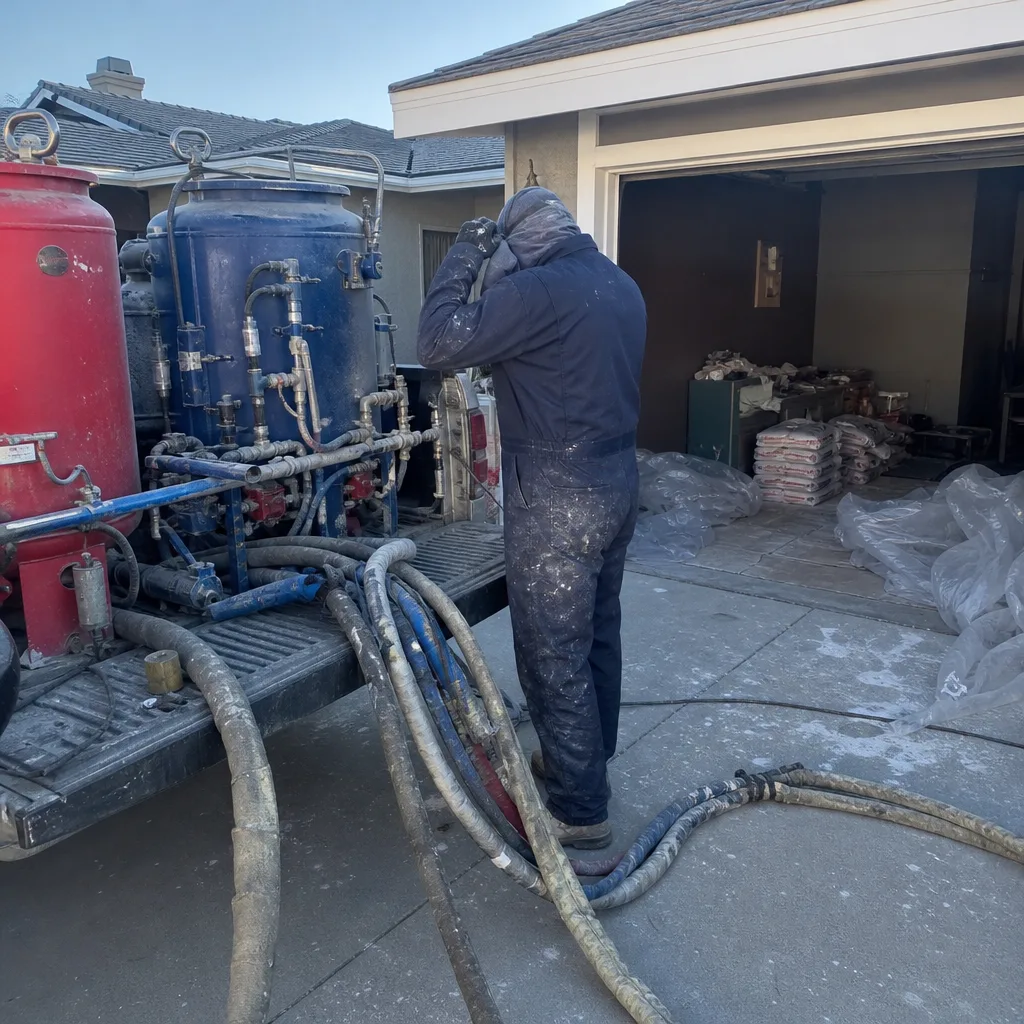
Our crews spend real time in Duarte. We know which 1950s tracts still have original batt insulation. We know the homes where ridge vents catch ember grit off the San Gabriels. That local familiarity means we’re not learning your house on the day of install. We show up with the right scaffold, the right foam rig, and a plan that respects your roofline and your schedule.
When you call (866) 271-1602, you’ll get a straight answer about timing and cost. Estimates are free, and we’ll explain the trade-offs between foam brands and densities without sales pressure.
Garage Spray Foam Insulation in Duarte
Garage Spray Foam Insulation in Duarte is one of the highest-impact upgrades for attached garages, especially in the stucco tract homes where the garage wall faces the San Gabriel foothills. Most Duarte garages are uninsulated or have a thin layer of fiberglass shoved between joists, which means the garage becomes a heat sink by noon and radiates warmth into living space through the shared wall. We apply open-cell spray foam to garage ceilings and common walls to cut that heat transfer and reduce the dust and ash intrusion that blows in around the door tracks and sill plates. Closed-cell foam is the better call if the garage shares a wall with a bedroom because it adds a structural air barrier alongside insulation value. On most single-car Duarte garages, ceiling foam runs $1,800 to $3,200 depending on surface prep and access.
Shared-Wall Heat Blocking
In homes where a bedroom or hallway sits above the garage, the floor above becomes a radiant panel by mid-afternoon. Foam on the garage ceiling breaks that path. We also foam the band joist where the garage meets the house, a spot where Duarte’s dry wind pushes dust and conditioned air out.
Ember and Dust Sealing at Sill Plates
The gap between the garage sill plate and the slab is a common entry point for wind-blown grit during Santa Ana events. Closed-cell foam seals this line effectively. For homeowners near the 210 corridor, this tiny upgrade makes a real difference in how much ash ends up inside the garage.
Closed Cell Spray Foam Insulation in Duarte
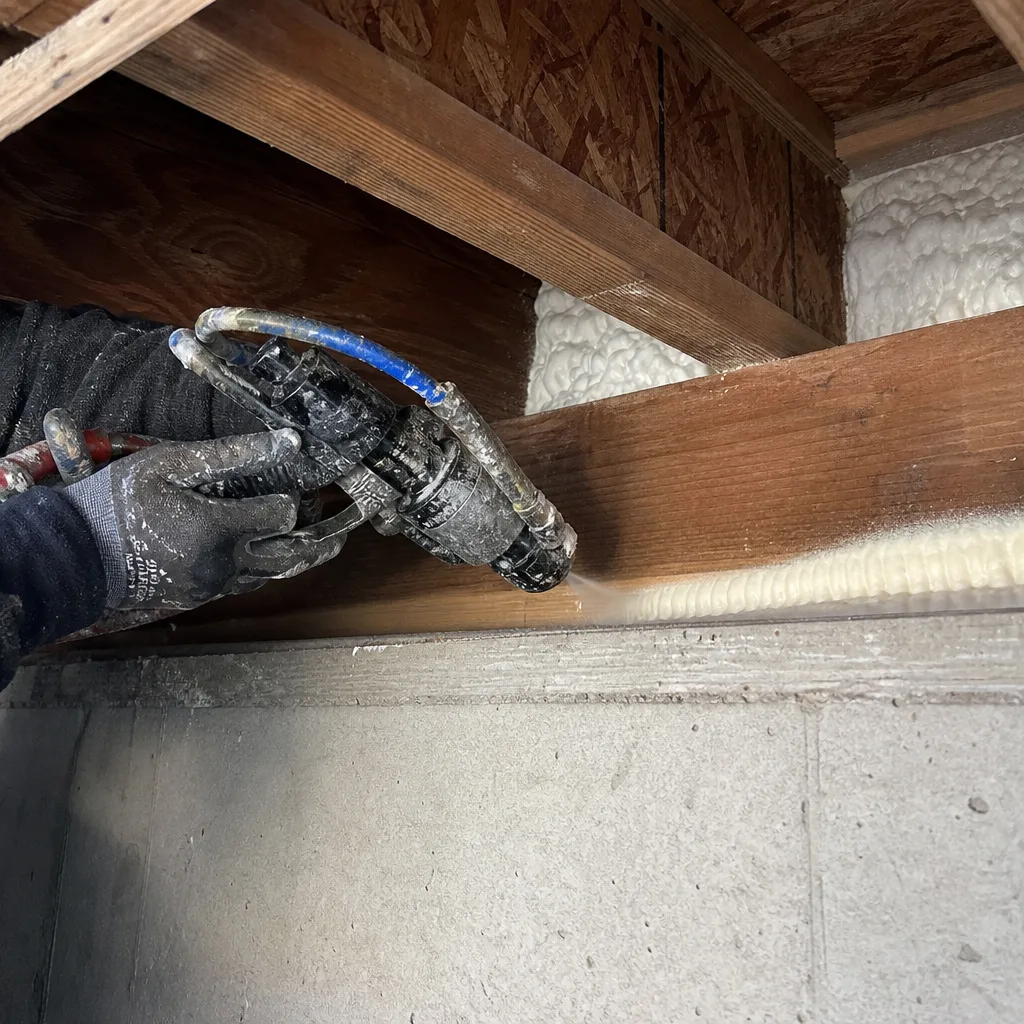
Closed Cell Spray Foam Insulation in Duarte is the right tool when a home needs an air barrier, a vapor barrier, and high R-value per inch in the same pass. Duarte’s older ranch homes often have shallow attic cavities and low-slope roofs where adding twelve inches of blown insulation isn’t possible without choking the ventilation. Closed-cell foam applied to the roof deck converts the attic into a semi-conditioned, sealed space and changes the thermal boundary from the ceiling plane to the roof line. This is the only spray foam we recommend for Duarte homes where ember entry at ridge vents and gable openings is a real concern, because the foam seals those gaps rather than just insulating around them. Typical closed-cell roof deck work in Duarte runs $5,500 to $11,000 depending on square footage and prep.
Roof Deck Sealing for Low-Slope Construction
Many Duarte homes built in the 1950s and 1960s have low-slope or nearly flat roof sections. These cavities are tight, hot, and prone to dust accumulation. Closed-cell foam bonds to the decking and stops air movement through the roof assembly, which helps keep that trapped heat from transferring into the living space below.
When Moisture Control Matters
Closed-cell foam is a Class II vapor retarder at about two inches of depth. In Duarte’s mild winters, that prevents condensation from forming inside the roof assembly, which is a real failure mode we see when open-cell foam goes into a shallow vented attic without a proper drying path. If your attic has existing moisture staining or you notice condensation on the underside of the sheathing in winter, closed-cell is almost always the safer recommendation.
Trusted Brands We Service in Duarte
We’re an authorized installer for Icynene and Demilec spray foam, and we also work with Knauf, Rockwool, and CertainTeed in Duarte homes where fiberglass or mineral wool is the better application. We carry Icynene because its open-cell formulation performs well in garage and interior partition applications. We carry Demilec because its closed-cell products deliver consistent R-value per inch and hold up in hot attic environments like those along the 210. Having competing brands on the truck means we can match the product to the specific Duarte house and its exposure, rather than forcing one formulation onto every job.
Common Spray Foam Insulation Problems We See in Duarte Homes
- Foam delamination over ash-fouled batts. Homes near the foothills collect wind-blown ash in the attic, and if foam gets sprayed over that film without vacuuming and air-sealing first, the foam lifts and the seal fails. We remove degraded material and clean the substrate before any foam goes down.
- Stale, superheated air trapped in shallow attics. Duarte’s older ranches often have only 4 to 6 inches of attic depth. If the attic is sealed without addressing venting, summer heat has nowhere to go. Our approach accounts for the existing vent pattern before we change the thermal boundary.
- Ember entry at ridge and gable vents staying open after foam work. In Santa Ana events, firebrands ride the wind and lodge in any gap along the roofline. A foam job that seals the deck but leaves the ridge vent unprotected does not solve the ember problem for foothill homes.
- Contractors spraying open-cell foam in garages without air-sealing the sill plate. The result is foam that insulates the upper wall but still lets dust and hot air channel under the plate into the garage. We seal the line before spraying, which most Duarte homes built in the 1960s need badly.
One more recurring issue: original fiberglass batts collapsed and coated with ash from recent Santa Ana events, leaving the attic vulnerable to 140°F+ summer heat. On a 1950s ranch off Mount Olive Drive, we found exactly that. After removing the debris, our crew applied closed-cell spray foam to the roof deck and gable walls, sealing ember-entry points and stabilizing attic temperatures, which noticeably reduced the homeowner’s cooling load. That job stuck with us because it showed how much Duarte’s environment changes the insulation equation compared to a flat valley home ten miles south.
Pricing for Spray Foam Insulation in Duarte, CA
Spray foam work in Duarte runs on a wider price band than in flatter parts of the San Gabriel Valley, mostly because of surface prep and roofline complexity. Garage ceiling foam typically lands between $1,800 and $3,200. Closed-cell roof deck applications run $5,500 to $11,000 depending on square footage, roof pitch, and how much ash and degraded batt needs to come out first. Rim joist sealing in a typical Duarte ranch falls between $900 and $1,800. Open-cell wall cavity work for a standard room addition runs $2,500 to $4,500. The prep matters more than the foam itself on these older foothill homes, and skipping it is how jobs fail. Call (866) 271-1602 for a free on-site estimate, and we’ll give you a fixed number with the prep work included.
We Also Serve Cities Near Duarte
Our spray foam crews regularly run routes from Duarte into Bradbury, Monrovia, Baldwin Park, and Mayflower Village, so if you’re on the edge of town or your property sits just across the city line, we can usually schedule you within the same week. For more detail on how we work and which foam types fit different construction styles, see our Spray Foam Insulation page. We know these foothill ZIP codes and the older housing stock they contain.
Serving Duarte, CA — Our Local Coverage Area
We’re based in the Duarte area and know this community well. Use the map below to see our service coverage — if you’re nearby, we can almost certainly help.
FAQs About Spray Foam Insulation in Duarte
It pushes the recommendation toward closed-cell foam at the roof line and any gable or ridge opening, because closed-cell seals the gap rather than just filling it, which is what you want when embers ride Santa Ana winds. Open-cell foam is still fine for interior partitions and garage ceilings, but the roofline is where fire-aware sealing belongs. Call (866) 271-1602 and we’ll assess your exposure before recommending a foam type.
No, and any contractor who says otherwise is setting you up for delamination. The ash, grit, and collapsed fiberglass in those old attics prevent foam from adhering properly to the substrate. We remove the degraded material, clean the deck and joists, seal the gaps, then spray. The prep adds cost but it’s the difference between a tight seal and a failed one.
For most low-slope Duarte homes, the best strategy is closed-cell foam on the underside of the roof deck, which seals the attic, blocks radiant heat from entering the living space, and removes the gaps that embers exploit. It’s more expensive than blowing in cellulose, but it works with the shallow cavity depth these older ranch homes have rather than against it.
Most residential retrofit spray foam work in Duarte does not require a building permit, but roof deck foam that changes the attic’s ventilation profile may trigger a review if the home is in a hillside or fire-hazard zone. We’ll check your specific property against current local requirements before the job starts. Call (866) 271-1602 and we’ll walk you through it.
Spray foam on the garage ceiling and shared wall stops the heat path between the garage and the house, which is a major cooling-load driver in Duarte summers, and sealing the sill plate and door-track gaps with closed-cell foam blocks the wind-blown ash that accumulates during Santa Ana events. It’s the most effective single garage upgrade we offer for this area. Call (866) 271-1602 for a free estimate and we’ll give you a fixed number for your specific garage.
Written by Noel Arredondo, Owner at Fontana Insulation, serving Duarte and the surrounding San Gabriel Valley foothill communities.