
Fast, Reliable Spray Foam Insulation Across Bradbury
Spray foam insulation in Bradbury typically runs $2,400 – $8,600 depending on which structure you’re sealing and whether you’re using open-cell or closed-cell foam. Most Bradbury jobs take one to three days, and the real cost driver isn’t square footage as much as it is how many separate structures you have on your parcel. If you’re dealing with a hot vaulted-ceiling wing, a drafty rim joist, or a detached guest house that never cools down, call us at (866) 271-1602 and we’ll walk you through what makes sense for your specific estate.
Bradbury isn’t a tract-home city. Nearly every property here is a large-lot custom estate, and that changes how we approach Spray Foam Insulation entirely. Big rooms, cathedral ceilings, oversized windows, detached structures. We stock eight brands across four material categories, so the conversation is always about the right foam for the right envelope, not whatever product we happen to have in the truck.
Why Fontana Insulation Is Bradbury’s Preferred Spray Foam Insulation Company
We work in Bradbury regularly, and we understand what these homes demand. This isn’t a market where a one-size-fits-all attic job works. We’ve sealed multi-wing estates where the main house attic hit 145°F by 3pm in August while the detached pool house sat separately unsealed and bleeding heat into the property. Solving that takes more than a truck and a spray gun. It takes knowing which envelope to tackle first, what fire-zone considerations apply along the foothill lots, and how to sequence work so you’re not living in a construction zone.
Noel Arredondo leads our team, and the standard he set is simple: carry competing brands, explain trade-offs honestly, and never push a material because it’s convenient for us. Bradbury homeowners tend to ask sharper questions than most. They want to know R-value targets, fire ratings, moisture performance. We’re ready for that conversation every time.
We carry Icynene and Demilec for spray foam because both have deep performance testing behind them. We also stock Knauf, CertainTeed, Rockwool, and others so that when we tell you spray foam is the right call, it’s because the application actually calls for it, not because we’re a one-product shop.
Rim Joist Spray Foam in Bradbury
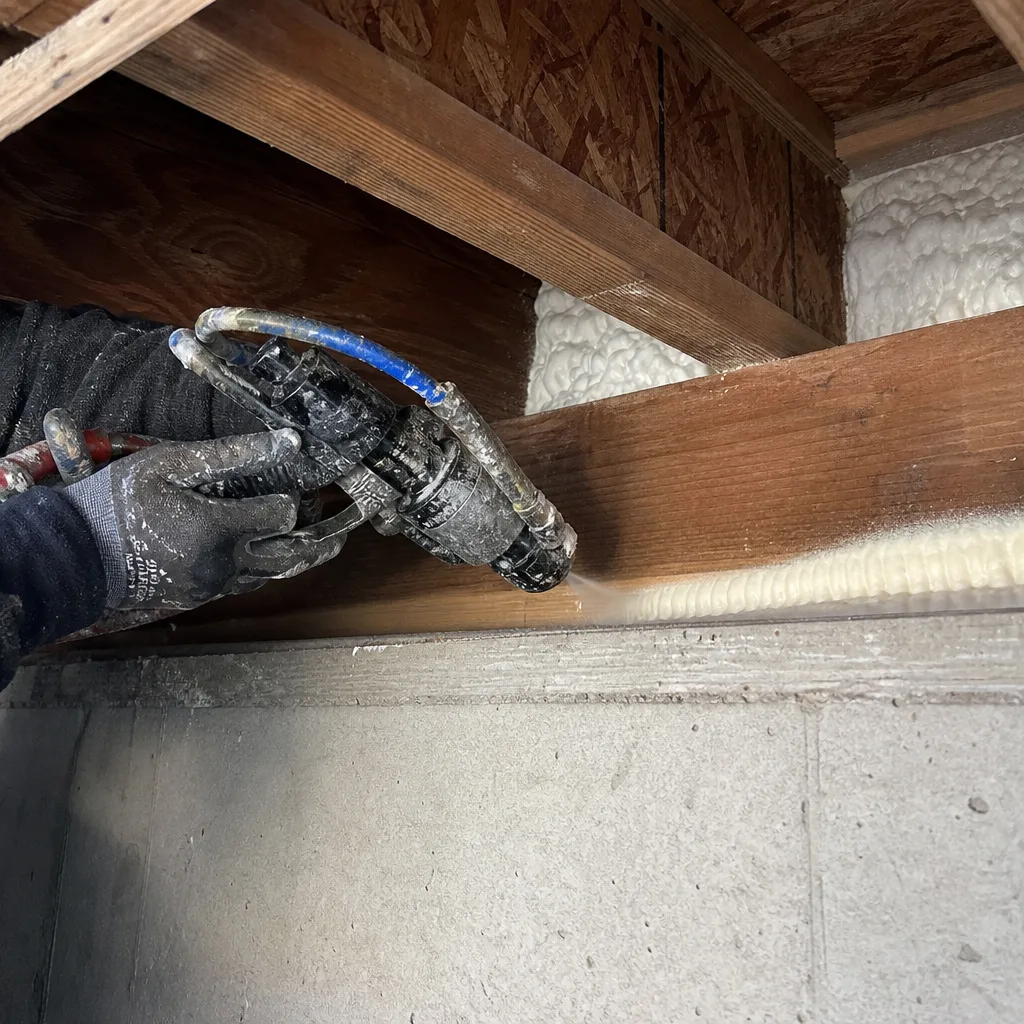
Rim joist spray foam in Bradbury is one of the most overlooked weak points in these foothill estates, and it’s where cold air sneaks into basements and crawl-adjacent spaces during the cool winter nights the San Gabriel Valley gets from November through February. The rim joist is the band of wood framing where your floor system meets the foundation wall, and in a city full of sprawling multi-wing homes on sloped lots, those joist bays are often left unsealed with bare fiberglass shoved in decades ago. Closed-cell spray foam seals the entire band, stopping air movement and adding structural rigidity in one pass. A typical Bradbury rim joist job runs $1,800 – $3,400 depending on linear footage and accessibility. If the bays are tight or partially finished, the price climbs toward the upper end.
Why Rim Joists Fail First on Bradbury’s Sloped Lots
Bradbury’s parcels run uphill into the San Gabriel foothills, which means foundation walls step down and partially exposed rim joists sit against earth or crawlspace openings. Moisture from irrigation and winter rain migrates into those bays. Fiberglass absorbs it, loses R-value, and invites mold. Spray foam doesn’t absorb water and won’t lose performance when damp, which makes it the material we recommend for exposed rim conditions on the steeper properties along Deodar Lane and Woodlyn Lane.
The Fire-Zone Factor on Rim Joists
Because Bradbury sits in a wildfire exposure zone, we often recommend closed-cell foam for rim joists even when an open-cell product would technically handle the air-sealing. Closed-cell forms a denser, ember-resistant barrier at a penetration point where wind-driven embers can collect against the foundation. It’s a small upcharge that makes a real difference on a city where fire defense is a legitimate concern for every homeowner.
Crawl Space Spray Foam Insulation in Bradbury
Crawl space spray foam insulation in Bradbury usually means closed-cell foam applied to the underside of the floor system or the crawl space walls, depending on whether your home uses a vented or sealed crawl design. Many Bradbury estates built in the mid-20th century have vented crawls under the older wings, and those spaces pull in hot, dry summer air and cold winter air all year. Sealing the crawl with spray foam stabilizes the temperature under the floor, cuts dust and allergen intrusion, and reduces the stack effect pulling attic heat down through walls. Typical Bradbury crawl space work runs $2,200 – $5,800 depending on crawl height, access, and whether we’re sealing the floor above or the crawl walls themselves.
When a Bradbury Home Needs Crawl Sealing Most
You’ll feel it in the floors. Tile and hardwood over a vented crawl stay cold all winter no matter how high you set the thermostat, because the air moving through that space wicks heat out of the floor system. In summer, the same venting pulls in hot air that rises through wall cavities and lands in the living spaces above. Both are fixable with a proper crawl encapsulation or floor-deck foam application.
Multi-Structure Crawl Conditions
Detached guest houses and pool houses in Bradbury often sit on shallow crawl spaces that were never insulated at all. If you’re doing the main house, it’s worth having us look at those secondary structures while our crew is on site. Sealing them separately prevents them from driving moisture into their own envelopes and keeps the whole parcel performing as one thermal unit rather than a patchwork.
Trusted Brands We Service in Bradbury
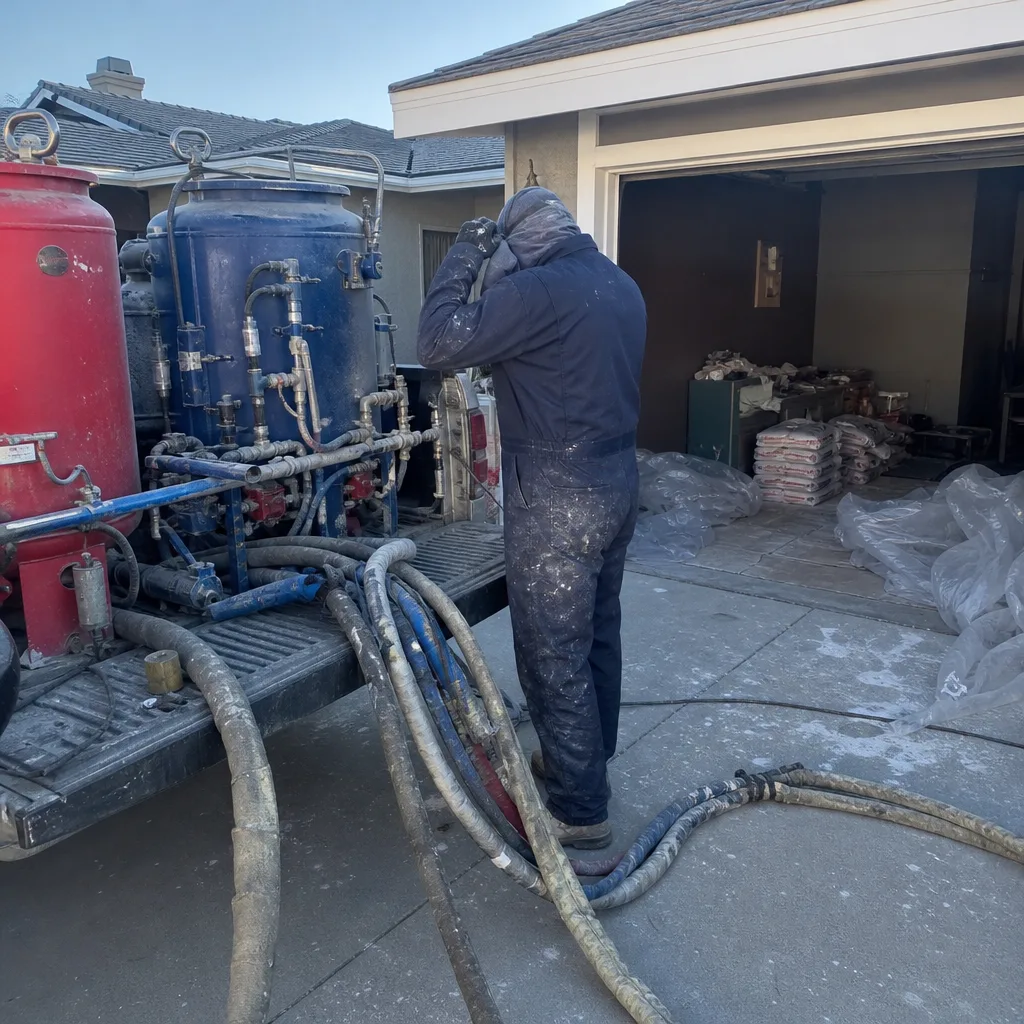
We install Icynene and Demilec spray foam, and we keep both open-cell and closed-cell products available for Bradbury jobs because the wildfire-zone consideration on many parcels pushes us toward closed-cell more often than flatland cities. We also work with Knauf, CertainTeed, Rockwool, and others when a project calls for a hybrid approach: spray foam on the roof deck, mineral wool in specific sound-sensitive wall cavities, fiberglass in low-load zones. Carrying eight brands across four material types means we’re not married to any single product line. Bradbury homeowners get the right material for their specific structure, not whichever brand we have a rebate on this quarter.
Stocking multiple foam brands also means faster turnaround for Bradbury clients. If a specific density or fire-rated closed-cell product is needed for a foothill rim joist or attic, we’re not waiting on a regional distributor to ship it in. It’s already in our inventory.
Common Spray Foam Insulation Problems We See in Bradbury Homes
- Sagging fiberglass in vaulted cathedral ceilings. Bradbury’s mid-century and custom estates use vaulted ceilings constantly, and builder-grade fiberglass stuffed into those rafter bays sags within a few years, leaving a direct path for attic heat to pour down into the room. Spray foam seals the roof deck itself so the vault void stays cool.
- Unsealed rim joists on sloped, stepped foundations. Multi-level estates with foundation steps create dozens of small framing penetrations where outside air moves freely. Homeowners feel it as cold floors and drafty baseboards in the lower wings every winter.
- Detached structures left as separate unsealed envelopes. The main house gets sealed, and the guest house, pool house, and garage stay wide open. Heat and moisture transfer continue through those secondary structures, undercutting what the main house insulation accomplished.
- Foothill fire-zone material mismatches. Some Bradbury homes got open-cell or fiberglass installed years ago before wildfire construction requirements tightened. Those assemblies don’t meet current ember-intrusion thinking, and homeowners are increasingly upgrading to closed-cell at rim joists and roof decks as a defensive measure.
Pricing for Spray Foam Insulation in Bradbury, CA
What does spray foam actually cost in Bradbury? A rim joist-only job typically runs $1,800 – $3,400. Crawl space sealing runs $2,200 – $5,800 depending on access and square footage. A full roof-deck foam application on a typical Bradbury main house runs $4,500 – $8,600, and detached guest houses or pool houses add $1,500 – $3,200 each if done separately. Open-cell foam runs $0.45 – $0.75 per board foot installed, closed-cell $1.00 – $1.60 per board foot. The difference matters: closed-cell gives you a vapor barrier and fire-rated rigidity; open-cell is lighter and costs less upfront. We quote both paths so you can decide with real numbers. Call (866) 271-1602 and we’ll come out, look at every structure on your parcel, and give you a line-item estimate, not a vague ballpark.
We Also Serve Cities Near Bradbury
Fontana Insulation works throughout the San Gabriel Valley, including Duarte, Monrovia, Baldwin Park, and Mayflower Village. If you’re in one of those cities and searching for Spray Foam Insulation in Bradbury because your property sits near the city line, we’ll cover your job with the same material-agnostic approach and the same crew depth. Bradbury itself is our focus for this page, but our trucks run the whole valley regularly.
Serving Bradbury, CA — Our Local Coverage Area
We’re based in the Bradbury area and know this community well. Use the map below to see our service coverage — if you’re nearby, we can almost certainly help.
FAQs About Spray Foam Insulation in Bradbury
It depends on the builder, but in most cases an insulation upgrade performed by a licensed contractor does not void a structural warranty, though some builders have language about third-party modifications to the thermal envelope. We recommend pulling your builder contract language and having us review it before work starts, because Bradbury’s custom builders often include specific stipulations. For the fastest answer on your specific home, call us at (866) 271-1602 and Noel can review what you’re working with.
Because the heat isn’t coming through the ceiling drywall, it’s radiating down from the roof deck itself. In vaulted construction, the attic space is the rafter bay directly above your head, and Bradbury’s foothill sun pushes those bays past 130°F by mid-afternoon. If there’s sagged fiberglass up there or no insulation at all, that heat transfers downward continuously, overwhelming the AC’s ability to cool the room faster than the roof adds heat. Spray foam on the underside of the roof deck stops that transfer at the source.
Yes. Closed-cell spray foam is denser and performs better against ember intrusion at rim joists, soffits, and other penetration points than open-cell or fiberglass. On Bradbury parcels that sit against the foothill interface, we typically recommend closed-cell for rim joists, crawl spaces, and any exposed framing where wind-driven embers could collect. Open-cell can still be right for interior wall cavities and some attic applications, but the fire-zone context pushes closed-cell into more of the conversation here than in flatland San Gabriel Valley cities.
Spray the main house first if you’re working with a budget, because that’s where you live and where the energy bill originates. But understand that those detached structures are separate envelopes, and they’ll keep losing or gaining heat on their own schedules. Many Bradbury homeowners phase the work: main house attic and rim joists first, then the guest house and pool house on a second visit. We price each structure separately so you can decide what makes sense this year and what waits.
Spray foam air-seals in a way fiberglass never will, and Bradbury’s winter nights get cold enough that air movement through rim joists and unsealed framing becomes the dominant heat-loss driver. Fiberglass only slows conductive heat transfer; it does nothing to stop air slipping through the gaps. Spray foam stops both simultaneously. That’s why a Bradbury home with sealed rim joists and a foamed roof deck feels noticeably warmer on a 40°F January night without touching the thermostat.
Have a specific question about your property’s envelope? Call us at (866) 271-1602 and we’ll talk through it. Estimates are free, and we’ll give you a straight answer even if that answer is that you don’t need spray foam everywhere.
Written by Noel Arredondo, Owner at Fontana Insulation, serving Bradbury and the San Gabriel Valley.