
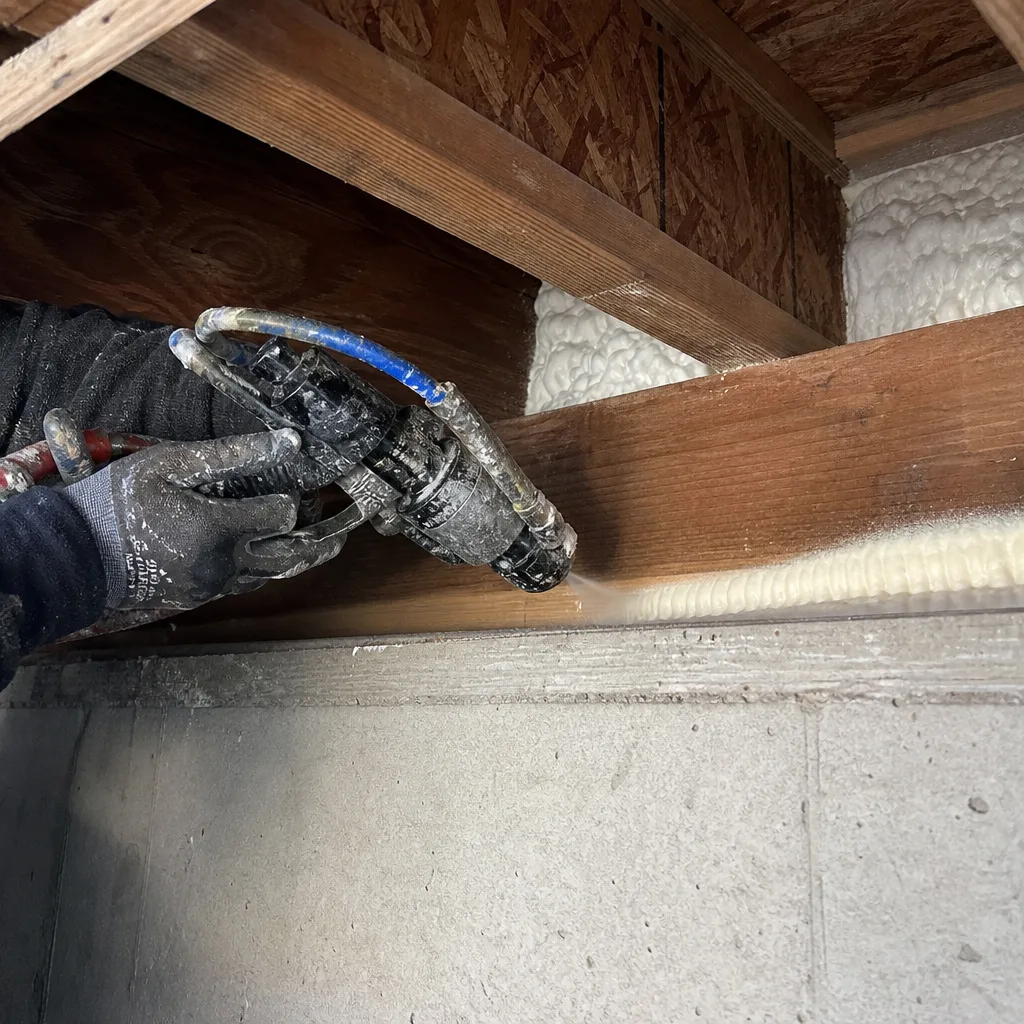
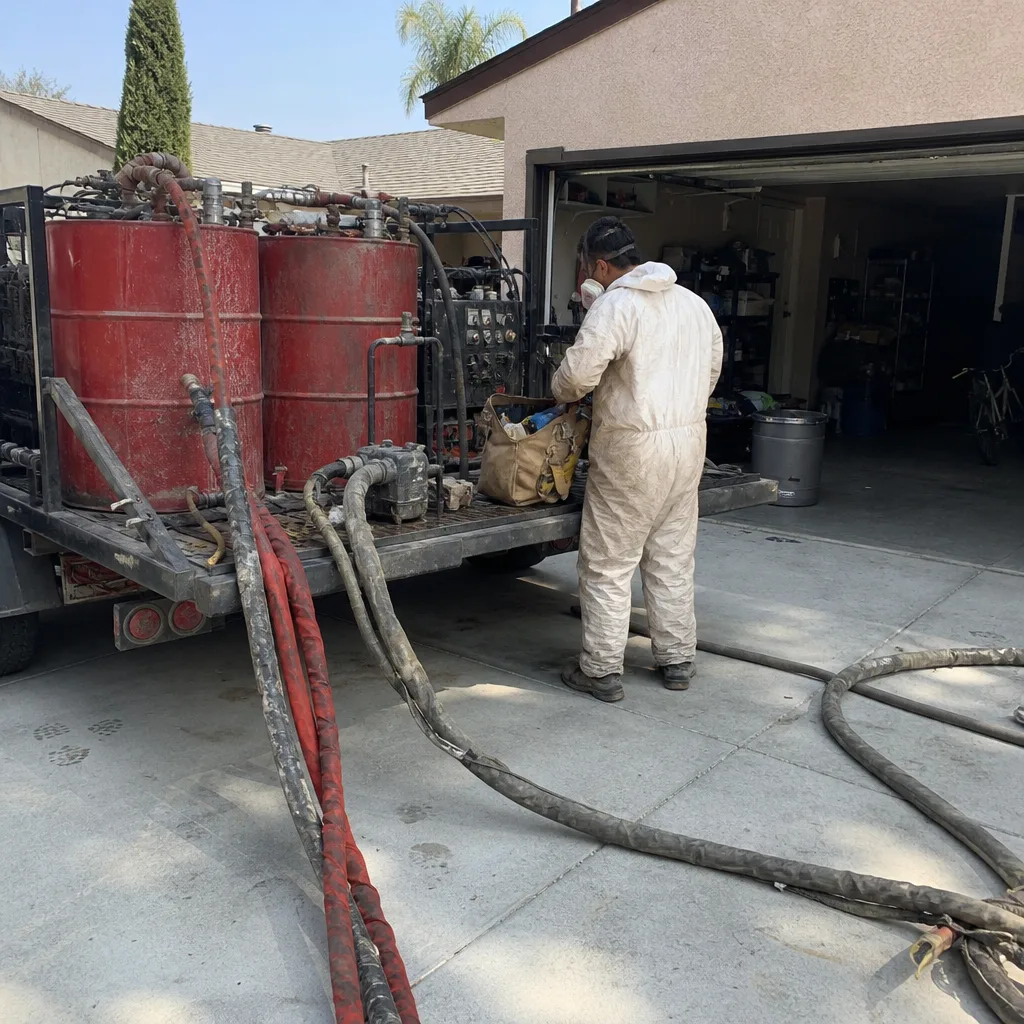
Fast, Reliable Spray Foam Insulation Across Hacienda Heights
Spray foam insulation in Hacienda Heights is a different job than it is down the hill. This is hill-country terrain with 1950s to 1970s homes, multi-level attics, knee walls, vaulted ceilings, and summer heat that pushes attic temperatures past 130°F. A flat R-value blow across one attic level won’t solve what’s actually happening up here. We stage the foam by attic zone, because that’s what these houses demand. If you’re chasing hot rooms, ember anxiety during Santa Ana season, or cooling bills that spike every July, call us at (866) 271-1602 and we’ll walk the attic with you.
Why Fontana Insulation Is Hacienda Heights’s Preferred Spray Foam Insulation Company
Noel Arredondo built Fontana Insulation around a material-agnostic approach: we carry eight brands across fiberglass, mineral wool, spray foam, and cellulose, so the recommendation comes from your house, not our inventory. That matters in Hacienda Heights, where one home off Hacienda Blvd needs closed-cell foam for a roof deck and the next needs open-cell behind a knee wall. We’re authorized installers for Icynene and Demilec, two of the most performance-tested spray foam brands in North America. We also stock Rockwool mineral wool for homeowners who want fire resistance and sound dampening alongside thermal performance, something most contractors in the San Gabriel Valley don’t bother carrying.
Local knowledge here isn’t marketing fluff. It’s knowing that a split-level off Turnbull Canyon behaves like two different climate zones, and that a single-pass foam job is the wrong call. It’s knowing that homes in the 91745 zip code were mostly built before Title 24 energy codes existed, so attic insulation runs thin, R-11 to R-19, with unsealed penetrations everywhere. We see these attics every week. That repetition is the expertise.
Spray Foam Attic Insulation in Hacienda Heights
Spray foam attic insulation in Hacienda Heights typically means converting a vented, under-insulated attic into a sealed, conditioned thermal boundary, and on hillside lots it is rarely a one-pass job. The first sentence of any honest quote here starts with which attic levels are cooking and which are not. A typical open-cell attic spray in Hacienda Heights runs $2,800 to $5,400 depending on square footage and rafter depth. Closed-cell on a roof deck runs higher, usually $4,500 to $8,000, because the material cost and install labor step up.
Staged Foaming for Two-Level Attics
Homes off Hacienda Blvd and Turnbull Canyon often have an upper attic that bakes and a lower attic behind knee walls that stays mild. Foam both zones as if they’re identical and you end up with an upper level still radiant-cooking through thin foam and a lower level over-sprayed at your expense. We insulate in stages: upper rafter bays first, knee-wall cavities second. That sequencing is what actually drops the second-floor temperature.
Attic Vents and Ember Detailing
Santa Ana winds don’t just push heat into attics. They push embers. When we foam an attic in Hacienda Heights, we check vent openings, gaps at eaves, and any hole where an ember could ride hot air past the foam and into the framing. Fire-conscious detailing isn’t an upsell here. It’s the difference between insulation and protection, and our Spray Foam Insulation team treats it as standard.
Spray Foam Wall Insulation in Hacienda Heights
Spray foam wall insulation in Hacienda Heights usually targets two situations: exterior walls in 1950s and 1960s homes that were built with no wall insulation at all, and knee walls inside attics where fiberglass batts have collapsed or slipped. Open-cell foam in existing walls runs $1.80 to $2.50 per square foot of wall area. Closed-cell, which adds structural rigidity and a vapor barrier, runs $2.60 to $4.00 per square foot. A typical single-story wall job lands between $2,200 and $4,800.
Knee Walls Behind Finished Attic Rooms
On a split-level off Turnbull Canyon, our crew found the original fiberglass batts collapsed and hanging behind the knee wall of the lower attic while the upper rafter bays ran bare. The two zones were behaving like different climates. We sealed and foamed the upper bays first with Icynene to stop the radiant cook-through, then re-insulated the lower knee-wall cavities in a second stage. The homeowner finally stopped feeling that upstairs heat bleed down into the main floor. That’s the repair pattern these homes need, and it’s one flat-lot contractors never see.
Exterior Walls on 1960s Construction
Many Hacienda Heights homes built in the 1960s have empty wall cavities, which means afternoon heat loads hit the drywall directly. During inland valley heat waves, that turns west-facing bedrooms into ovens by 4 p.m. Spray foam here, injected through small access holes or installed during a remodel, creates an air seal that batts simply cannot. We match the foam type to the wall depth and the stud spacing, not to whichever product we happen to have the most of in stock.
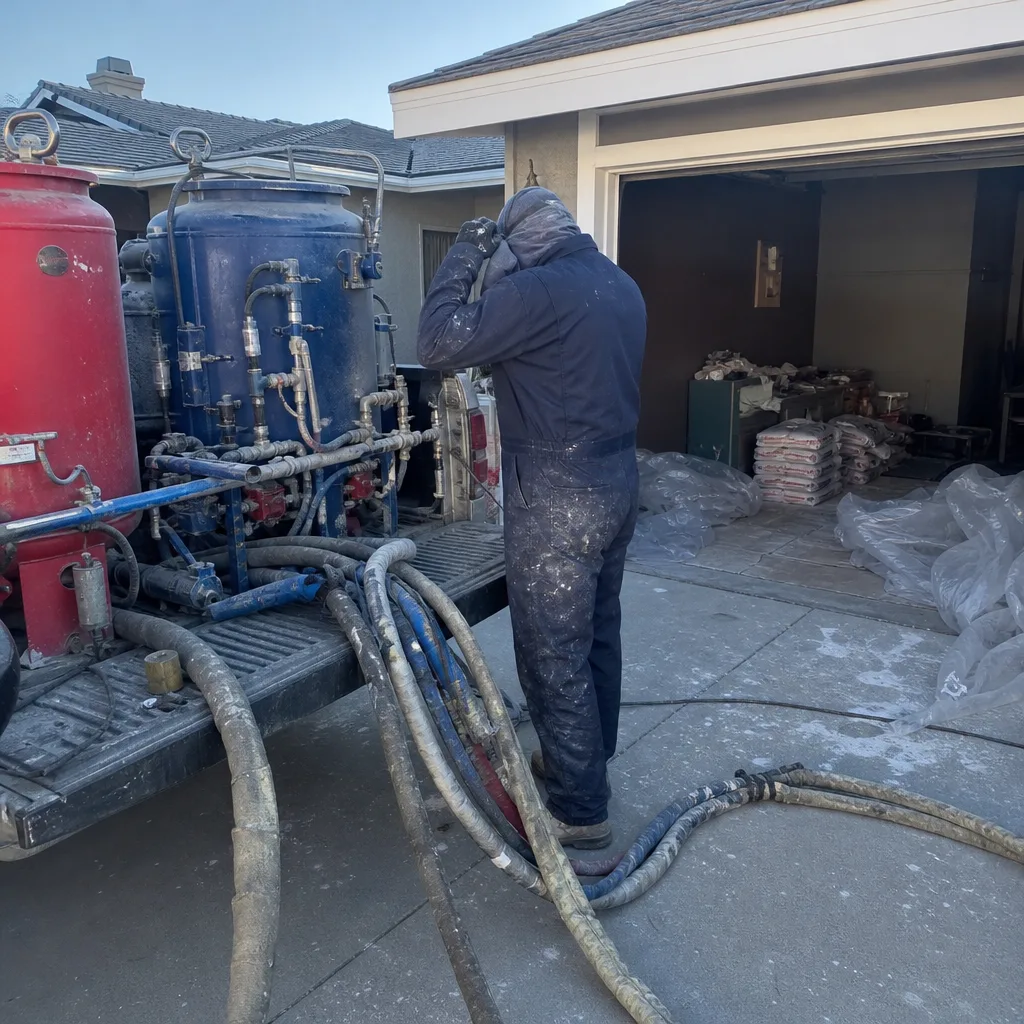
Trusted Brands We Service in Hacienda Heights
We carry Icynene and Demilec spray foam because both brands have decades of real-world performance data across North American climate zones, including dry inland heat. We also stock Johns Manville, Knauf, CertainTeed, and Rockwool for homes in Hacienda Heights where foam isn’t the right fit, or where a hybrid approach makes more sense. GreenFiber cellulose rounds out the line for homeowners who prioritize recycled content. Because we carry competing brands at every price tier, the recommendation system is simple: match the material to the application, not the inventory sheet. That’s the advantage of being a material-agnostic insulation specialist rather than a single-brand installer.
Common Spray Foam Insulation Problems We See in Hacienda Heights Homes
- Single-pass foam across multi-level attics. The hotter upper bays end up under-insulated while the mild lower level gets over-foamed, so the upstairs stays hot and the homeowner wasted money on the wrong area.
- Unsealed knee walls and deep rafter bays. Santa Ana wind pushes hot, dry air behind the foam through gaps at the knee-wall top plates and the rafter-to-wall connections, so attic temperatures climb even after a fresh spray-out.
- Collapsed or missing R-11 batts in original 1950s-70s construction. On sloped lots, batts shift, compress, and fall away from the wall assembly over decades, leaving bare wall cavities that then get built over by homeowners who don’t realize what’s behind the drywall.
- Ember-entry points at vents, eaves, and gable ends. Dry wind season turns any unsealed penetration into an ember pathway, and a foam job that ignores vent detailing leaves the attic protected thermally but still exposed to wind-driven fire risk.
Pricing for Spray Foam Insulation in Hacienda Heights, CA
Here’s what Hacienda Heights homeowners should expect to pay. Open-cell attic insulation on a typical 1,200 to 1,800 square foot home runs $2,800 to $5,400. Closed-cell roof deck work runs $4,500 to $8,000 depending on rafter depth and access difficulty. Wall injection or knee-wall foam runs $2,200 to $4,800. Homes on steep hillside lots with multi-level attics and restricted access will land at the higher end of every range, because the crew works in stages and handles irregular rafter bays. The free estimate locks the number before work starts, so there’s no surprise on invoice day. Call (866) 271-1602 and we’ll get you an exact figure for your house, not a generic square-footage quote.
We Also Serve Cities Near Hacienda Heights
We run crews into La Puente, Valinda, Avocado Heights, and West Puente Valley most weeks. The hillside work in this part of the San Gabriel Valley is consistent enough that we’ve come to know the construction patterns block by block. If you’re in a neighboring city and want a foam estimate, call the same number: (866) 271-1602.
Serving Hacienda Heights, CA — Our Local Coverage Area
We’re based in the Hacienda Heights area and know this community well. Use the map below to see our service coverage — if you’re nearby, we can almost certainly help.
FAQs About Spray Foam Insulation in Hacienda Heights
Homes on hillside lots off Hacienda Blvd and Turnbull Canyon typically have two-story attics where the upper rafter bays bake in direct sun while the lower level behind knee walls stays shaded and comparatively mild. The original fiberglass batts, usually R-11 to R-19, have often collapsed behind those knee walls, which makes the temperature split even worse. The fix is staged foaming: seal the hot upper bays first, then re-insulate the lower knee-wall cavities in a second pass. Call (866) 271-1602 for an attic-by-attic assessment.
Yes, when it’s detailed correctly. Spray foam on the roofline can close the gaps at eaves, rafter intersections, and gable ends where embers ride hot wind into the attic. But the foam itself is only part of it; the vent openings and any unsealed penetration still need to be screened or sealed. In Hacienda Heights, where the 2008 and 2020 fire seasons put ember intrusion on every homeowner’s mind, we treat vent and gap detailing as part of the foam job, not an add-on.
Yes, and this is one of the most common conditions we correct in Hacienda Heights. Collapsed R-11 batts leave the knee-wall cavity effectively uninsulated, which is why the adjacent room never holds temperature. We remove the failed batts, air-seal the cavity, and spray foam to the depth the wall assembly allows. The improvement in that room’s comfort is immediate because the air seal stops the hot attic air from moving through the wall, not just the heat transfer.
We do both. Attic and roof deck foaming handles the biggest heat load in Hacienda Heights, but uninsulated exterior walls from 1950s and 1960s construction are the second biggest culprit for afternoon heat gain. We inspect the walls during the attic assessment and quote them separately, so you know exactly which part of the envelope is failing and what each fix costs.
We carry Icynene and Demilec for open-cell and closed-cell spray foam, both among the most performance-tested foam brands in North America. We also stock Johns Manville, Knauf, CertainTeed, and Rockwool for fiberglass and mineral wool applications, plus GreenFiber cellulose. Because we carry competing brands at every price tier, the recommendation for your attic or walls is based on the application and the performance goal, not on what we’re trying to move out of the warehouse.
If your Hacienda Heights attic is hot, your cooling bill is climbing, or you’re worried about what a dry Santa Ana wind season could push into your eaves, call (866) 271-1602 for a free spray foam estimate. We’ll walk the attic, show you what’s there, and quote the job in stages if that’s what your house needs.
Written by Noel Arredondo, Owner at Fontana Insulation, serving Hacienda Heights and the San Gabriel Valley.