
Insulation Company in Corona, CA
Blown in insulation takes on a different level of importance in Corona, where summer attic temperatures regularly climb past 150°F and 1980s-2000s tract homes still carry builder-grade R-19 coverage that was never meant for this kind of heat. Most Corona homes we inspect show settled fiberglass, gaps around recessed lights, and bare spots near roof valleys – all of which translate directly into cooling bills that climb every July. At Fontana Insulation, we stock eight major insulation brands and install blown in insulation, attic insulation, and spray foam without subcontracting, so the recommendation you get matches your home’s actual thermal envelope, not our inventory. Call us at (866) 271-1602 for a free estimate on any Corona insulation project.
Why Corona Homes Are Different
Corona sits in a semi-arid inland valley where summer temperatures routinely exceed 100°F for weeks at a stretch, and the solar gain on west-facing roof planes is relentless. Unlike coastal Orange County, Corona gets almost no marine layer relief. That means your attic becomes a heat reservoir every afternoon, and whatever insulation is up there either holds the line or lets the heat pour through. Homes built in the 1980s through 2000s – which covers much of Corona’s housing stock – typically shipped with R-13 walls and R-19 attics, numbers that fell short of Title 24 even when new, and many of those homes also have unvented attics or shallow roof pitches that make retrofits trickier than a standard walk-up attic.
Wildfire smoke season adds a second variable. When the Santa Ana winds push smoke through the Santa Ana River corridor, a leaky attic isn’t just an energy problem – it’s an indoor air quality problem. Air sealing and proper insulation coverage become a single job, because no amount of loose fill helps if the air carrying the heat and smoke can move around it. In neighborhoods like Eagle Glen, Sierra Del Oro, Chase Ranch, and Horsethief Canyon, we regularly find original insulation that has settled unevenly or been kicked around by decades of HVAC service, leaving hot spots exactly where the afternoon sun hits hardest.
Our Main Corona Services
Corona homeowners call Fontana Insulation most often about two things: under-insulated attics that are baking the living space below, and air-sealing gaps that let conditioned air escape while smoke and heat work their way in. Both are jobs we handle in-house with a material-agnostic approach.
Attic Insulation in Corona
Most Corona attics we enter still have the original fiberglass batts the builder laid down in the 1990s or early 2000s, often compressed, settled, or pushed aside during roof and HVAC work. In a Corona summer, that coverage gap becomes a measurable heat load on the ceiling below. Our attic insulation work starts with a full inspection of what’s up there, then a recommendation based on the roof pitch, venting situation, and how much headroom the attic actually has. For many of the low-slope roofs we see in Chase Ranch and similar developments, that means a material choice that works with limited clearance. See the full breakdown on our Attic Insulation in Corona page.
Spray Foam Insulation in Corona
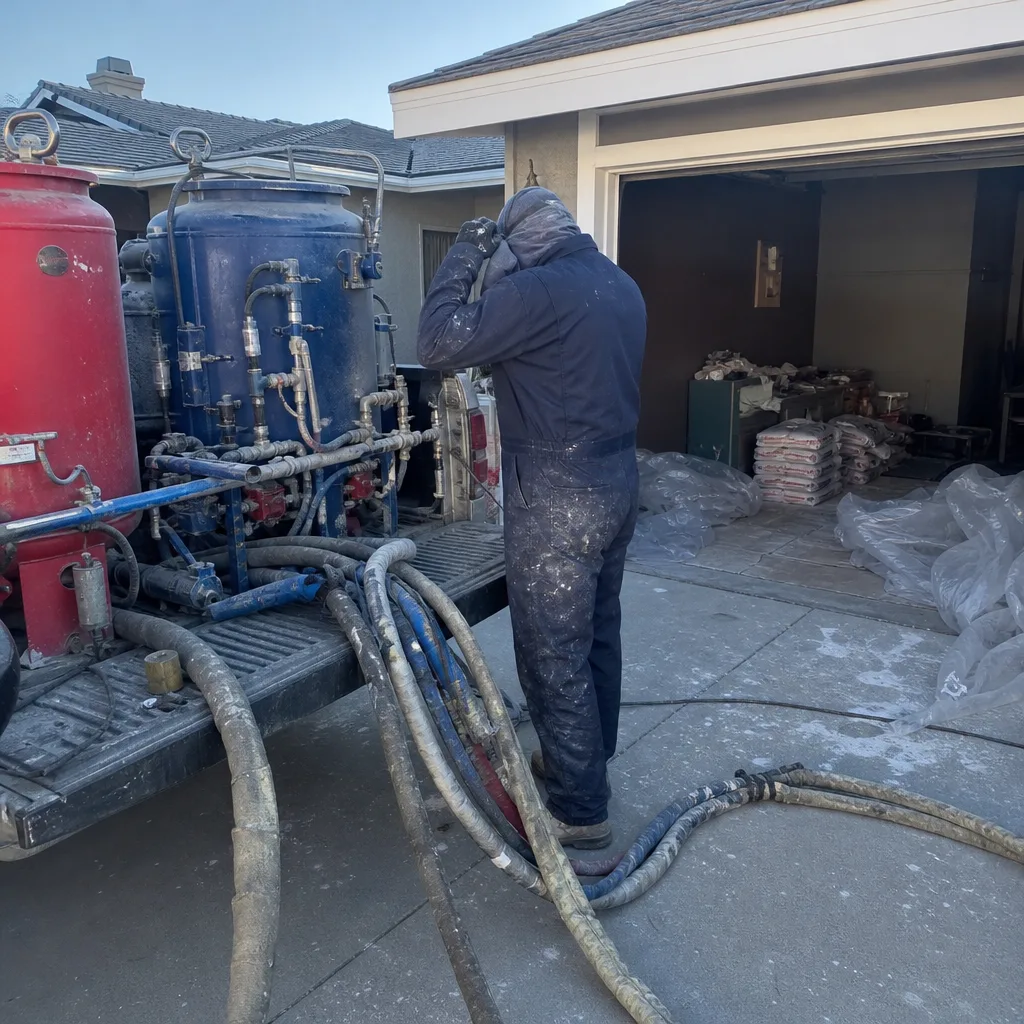
Spray foam earns its keep in Corona’s unvented attics and knee-wall spaces, where fiberglass alone can’t stop the stack effect that pulls hot, smoky air through the building envelope. Closed-cell foam also adds structural rigidity, which matters on the shallow-pitch roofs common throughout the city’s tract developments. We install both open- and closed-cell foam from Icynene and Demilec, and for homes where a full attic foam job doesn’t fit the budget, we often use foam as the air-sealing layer with blown in insulation doing the thermal work above it. More detail is on our Spray Foam Insulation in Corona page.
What happens when you call
- 1
A real person answersNo phone trees — you reach a local pro.
- 2
You get an upfront price rangeHonest numbers before anyone is dispatched.
- 3
A background-checked tech heads outLicensed & insured, dispatched right away.
- 4
You approve before work beginsNothing starts until you say go.
Blown In Insulation in Corona
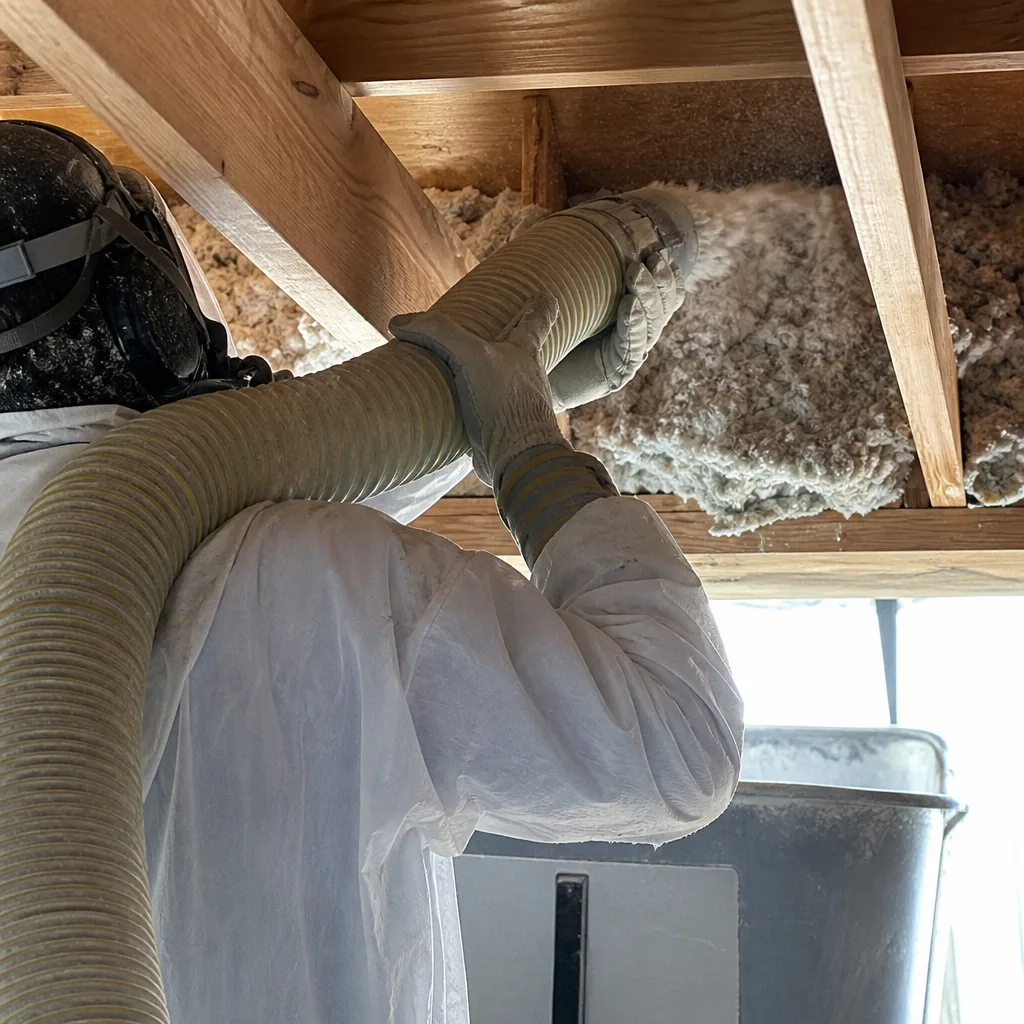
Blown in insulation is the most common retrofit we recommend in Corona, because it’s the fastest way to achieve an even, airtight thermal layer across an attic floor without tearing out drywall. In the 92877, 92878, 92879, and 92880 ZIP codes, we see the same pattern every summer: settled or disturbed builder-grade insulation leaving gaps that let 150°F attic air radiate straight into bedrooms and hallways. Blown in material flows around obstructions, fills the odd crevices that batts can’t reach, and gives us the exact depth needed to hit the R-values current code expects. Whether the right fit is cellulose or fiberglass, we install it as a full-service job with air sealing at the top plate, baffles at the eaves, and dam coverage around can lights. Read more about the material and method on our Blown In Insulation page.
Cellulose Insulation
Signs you need it
You want a denser, recycled-content material that fills tight spaces well and offers better fire resistance than fiberglass in a Corona attic with overhead lighting or recessed fixtures.
What it costs in Corona
Cellulose insulation in Corona typically ranges from $1.10 to $1.90 per square foot installed, depending on depth and whether we’re topping up an existing layer or starting from bare drywall.
How we do it
We run a hose from our truck to the attic, spray the cellulose at a controlled density, and use depth gauges to keep the coverage even from the eaves to the peak.
Blown In Attic Insulation
Signs you need it
Rooms directly under the attic feel consistently 5-10°F warmer than the rest of the house in summer, or your attic inspection shows bare drywall in spots where the original batts have shifted.
What it costs in Corona
Blown in attic insulation in Corona generally runs $1.50 to $3.50 per square foot to bring an attic up to modern R-value, with most homes landing between $1,500 and $4,500 total.
How we do it
We seal penetrations and top plates first, install or check baffles to protect soffit vents, then blow the material to a uniform depth that hits the R-value we agreed on.
Blown In Fiberglass Insulation
Signs you need it
Your attic has settled batts that no longer fill the joist bays, and you want a lightweight, non-absorbent fill that’s easy to top up in a home with irregular bays or shallow pockets.
What it costs in Corona
Blown in fiberglass in Corona typically lands between $1.00 and $2.10 per square foot, but tight or low-clearance attics can push toward the higher end of that range.
How we do it
We prep the attic by sealing air leaks, then machine-blow the fiberglass loose fill to a measured depth that gives full coverage across the floor, including the edges over exterior walls.
Loose Fill Insulation
Signs you need it
The attic above a west-facing Corona room stays hot all afternoon, and you can see from the access hatch that the existing loose fill has thinned out or never reached the eave edges.
What it costs in Corona
Loose fill projects in Corona typically cost $1.00 to $2.00 per square foot plus the cost of air sealing, so an average 1,500-square-foot attic usually runs $1,800 to $4,200.
How we do it
We remove or even out the old material, seal air bypasses, and blow fresh loose fill to a consistent depth mapped across the entire attic floor.
What Blown In Insulation Costs in Corona
| Item | Typical range in Corona |
|---|---|
| Blown in attic insulation (installed) | $1.50 – $3.50 per sq ft |
| Cellulose insulation (installed) | $1.10 – $1.90 per sq ft |
| Blown in fiberglass (installed) | $1.00 – $2.10 per sq ft |
How long does blown in insulation last in Corona’s heat?
Cellulose and fiberglass loose fill both hold their R-value for decades, but Corona’s heat cycle can accelerate settling in fiberglass if the attic is frequently accessed. A condition check during an energy audit will tell you if a top-off is needed.
Can you blow insulation over old insulation in Corona?
Yes, if the existing material is dry and free of mold or pest damage, we can blow new material over it to bring the total R-value up. We inspect first to make sure the old layer is still performing.
Brands We Service in Corona
We carry CertainTeed and Knauf for fiberglass loose fill, Rockwool for mineral wool when fire resistance and sound dampening matter, and Icynene and Demilec for open- and closed-cell spray foam. Because we stock competing brands in each category, the recommendation we make for your Corona home is based on the attic conditions and your performance goals, not on what we happen to have in the truck. Material is sourced directly from our supply partners and typically staged locally within a few days of your estimate. Learn more about our brands.
Pricing for Insulation Company in Corona, CA
| Service | Typical range in Corona |
|---|---|
| Blown in attic insulation | $1,000 – $4,500+ |
| Cellulose insulation | $1,500 – $4,000+ |
| Blown in fiberglass insulation | $1,200 – $3,500+ |
| Loose fill insulation | $1,500 – $4,200+ |
| Re-insulation / full replacement | $3,500 – $8,000+ |
| Insulation removal | $1,500 – $3,800+ |
| Air sealing + insulation | $2,800 – $7,000+ |
| Removal & re-insulation | $4,500 – $9,000+ |
Two things push prices toward the upper end in Corona. First, the high share of homes with low-pitch or unvented attics makes access slower and more technical than a standard walk-up job. Second, air sealing work is almost always needed in this housing stock, and that adds materials and labor hours. The quote we give you is the price you pay – no change orders after we open the attic, and no surprise fees at the end.
Neighborhoods We Serve in Corona
We install insulation throughout Corona, including the tract developments where original builder-grade coverage has run its course and the newer hillside communities where solar gain is hardest to control. Response time for estimates across the Corona area is usually a few business days, with scheduling geared around getting attics closed up before the hottest stretches.
- Eagle Glen
- Sierra Del Oro
- Chase Ranch
- Horsethief Canyon
- Corona Hills
Service Area – Cities Near Corona
From our Fontana home base, we run insulation crews into the communities surrounding Corona, including Home Gardens, CA just to the west, El Cerrito Corona, CA around the downtown corridors, Eastvale, CA to the north, and Norco, CA to the northeast. If you’re in one of these nearby cities and your attic is underperforming, call the same number and we’ll route an estimate to you.
Serving Corona, CA — Our Local Coverage Area
We’re based in the Corona area and know this community well. Use the map below to see our service coverage — if you’re nearby, we can almost certainly help.
FAQs About Insulation Company in Corona
Yes. Our Corona crews cover 92877, 92878, 92879, and 92880, including the neighborhoods within each, from the older tracts near the 91 corridor to the newer hillside developments on the east side of the city.
In most Corona homes, adding blown in or batt insulation to an existing attic does not require a permit, but if the job involves structural changes or a spray foam application on the roof deck, the building department may want plans. We can tell you which category your project falls into before we start.
We schedule Corona insulation work year-round, but demand spikes in late spring and early summer when attics start cooking. If you want the job done before the first sustained 100°F stretch, call early to get on the calendar, and we’ll give you a firm install date at the estimate.
If your Corona home is fighting the inland heat with builder-grade insulation from the 1990s or early 2000s, the fix is straightforward: get an attic inspection, find the gaps, and fill them with the right material at the right depth. Call Fontana Insulation at (866) 271-1602 for a free estimate, and we’ll walk you through the material options and the exact cost for your home.
What happens when you call
- 1A real person answersNo phone trees — talk to a local insulation pro.
- 2You get an upfront price rangeHonest numbers before anyone is dispatched. No surprises.
- 3A background-checked tech heads outLicensed & insured, typically within 1-hour.
- 4You approve before work beginsNothing starts until you say go.
What Corona Customers Say
"Attic was at maybe R-11 from the 1970s and blown in over the top would have just buried the problem. They removed the old material, air sealed the top plates and penetrations first, then blew in to R-49. The upstairs is a completely different house in August."
— Sarah Fletcher"Work is good and the house is noticeably more comfortable. There was insulation debris left in the hall closet under the attic access that I had to clean up."
— Holly Mercer"Found and sealed a gap around the chimney chase that was basically an open chimney to the attic."
— Nadia Aziz