
Fast, Reliable Attic Insulation Across Spring Valley Lake
Attic insulation in Spring Valley Lake isn’t a one-size job, and if you live in a 1970s lakefront or fairway home with vaulted ceilings, you already know why. Standard batts often won’t fit the shallow rafter bays these homes were built with. Dense-pack cellulose or rigid foam becomes the workable answer. Our crew works throughout Spring Valley Lake, from Ridgeview Road down to the marina side, and we stock materials locally so we can move fast when you call. For a free estimate in the 92395 area, call (866) 271-1602.
Why Fontana Insulation Is Spring Valley Lake’s Preferred Attic Insulation Company
We walk into Spring Valley Lake homes knowing what we’re going to find before we open the attic hatch. These houses were built for a high-desert climate that punishes insulation harder than people expect, with summer attic temperatures that bake whatever’s up there and winter nights that pull heat straight through the ceiling plane. Local homeowners call us because we explain the trade-off between fiberglass, cellulose, mineral wool, and spray foam without pushing whichever product we happen to have the most of in the truck. Noel Arredondo built the company around carrying eight brands across four material categories for exactly that reason: the right material for your home’s specific situation, not the one that’s easiest for us to stock.
Spring Valley Lake customers keep us honest. The lakefront homes near Spring Valley Lake Country Club have closed-cell spray foam needs we don’t see in the tract homes off Bear Valley Road. The infill homes on the north side of the lake often just need an Attic Insulation top-up and air-sealing. One crew, three installation methods, no subcontracting. That’s how we keep response times tight to Spring Valley Lake.
Insulation Contractors in Spring Valley Lake
Insulation Contractors in Spring Valley Lake have to solve a ceiling-depth problem most Inland Empire contractors never see. The vaulted ceilings with exposed beams that define so many fairway and lakefront homes leave only 2×6 or even 2×4 rafter depth. A standard R-38 batt needs a full 2×12 cavity. So the real work here is creative, honest material selection rather than rolling out fiberglass and calling it done.
Attic Insulation Replacement
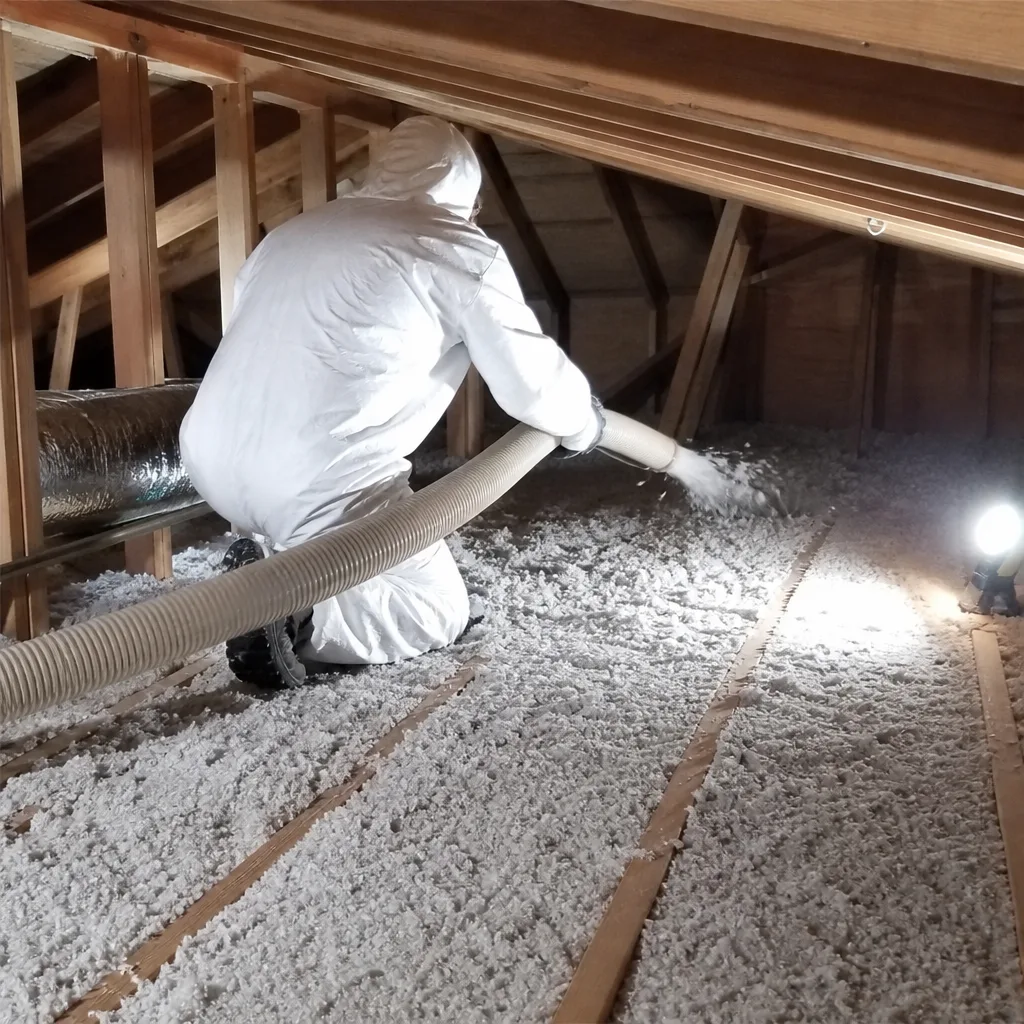
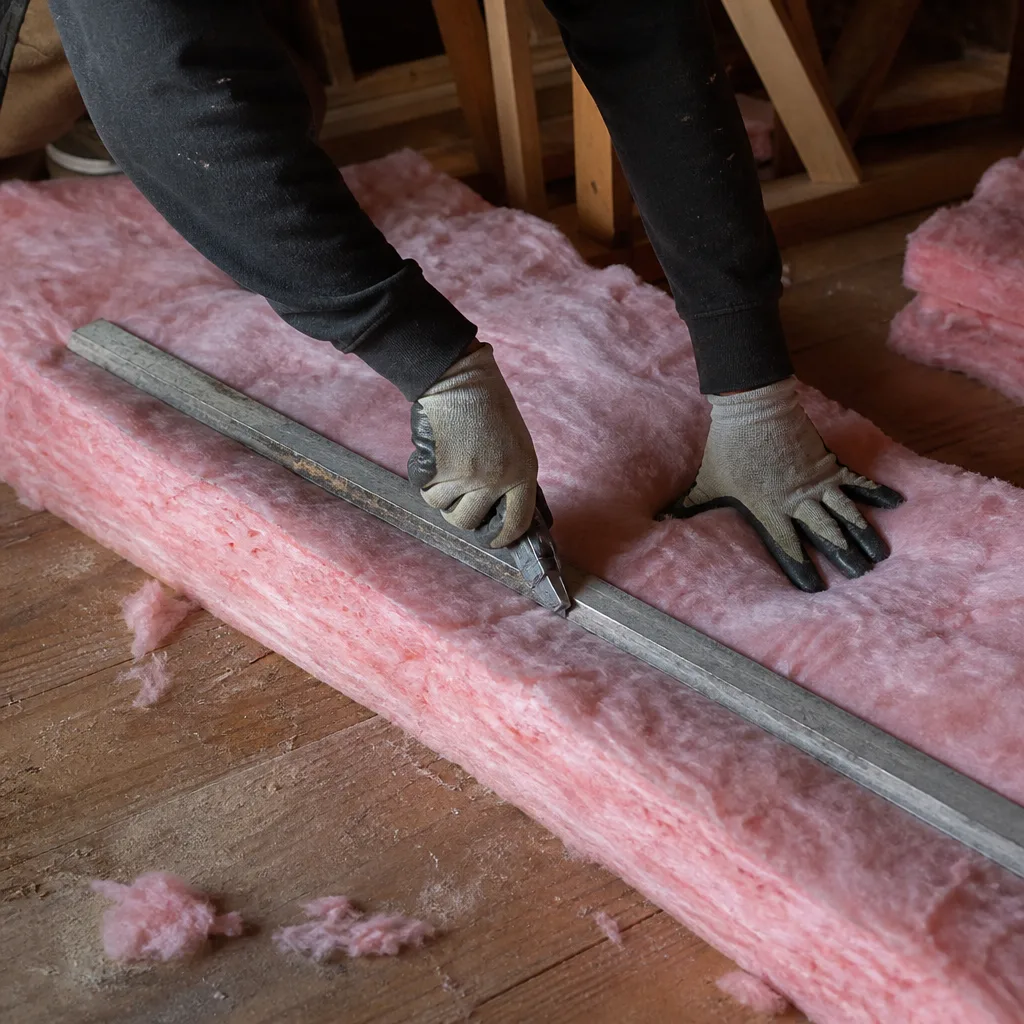
Replacement in an older Spring Valley Lake home usually means pulling compressed R-11 or R-19 out of shallow rafter bays and dense-packing the same space with GreenFiber cellulose or installing rigid foam against the roof deck. That’s a retrofit spec. It costs more than a standard batt swap in a Victorville tract home, but it’s the only way to hit a meaningful R-value in a 2×6 cavity.
Attic Baffles & Ventilation Prep
Before insulation goes in, we check what the desert wind has done to your vents. Blowing sand from the dry lakebed and surrounding flats packs soffit vents solid. That kills airflow, traps radiant heat, and shortens the life of whatever insulation you have. Adding or replacing baffles isn’t a suggestion here; it’s prep work the house demands.
Attic Ventilation in Spring Valley Lake
Attic Ventilation in Spring Valley Lake fails differently than it does on the coast. Spring Valley Lake sits at roughly 3,000 feet in the Victor Valley, where summer days run past 100°F and winter nights dip toward freezing. That 30-to-40-degree daily swing means the attic becomes a heat engine. If you can’t move air through it, no amount of insulation saves you from what the roof deck radiates down into the living space.
Soffit and Ridge Vent Clearing
Dust and sand find every opening in a Spring Valley Lake attic. We pull old baffles, clear packed soffit vents, and often add vent area where the original build under-ventilated. Once air moves again, attic temperatures drop and the insulation can actually do its job.
Sealing Attic Hatches and Can Lights
An unsealed attic hatch in a desert home acts like a chimney, pulling conditioned air out and dragging dust in. The recessed can lights in so many 1980s and 1990s Spring Valley Lake homes are just holes in the thermal boundary. We seal and cover them with rated boxes before insulation work starts, because air-sealing and insulation are two halves of the same job.
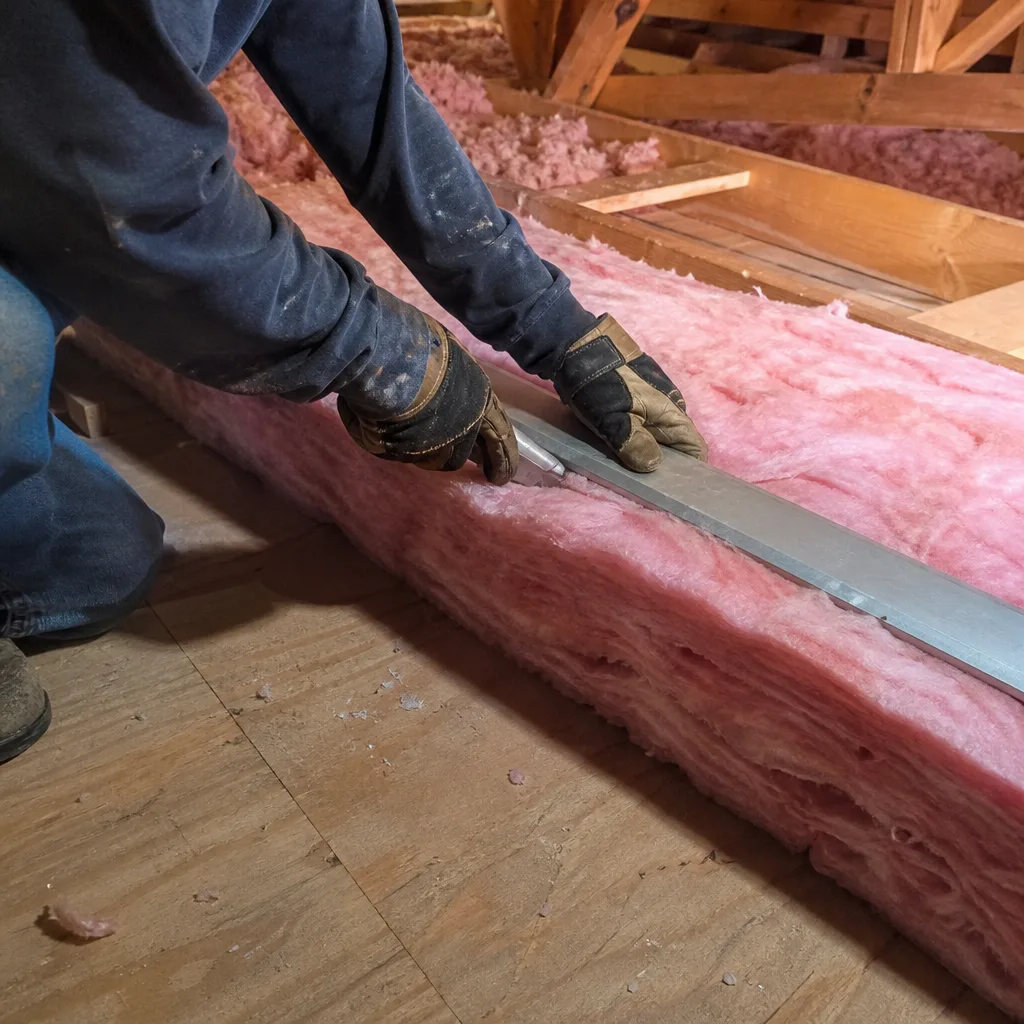
On a lakefront home near the Spring Valley Lake Country Club, we found original R-11 batts compressed into 2×6 rafters under exposed beams, with blown sand sealing the soffit vents. We dense-packed the rafter bays with GreenFiber and added a radiant barrier, dropping the attic temperature by 20°F and stopping the dust infiltration that had been coating the can lights.
Trusted Brands We Service in Spring Valley Lake
We carry CertainTeed fiberglass because its batt sizing tolerances stay consistent enough for high-desert temperature swings. We stock Rockwool mineral wool for Spring Valley Lake clients who want fire resistance and sound dampening along with thermal performance. And we install Icynene and Demilec spray foam when a vaulted ceiling or bonus room needs air-sealing that blanket material can’t provide. Carrying competing brands means we match the material to the problem. For Spring Valley Lake customers, that means faster decisions and no waiting on a single product line to show up.
Common Attic Insulation Problems We See in Spring Valley Lake Homes
- Compressed batts in vaulted ceilings. Original fiberglass in 2×6 rafter bays loses most of its R-value once it’s squashed. Dense-pack or rigid foam is usually the only fix that works without rebuilding the roofline.
- Sand-clogged ventilation. Prevailing desert winds push fine sand into soffit and ridge vents across 92395. Reduced airflow traps heat and bakes whatever insulation is up there.
- Unsealed attic hatches and can lights. These pull conditioned air out year-round and make the house feel drafty even when the HVAC is running correctly.
- Thin original insulation in 1970s-1990s builds. Many Spring Valley Lake homes still carry R-11 to R-19 in the attic. Modern code-level performance starts around R-38 to R-49, and the gap shows up in every energy bill.
Pricing for Attic Insulation in Spring Valley Lake, CA
A blown-in attic top-up in a standard Spring Valley Lake single-story home typically runs $1,800 to $3,400, depending on current depth and square footage. Attic insulation replacement with removal of old material lands between $2,900 and $5,600. Dense-pack work in vaulted ceiling cavities costs more, usually $4,500 to $8,000, because it’s slower and the access is tight. Attic baffle and ventilation prep adds $600 to $1,800 depending on how many vents need clearing or replacement. Call (866) 271-1602 for an exact quote on your Spring Valley Lake home. Estimates are free.
We Also Serve Cities Near Spring Valley Lake
Our crews run regular routes through Spring Valley Lake and the surrounding Victor Valley. We cover Mountain View Acres, Victorville, Apple Valley, and Hesperia extensively, often within the same week as the initial call. The same multi-brand approach applies across all of them, tuned to each city’s housing stock and elevation instead of a one-spec-fits-all formula.
Serving Spring Valley Lake, CA — Our Local Coverage Area
We’re based in the Spring Valley Lake area and know this community well. Use the map below to see our service coverage — if you’re nearby, we can almost certainly help.
FAQs About Attic Insulation in Spring Valley Lake
Yes, in most cases. Dense-pack cellulose and rigid foam both work in the shallow 2×6 rafter bays common in Spring Valley Lake vaulted ceilings. We access the cavity from inside the attic or through small exterior openings, so the exposed beams and ceiling finish stay intact. Call (866) 271-1602 and we’ll tell you which method fits your roofline.
The dust in your Spring Valley Lake attic comes from windblown sand entering through soffit and ridge vents, plus air pulled through unsealed hatches and can lights. Insulation alone won’t stop it. We clear or replace the vents and seal the openings before installing new material, which cuts both the dust and the heat loss.
For conditioned attics with vaulted ceilings, R-30 to R-38 is a realistic target given the rafter depth limitations. For ventilated attics with standard framing, we recommend R-38 to R-49. The exact number depends on your roof structure and whether we can add ventilation. A site assessment gives you a firm answer.
Ventilation is what keeps attic air moving so radiant heat doesn’t sit on top of your insulation all afternoon. In Spring Valley Lake’s high-desert heat, a poorly vented attic can run 20 to 30 degrees hotter than a properly vented one. That heat soaks through even good insulation, so ventilation and insulation have to be sized together.
Yes. Bonus rooms over garages in Spring Valley Lake homes are often the least insulated space in the house, with exposed floor cavities and little to no air-sealing. We typically dense-pack the floor cavity and spray foam the rim joists, which makes the room usable year-round. Call (866) 271-1602 for a free estimate on that specific space.
Written by Noel Arredondo, Owner at Fontana Insulation, serving Spring Valley Lake and the Victor Valley.