
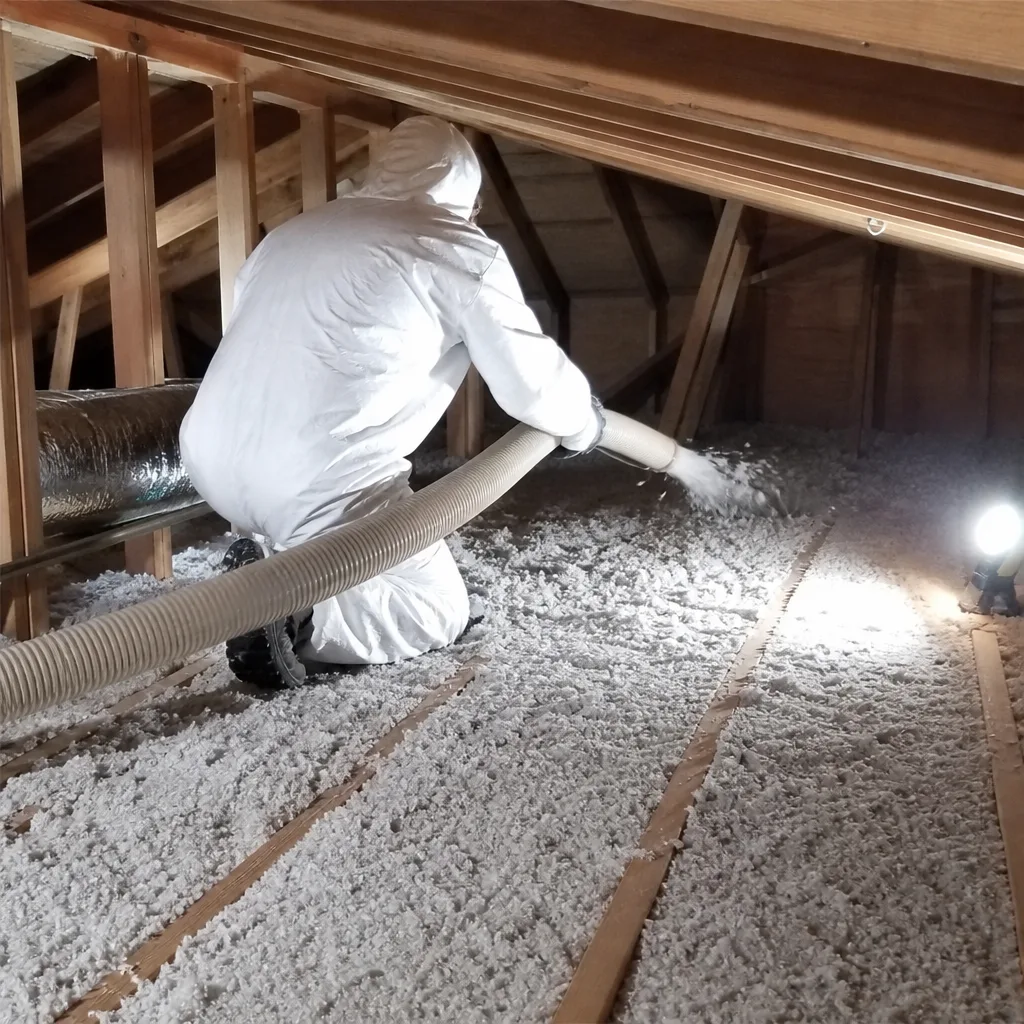
Fast, Reliable Attic Insulation Across Apple Valley
Attic insulation in Apple Valley means dealing with a climate that swings from 100°F summer afternoons to below-freezing winter nights, often in the same week. Most homes here were built as single-story tract subdivisions between the 1980s and 2000s, and the original builder-grade fiberglass has usually settled, been crushed by ductwork, or blown unevenly across the joist bays by high-desert winds. We know what that looks like because we’ve opened hundreds of Apple Valley attics and seen the same pattern: thin coverage exactly where you need it most. Call (866) 271-1602 for attic insulation work in Apple Valley, CA 92307 and 92308, and we’ll give you an honest assessment of what’s actually up there.
Why Fontana Insulation Is Apple Valley’s Preferred Attic Insulation Company
Fontana Insulation serves Apple Valley as an insulation specialist, not a general handyman crew that occasionally touches attics. We carry eight insulation brands across four material categories, which matters in the high desert: a tract home with wind-scattered fiberglass needs a different fix than a custom ranch with a tile roof and a hot west-facing wing. Noel Arredondo leads the team, and the approach is brand-neutral. We don’t push one product because it’s easiest to stock. We measure what’s there, ask how the rooms below actually feel in July and January, and recommend the material that matches the house.
Apple Valley homeowners tell us the same things: the AC runs nonstop in summer, certain rooms never hold temperature, and the attic has dust and debris blown in around the vents. That local pattern matters. A house off Central Road behaves differently than one near the airport or in the older lots south of Highway 18. We work with Attic Insulation materials including Owens Corning, CertainTeed, Rockwool, Icynene, and Demilec, so the recommendation is driven by the job, not by what’s in the truck.
Attic Mold Removal in Apple Valley
Attic Mold Removal in Apple Valley is less about standing water than you’d expect in a dry climate, and more about condensation from temperature swings and blocked ventilation. When warm interior air leaks into a cold attic on winter nights, it condenses on the underside of the roof sheathing. That repeated moisture is enough to feed mold on the wood, even in the high desert. Add wind-driven dust and the dark corners of a low-pitch roof, and you get the conditions we see regularly in Apple Valley homes.
What the Removal Job Involves
We remove mold-contaminated insulation and surface mold from the roof deck and framing, then treat the affected wood with a mold-killing agent. The attic needs proper ventilation afterward, otherwise the condensation cycle just restarts. In Apple Valley’s windy environment, that often means checking that baffles and vents haven’t been clogged with dust or shifted by gusts.
When to Address Mold in Apple Valley
A musty smell in the hallway ceiling or visible dark staining on the underside of the roof sheathing are the two most reliable signs. We also look for mold after any winter where indoor humidity was high and nighttime temperatures dropped hard. The dry climate doesn’t make Apple Valley immune, it just makes the moisture source harder to spot until the staining shows.
Attic Insulation Removal in Apple Valley
Attic Insulation Removal in Apple Valley is most often needed because the original fiberglass has been flattened, crushed, or completely blown out of place over decades of high-desert wind and HVAC service. Paper-faced batts can hold dust, rodent debris, and even mold. In some custom homes, the original insulation was never adequate for a 3,000-foot elevation with a full summer cooling load. Removal gives us a clean, sealed attic floor before new material goes in.
What We Remove
We remove old fiberglass batts, loose-fill cellulose, or rock wool that has settled below useful thickness. Where pests or moisture have contaminated the material, removal is the only correct fix. We bag and dispose of the material according to local waste guidelines, then prepare the attic floor for air-sealing and new insulation.
When Apple Valley Homeowners Call for Removal
The most common call comes after a homeowner climbs into the attic and finds bare joist bays or sees insulation piled against one wall. Sometimes it’s a remodeler opening a ceiling and discovering the cavity insulation never recovered from a roof repair. Removal is also the right step before installing spray foam or mineral wool, when you want a clean substrate rather than new material layered over failing old material.
Trusted Brands We Service in Apple Valley
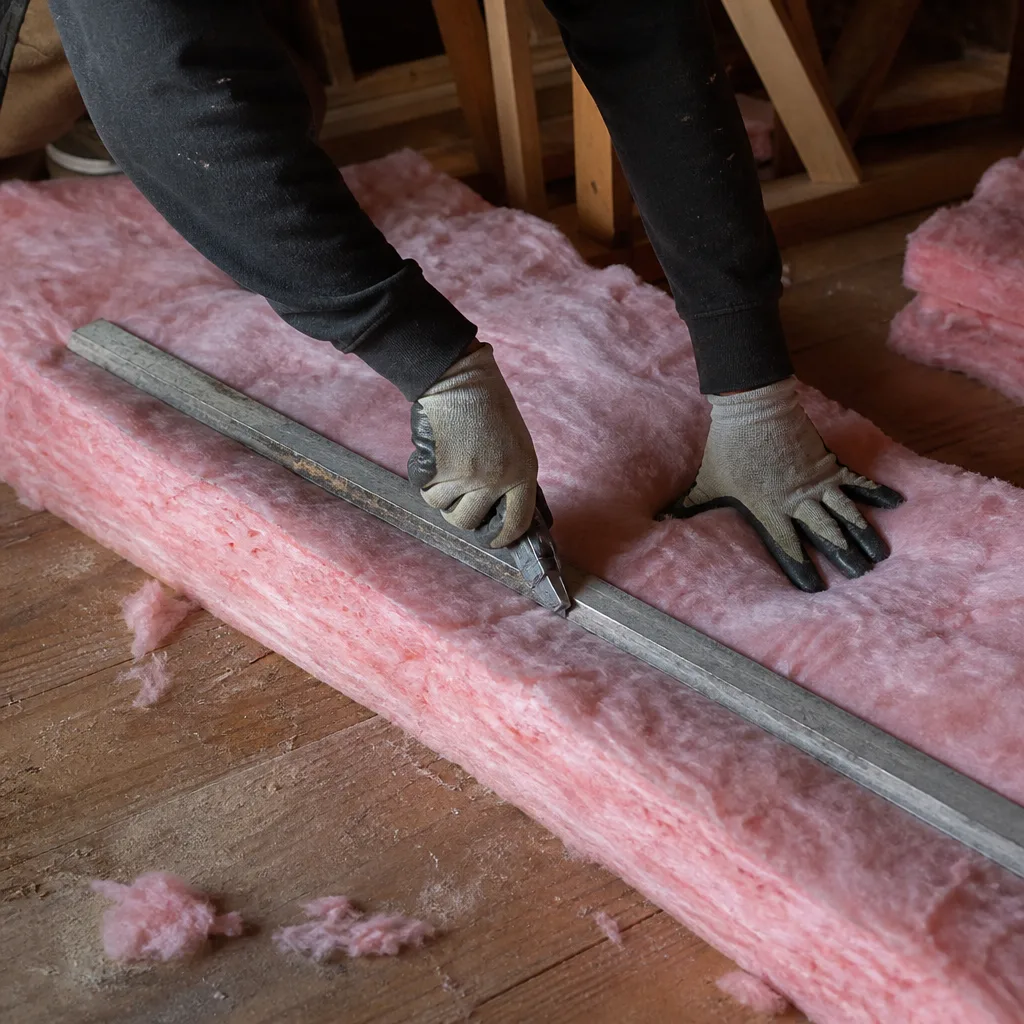
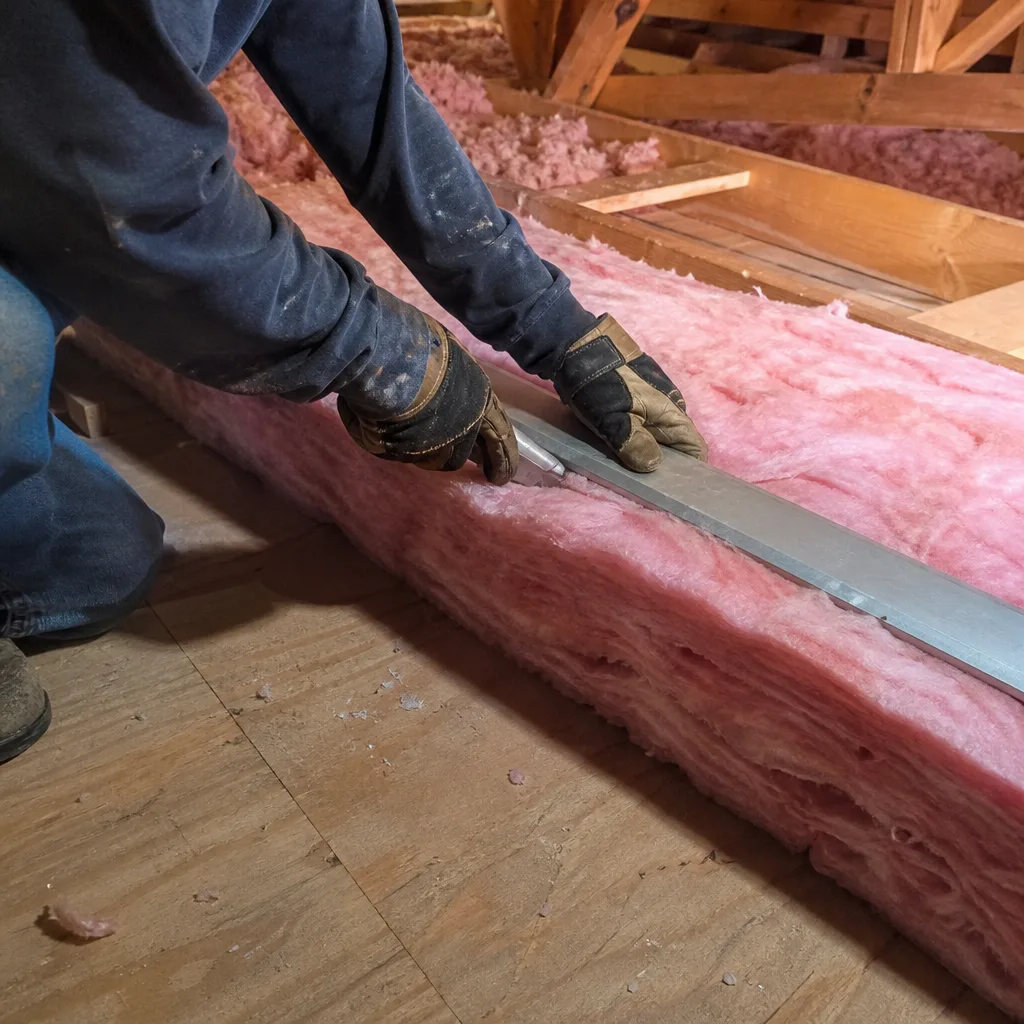
We carry Rockwool mineral wool for Apple Valley homeowners who want fire resistance and sound dampening along with thermal performance, especially in custom homes with attached garages or media rooms. For attic top-ups and full replacements, we install CertainTeed and Owens Corning fiberglass, and for air-sealing work on irregular attic floors, we can apply Icynene and Demilec spray foam. Carrying competing brands at every price tier is the point: we can match your attic to the right material rather than making your attic fit one product. Apple Valley customers get the same brand access as any Los Angeles job, without a markup for the drive.
Common Attic Insulation Problems We See in Apple Valley Homes
- Wind-displaced batts. Apple Valley’s high-desert winds get into attics through soffit and gable vents, and fiberglass batts get pushed to one side of the joist bays. The result is a bare strip of ceiling over the hottest rooms while insulation piles against the eave wall.
- Crushed insulation under ductwork. HVAC ducts laid across the attic floor compress the insulation beneath them, reducing R-value and creating a thermal bridge straight into the ceiling below. This is common in 1980s-2000s tract homes where the ducts were installed after the initial insulation, not before.
- Dust-caked attic vents and baffles. Wind-driven dust in the Victor Valley clogs ridge vents, soffit vents, and baffles, cutting airflow and turning the attic into a heat trap in summer. Restricted ventilation also contributes to winter condensation and mold.
- Thin coverage over recessed lights and top plates. In Apple Valley’s original subdivisions, air-sealing around recessed fixtures and wall top plates was rarely done properly. That allows hot attic air and dust to infiltrate the living space, and it’s the first thing we address before installing new attic insulation.
Pricing for Attic Insulation in Apple Valley, CA
For an average Apple Valley single-story home, a full attic insulation top-up with blown-in fiberglass runs $1,400 – $2,800 depending on square footage and current R-value. Full attic insulation removal and replacement typically falls between $2,200 and $4,500, with spray foam options at the higher end. Attic mold removal in Apple Valley generally runs $1,500 – $3,500 depending on the affected square footage and whether the insulation itself must be removed. Every estimate is specific to your attic’s actual condition, not a per-square-foot guess. Call (866) 271-1602 for a free, on-site estimate in Apple Valley.
We Also Serve Cities Near Apple Valley
Our crews regularly work in Apple Valley and the surrounding Victor Valley communities, including Mountain View Acres, Spring Valley Lake, Victorville, and Hesperia. Whether the house sits in a tight older subdivision or on a larger desert lot, the attic issues follow the same local pattern: heat, wind, and aging builder-grade insulation.
Serving Apple Valley, CA — Our Local Coverage Area
We’re based in the Apple Valley area and know this community well. Use the map below to see our service coverage — if you’re nearby, we can almost certainly help.
FAQs About Attic Insulation in Apple Valley
That’s the signature of high-desert wind entering through the vents and blowing loose or batt insulation across the joist bays. Apple Valley’s open lots and steady seasonal winds make this a far more common sight here than in neighboring Victorville, where tighter lot lines and buildings break the airflow. We fix it by removing the displaced material, air-sealing the vents and top plates, and reinstalling insulation that stays put, often with baffles to redirect airflow.
At roughly 3,000 feet with heavy summer cooling loads and cold winter nights, we target R-49 in attics for Apple Valley homes, which is about 14 – 16 inches of blown-in fiberglass or the equivalent in mineral wool or spray foam. Many original tract homes have R-19 or less, especially where the insulation has settled or been displaced. A free attic inspection will tell you exactly where you stand. Call (866) 271-1602 to schedule one.
Yes, we remove old fiberglass batts that have been flattened, crushed under HVAC ductwork, or blown into one corner of the attic. Once the old material is out, we air-seal the attic floor and install a uniform layer of new insulation at the correct R-value for Apple Valley’s climate. This is standard work for us in the 92307 and 92308 areas.
Mold appears in Apple Valley attics when interior moisture condenses on cold roof sheathing in winter, not from rain intrusion as it might in coastal climates. We remove affected insulation, treat the wood surfaces, and then address the ventilation and air-sealing issues that caused the condensation. Treating only the mold without fixing the airflow means it comes back the next cold season.
We do, and this is where a multi-brand, multi-method approach matters. Custom Apple Valley homes with open-beam ceilings, clerestory windows, or partially finished attics often need a combination of spray foam air-sealing, mineral wool in specific cavities, and blown-in fiberglass where the roof pitch allows access. Noel Arredondo’s team has the full material lineup to match the house, not force one product into an awkward situation. Call (866) 271-1602 to discuss your home’s layout.
Written by Noel Arredondo, Owner at Fontana Insulation, serving Apple Valley and the Victor Valley since day one.