
Fast, Reliable Attic Insulation Across Running Springs
Attic insulation in Running Springs typically costs $1,800 – $4,200 for a full retrofit, with mold removal running $900 – $2,800 and insulation removal at $1.50 – $3.00 per square foot. The mountain climate here changes the job entirely. At 5,000 – 6,000 feet, your attic isn’t just a heat-loss problem in winter; it’s also a snowmelt and ice-dam risk when insulation and ventilation don’t work together. We know Running Springs homes because we’ve worked inside them: 1950s cabins off Holiday Lane, 1970s A-frames near Live Oak Drive, and full-time residences throughout the 92382 ZIP code. Call (866) 271-1602 for a free estimate on any attic insulation project in Running Springs.
Why Fontana Insulation Is Running Springs’s Preferred Attic Insulation Company
Most Running Springs homeowners we meet have already gotten one or two quotes that pushed a single product line. That’s not how we work. Fontana Insulation carries eight nationally recognized brands across four material categories, so the recommendation matches your cabin’s actual construction, not what’s sitting in a warehouse. Noel Arredondo built the company around that principle: know every material, then recommend the one that fits the specific attic, the specific snow load, the specific budget.
Running Springs customers call us because we understand what happens when mountain attics get insulated wrong. We’ve seen settled fiberglass batts compressed to half their original depth under years of stored boxes. We’ve opened attic hatches and found mold feeding on trapped humidity from snowmelt and forest air. That local knowledge means we don’t just blow in new material and leave. We check the ventilation, the air sealing, and the places where warm air leaks up from the living space. Call (866) 271-1602 and you’ll talk to someone who knows Running Springs construction, not a call center.
Attic Mold Removal in Running Springs
Attic mold removal in Running Springs starts with finding the moisture source, because scrubbing visible mold without fixing the ventilation or air-sealing problem means it comes back within a season. In Running Springs, mold almost always ties back to snowmelt condensation, unvented ridge lines, or bathroom fans venting into the attic instead of through the roof. Our team removes contaminated insulation, treats the affected framing and sheathing, and then corrects the airflow problem that let the mold take hold in the first place.
What Running Springs homeowners pay for attic mold removal depends on how far the contamination has spread. Isolated mold around a single gable vent or bathroom fan run might cost $900 – $1,400. Mold that has spread across the roof deck under a poorly vented ridge can reach $2,500 – $2,800, especially when the insulation itself is saturated and must come out. Since this often means removing old insulation first, the total job may combine both services.
Mold Sources Common to Mountain Cabins
We find mold in Running Springs attics most often near unvented ridges, around recessed can lights, and along top plates where warm indoor air leaks into the cold attic space. Warm air carries moisture. When that moisture hits cold sheathing at 5,500 feet in January, it condenses. Repeat that cycle for a few winters and the roof deck turns into a mold substrate.
What the Removal Process Includes
After pulling contaminated insulation, we treat framing with an antimicrobial, verify the soffit and ridge ventilation path is clear, and prepare the attic for new insulation that won’t create the same conditions. The air-sealing step matters as much as the chemical treatment. Without it, you’re just resetting the clock.
Attic Insulation Removal in Running Springs
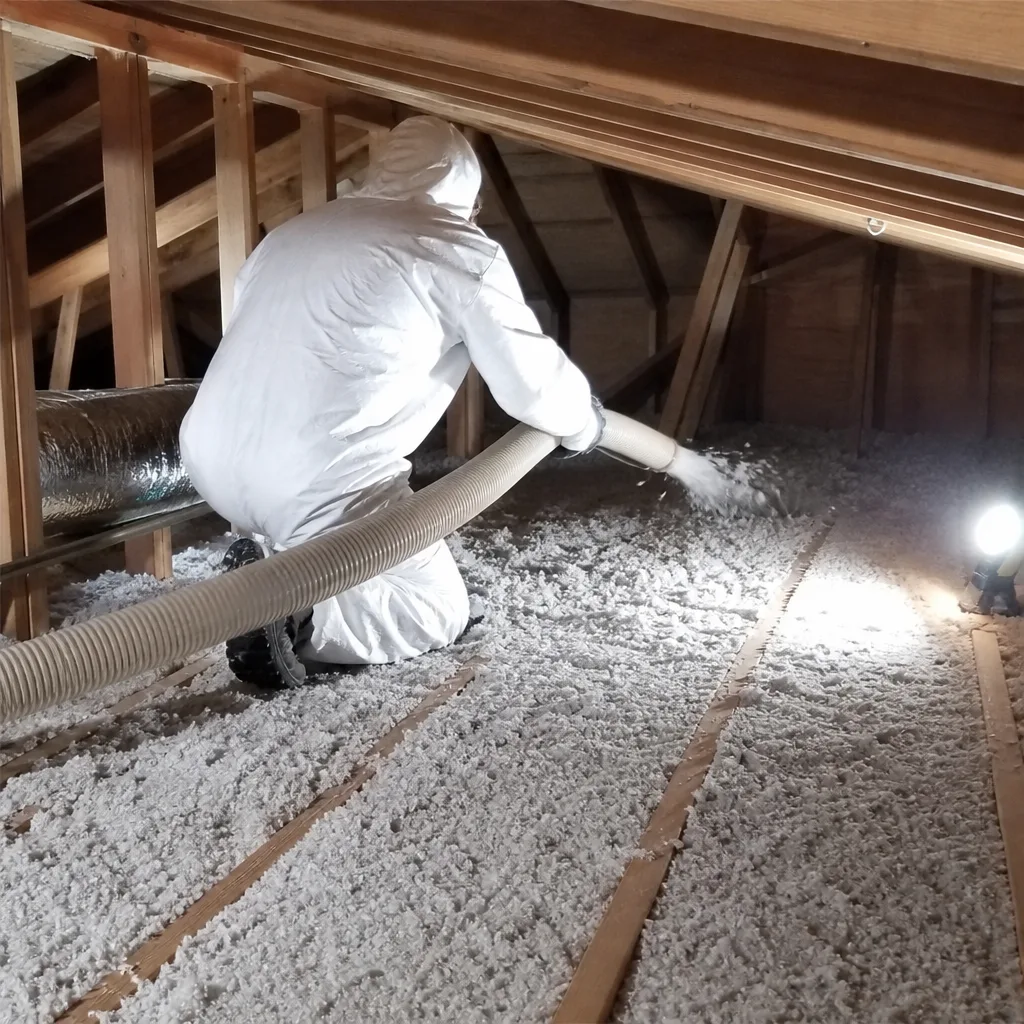
Attic insulation removal in Running Springs is usually the right call when old fiberglass batts are crushed and settled, when rodents have nested throughout the material, or when mold from mountain moisture has already penetrated deep. We don’t recommend topping off over degraded insulation in Running Springs. The snow-load performance you need at this elevation doesn’t come from piling fresh material on top of a moldy, compressed base. You pull the old out, fix the air leaks, then blow or batt fresh insulation to the correct mountain depth.
Removal costs in Running Springs generally run $1.50 – $3.00 per square foot of attic floor. A typical 1,000-square-foot cabin attic lands around $1,500 – $2,500 for extraction, bagging, and disposal. Add mold treatment if needed, and you’ll see the combined pricing outlined above. Old insulation that has been wet from snowmelt or roof leaks weighs more and compacts harder, which pushes the cost toward the higher end.
Signs Your 1970s Batts Have Failed
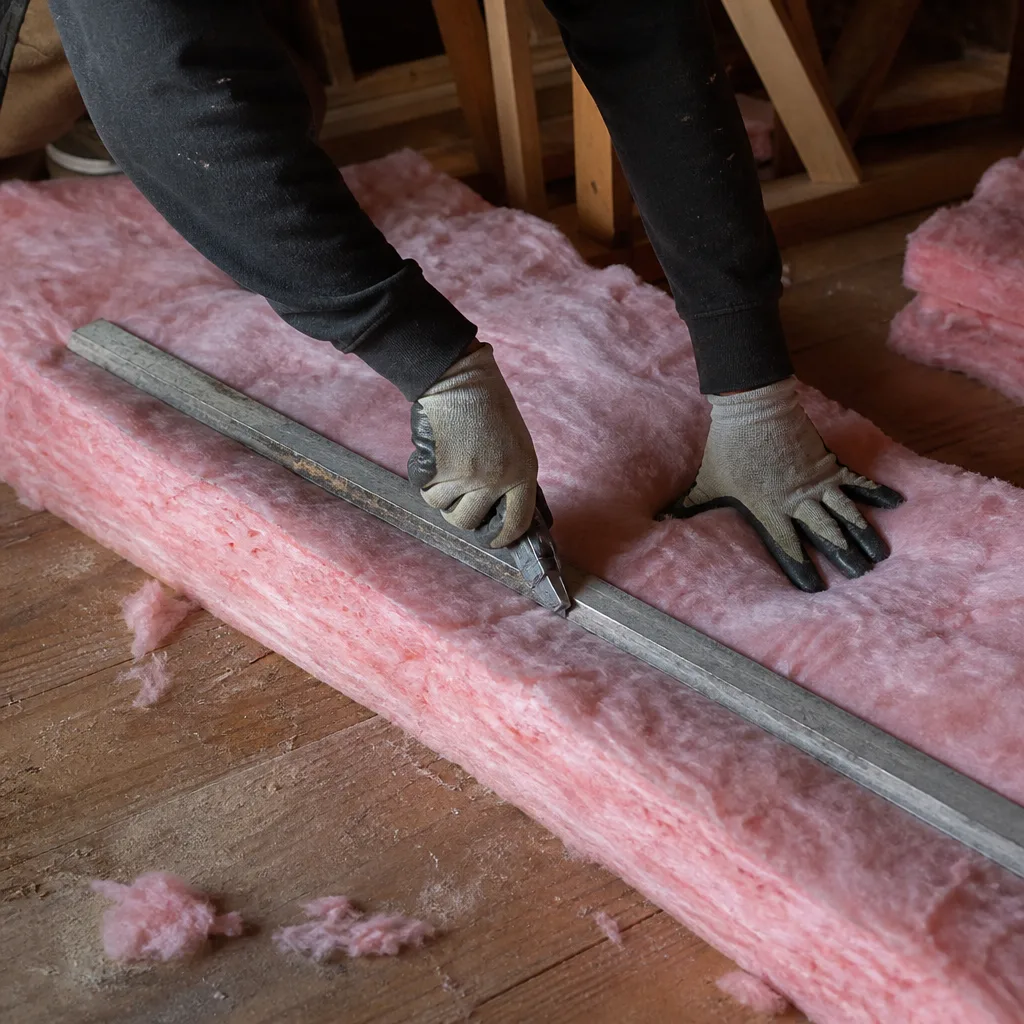
Walk up and look. If the fiberglass is dark, matted, or sitting below the top of the ceiling joists, it stopped performing years ago. Running Springs homes built in the 1960s and 1970s often got R-11 or R-19 batts that are now doing the work of R-4.
Open-Beam Ceilings and Removal Challenges
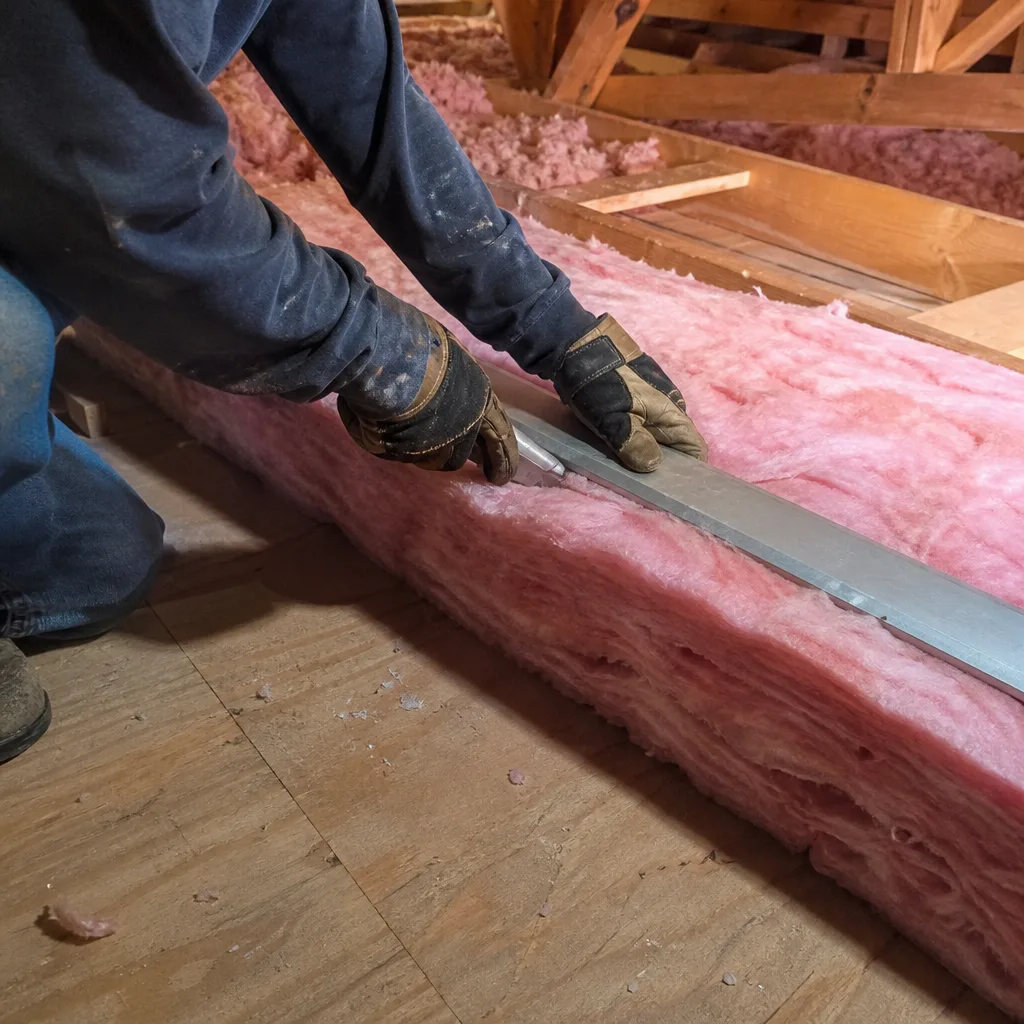
Vaulted and open-beam ceilings, common along Kuffle Canyon Road and the older cabin neighborhoods, change how removal works. There’s often no flat attic floor to walk. We run extraction equipment from the access point and work carefully around exposed beams, wiring, and the occasional original 1950s knob-and-tube remnants. This is not a quick job, and it’s exactly the scenario where most generic insulation contractors decline the work or sub it out. We handle it in-house.
Trusted Brands We Service in Running Springs
For Running Springs homes, we lean on brands that perform under real four-season stress. Rockwool mineral wool is one of the better choices for mountain cabins because it’s fire-resistant and won’t hold moisture the way fiberglass can after a condensation event. Icynene closed-cell spray foam earns its place when an open-beam vaulted ceiling needs air sealing and insulation in one pass, which is a common retrofit scenario in Running Springs. CertainTeed and Knauf fiberglass remain solid options for standard flat attics where ventilation is already correct. We stock these materials for Running Springs jobs, which means no waiting on a supply run up the 330 when the crew is already at your house.
Common Attic Insulation Problems We See in Running Springs Homes
- Crushed and settled 1950s – 1980s batts: Original fiberglass in Running Springs cabins is typically compressed to a fraction of its original depth after decades of roof snow loads and stored holiday decorations. The top of the joists is often the first thing you see when you open the hatch.
- Insulation without matching ventilation: We pull into Running Springs driveways and see fresh blown-in insulation installed under an unvented ridge with blocked soffits. That setup traps snowmelt and forest humidity, feeds mold on the roof deck, and creates the exact ice-dam conditions that rot sheathing at this elevation.
- Open-beam retrofits with no air sealing: Running Springs cabins with vaulted ceilings and exposed beams leak heated air through top plates, can lights, and gable penetrations. Warm roof melting happens at the peak, refreezes at the cold eaves, and backs water up under the shingles.
- Rodent and pest damage in older pier-and-beam cabins: Mountain squirrels and pack rats find their way into attics through gaps around gable vents and fascia boards. Once they nest in fiberglass, the insulation is contaminated and needs removal before anything new goes in.
Pricing for Attic Insulation in Running Springs, CA
Here’s what Running Springs homeowners can expect to pay. Full attic insulation removal plus new blown-in material on a standard 1,000 – 1,200 square foot attic runs $3,800 – $6,500 when you factor in air sealing and ventilation correction. A straight top-up over existing fiberglass that’s still in decent shape is cheaper, around $800 – $1,500 for blown-in GreenFiber or Knauf fiberglass to reach a mountain-appropriate depth. Attic mold remediation as a standalone service lands between $900 and $2,800 depending on spread. The wild card in Running Springs is always access: steep driveways, narrow attic hatches, and open-beam construction add labor. Call (866) 271-1602 for a free estimate with exact numbers for your attic.
We Also Serve Cities Near Running Springs
Fontana Insulation provides Attic Insulation to Running Springs and the surrounding mountain and foothill communities. You’ll find our crews in Running Springs, Lake Arrowhead, Crestline, Highland, and Mentone throughout the year. If you’re just over the ridge or down the hill, the same material-agnostic approach applies.
Serving Running Springs, CA — Our Local Coverage Area
We’re based in the Running Springs area and know this community well. Use the map below to see our service coverage — if you’re nearby, we can almost certainly help.
FAQs About Attic Insulation in Running Springs
Sometimes, but not often in Running Springs. If the existing fiberglass is dry, uncompressed, and mold-free, a top-up can work. But most 1960s and 1970s cabins we open up in the 92382 ZIP have batts that are crushed, rodent-contaminated, or damp from snowmelt condensation. That material needs removal first. Call (866) 271-1602 and we’ll tell you honestly after an attic inspection.
Because the problem isn’t just heat loss in winter; it’s moisture. At 5,000 – 6,000 feet, warm indoor air leaking into a cold attic condenses on the sheathing. Snow sitting on the roof then melts from below, runs to the cold eaves, and refreezes as ice dams. Proper intake and ridge ventilation keeps the roof deck cold and dry, which is as important as the R-value itself in Running Springs.
Yes. Open-beam and vaulted ceilings are common in Running Springs cabins and A-frames, and they can be insulated with closed-cell spray foam like Icynene or Demilec. Spray foam applied directly to the underside of the roof deck creates both an air barrier and insulation in one pass, which solves the warm-roof melting problem that batt insulation can’t address in that construction type.
Attic mold removal starts with finding and fixing the moisture source, then removing contaminated insulation, treating framing and sheathing with an antimicrobial, and correcting the ventilation or air-sealing problems that let mold grow in the first place. In Running Springs, that usually means adding or clearing soffit vents, installing a ridge vent, and sealing air leaks around can lights and top plates. Costs run $900 – $2,800 depending on spread. Call (866) 271-1602 for a free attic inspection.
Remove it when the existing material is moldy, saturated, rodent-contaminated, or compressed below the joist level. In Running Springs, all four conditions are common in cabins built before 1980. If snowmelt has ever leaked through your roof or humidity has condensed on the sheathing, the insulation has likely absorbed moisture and lost most of its R-value. Topping off over that base traps the problem underneath the new material.
Call Fontana Insulation for Attic Insulation in Running Springs
Your Running Springs attic is a snow-country envelope, not just a place to blow some fiberglass. We’ll assess the insulation, the ventilation, the air leaks, and the moisture risks as one connected system. Then we’ll recommend material from eight brands based on what your cabin actually needs. Call (866) 271-1602 for a free estimate. Noel Arredondo and the Fontana Insulation team know Running Springs construction because we work in it every season.
Written by Noel Arredondo, Owner at Fontana Insulation, serving Running Springs and the San Bernardino Mountains.