
Fast, Reliable Spray Foam Insulation Across Wildomar
If you’re fighting a hot attic in Wildomar, spray foam is usually the strongest fix, and our crews reach most of the 92595 zip within a day or two of your call. We’ve worked in the older ranch homes off Bundy Canyon Road, the newer tract subdivisions along the I-15 corridor, and the semi-rural parcels where detached workshops bake in direct sun, so we know what Wildomar heat actually does to a roof deck. A properly applied two-part spray foam insulation job seals the attic air leaks and knocks down that radiant heat gain in one visit, which matters when your AC is already running hard every afternoon from May through October. Call (866) 271-1602 and we’ll schedule someone to look at your attic, give you a straight answer on material choice, and quote the work the same day.
Why Fontana Insulation Is Wildomar’s Preferred Spray Foam Insulation Company
Wildomar homeowners have a specific problem: summer attic temperatures that climb past 150°F and force a central AC to run nearly nonstop. That’s not the same problem as a homeowner in, say, the Pacific Northwest. Our crew leads with that understanding. We’re a material-agnostic insulation specialist, not a contractor pushing a single brand, so when we tell a Wildomar homeowner that open-cell Icynene is the right call for a sun-baked roof deck off Clinton Keith Road, it’s because the product fits the application, not because it’s the only foam we stock. We carry eight nationally recognized insulation brands across fiberglass, mineral wool, spray foam, and cellulose, and we’re authorized installers for Icynene and Demilec, two of the most performance-tested spray foam brands in North America. Noel Arredondo, who leads Fontana Insulation, has built the company around a simple operating principle: match the material to the home’s actual thermal problem. In Wildomar, that problem is summer heat gain. The reputation we’ve earned with Wildomar customers comes from showing up on time, prepping the attic correctly, and leaving a thermal boundary that actually reduces cooling load, not a half-inch coat of foam that looks fine but underperforms.
Open Cell Spray Foam in Wildomar
Open Cell Spray Foam is the most common retrofit material we install in Wildomar attics, particularly on older semi-rural homes where the roof deck gets direct afternoon sun and the existing ventilation is marginal. It’s a lower-density, air-permeable foam that expands aggressively to fill rafter bays and seal around roof penetrations. In a Wildomar attic, the key job is air-sealing the thermal boundary at the roofline, not just adding more insulation on the floor. Open cell does that well. We often recommend it for open attic cavities and unvented roof assemblies where attic temperature is the main enemy. Pricing for open-cell spray foam in Wildomar typically lands between $1.60 and $2.40 per board foot, installed, depending on depth and access. A typical 1,500-square-foot attic with a roof deck application runs roughly $4,800 to $7,200.
Ranch Homes and Roof Deck Heat
Older Wildomar ranch homes often have low-slope or gable roofs with no radiant barrier. The attic isn’t just warm; it’s an oven that re-radiates heat into the living space for hours after sunset. Open-cell foam applied directly to the underside of the roof deck moves the thermal boundary from the attic floor to the roof itself, which stabilizes attic temperature and lets any HVAC ducts in that space stop bleeding energy. A 1980s home off Bundy Canyon Road we worked on had settled fiberglass measuring R-11 on the attic floor. After applying open-cell Icynene to the roof deck, the homeowner’s AC finally cycled normally during August instead of running continuously from noon to nine.
Duct Sealing and Airborne Dust Control
Wildomar sits in a dry inland valley where dust is a constant. If you have leaky ductwork in the attic, that ductwork pulls in superheated air and spreads fine dust through the house. Open-cell foam creates a sealed attic environment that reduces the dust load those ducts are exposed to, and because we apply it as a monolithic layer, it doesn’t leave the gaps that batt insulation does around irregular framing.
Spray Foam Insulation Contractors in Wildomar
Spray Foam Insulation Contractors in Wildomar aren’t all the same, and the difference becomes obvious on the job site: some crews spray too thin on hot roof decks, rush through surface prep, and leave the attic before the foam has fully cured. Wildomar’s climate punishes that kind of work. We approach every spray foam job with the understanding that summer attic temps here routinely exceed 140°F, which means substrate temperature, moisture content, and foam pass thickness all have to be dialed in correctly. We do the prep the same day we spray, and we don’t split the job into multiple trips because the foam needs proper surface conditions to adhere. For Wildomar homeowners, one trip means the attic gets sealed while the conditions are right, not days later after the house has baked another 48 hours. Labor and material for a professional spray foam job in Wildomar generally lands between $3,500 and $9,000 depending on square footage, foam type, and whether we’re working in an open attic or a tight cathedral ceiling.
One-Trip Surface Prep and Cure
On semi-rural Wildomar properties, detached workshops with heavy doors and little cross-ventilation hold heat differently than attached garages. If the roof deck is too hot when foam is applied, the foam can cure too fast and lose adhesion. We check surface temperature before spraying, and we stage the work so the foam goes on in the right window. That’s the kind of thing you learn from years of working in inland Riverside County heat, and it’s the reason our one-trip process is built around substrate conditions, not just scheduling convenience.
Full-Attic Solutions Without Subcontracting
Because we handle attic insulation, spray foam, and blown-in insulation in-house, a Wildomar homeowner who needs the attic air-sealed and the rest of the ceiling brought up to current R-value doesn’t have to coordinate two companies. We carry Rockwool, CertainTeed, Knauf, and GreenFiber alongside our foam lines, so if the right answer for your home is foam at the roofline plus blown-in fiberglass over the living space, we can do both in the same visit. No brand loyalty; just the best fit for the attic.
Trusted Brands We Service in Wildomar
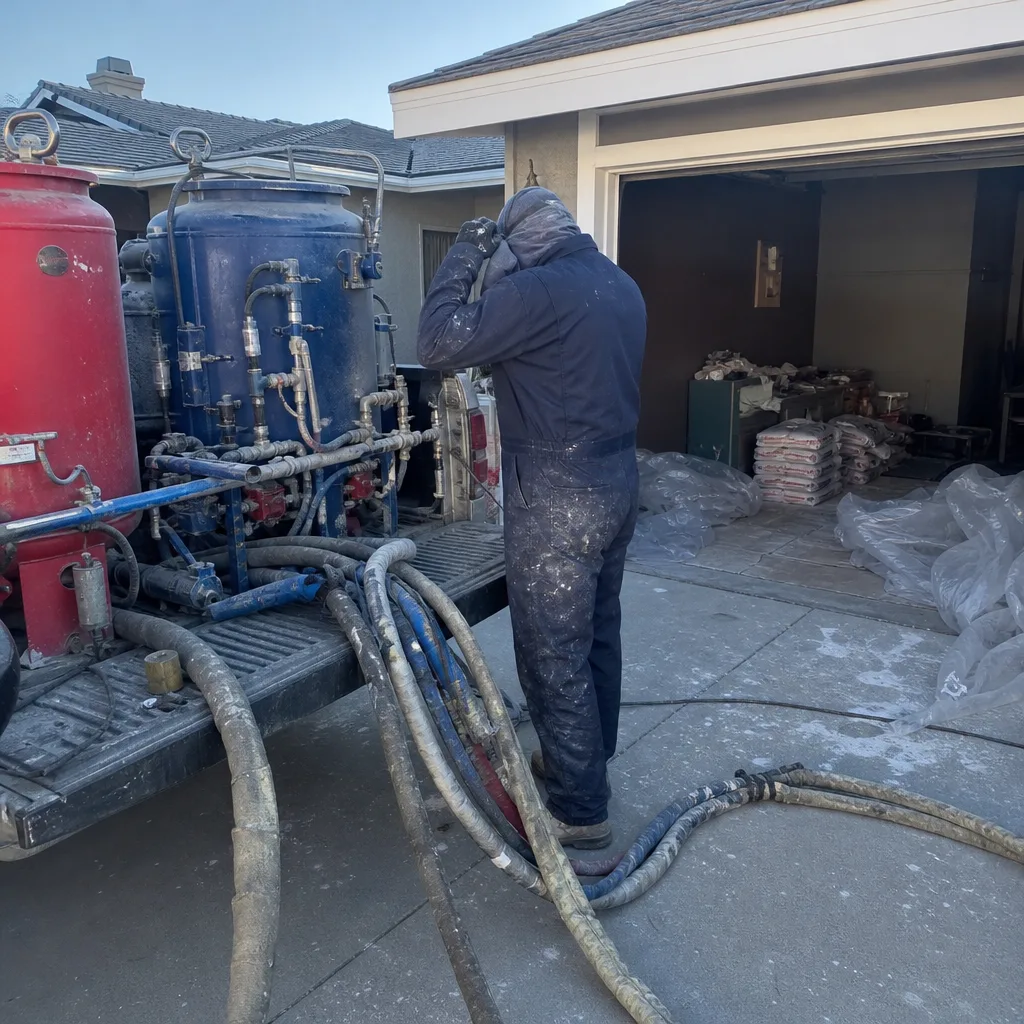
We carry Icynene and Demilec spray foam because they’re two of the most performance-tested foam formulations in North America, and Wildomar’s roof decks need foam that holds its R-value under sustained high heat. We stock CertainTeed fiberglass and Rockwool mineral wool for hybrid jobs where the right answer is foam at the roofline and a blown or batt product over the living space. Because we’re an authorized installer for Icynene and Demilec, Wildomar homeowners get the full manufacturer warranty and our installation work backed by the brand’s technical support line, not an off-spec product from a generic supplier.
Common Spray Foam Insulation Problems We See in Wildomar Homes
- Spray foam applied too thin on sun-baked roof decks in semi-rural attics. We regularly find attics where a previous contractor applied a half-inch pass over a deck that wasn’t prepped correctly, and the result is condensation risk and R-value that’s nowhere near what the homeowner paid for.
- Detached workshops with heavy doors and no ventilation getting foam that loses adhesion. Those outbuildings trap heat, and if foam is sprayed when the substrate is too hot, it cures before it bonds. The homeowner ends up with brittle, peeling foam in a building they use every day.
- Older homes with settled or missing insulation getting spot-treated with foam. Some contractors will spray foam in a few bays and call it done, leaving the rest of the attic floor at R-11 fiberglass. The thermal bridging stays, the radiant heat keeps coming in, and the homeowner sees almost no cooling load reduction.
- Do it yourself kits gone wrong. Big-box store foam kits are tempting for a small job, but Wildomar heat makes them even riskier. Inconsistent mix ratios, improper surface temps, and ventilation issues lead to foam that never fully cures or off-gasses for weeks.
Pricing for Spray Foam Insulation in Wildomar, CA
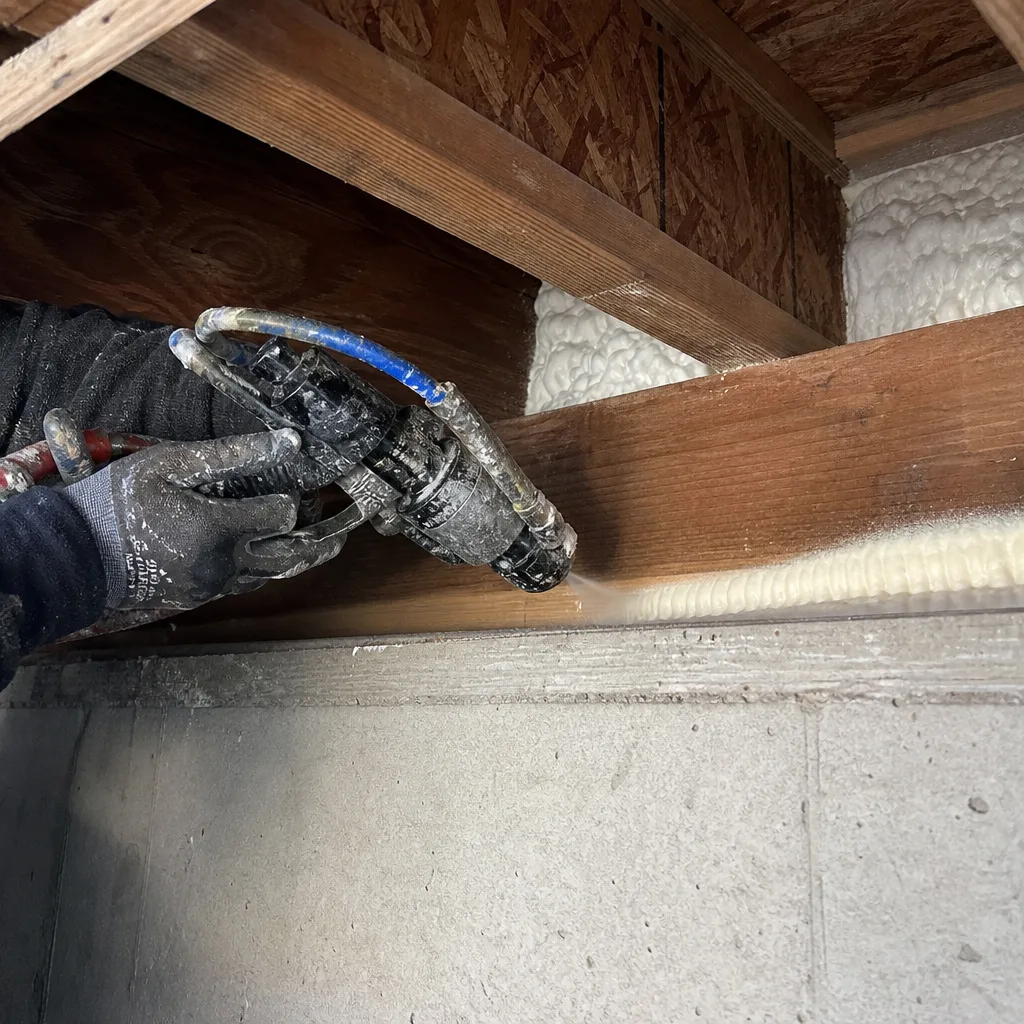
Open-cell spray foam in Wildomar typically runs $1.60 to $2.40 per board foot installed, and closed-cell runs $2.80 to $4.00 per board foot. A standard attic roof deck of 1,200 to 1,500 square feet lands between $4,200 and $7,500 for open-cell. Rim joist spray foam in a crawlspace or basement typically runs $900 to $1,800. Garage ceiling spray foam for a two-car garage averages $1,100 to $2,300. For detached workshops and oversized doors, the square footage is often smaller but access can be tighter, so expect to add 15 to 20 percent for ladder work and surface prep. These are Wildomar-market numbers, not national estimates. Call (866) 271-1602 for a free estimate with an exact number.
We Also Serve Cities Near Wildomar
If you’re in Murrieta, Murrieta Hot Springs, Sedco Hills, or Lakeland Village, we work there too. Our service radius covers the full Temecula Valley corridor along I-15, and the heat-load problems those communities face are nearly identical to Wildomar: intense summer roof deck temperatures, settled original insulation, and homeowners tired of AC bills that spike every June.
Serving Wildomar, CA — Our Local Coverage Area
We’re based in the Wildomar area and know this community well. Use the map below to see our service coverage — if you’re nearby, we can almost certainly help.
FAQs About Spray Foam Insulation in Wildomar
Spray foam is better than fiberglass for Wildomar’s attic heat because it air-seals the roofline and stops superheated air from entering the attic in the first place, while fiberglass only slows heat transfer through the ceiling below. Fiberglass batts typically leave gaps at penetrations, trusses, and the attic perimeter, and in a Wildomar summer those gaps let attic air heat the ductwork and radiate into the living space. Call (866) 271-1602 for an assessment of your specific attic.
Yes, we spray foam detached workshops and garages in Wildomar routinely, and these outbuildings are often the hottest spaces on a property because they lack cross-ventilation and sit in direct sun all day. Open-cell foam on the roof deck or wall cavities brings the interior temperature down enough that you can actually work in the space during July. They’re also among the trickiest for proper surface prep, which is why our one-trip process includes substrate temperature checks before we spray. Call (866) 271-1602 for a detached workshop quote.
Spray foam doesn’t interfere with heavy door tracks or openers when installed correctly, because we mask the tracks, springs, and motor housings before spraying, and foam is applied to the walls and ceiling, not the door assembly itself. The bigger issue on Wildomar rural properties is that oversized doors let heat in around the perimeter seal, and foam in the surrounding wall and roof cavities reduces that heat load so the opener and tracks aren’t operating in a 130°F oven. We recommend closed-cell for perimeter gaps around door frames because it’s denser and adds structural rigidity. Call (866) 271-1602 to schedule a look at your workshop.
Many newer Wildomar tract homes along the I-15 corridor have builder-grade attic insulation that meets the minimum code at the time of construction, but is often R-30 fiberglass on the ceiling with an unsealed attic, which still lets hot air enter through the roof and cook the ductwork. Upgrading to open-cell foam at the roofline typically reduces the attic temperature by 25 to 35 degrees, which lowers the cooling load on downstairs rooms. Whether spray foam is the right move depends on your ductwork location and attic configuration. Call (866) 271-1602 and we’ll tell you honestly if it’s worth it in your house.
Open-cell foam is the better choice for most Wildomar attics because it’s more economical per R-value and does an excellent job air-sealing the roofline, which is the main goal in a cooling-load-dominated climate. Closed-cell is the better choice when you need a vapor barrier, when space is tight, or when you’re insulating a rim joist or a workshop wall that needs structural strength. Both have a place here, and the right answer depends on your roof deck angle, ductwork location, and whether you’re using the attic for storage. Call (866) 271-1602 for a free roof deck assessment in Wildomar.
Written by Noel Arredondo, Owner at Fontana Insulation, serving Wildomar and the Temecula Valley with material-agnostic insulation installs.