
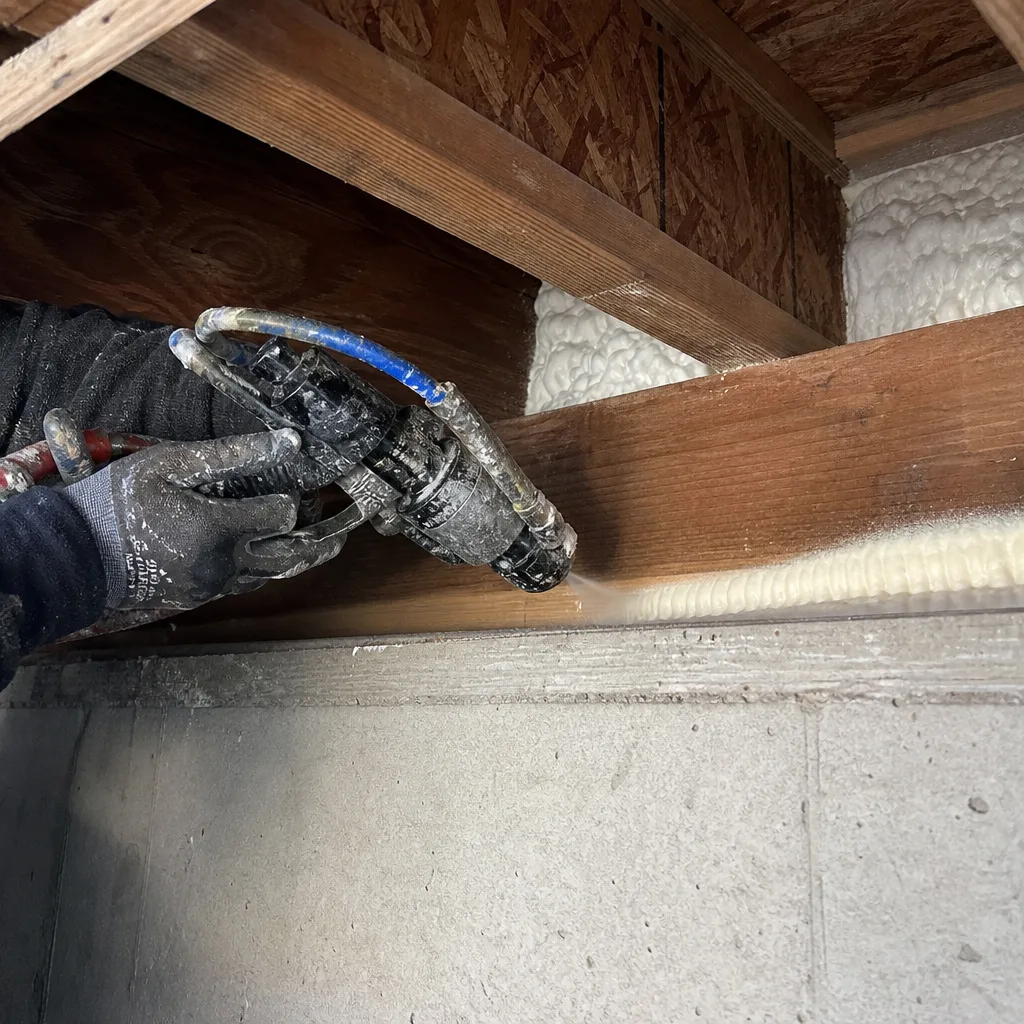
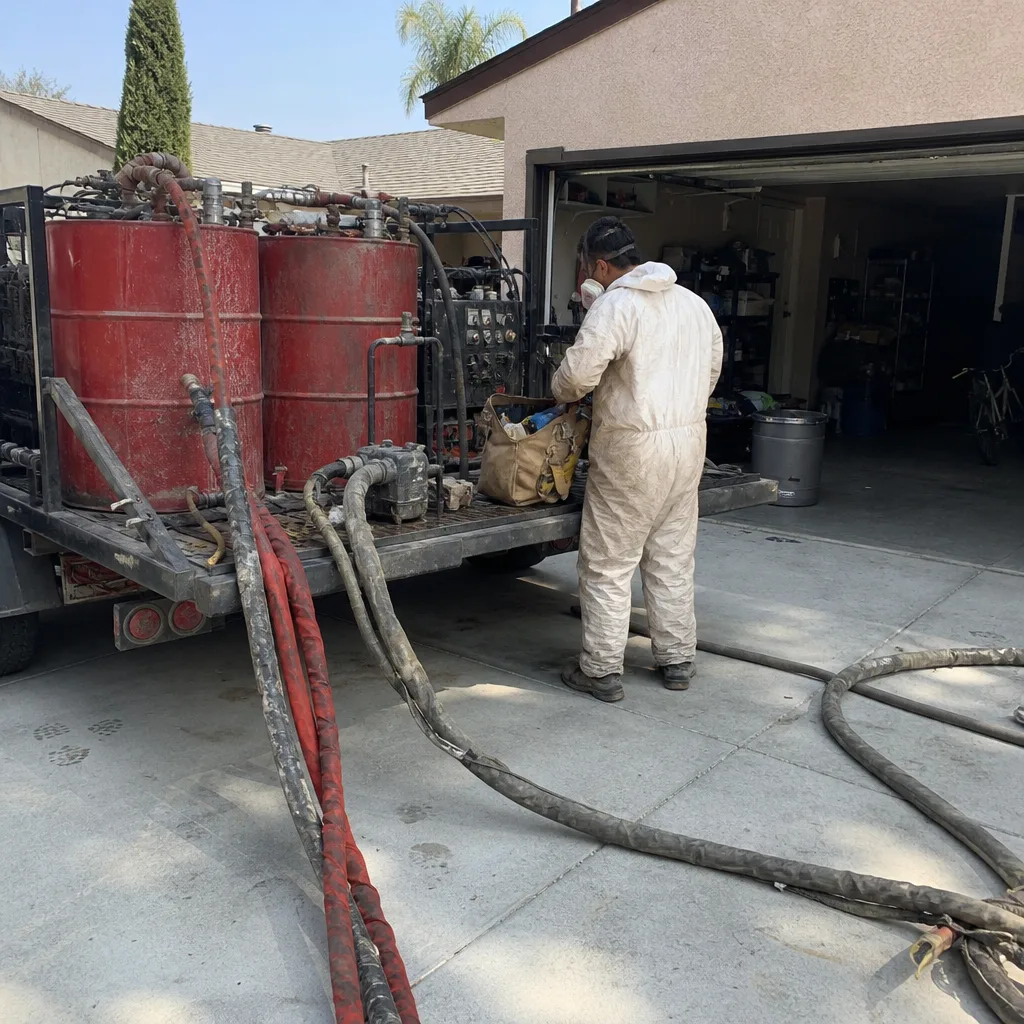
Fast, Reliable Spray Foam Insulation Across West Puente Valley
Spray foam insulation in West Puente Valley costs between $1.50 and $3.80 per board foot for open-cell and $2.75 to $5.50 per board foot for closed-cell, with most attic jobs in the 91746 ZIP landing between $2,800 and $7,500 depending on square footage. We’re out here regularly, working on the 1950s – 1970s stucco tract homes that make up most of this valley. If your attic is cooking the rest of the house by mid-afternoon, call (866) 271-1602 and we’ll come take a look.
What most West Puente Valley homeowners don’t realize is that their original attic insulation stopped doing its job years ago. Dry heat, Santa Ana winds, and a few decades of rodents have compressed it into near-uselessness. Spray foam fixes this differently than just blowing more fiberglass on top. It air-seals the thermal boundary and stops the heat at the roof line. That matters in this valley because our cooling season runs long, and radiant heat through the attic is the single biggest driver of summer energy bills here.
Why Fontana Insulation Is West Puente Valley’s Preferred Spray Foam Insulation Company
We’re not tied to one brand, which means we’re not going to show up and push a product that doesn’t fit your house. Fontana Insulation carries eight insulation brands across four material categories, including Icynene and Demilec for spray foam, so the recommendation comes from what your 1960s ranch actually needs, not what we’re trying to move off the shelf this month. Noel Arredondo built our operation around that principle: match the material to the thermal problem, not the other way around.
Our crews know the 91746 housing stock. We’ve opened enough attics here to predict what we’ll find before the ladder goes up: compacted fiberglass batts, rodent tunnels, soffits that were never baffled properly, and garage conversions with zero insulation and daylight showing around the door frames. That local knowledge means our estimates are realistic and our installs don’t get derailed by surprises a contractor from outside the area might miss. We work with homeowners, remodelers, and new-construction clients who are comparing quotes and want a straight answer about material trade-offs.
Spray Foam Attic Insulation in West Puente Valley
Spray foam attic insulation in West Puente Valley addresses what our team sees more than anything else in this valley: decades-old insulation that’s been flattened and tunneled to the point of failure. Most 1950s – 1970s stucco tract homes along the San Jose Creek corridor left the factory with a couple inches of fiberglass in the attic. After fifty or sixty years of dry heat and pests, that fiberglass is often compressed to under an inch and shot through with rodent tunnels that create thermal short circuits. Closed-cell foam applied to the roofline changes the entire attic from a heat trap to a conditioned space.
When to Remove and Air-Seal Before Spraying
Spraying foam over degraded legacy insulation creates hidden voids. The foam adheres to old batts instead of the roof sheathing, leaving gaps where heat still moves freely. In West Puente Valley, where Santa Ana winds drive dust and heat into every crack, we insist on removing compacted or rodent-damaged fiberglass, air-sealing top plates and plumbing penetrations, and installing baffles at the soffits before any foam goes in. This is the step that determines whether the job actually performs.
Garage Conversion Challenges
A lot of 91746 homes have garage conversions, and most of them were done without permits or insulation. The walls are typically single-skin stucco over framing with no thermal barrier, and the door openings still leak air around the edges. On a 1962 ranch off San Jose Creek Drive, we found exactly that: a garage conversion with visible gaps around the door frame and dust accumulating daily. Two inches of closed-cell spray foam on the walls and roofline stopped the dust infiltration and knocked the temperature down dramatically.
Spray Foam Wall Insulation in West Puente Valley
Spray foam wall insulation in West Puente Valley is often the answer for rooms that won’t hold temperature no matter how long the AC runs. The mid-century tract homes here were framed with 2×4 walls and insulated modestly at best, and many exterior walls in original sections have settled or degraded material. Open-cell foam injected into existing wall cavities fills gaps that fiberglass never touched, while closed-cell on new construction or exposed framing adds structural rigidity and a full air barrier.
Drafty Rooms and Wind-Driven Dust
Santa Ana winds don’t just make it hot, they push fine dust through every unsealed penetration in an exterior wall. Homeowners near the San Jose Creek channel notice this most, with dust collecting on window sills and baseboards even with windows closed. Spray foam fixes this because it expands into every gap and crack in the wall cavity, creating a continuous seal that fiberglass batts simply cannot replicate. For West Puente Valley homes subject to red flag wind events, that air-sealing property matters as much as the R-value.
Retrofit vs. Exterior Access
For walls in finished rooms, we typically use injection methods through small access holes drilled from inside or outside. For garage conversions and additions where the framing is exposed, we spray directly onto the stud bays. The price ranges from roughly $0.60 to $2.00 per board foot for open-cell in wall cavities and $1.00 to $2.80 for closed-cell, depending on depth and access. Every wall in the 91746 area has its own access story, and our estimates account for what we’ll actually encounter on site.
Trusted Brands We Service in West Puente Valley
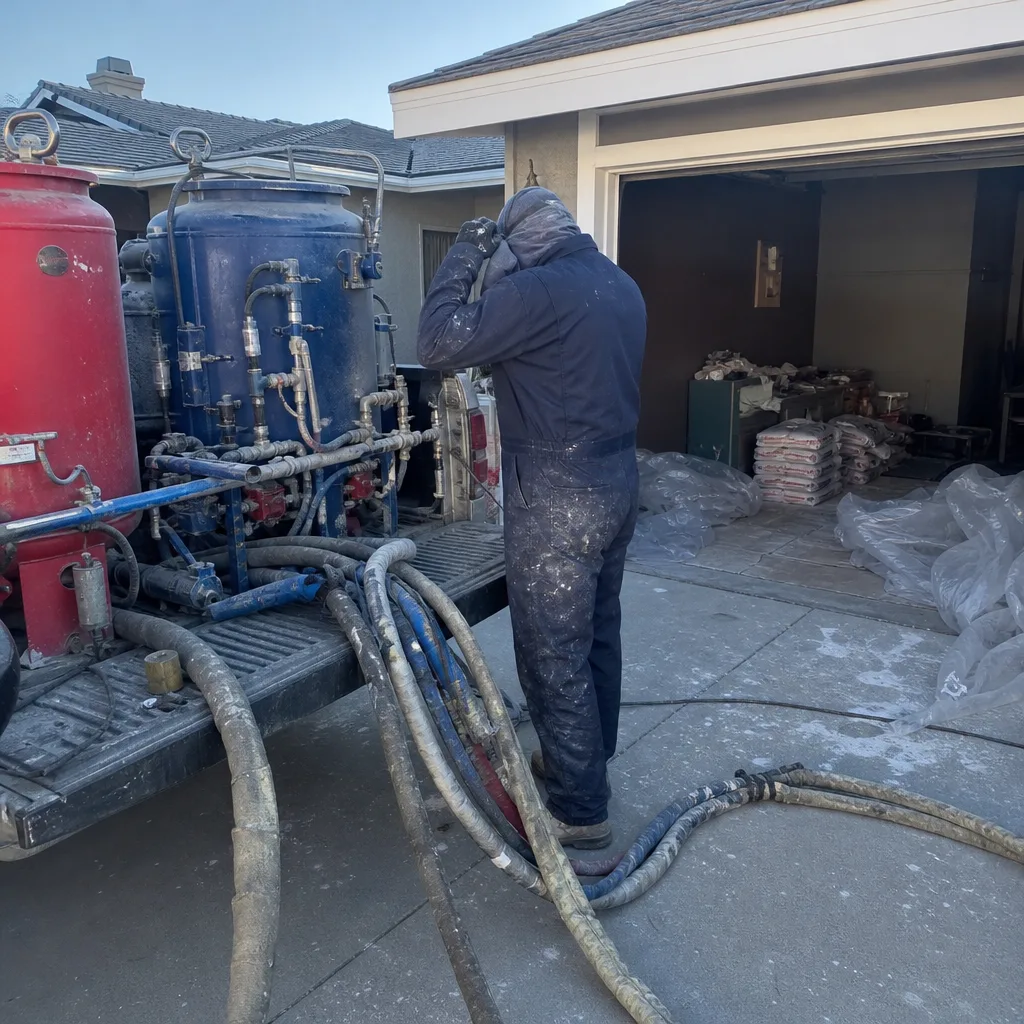
Our Spray Foam Insulation team installs Icynene and Demilec spray foam, two of the most performance-tested open- and closed-cell brands in North America. We also carry Rockwool, CertainTeed, and Knauf for situations where a hybrid approach makes more sense than foam alone. Because we stock these brands and know their application specs, we don’t have to invent a recommendation based on what’s left in the warehouse. If your West Puente Valley attic needs baffle repair and air-sealing before foam, we’ll tell you that. If a mineral wool batt is the smarter play for a specific wall, we’ll tell you that too.
Common Spray Foam Insulation Problems We See in West Puente Valley Homes
- Foam sprayed over rodent-tunneled legacy insulation: The old fiberglass gets left in place, the foam adheres to it instead of the sheathing, and the homeowner pays for a thermal barrier that doesn’t exist. We remove and air-seal first, every time.
- Missing or crushed soffit baffles: 1950s – 70s stucco tract homes rarely have proper baffles at the eaves. Foam blocks what little ventilation existed, and summer heat pockets form under the roofline. Baffle replacement is part of our standard attic prep.
- Unsealed garage conversions: Foam applied to walls while Santa Ana dust pathways remain open only solves part of the problem. We seal the door openings, rim joists, and any framing gaps before spraying so wind-driven dust can’t find a way in.
- Thick single-pass foam in hot weather: Low-density foam sprayed too deep in one lift during a 100-degree valley day can cure unevenly, shrink, and pull away from the sheathing. We spray in controlled lifts and follow manufacturer temp specs.
Pricing for Spray Foam Insulation in West Puente Valley, CA
A typical attic spray foam job in West Puente Valley runs $2,800 to $7,500 for a standard 1950s – 70s tract home, with closed-cell costing more than open-cell. Wall injection retrofits usually land between $1,800 and $4,200 depending on the number of exterior walls and access difficulty. Garage conversions start around $900 for a single-bay with exposed framing and go up from there. Two factors swing cost more than anything in 91746: whether we’re removing degraded legacy insulation first, and whether your existing baffles are intact. Both are non-negotiable if the job is going to perform. Call (866) 271-1602 for a free estimate with real numbers, not a vague range.
We Also Serve Cities Near West Puente Valley
Our West Puente Valley work often takes us across the valley to neighboring communities with similar housing eras and thermal challenges. We regularly run crews to Avocado Heights, La Puente, Valinda, and El Monte, so if your project is on the edge of 91746 or just across the San Jose Creek corridor, you’re still in our service area.
Serving West Puente Valley, CA — Our Local Coverage Area
We’re based in the West Puente Valley area and know this community well. Use the map below to see our service coverage — if you’re nearby, we can almost certainly help.
FAQs About Spray Foam Insulation in West Puente Valley
No, and we won’t. The original fiberglass in 1960s tract homes here is almost always compacted, dust-laden, and tunneled by rodents. Spraying foam over it creates hidden voids and wastes your money. We remove the old material, air-seal every penetration, and install baffles at the soffits before any foam touches the roofline. Call (866) 271-1602 and we’ll confirm what’s in your attic during the free estimate.
Spray foam handles Santa Ana winds far better than fiberglass or cellulose because it air-seals, not just insulates. Traditional insulation slows heat transfer but does nothing to stop wind-driven dust and hot air from moving through wall penetrations. Closed-cell foam creates a continuous barrier that wind can’t blow through. That matters in 91746, where red flag events push fine dust into homes all along Merced Avenue and Valley Boulevard.
Yes, spray foam helps with dust because it fills the gaps where dust gets in. Most garage conversions in West Puente Valley were done without air-sealing, leaving openings around the door frame, rim joists, and wall-to-ceiling junctions. Foam expands into those cavities and blocks the pathway. But we seal the visible gaps and rim joists first, because foam alone won’t fix a quarter-inch opening around a garage door.
The first thing we check is the condition of what’s already up there. In this area, that means looking for rodent tunnels, compacted batts, and whether the soffits have any baffles at all. Those three factors determine whether we’re doing a straightforward spray or a full removal, air-seal, and baffle replacement first. It’s the difference between a job that performs and one that just looks good in photos.
Yes, ventilation becomes even more critical when you’re air-sealing an attic in a hot, dry climate like this one. Once foam goes on the roofline, the attic becomes a conditioned space, and that means airflow through soffit baffles has to be right or you’ll trap heat at the roof deck. In 91746, where summer roof deck temps run high, proper baffling is what keeps the foam from becoming a liability. We factor it into every attic estimate.
If your West Puente Valley home is fighting the heat and losing, we can tell you exactly what’s wrong and what it’ll cost to fix. Call Fontana Insulation at (866) 271-1602 for a free estimate. We’ll send someone who knows this valley’s housing stock, not a salesperson working off a script.
Written by Noel Arredondo, Owner at Fontana Insulation, serving West Puente Valley and the San Gabriel Valley.