
Fast, Reliable Spray Foam Insulation Across Mentone
Spray foam insulation in Mentone runs $2.40 – $5.10 per board foot for closed cell and $0.80 – $1.85 per board foot for open cell, with most attic applications landing between $1,900 and $6,800 depending on square footage and whether old material has to be pulled first. We respond to Mentone calls from our Fontana shop and can typically be at your door within a day for an estimate. If you’re dealing with wind-driven heat loss off the San Bernardino foothills or an attic that bakes past 100°F in July, call (866) 271-1602 and we’ll walk through what’s actually happening in your home before recommending anything.
Mentone sits in a unique spot. You get mountain air drainage pulling cold air down through the foothill streets at night, then the full Inland Empire sun hammering your roof deck by mid-afternoon. That’s not a flatland problem. It’s a thermal-boundary problem that requires an insulation specialist who understands how both forces move through a house. We’re Fontana Insulation, and we’ve been working homes along the 92359 corridor long enough to know which ones still have the original 1950s batts compressed flat by decades of Santa Ana wind vibration.
Why Fontana Insulation Is Mentone’s Preferred Spray Foam Insulation Company
We’re not a company that shows up with one product and tells you it’s perfect for everything. We stock eight insulation brands across four material categories because the right answer for a mid-century ranch on a foothill street in Mentone is not the same as the right answer for a newer build in Redlands. Our spray foam work draws on Icynene and Demilec, two of the most performance-tested foam brands in North America, but we won’t hesitate to tell you if Rockwool mineral wool or a specific fiberglass product would serve your walls better. Noel Arredondo built Fontana Insulation around that honest, material-agnostic consultation because recommending the best fit for the application beats pushing whatever’s cheapest to stock.
Mentone homeowners call us for two reasons more than any others: attics that spike in summer and rooms that won’t hold heat in winter. Both usually trace back to air movement through the thermal boundary. We inspect before we quote. That matters in Mentone because the housing stock is older and built into the terrain, not laid out on flat lots. Attic geometry runs shallow and irregular, foundation types vary, and the wind exposure on the north-facing foothill side complicates retrofits. You want a contractor who’s seen these houses, not someone learning their quirks from a Google Maps photo.
Closed Cell Spray Foam Insulation in Mentone
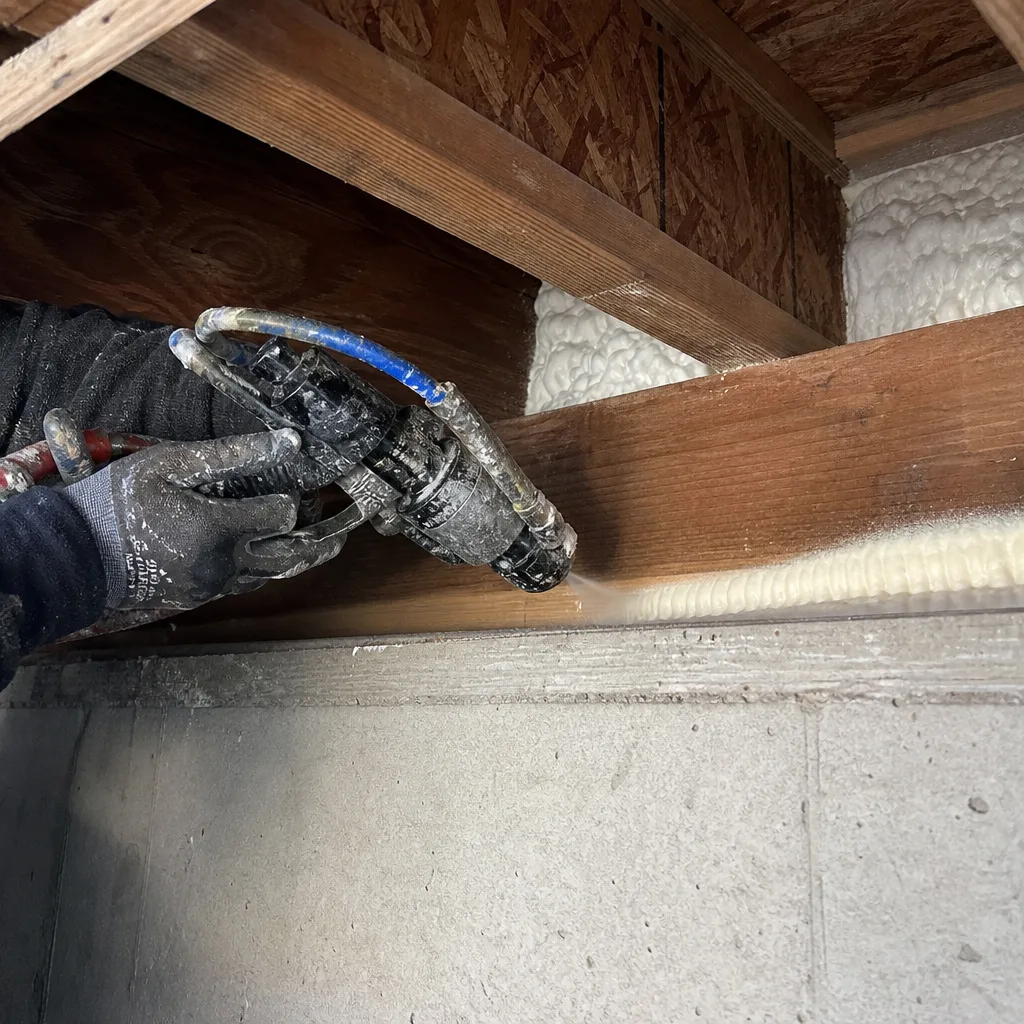
Closed Cell Spray Foam Insulation in Mentone is the heavier, denser foam we recommend when a house faces both wind-side heat loss and serious summer attic temperatures. It expands to roughly 2 inches per pass, cures rigid, and acts as both a thermal barrier and an air seal. In Mentone’s older homes, that dual function matters because the wind doesn’t just lower the temperature, it pushes air through every gap in the exterior envelope. Closed cell boards up the wind-driven gaps and gives you an R-value per inch that outperforms most batt products. A full closed cell attic application in Mentone typically runs $3,800 to $6,800 for a 1,000 – 1,400 square foot attic, though removing old batts and re-sealing the deck adds labor.
The homes along the foothill streets near the San Bernardino Mountains base demand this product more than most. You can’t get a reliable wind-rated seal by spraying over failed insulation. If the original rock-wool has settled and compressed, the air paths are already open at the irregular edges of the attic. Closed cell is the material that closes those paths and stays closed through the Santa Ana cycles.
What a Closed Cell Application Involves
We start by pulling whatever’s failed so the deck is clean. Then we seal the seams, penetrations, and transition points where warm air leaches out in winter and pours in during summer. The foam goes on in lifts, expanding into the shallow, irregular cavities that make Mentone attics such a retrofit challenge.
When Closed Cell Is the Right Call
If your attic deck doubles as your roof deck, or if you’ve got ductwork running through unconditioned space, closed cell usually makes sense. It also helps if you’re storing anything in the attic or using it as partial living space. We tell homeowners to think of closed cell as the structural, air-sealing solution, not just insulation.
Open Cell Spray Foam in Mentone
Open Cell Spray Foam in Mentone works best for interior wall cavities and attics where the primary goal is air sealing and sound control rather than structural rigidity. It expands significantly, fills irregular framing well, and costs less per board foot than closed cell. In Mentone’s ranch homes with shallow attic pitches, open cell can reach places batts physically can’t. Typical open cell applications in Mentone run $1,900 to $4,200 depending on the size of the attic and whether we’re spraying over a clean deck or removing decades of failed material first.
One of the reasons we don’t automatically quote open cell for every Mentone job is the wind. Open cell is an excellent air barrier, but it’s softer and more moisture-permeable than closed cell. If your envelope has exterior penetrations that flex under Santa Ana winds, the air-sealing layer has to be continuous. We’ll inspect the rim joists, band boards, and exterior wall cavities before we recommend open cell. Many Mentone homes need a hybrid: closed cell at the vulnerable perimeter, open cell through the interior cavities where the wind can’t reach with the same force.
Situations Better Suited to Open Cell
Interior wall cavities and floors between conditioned stories are prime candidates. Open cell fills odd framing gaps and provides real noise reduction, which helps in older ranch homes where interior walls were built with minimal insulation. It’s also a smart choice when the budget is tight but the air-sealing goal is still essential.
Where It Doesn’t Belong
If your attic deck has existing leaks, open cell will hold moisture against the wood rather than shedding it. We won’t spray open cell over a vented roof assembly without first confirming moisture control is handled. That’s the kind of application matching we do for every Mentone home.
Trusted Brands We Service in Mentone
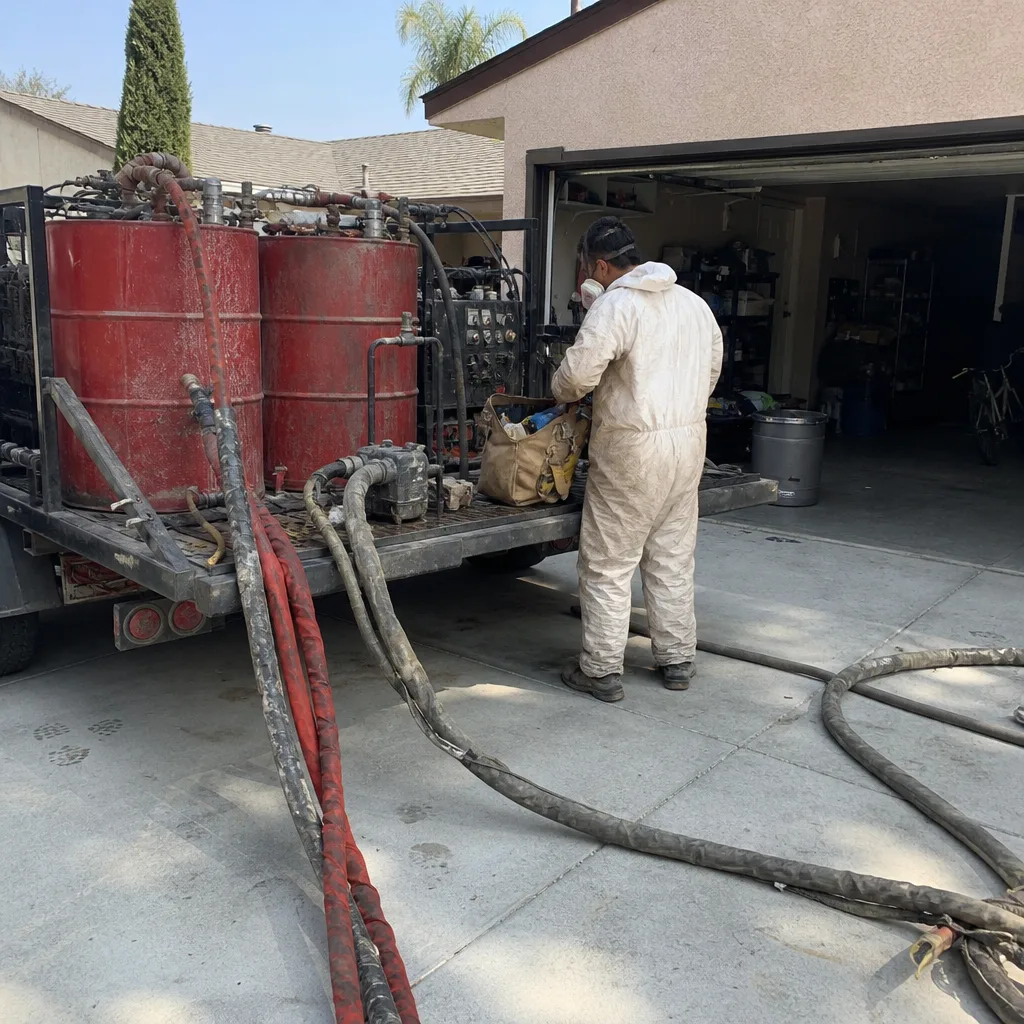
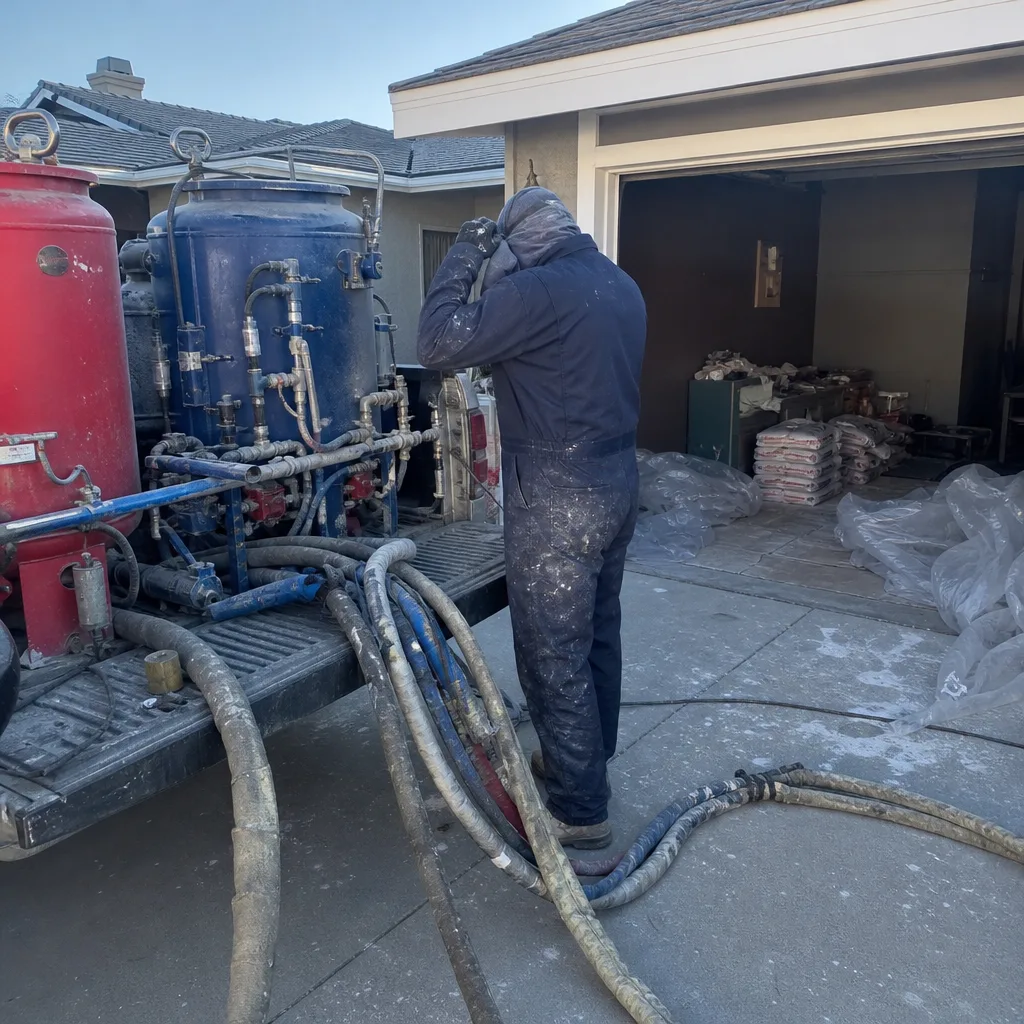
We source spray foam from Icynene and Demilec because both have long track records in air-sealing applications where the envelope has to hold under wind and temperature swings. We also stock Rockwool for clients who prioritize fire resistance and sound dampening alongside thermal performance, and Knauf for fiberglass applications where spray foam isn’t warranted. Since our shop keeps materials in stock and we handle all installation in-house, Mentone homeowners get a faster turnaround than waiting on a subcontracted crew. Our brand-neutral approach means the conversation is always about what your house in Mentone needs, not what we’re trying to move off the shelf.
Common Spray Foam Insulation Problems We See in Mentone Homes
- Original 1950s rock-wool batts settled by Santa Ana wind vibration. In Mentone’s foothill streets, we routinely find vintage batts compressed unevenly and no longer meeting code-required R-values. Spraying foam over this failed material just traps it in place and leaves the air paths open.
- Shallow, irregular attic decks. Mid-century ranch homes and older cabin-style properties near the foothills weren’t built with modern venting or standard rafter spacing. Foam applied without first re-sealing the deck lets winter mountain air drain directly through the edges.
- Wind-driven air paths reopening after installation. If exterior penetrations, rim joists, and band boards aren’t sealed before open-cell foam goes in, the Santa Ana cycles flex those joints and the air barrier fails again. It’s a problem we see in homes that had quick spray jobs done years ago.
- Overheating attics despite new insulation. In Mentone, attic temps climb past 100°F most summer days. If the foam installation didn’t include air sealing at the roofline and gable ends, the insulation works against itself. Thermal performance has to be paired with a continuous air barrier.
Pricing for Spray Foam Insulation in Mentone, CA
Here’s what a Mentone homeowner can expect to pay. Open cell spray foam for a standard 1,000 – 1,200 square foot attic usually lands between $1,900 and $3,400. Closed cell runs higher, typically $3,800 to $6,800 for the same footprint, because it’s denser and slower to install. The biggest cost variable in Mentone is removal: pulling settled 1950s rock-wool or failed batts off a shallow, irregular deck takes labor. That’s not a line item every quote includes, and skipping it is why some foam jobs in Mentone fail within a few years. We quote the full job, including cleanup, so you’re comparing real numbers. Call (866) 271-1602 and we’ll give you a free estimate with exact measurements from your attic.
We Also Serve Cities Near Mentone
Fontana Insulation installs Spray Foam Insulation throughout the eastern Inland Empire, including the communities that share Mentone’s foothill climate profile. You’ll find us working attics and walls in Spray Foam Insulation in Mentone, Redlands, Yucaipa, Highland, and Calimesa. Same team, same brand-neutral consultation, same emphasis on fixing the air seal before adding insulation.
Serving Mentone, CA — Our Local Coverage Area
We’re based in the Mentone area and know this community well. Use the map below to see our service coverage — if you’re nearby, we can almost certainly help.
FAQs About Spray Foam Insulation in Mentone
The original material has usually settled and compressed from decades of Santa Ana wind vibration, so the thermal boundary is already compromised. You can’t restore a code-required wind-rated seal by covering a failed layer with new foam. We pull the old material and start from a clean deck so the new insulation actually stops the air movement it’s meant to stop. Call (866) 271-1602 and we’ll inspect what’s in your attic before we recommend anything.
No. Shallow attics are actually where spray foam shines because it conforms to odd framing and fills cavities that batts can’t reach. The critical step is surface prep: sealing the deck edges, venting, and penetrations before foam goes on. We’ve done dozens of Mentone ranch homes with 4:12 pitches or lower, and closed cell works especially well on those rooflines where winter mountain air pools at the edges.
Closed cell adds structural rigidity and a stronger air seal per inch, which matters when Santa Ana winds are pushing air through exterior walls and rim joists. Open cell seals air well but is softer and more permeable. For wind-exposed Mentone homes, we typically recommend closed cell at the vulnerable perimeter and open cell through interior cavities where the air pressure differential is lower.
The material has to perform across a wide temperature range and stay put under physical stress. Mentone sees summer attic temps above the range where some cheap foams degrade, plus winter nights near freezing from mountain air drainage. We use Icynene and Demilec closed cell for those dual-demand applications because both are engineered for exactly this kind of temperature and wind exposure profile.
No. Spray foam works on the building envelope, but a wind-rated door’s air issue is usually the door itself: the threshold, the weatherstripping, the frame alignment. We’ll often find homes in Mentone where the door’s leaking and the wall around it isn’t foamed correctly. We fix both, because air sealing only works when every penetration in the envelope is addressed together.
Written by Noel Arredondo, Owner at Fontana Insulation, serving Mentone and the greater Inland Empire.