
Fast, Reliable Spray Foam Insulation Across Calimesa
Spray foam insulation in Calimesa has to solve a problem most contractors never mention: the San Gorgonio Pass. Wind events push dust through attic vents and onto top plates, where it sabotages foam adhesion. If the substrate isn’t cleaned first, the foam delaminates within a few seasons. Our crews know this failure pattern because we see it constantly in Calimesa homes, from the ranch tracts near Singleton Road to the mobile home parks along Calimesa Blvd. We’re Fontana Insulation, and we install open-cell and closed-cell spray foam the way Pass conditions demand. Call (866) 271-1602 for a free estimate.
Why Calimesa Homeowners Choose Fontana Insulation for Spray Foam
Most insulation contractors treat Calimesa like any other Inland Empire city. They shouldn’t. Homes here sit at the mouth of a wind corridor that doesn’t exist in Redlands or Yucaipa, and that changes how spray foam performs. Our crew lead, Noel Arredondo, has walked enough Calimesa attics to know exactly what Pass-driven dust does to a foam job, and he trains every installer to prep for it. We carry Icynene and Demilec open- and closed-cell foams because both have the adhesion and expansion characteristics that hold up under the thermal swings Calimesa sees every summer and winter. Homeowners call us back for the prep work, not just the spray. That’s the part that separates a 3-year foam job from a 20-year one.
We also stock Rockwool and CertainTeed products for Calimesa customers who want hybrid approaches, like mineral wool baffles at vent edges before foam goes in. No brand loyalty here, just the right material for the attic shell, the wall cavity, or the rim joist. Estimates are free, and we’ll tell you honestly if spray foam isn’t the best fit for your Calimesa home.
Open Cell Spray Foam in Calimesa
Open cell spray foam is the workhorse for Calimesa attics and exterior walls where air-sealing matters more than maximum R-value per inch. It expands to roughly 100 times its liquid volume, filling the odd-shaped cavities common in 1970s and 1980s ranch homes around Calimesa. For a typical 1,200 to 1,800 square foot attic in Calimesa, open cell foam installation runs $1,800 to $3,400 depending on roof pitch, accessibility, and how much prep the vent edges need. That prep matters more here than almost anywhere else in the Inland Empire.
Attic Roof Deck Application
We spray open cell directly to the underside of the roof deck to create a conditioned attic. That means ductwork and air handlers live inside the thermal boundary instead of roasting or freezing with outdoor air. In Calimesa, where summer attic temperatures regularly exceed 130°F, this approach eliminates the biggest heat load on your cooling system.
Wall Cavity Retrofit in Older Homes
Calimesa has a lot of wood-frame homes built before modern wall insulation standards. Open cell foam injected into closed wall cavities fills gaps that fiberglass batts leave behind. We apply it from the interior or exterior depending on siding type, and it cuts the drafts that make winter nights near freezing feel colder inside than they should.
Spray Foam Insulation Contractors in Calimesa
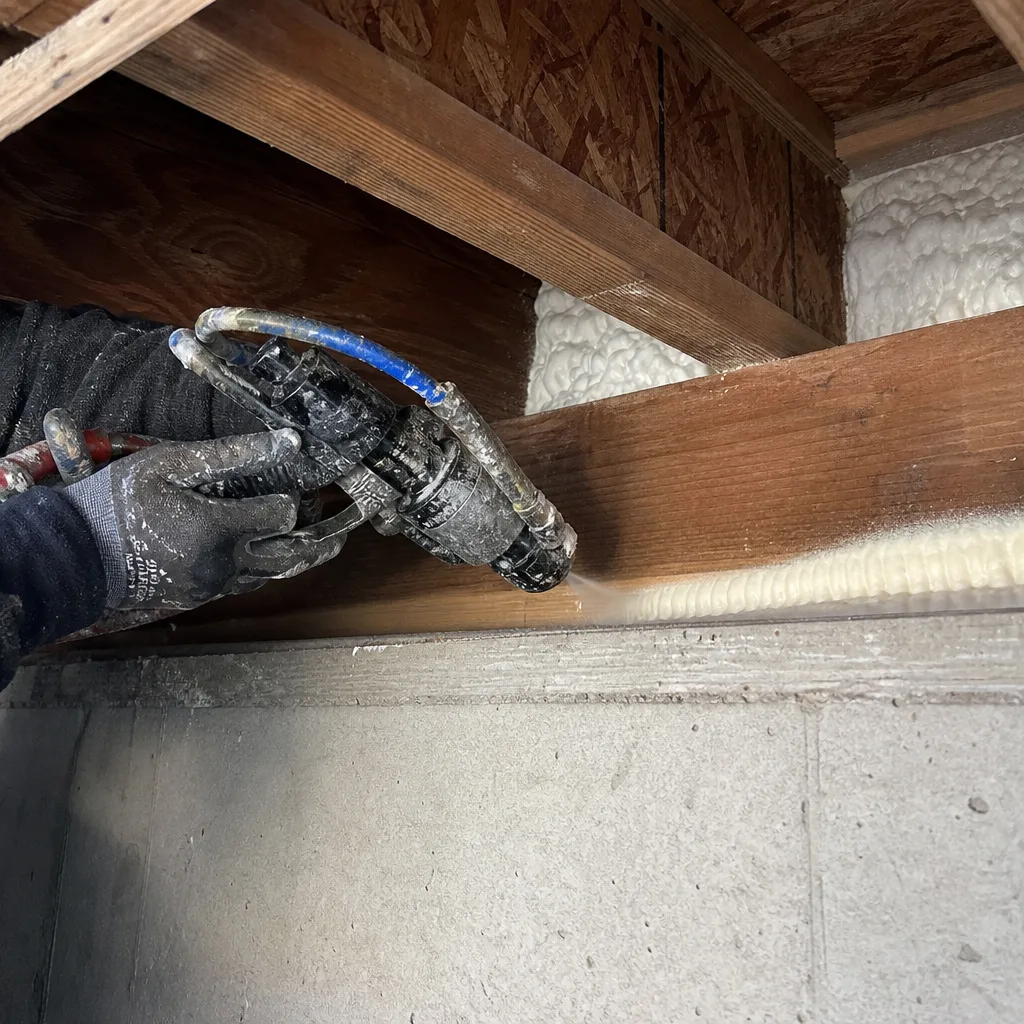
Spray foam insulation contractors in Calimesa vary widely in how they handle substrate prep, and that’s the difference between a job that lasts and one that peels. We estimate a typical closed-cell rim joist job in Calimesa at $900 to $2,100, while a full garage ceiling spray foam application runs $1,400 to $2,800. Closed-cell costs more per board foot than open-cell, but it adds structural rigidity and a vapor barrier, which matters in Calimesa crawlspaces and rim joist areas where winter ground moisture moves upward.
Closed-Cell for Rim Joists and Band Boards
Rim joists are the biggest air leakage point in most Calimesa homes. Closed-cell foam seals the band board and stops the stack effect that pulls hot air into the attic and cold air into the floor system. We typically install 2 inches here, which delivers a significant thermal break at the floor line.
Garage Ceiling and Bonus Room Applications
Attached garages in Calimesa get punishingly hot, and if there’s a bonus room above, that heat bleeds upward into living space. Spray foam on the garage ceiling creates a clean thermal boundary. We stock Demilec closed-cell products specifically because they hold up to the heat cycling homeowners here deal with every July and August.
Trusted Brands We Service in Calimesa
We install Icynene and Demilec spray foam products because both brands have extensive performance testing for the conditions Calimesa homes face: extreme diurnal swings, wind-driven dust, and wood-frame construction that expands and contracts. We also carry CertainTeed fiberglass and Rockwool mineral wool for Calimesa customers who need vent baffles, acoustic separation, or hybrid insulation approaches alongside foam. When we recommend a brand, it’s because the home’s specific conditions point that direction, not because we’re trying to move inventory. Calimesa homeowners get the full material conversation, and that’s what a material-agnostic insulation specialist does differently.
Common Spray Foam Insulation Problems We See in Calimesa Homes
- Foam delaminating along the pass-facing attic edge. San Gorgonio Pass winds push dust through roof and gable vents, and that dust settles on top plates and roof deck framing. Spray foam applied over that grit bonds to the dust, not the wood, and peels off in sheets within a few seasons.
- Gaps reopening at attic vent screens. Blowing dust abrades the foam-to-vent interface over time. What looks fine on installation day can develop air leakage paths within two or three years if the vent edges weren’t cleaned and sealed properly first.
- Cracking in older mobile home cavities. Summer days above 100°F expand foam, and winter nights near freezing contract it. In Calimesa mobile home parks along Calimesa Blvd, this diurnal swing stress causes seam cracking in rigid foams that batts simply absorb.
- Whistling attics during high-wind events. When foam gaps open at the rake or eave, wind finds them. Homeowners report attic whistling that gets louder as Pass winds pick up. It’s a sign the air seal has failed at the most wind-exposed part of the roof.
Pricing for Spray Foam Insulation in Calimesa, CA
Open cell spray foam for a Calimesa attic typically runs $1,800 to $3,400. Closed cell rim joist work lands between $900 and $2,100, while a garage ceiling application costs $1,400 to $2,800. The biggest variable in Calimesa isn’t square footage, it’s prep time. If a previous insulation job or years of Pass dust have left top plates and vent bays caked in grit, we have to blast that clean before foam touches anything. That adds labor hours but prevents a delamination failure that would cost far more to remediate later. Call (866) 271-1602 and we’ll give you a detailed, line-item estimate at no charge. No pressure, just the material conversation and what your Calimesa home actually needs.
We Also Serve Cities Near Calimesa
Our spray foam crews cover the entire Pass corridor and surrounding foothill communities. We install spray foam insulation in Calimesa and regularly take jobs in Yucaipa, Mentone, Redlands, and Banning. If you’re in any of those areas, the same prep-first approach applies, especially for homes that sit within a few miles of the wind corridor.
Serving Calimesa, CA — Our Local Coverage Area
We’re based in the Calimesa area and know this community well. Use the map below to see our service coverage — if you’re nearby, we can almost certainly help.
FAQs About Spray Foam Insulation in Calimesa
Because San Gorgonio Pass winds drive dust into attic vents and deposit grit on top plates and roof deck framing along the pass-facing side of the home. Foam sprayed over that dust bonds to the grit instead of the wood, and delamination follows within a few seasons. The fix is aggressive mechanical cleaning of all top plates and vent bays before foam application. Call (866) 271-1602 and we’ll assess your attic’s condition and give you an exact quote.
Yes, with the right product and application. Open cell foam’s flexibility handles the expansion and contraction better than rigid closed cell in mobile home cavities that see 100°F summer days and near-freezing winter nights. The key is spraying it in lifts that allow for movement without cracking at the seams. Many of the mobile homes along Calimesa Blvd are under-insulated and drafty, and foam addresses that directly.
The first few days after application are critical. High winds during the curing window can disturb the foam before it fully sets, so we schedule Calimesa jobs with an eye on the Pass forecast. Once cured, properly adhered foam resists wind fine. The real wind-related risk is dust contamination at the substrate level, which is why we don’t spray until every top plate and vent bay is clean.
Generally no, and in Calimesa especially no. Older loose-fill insulation in homes here often contains wind-deposited dust packed into the top layer. Foam sprayed over that won’t bond to the roof deck, and you’ll get delamination within a season or two. We remove or net out the old material, clean the framing, and spray directly to the deck. Estimates for that full scope are free.
We install Icynene and Demilec spray foam products, both open cell and closed cell depending on the application. Both brands have strong performance testing for the thermal swings and substrate challenges we see regularly in Calimesa. We also stock Rockwool mineral wool and CertainTeed fiberglass for hybrid approaches where a combination of materials outperforms foam alone.
If your Calimesa attic has never had its vent edges and top plates properly prepped, you’re not starting from a clean surface. Let’s fix that before the next wind event. Call Fontana Insulation at (866) 271-1602 for a free estimate, and we’ll tell you straight what your home needs and what it doesn’t.
Written by Noel Arredondo, Owner at Fontana Insulation, serving Calimesa and the Pass corridor with material-agnostic insulation solutions.