
Fast, Reliable Spray Foam Insulation Across Long Beach
Spray foam insulation in Long Beach typically costs $2.50 to $6.50 per board foot for open-cell and $3.50 to $8.50 per board foot for closed-cell, with most whole-home retrofit projects landing between $4,500 and $18,000 depending on square footage and access. Fontana Insulation installs both Icynene and Demilec spray foam systems across 90835, 90840, 90842, and 90844, usually within a few days of your call. If you’re tired of rooms that never hold temperature or you’ve noticed musty smells in the attic, call (866) 271-1602 for a free estimate and we’ll walk you through what your home actually needs.
Why Fontana Insulation Is Long Beach’s Preferred Spray Foam Insulation Company
Long Beach homes are different. A 1930s bungalow in Belmont Shore doesn’t behave like a 1960s tract house in Lakewood, and our crew knows both. We’ve crawled through raised-floor cavities in Alamitos Beach, sealed rim joists in Signal Hill, and pulled salt-degraded batts out of attics across North Long Beach. That local experience shapes every recommendation we make.
Noel Arredondo leads our team with a materials-first approach. We carry eight brands across fiberglass, mineral wool, spray foam, and cellulose, so the recommendation you get is based on your home’s structure and moisture exposure, not what’s sitting in our warehouse. For spray foam specifically, we’re an authorized installer for Icynene and Demilec, two of the most performance-tested foam brands in North America. That matters in a coastal climate where the wrong product choice shows up as condensation and mold within two winters.
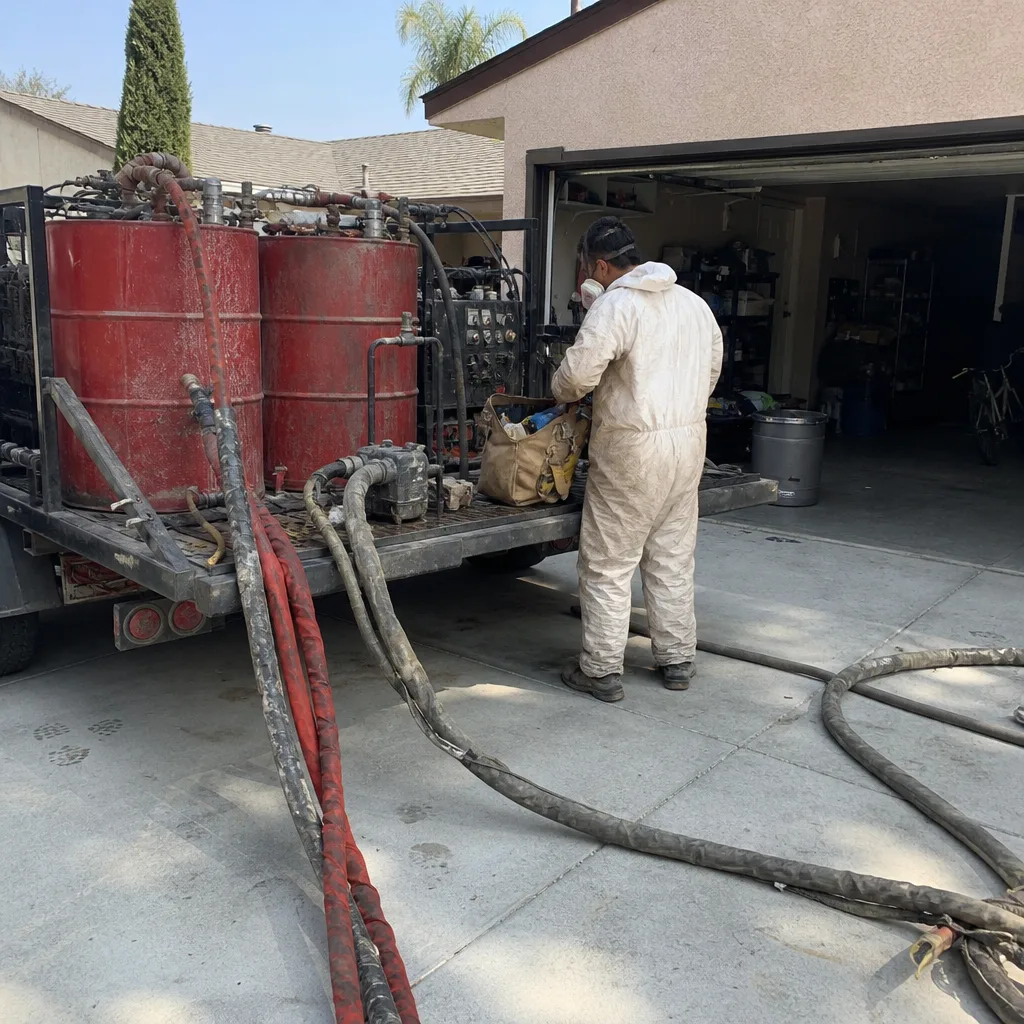
We don’t subcontract. Every spray foam job in Long Beach is handled by our own crew, from the initial attic inspection to the final air-sealing pass. When you call (866) 271-1602, you’re talking to the people who will actually do the work.
Rim Joist Spray Foam in Long Beach
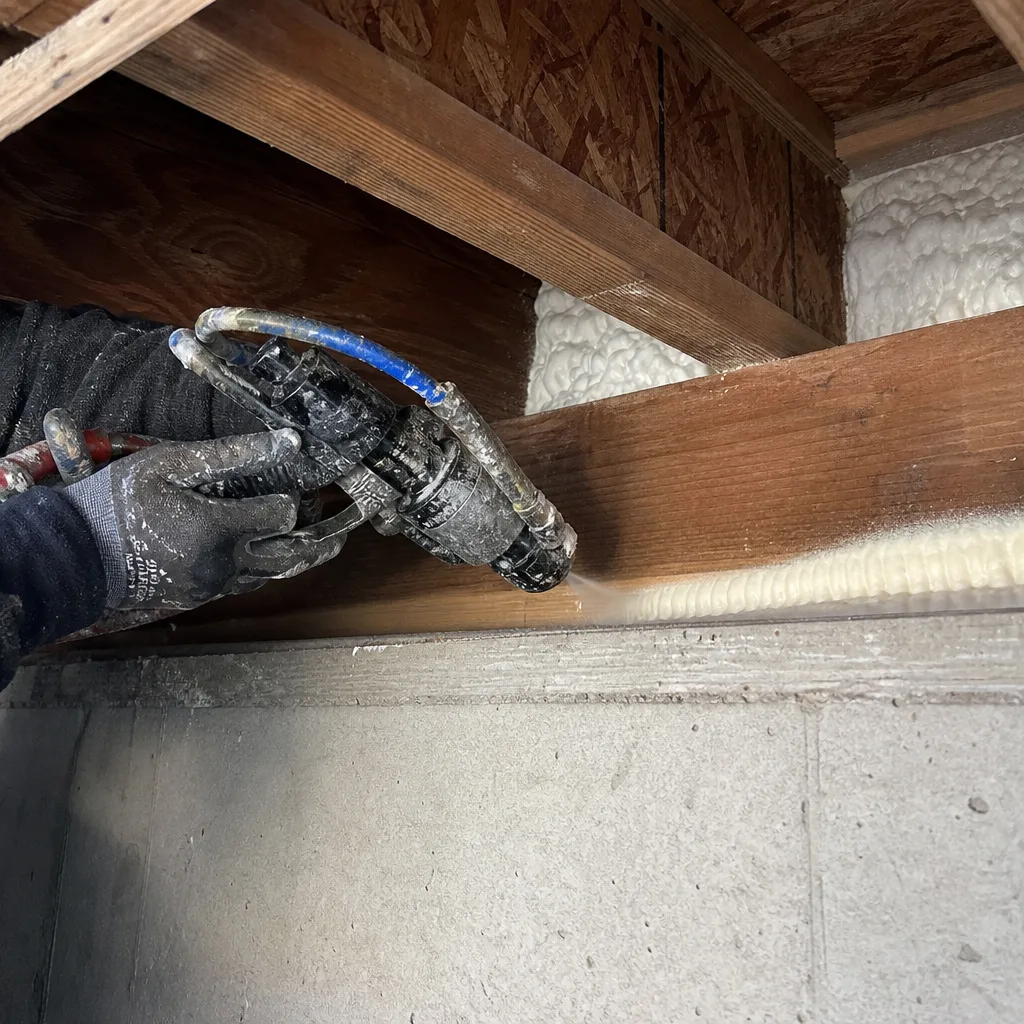
Rim joist spray foam in Long Beach addresses one of the most overlooked air leakage points in coastal construction. The rim joist, that band of framing where your floor meets the foundation wall, is often left uninsulated in pre-war and mid-century homes. In Long Beach’s fog-heavy neighborhoods, that gap lets salt-laden marine air flow directly into the floor cavity, carrying moisture that condenses on the cold concrete. Rim joist sealing in Long Beach typically runs $1,800 to $4,200 for a full perimeter, depending on crawl space access and joist depth. Closed-cell foam is our standard here; it adds rigidity to the framing and acts as a vapor barrier in one pass.
Where Air Sealing Fails In Older Bungalows
In 90802 and 90803, original construction rarely included any rim joist sealing. The wood has also had 80 to 100 years to shrink, opening gaps that run straight through to the crawl space. We commonly find daylight visible at the joist-to-sill connection in Belmont Shore basements and raised foundations. Spray foam solves this by expanding into every seam and crack, creating a continuous thermal boundary that caulk and rigid board can’t match.
Why We Use Closed-Cell At The Rim
Closed-cell foam at the rim joist does three jobs at once: it air-seals, it insulates at roughly R-6.5 per inch, and it blocks moisture migration. In a city where the marine layer parks over the coast most mornings, that moisture-blocking piece is non-negotiable. Open-cell foam at the rim joist in Long Beach can absorb humidity and hold it against the framing. That’s a mold timeline, not a long-term solution.
Crawl Space Spray Foam Insulation in Long Beach
Crawl space spray foam insulation in Long Beach is the single best retrofit for homes that smell musty or feel cold underfoot in the winter months. In raised-floor bungalows throughout 90804 and 90806, the crawl space is a direct connection to outdoor air. Fog rolls under the house, condenses on the joists, and feeds mold. Sealing the crawl space with spray foam in Long Beach typically costs $3,800 to $9,500, depending on square footage, joist spacing, and whether you want the walls encapsulated or the subfloor insulated directly. We usually recommend closed-cell Demilec or Icynene for ground-contact and high-humidity conditions.
Insulating Floor Cavities vs. Wall Encapsulation
Two approaches, and Long Beach homes need the one matched to their ventilation. Floor-cavity spray foam insulates the living space above but leaves the crawl space unconditioned. Wall encapsulation creates a sealed, conditioned crawl space, which is often the better play near the coast where humidity is the real enemy. We’ll inspect your crawl space and show you what’s actually happening before recommending either path.
Why Ventilation Alone Falls Short Near The Coast
The old advice was to vent crawl spaces aggressively. That works in dry inland climates. In Long Beach, venting pulls salt-laden, fog-saturated air directly into the space under your floors. What you need is less air exchange, not more. A sealed crawl space with spray foam on the walls keeps marine air out and stabilizes the temperature, which also helps if you have plumbing running through the space.
On a 1930s Belmont Shore bungalow, we found the original attic batts saturated and matted against the roof deck from years of fog-heavy mornings. After installing a vapor retarder and adding soffit venting, we applied Icynene spray foam to the rim joist and crawl space, sealing the salt-air pathways that had been feeding moisture into the framing. The homeowner reported noticeably drier air and no more musty odors within weeks. That’s the difference between adding R-value and fixing the actual problem.
Trusted Brands We Service in Long Beach
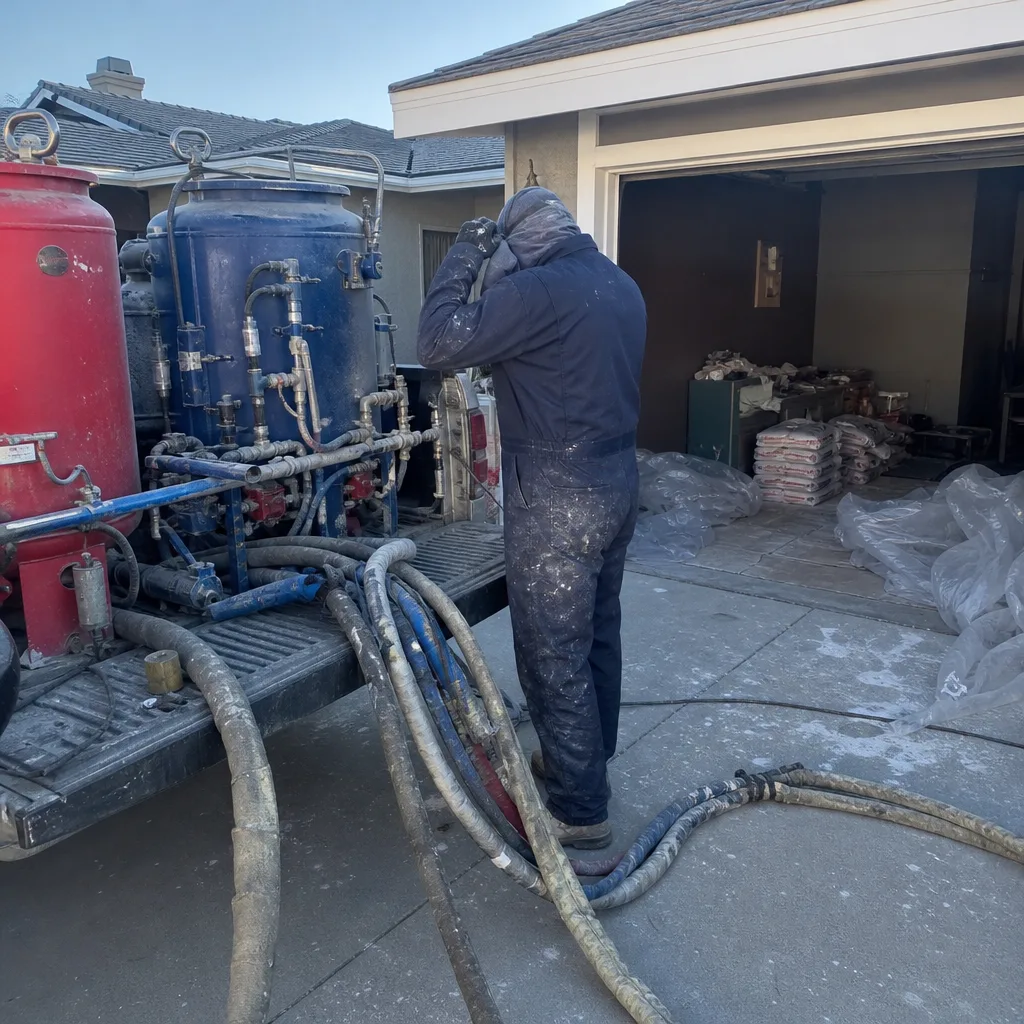
Fontana Insulation is an authorized installer for Icynene and Demilec spray foam, two brands we selected for their performance in coastal conditions. Closed-cell Demilec is our go-to when moisture control is the priority, which covers most of Long Beach’s fog belt. Icynene open-cell serves well on interior walls and sound-dampening applications where the marine layer isn’t a factor. We also stock Rockwool and CertainTeed for situations where mineral wool or fiberglass genuinely make more sense than foam. The point is, we carry multiple brands because Long Beach houses throw multiple problems at you, and no single product solves all of them. We keep local inventory staged for quick turnaround.
Common Spray Foam Insulation Problems We See in Long Beach Homes
- Salt-degraded batts that lost their R-value years ago. In homes from Belmont Shore to North Long Beach, salt-laden onshore air settles into attic batts and corrodes the fasteners holding them in place. The insulation sags, compresses, and stops performing long before anyone notices. A visual attic inspection tells us exactly how far it’s gone.
- Fog-driven condensation in unvented knee-wall cavities. 1920s and 1930s bungalows in 90802 and 90803 often have finished attic spaces with knee walls. Marine-layer moisture gets in, condenses on the back side of the drywall, and mold follows. Spray foam directly against this condition without a vapor retarder makes it worse, not better.
- Rim joist gaps feeding salt air into floor systems. Pre-war construction never sealed rim joists, and the lumber has shrunk since. Salt air pours through those gaps year-round, condensing on joists and subfloor. We see rusted fasteners and early rot in the same spots across multiple Long Beach blocks.
- Original ventilation gaps bypassing spray foam at the roofline. In Belmont Shore and Alamitos Beach, old roof vents and gable gaps let moist marine air flow right over the top of spray foam. Unless soffit venting is added and air sealing is comprehensive, the foam can’t do its job. It’s a systems problem, not a product problem.
This is the piece most insulation write-ups miss: in Long Beach, spray foam alone doesn’t solve a moisture problem. It seals. But if the ventilation path and vapor control aren’t addressed at the same time, you’re just trapping marine moisture behind the foam. We plan for that from the first inspection.
Pricing for Spray Foam Insulation in Long Beach, CA
What you’ll pay depends on square footage, ceiling height, access, and which foam chemistry fits your home. Open-cell spray foam in Long Beach runs $2.50 to $6.50 per board foot. Closed-cell runs $3.50 to $8.50. A typical attic retrofit in a 1,200 square foot 90806 ranch lands between $4,800 and $9,600. A full rim joist package runs $1,800 to $4,200. Crawl space encapsulation runs $3,800 to $9,500 depending on joist spacing and whether you’re sealing walls or insulating the subfloor. We give you a written line-item quote before any work starts. Call (866) 271-1602 and we’ll schedule a free walkthrough of your home in Long Beach.
We Also Serve Cities Near Long Beach
Our Spray Foam Insulation crew works throughout the greater Long Beach area, including Signal Hill, Lakewood, Carson, and West Carson. If you’re just across the city line, we’re already in your neighborhood. Our Long Beach projects keep us within minutes of all four communities most weeks.
Serving Long Beach, CA — Our Local Coverage Area
We’re based in the Long Beach area and know this community well. Use the map below to see our service coverage — if you’re nearby, we can almost certainly help.
FAQs About Spray Foam Insulation in Long Beach
Spray foam fails faster in Belmont Shore and Alamitos Beach because salt-laden onshore air, fog-driven condensation, and original ventilation gaps force moisture into the foam’s adhesion surface. If the substrate is damp or already has salt contamination, the foam can’t bond properly and separates within a few seasons. That’s why we insist on vapor retarders and ventilation upgrades before foaming in 90802 and 90803. Call (866) 271-1602 if you’re seeing peeling or lifting foam anywhere in your attic or crawl space.
No, spray foam cannot be applied over damp or salt-degraded batts. The old insulation has to come out, the cavity inspected for corrosion and mold, and the framing allowed to dry before any foam goes in. Putting foam over wet material traps the moisture and accelerates rot. We remove old batts, address the moisture source, then foam. It’s a few extra hours of labor that saves a full tear-out later.
Closed-cell Icynene and Demilec are our primary brands for Long Beach’s marine-layer climate because their closed-cell structure acts as a built-in vapor barrier and won’t absorb airborne salt moisture the way open-cell foam can. For interior walls and sound damping, open-cell Icynene works well. We’ll match the foam chemistry to the specific cavity and exposure in your home, not default to one product line.
Salt air corrodes exposed metal fasteners and brackets in crawl spaces, and it accelerates breakdown of vapor barriers that aren’t sealed to the foam. In homes within a few blocks of the water in 90802 and 90803, we use stainless or coated fasteners anywhere spray foam meets structural metal. The foam itself is stable, but the system around it needs salt-resistant materials to last.
Most retrofit spray foam insulation work in Long Beach does not require a building permit, but if your project involves removing or altering structural framing, ducting, or adding a vapor barrier that changes the building envelope, a permit may apply. We check current Long Beach building codes for every job and handle any paperwork if it’s needed. Call (866) 271-1602 and we’ll tell you where your specific project falls.
Get Your Free Spray Foam Estimate in Long Beach
If your Long Beach home has rooms that never hold temperature, an attic that smells like the beach every morning, or floors that feel cold all winter, we can find the specific cause and fix it properly. Fontana Insulation installs Icynene and Demilec spray foam, plus Rockwool, CertainTeed, and five other brands, so your recommendation comes from what your home needs in this climate, not what we’re trying to move. Call Noel Arredondo and the crew at (866) 271-1602 for a free, no-pressure assessment. We’ll show you exactly what’s happening in your attic, rim joists, or crawl space, and quote it line by line.
Written by Noel Arredondo, Owner at Fontana Insulation, serving Long Beach and the surrounding communities.