
Fast, Reliable Spray Foam Insulation Across Signal Hill
Spray foam insulation in Signal Hill runs $2,400 to $6,800 for a typical attic retrofit, with open-cell foam on the lower end and closed-cell on the higher end. Most jobs take one to two days, and we can usually get a crew to your neighborhood within 48 hours of the estimate. Fontana Insulation has been working in Signal Hill long enough to know exactly what these hilltop homes need. Call (866) 271-1602 for a free assessment of your attic or walls.
Signal Hill is a unique place to insulate. The same hilltop that gives you ocean views and steady breeze also means wind-driven dust, salt air, and hydrocarbon residue from the oil fields settle on everything, including your roof sheathing. That changes how spray foam has to be applied here. We get that, and we plan for it before the first spray gun comes off the truck.
Why Fontana Insulation Is Signal Hill’s Preferred Spray Foam Insulation Company
Signal Hill homeowners call us because we understand what happens inside attics on the hill. The marine layer rolls in overnight, leaving a fine film of salt and moisture on exposed surfaces. By afternoon, the sun bakes it off and pulls dust up from the roads. Over the years, that cycle leaves roof sheathing covered in a chalky, salty residue. Spray foam applied directly over that residue will eventually delaminate, pulling away from the deck in sheets. We pre-clean and prime surfaces before we spray. It adds a step to the job, but it’s the difference between foam that lasts 30 years and foam that fails in five.
Noel Arredondo, who leads our team, has walked attics throughout Signal Hill, from the older bungalows near Burnett Street to the 1980s infill up on Skyline Drive. He knows which homes have shallow rafters, which ones have stucco walls with zero insulation, and which ones catch the full force of the Santa Ana winds. That local knowledge means we quote the right material for the right spot, not whatever happens to be in the truck.
We carry Icynene and Demilec spray foam because both brands have a proven track record in coastal environments. Icynene open-cell works well for attic rooflines where you want air sealing without trapping moisture. Demilec closed-cell gives you higher R-value per inch and adds structural strength to older framing. We also stock Rockwool for Sound dampening in interior walls and Knauf for fiberglass applications where spray foam isn’t the right call. When we recommend spray foam for your Signal Hill home, it’s because the application actually calls for it, not because we’re trying to move inventory.
Open Cell Spray Foam in Signal Hill
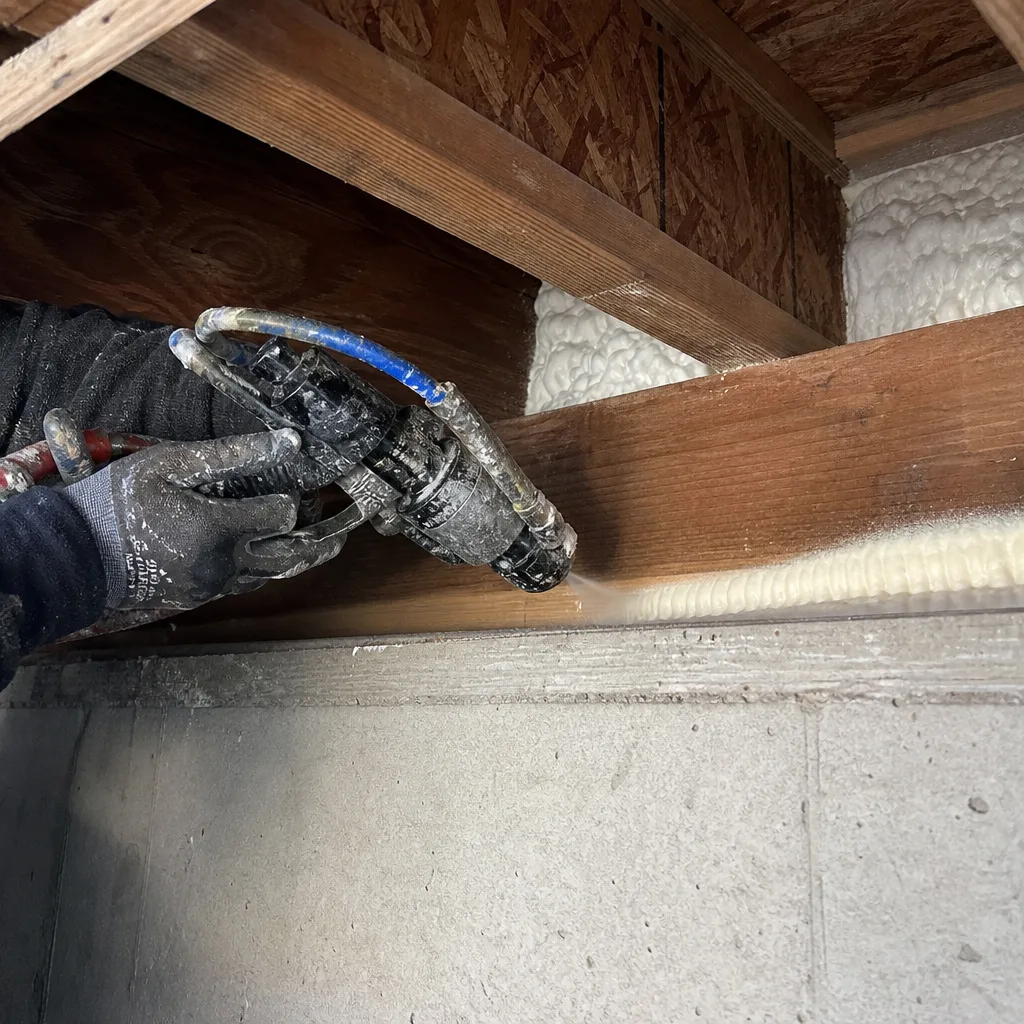
Open Cell Spray Foam in Signal Hill costs $0.55 to $1.10 per board foot for a typical attic application, and most attics here run between 1,800 and 3,200 board feet depending on roofline complexity. Open-cell is light, expands aggressively to fill odd cavities, and does a great job air-sealing the underside of roof decks. It’s the material we recommend most often for Signal Hill attics because it breathes a little, which matters in a climate where marine-layer moisture seeps into framing in the mornings and gets baked out in the afternoons.
Why Open-Cell Works on Hilltop Roof Decks
Signal Hill attics face a lot of wind pressure. Santa Ana events push air through ridge vents, soffits, and any gap in the framing. Open-cell foam expands into those gaps and stays flexible, so it doesn’t crack or separate when the roof framing moves with temperature swings. For the south and west exposures that get hammered by afternoon sun, open-cell reduces radiant heat gain substantially when combined with proper attic ventilation.
Where We Don’t Use Open-Cell
If you have a flat or low-slope roof over a garage or addition, open-cell isn’t the best fit. Those low-clearance spaces trap heat and moisture, and closed-cell handles that better. Same goes for rim joists and crawlspace walls: that’s closed-cell territory. We’ll tell you if open-cell is the right choice or if you’re better served by a different foam or a different material entirely.
Spray Foam Insulation Contractors in Signal Hill
Spray Foam Insulation Contractors in Signal Hill charge $1,200 to $3,100 for a typical rim joist job and $3,800 to $8,400 for a full attic plus wall retrofit, including material and labor. Most contractors in the area don’t carry more than one foam brand, which limits what they can offer. Fontana Insulation carries both Icynene and Demilec, and our crews handle the entire job in-house, so nothing gets subcontracted to a crew that doesn’t know Signal Hill’s specific conditions.
Tight Lot Access and Working Space
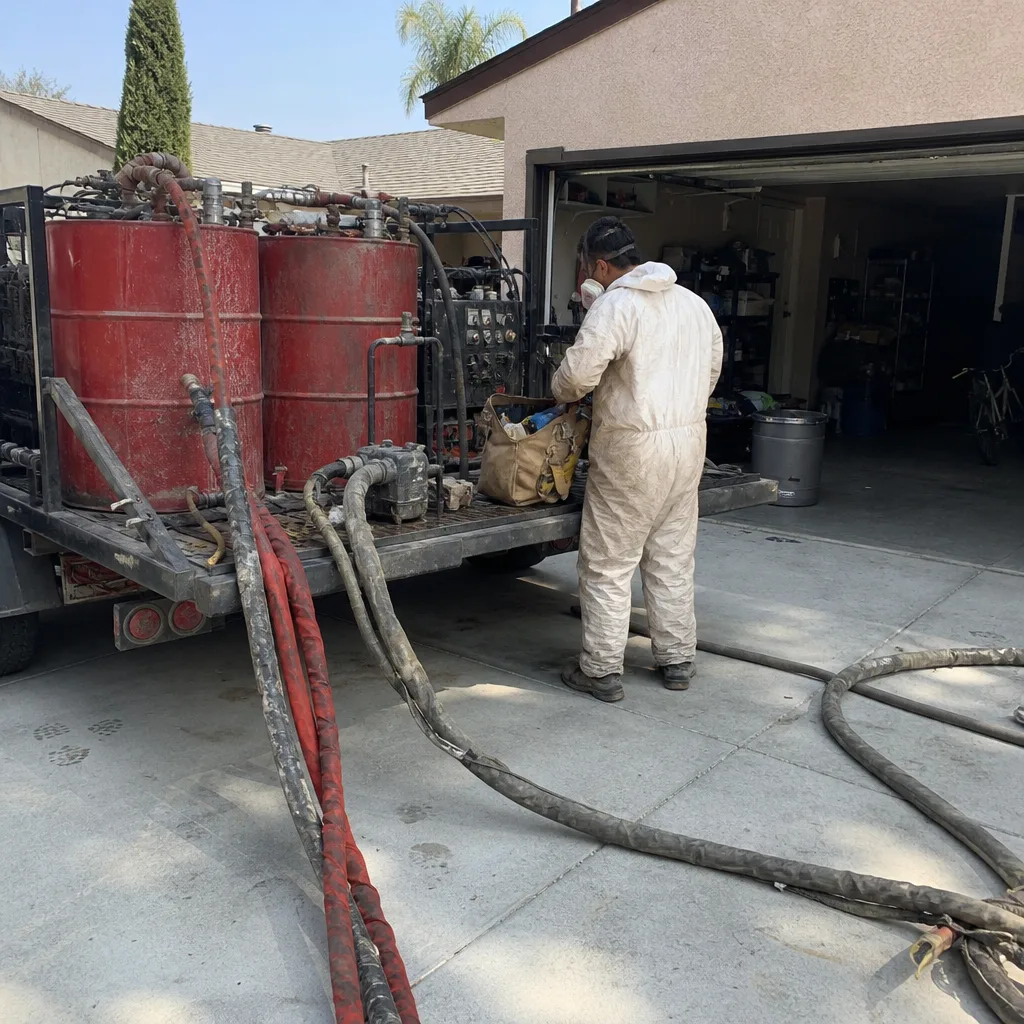
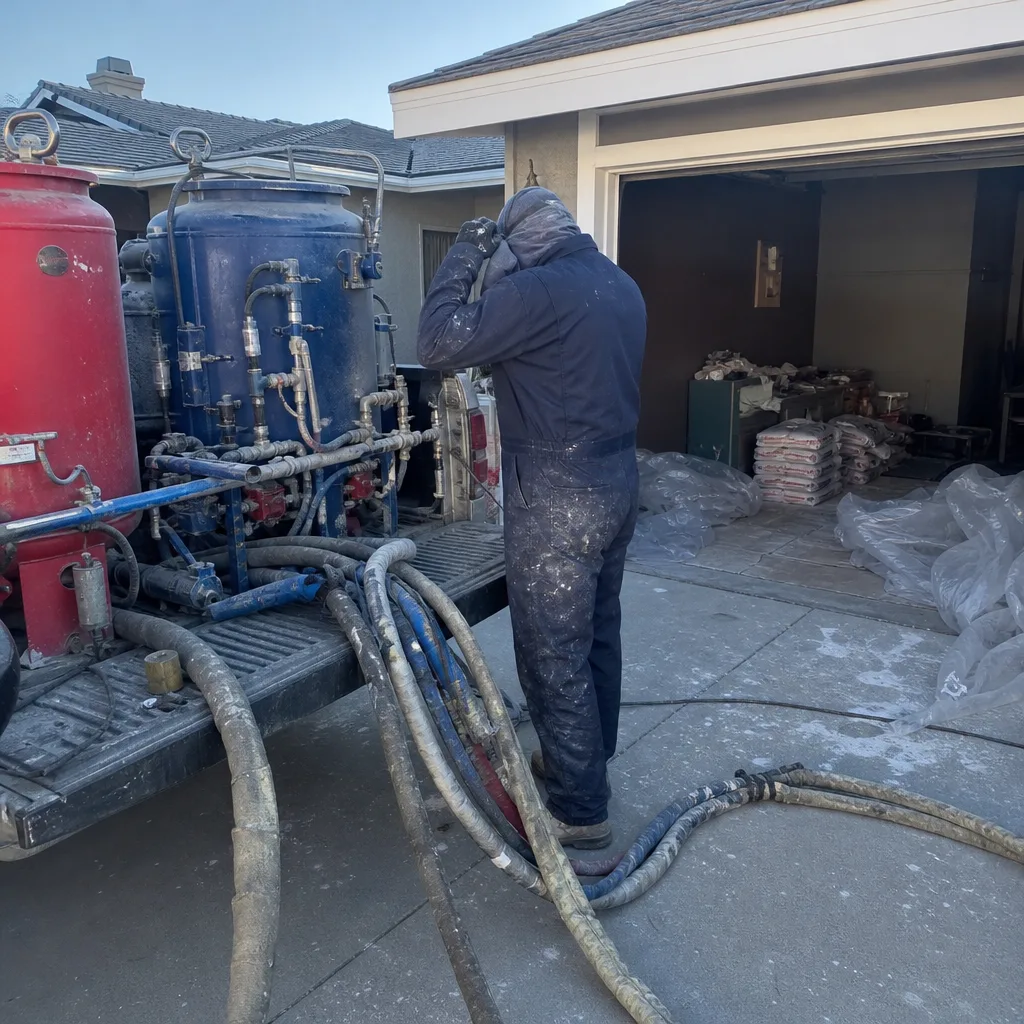
Signal Hill lots are small and many homes sit close together, which leaves very little room for staging equipment. We’ve done jobs where the spray rig had to park a block away and we ran the hose through a neighbor’s side yard with permission. Our crews know how to set up fast and keep the work area contained, even in tight spaces between a stucco wall and a pumpjack-adjacent property line.
Occupied Retrofits, Not Empty New Builds
Nobody’s building new single-family homes on Signal Hill. Almost everything we do here is a retrofit into a fully lived-in house, which means containing overspray, protecting flooring, sealing off the work area, and scheduling around your family’s routine. We’re used to working in occupied homes, and we treat every Signal Hill retrofit like we’re working in someone’s kitchen, because usually we are within 20 feet of it.
Trusted Brands We Service in Signal Hill
Fontana Insulation is an authorized installer for Icynene and Demilec spray foam, and we service existing installations from both brands across Signal Hill. If your current open-cell foam has pulled away from the roof deck or your closed-cell has shrunk at a seam, we can assess whether it needs removal, re-spray, or a targeted patch. We also work with Rockwool, CertainTeed, and Knauf products for projects where spray foam isn’t the only piece of the insulation puzzle, like dense-packing stucco walls that need both air sealing and thermal resistance. You get the right material for the right spot, backed by a crew that knows how Signal Hill houses are actually built.
Common Spray Foam Insulation Problems We See in Signal Hill Homes
- Foam delamination from roof sheathing. Salt-air residue and oil-field dust settle on attic framing over the years, forming a chalky film that prevents foam from bonding. If the surface isn’t wire-brushed and primed first, foam sheets peel away within a few seasons, especially on south-facing rooflines that get the strongest sun.
- Wind-driven compression in upper-floor attics. Santa Ana winds push into ridge vents and gable openings with enough force to compress open-cell foam against the far side of the attic. We consistently find the insulation bunched against the eaves on the leeward side of hilltop homes, leaving the windward wall surface nearly bare.
- Corroded fasteners and vent components. The marine layer brings salt-laden air that corrodes metal plates, fasteners, and vent flashing embedded in or adjacent to foam. Homes within a mile of the hill’s western edge show the worst corrosion, especially where foam touches uncoated metal.
- Stucco wall air leaks behind blown insulation. Older Signal Hill bungalows with stucco-clad wood framing rarely have any wall insulation. When homeowners retro-fit with spray foam on the roofline but skip the walls, the house still loses conditioned air through thousands of unsealed gaps in the stucco. We often recommend a hybrid approach: spray foam at the roofline, dense-pack or blown-in up against the stucco walls.
Pricing for Spray Foam Insulation in Signal Hill, CA
Here’s what you can expect to pay for spray foam work in Signal Hill. Open-cell attic rooflines run $0.55 to $1.10 per board foot. Closed-cell runs $1.10 to $2.00 per board foot. A rim joist treatment averages $1,200 to $3,100 depending on the number of joist bays and access. Garage ceiling spray foam runs $950 to $2,200. Full attic plus wall retrofits run $3,800 to $8,400. The biggest cost drivers on Signal Hill are attic access, roofline complexity, and whether surfaces need pre-cleaning and priming, which most hilltop homes do. Estimates are free. Call (866) 271-1602 and we’ll give you a firm number before any work starts.
We Also Serve Cities Near Signal Hill
Beyond Signal Hill itself, our Spray Foam Insulation crews regularly work in Long Beach, Lakewood, Carson, and Hawaiian Gardens. If you live in one of those cities, the coastal conditions are similar to what we deal with on the hill, so the same cleaning, priming, and material selection approach applies. If you’re in Signal Hill, we’re your neighborhood crew. If you’re nearby, we’re close enough to get there fast. Learn more about what we do across the area on our Spray Foam Insulation in Signal Hill page.
Serving Signal Hill, CA — Our Local Coverage Area
We’re based in the Signal Hill area and know this community well. Use the map below to see our service coverage — if you’re nearby, we can almost certainly help.
FAQs About Spray Foam Insulation in Signal Hill
Salt-laden marine air leaves a chalky film on roof sheathing and framing, and spray foam applied directly over that film will eventually delaminate. That’s why we pre-clean and prime attic surfaces before spraying in Signal Hill. Without that step, foam pulls away from the deck within a few seasons, especially on south-facing exposures. Call (866) 271-1602 if you suspect your existing foam has separated from the sheathing; we can assess whether a patch or full re-spray is needed.
Yes. Open-cell spray foam air-seals the roofline, blocking the pathways that Santa Ana winds use to push hot or cold air through your attic. On upper-street homes near Hill Street and Skyline Drive, we’ve measured significant air leakage at ridge vents and soffit gaps that foam closes off permanently. Combined with proper ventilation, foam keeps the attic temperature stable even during sustained wind events.
For most Signal Hill attics, open-cell Icynene works well because it handles moisture from the morning marine layer while providing solid air sealing against afternoon radiant heat. For flat or low-slope roofs, garage ceilings, and rim joists, closed-cell Demilec is the better call because it handles the heat and moisture those tight spaces trap. The right choice depends on your specific roofline, so we assess each home before recommending one over the other.
We bring a full spray rig, but Signal Hill’s small lots sometimes mean the rig can’t park directly next to the house. Our crews have run hose lines from a block away and worked in side yards barely wider than a wheelbarrow. The equipment is standard; the setup and cleanup discipline required in a dense hilltop neighborhood is what sets experienced crews apart.
Spray foam holds up well on rooflines and rim joists in older bungalows, but stucco walls without stud cavities usually need a different approach. For those homes, we often pair spray foam at the thermal boundary with blown-in or dense-pack material behind the stucco. The goal is a complete air and thermal seal, not just foam in the attic. We’ll walk you through what your specific walls can and can’t accept during the estimate.
Written by Noel Arredondo, Owner at Fontana Insulation, serving Signal Hill and the surrounding coastal communities.