
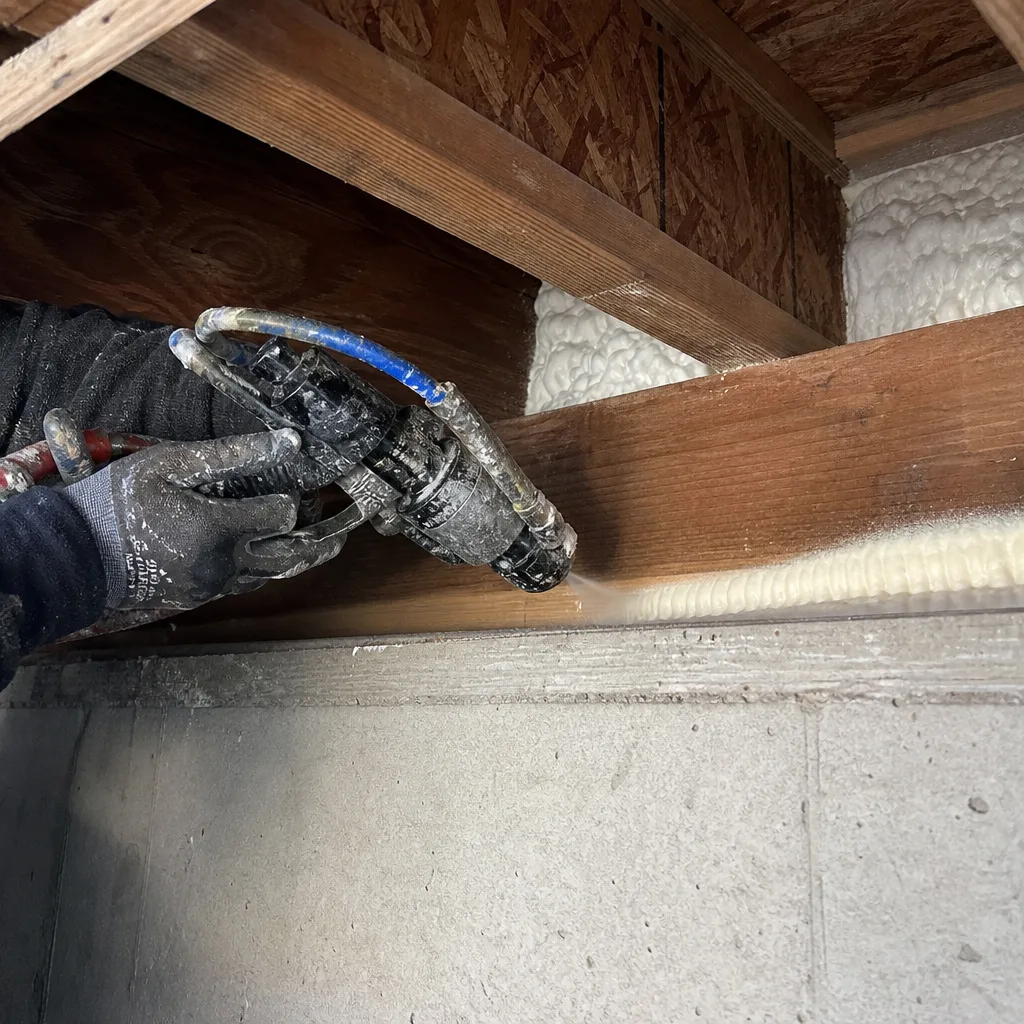
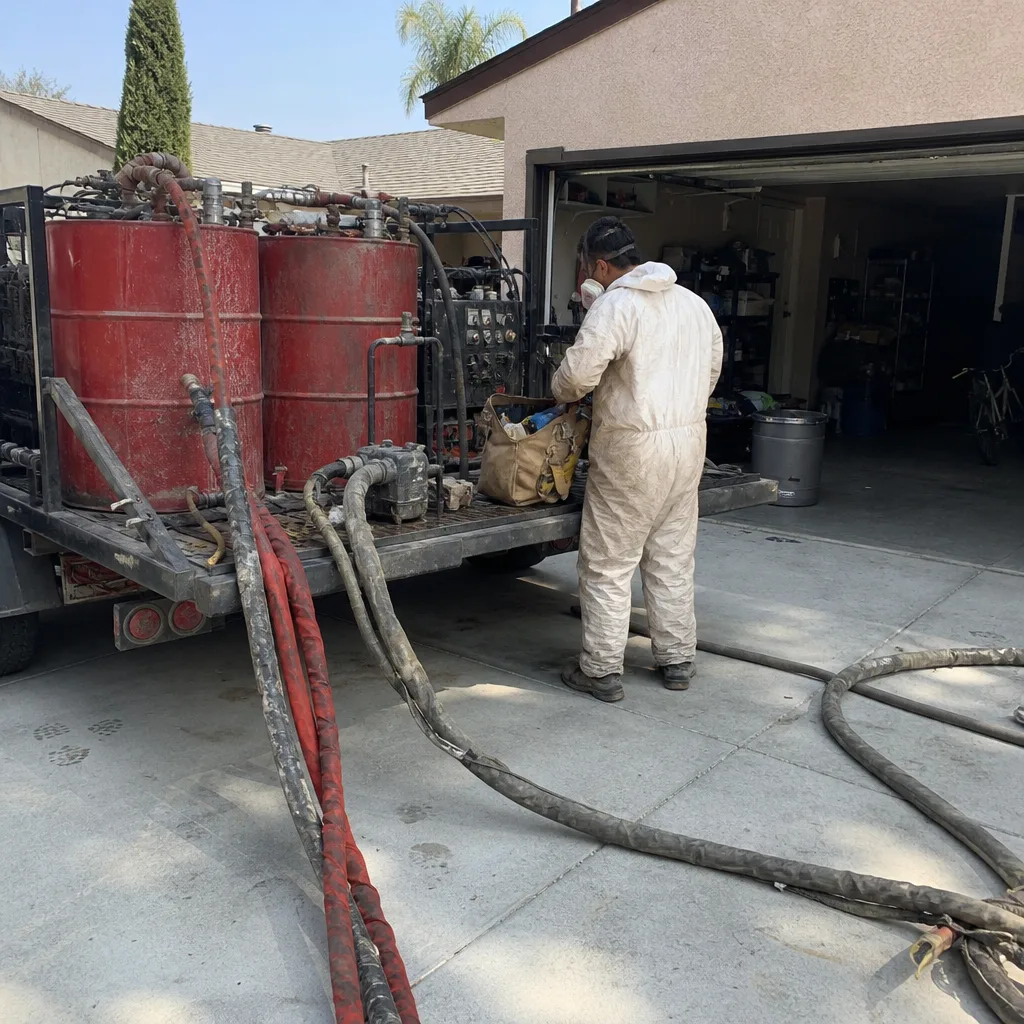
Fast, Reliable Spray Foam Insulation Across Inglewood
Spray foam insulation in Inglewood typically costs $2.25 – $4.50 per board foot for open-cell and $3.50 – $7.00 for closed-cell, depending on the cavity depth and existing conditions. Most attic applications here run $2,800 – $6,500 for a typical 1,200-sq-ft bungalow. The work usually takes one to two days. Call (866) 271-1602 for a free estimate, and we can usually schedule an assessment within the week.
Inglewood isn’t a generic insulation job. The flats under the LAX flight path and the new SoFi Stadium and Intuit Dome district have a specific set of problems that ordinary attic blow-in work doesn’t touch. Older stucco bungalows, most built between the 1920s and 1950s, carry original or degraded insulation, single-pane windows, and wall cavities that were never designed for modern air-sealing. We work these homes regularly and know what the noise, heat gain, and legacy wiring actually demand. Fontana Insulation is led by Noel Arredondo, and our team knows the difference between a quick attic job in Del Aire and a full thermal-envelope retrofit near Century Boulevard.
Why Fontana Insulation Is Inglewood’s Preferred Spray Foam Insulation Company
We carry eight nationally recognized insulation brands across fiberglass, mineral wool, spray foam, and cellulose. That matters in Inglewood because the right call for a 1948 Spanish-style bungalow near Prairie Avenue is different from the right call for a new townhome near the stadium district. We don’t have one product to push. If closed-cell Icynene fits your walls, we’ll say so. If open-cell Demilec is the better value for your attic, that’s the recommendation. No brand loyalty, just the best fit for your attic, walls, or crawlspace.
Our Inglewood customers tell us the same thing repeatedly: other contractors quoted them fiberglass batts and moved on. We look at the whole envelope. The air leaks around your rim joists, the settled cellulose in your attic, the unsealed wall cavities that let Santa Ana wind dust into the house. That’s the difference between an insulation installer and an insulation specialist.
We’re authorized installers for Icynene and Demilec, two of the most performance-tested spray foam brands in North America. We also carry Rockwool mineral wool, which most local contractors don’t stock, for clients who want fire resistance and sound dampening alongside thermal performance. When you’re under a flight path or a block from an event venue, that combination isn’t a luxury. It’s the point of the job.
Spray Foam Insulation Contractors in Inglewood
Spray Foam Insulation Contractors in Inglewood deal with a housing stock that predates modern air-sealing standards. The job here usually involves sealing attic floors, rim joists, and exterior wall cavities in homes that have knob-and-tube wiring, settled blown-in insulation, or no insulation at all. A full retrofit on a 1,000-sq-ft stucco bungalow runs $2,200 – $5,800 for open-cell attic work, with wall cavity injection adding $4,000 – $9,000 depending on access. Homeowners call us when they can’t hold a consistent temperature, when jet noise from LAX intrudes into bedrooms, or when energy bills climb through the dry summer months.
Wall Cavity Application in Older Bungalows
Older Inglewood homes often have uninsulated wall cavities, and many still carry active knob-and-tube wiring. You can’t just spray foam over live knob-and-tube. The foam traps heat against the conductors, creating a fire risk and a code violation. The right sequence is: electrician or qualified technician confirms the wiring, conduit or air gap is installed, then foam is applied. We flag this on nearly every pre-1960 wall job in 90306 and 90307. Skipping that step is how you get a house that’s tighter but less safe.
Air Sealing and Thermal Boundary
The real value of spray foam in Inglewood isn’t just R-value per inch. It’s the air barrier. Open-cell foam at 3.5 inches gives roughly R-13 and stops air movement. Closed-cell at 2 inches gives roughly R-14 and adds structural rigidity plus vapor control. In a dense flatland city where the afternoon sun bakes attics to 130°F and cool coastal nights drop the exterior 30 degrees, that sealed boundary is what keeps rooms comfortable. We focus on the thermal envelope, not just the insulation product.
Spray Foam Attic Insulation in Inglewood
Spray Foam Attic Insulation in Inglewood is the most common job we do, and it’s rarely straightforward. Most pre-1950s attics here have settled or disturbed blown-in insulation, gaps around the eave edges, and unsealed top plates. Spraying foam over settled material creates uneven coverage and thermal bridging. The right approach is often to seal the air leaks first, then apply open-cell foam directly to the attic floor or roofline. A typical attic retrofit runs $2,800 – $6,500, with the higher end reflecting homes where old insulation must be removed or knob-and-tube is present. We assess before we quote.
Attic Radiant-Heat Control
Inglewood’s dry, Mediterranean-influenced climate means attics here bake. The priority is radiant-heat control and air sealing, not heavy heating loads. Open-cell Icynene on the attic floor creates a continuous air barrier that stops superheated attic air from pressing down into living space. We’ve measured stabilized attic temperatures after sealing jobs near Century Boulevard, even during Santa Ana wind events where exterior temperatures swung 20 degrees in 12 hours.
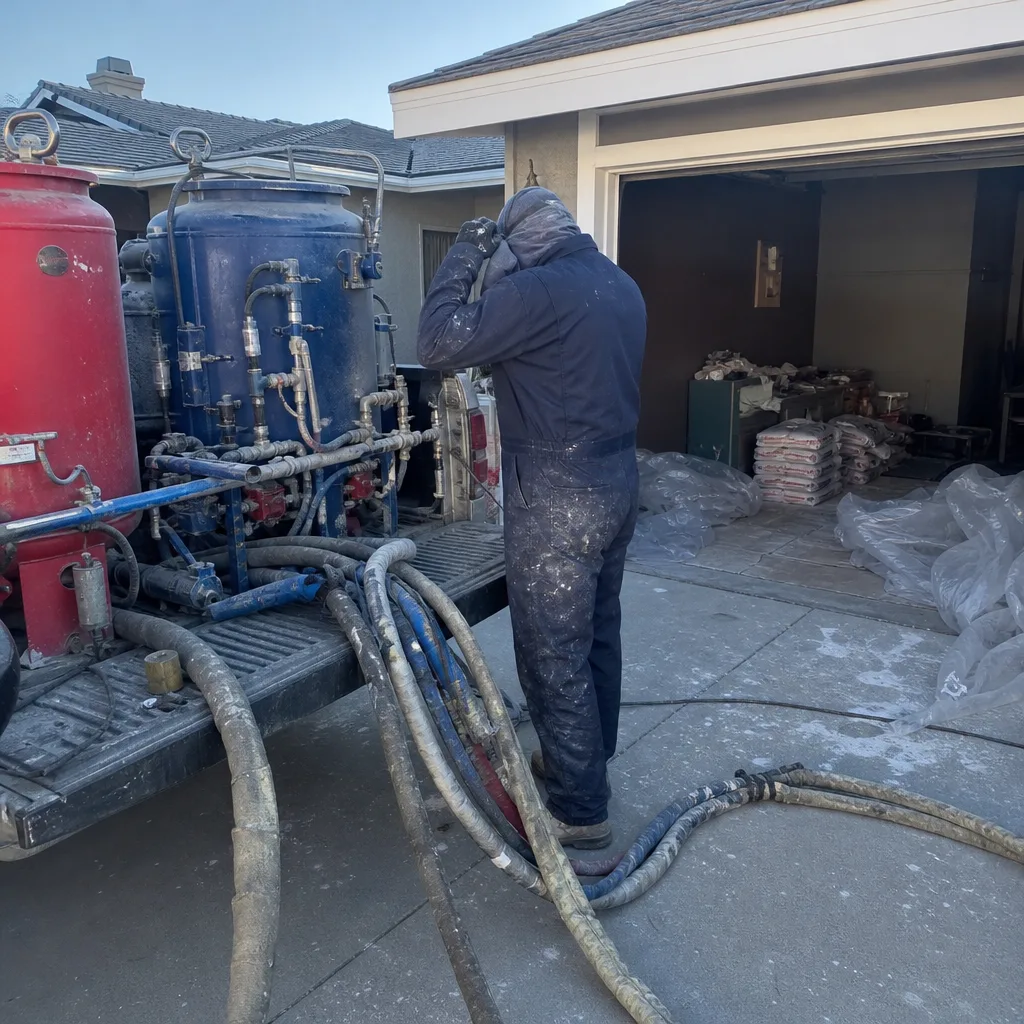
Reinsulating Over Legacy Systems
A home built in 1940 with original attic insulation doesn’t need more of the same. It needs the old material evaluated, the air leaks sealed, and a continuous layer applied. Where knob-and-tube wiring is present, we require conduit encapsulation before any foam touches the cavity. This isn’t optional. It’s the difference between a code-compliant retrofit and a risk you don’t see until it’s too late. We carry the brands that make sense here, including Icynene for open-cell applications and Knauf for any fiberglass transitions.
Trusted Brands We Service in Inglewood
We stock and install Icynene and Demilec spray foam for Inglewood jobs because both brands have decades of performance testing behind them. Icynene’s open-cell formula is forgiving in retrofit applications and air-seals aggressively. Demilec’s closed-cell product carries the higher R-value per inch and adds structural strength, which matters in older stucco homes that have been through decades of seismic movement. We also carry Rockwool mineral wool for Inglewood clients who want fire-resistant, sound-dampening material in interior walls or around mechanical chases. Carrying eight brands means we’re installing what your home’s condition demands, not what’s cheapest to stock.
Common Spray Foam Insulation Problems We See in Inglewood Homes
- Foam applied over settled blown-in insulation. In attics where cellulose or fiberglass has settled to R-8 or less, spraying foam on top creates uneven coverage and leaves thermal bridges at the eave edges. The fix is an assessment first, not a one-day spray-and-go.
- Unsealed knob-and-tube wiring before foam application. Pre-1960 bungalows in 90303 and 90308 frequently still have active knob-and-tube in attic floors and wall cavities. Foam directly over live wiring is a fire risk and a code violation. Conduit or air gap first, always.
- Off-gassing from improperly mixed two-part foam. Tightly sealed stucco bungalows with minimal mechanical ventilation can trap off-gas odor for days if the A/B ratio is off. We’ve corrected jobs from other contractors where the smell lingered because the foam was mixed wrong or applied too thick in a single pass.
- Foam shrinkage and cracking from day-night temperature swings. Inglewood’s wide diurnal range, cool nights and hot afternoons, puts real stress on closed-cell foam in wall cavities. Combined with seismic movement along the Newport-Inglewood fault zone, improperly cured foam can crack and lose its air barrier. Material selection and application technique matter more here than in coastal cities with steadier temperatures.
Pricing for Spray Foam Insulation in Inglewood, CA
Open-cell spray foam in Inglewood runs $2.25 – $4.50 per board foot installed. Closed-cell runs $3.50 – $7.00. A typical attic retrofit on an 800 – 1,400-sq-ft bungalow lands between $2,800 and $6,500 for open-cell, and $5,000 – $11,000 for closed-cell. Wall cavity injection adds $4,000 – $9,000 depending on access to stud bays and whether knob-and-tube encapsulation is needed. Rim joist sealing in a crawlspace or basement runs $1,200 – $2,800. Garage ceiling spray foam for a detached structure runs $1,500 – $3,500. These are real ranges for this market, not national averages. We assess the existing insulation, wiring, and moisture conditions before quoting, and estimates are free. Call (866) 271-1602 for an exact quote.
Key Takeaways
- Spray foam in Inglewood doubles as acoustic buffering against LAX and stadium noise, which is a primary reason homeowners here choose it over batts or blow-in.
- Older stucco bungalows frequently have knob-and-tube wiring that must be encapsulated before foam touches the cavity.
- Attic sprays run $2,800 – $6,500 for open-cell; closed-cell runs higher per board foot and adds vapor control.
- Fontana Insulation carries eight brands so the material recommendation fits your home, not our inventory.
- We spray foam in every Inglewood zip code: 90306, 90307, 90308, and 90309.
We Also Serve Cities Near Inglewood
Our Spray Foam Insulation team works across the South Bay and airport-adjacent communities. In addition to Inglewood, we regularly spray foam in Hawthorne, Del Aire, Lennox, and Alondra Park. Each of these flatland neighborhoods shares the same legacy housing stock, flight-path noise, and thermal-envelope challenges, so our crews know what to expect before they arrive.
Serving Inglewood, CA — Our Local Coverage Area
We’re based in the Inglewood area and know this community well. Use the map below to see our service coverage — if you’re nearby, we can almost certainly help.
FAQs About Spray Foam Insulation in Inglewood
Yes. Spray foam, especially open-cell foam, is an effective airborne sound damper. It fills gaps, absorbs sound vibrations, and creates a continuous air barrier that stops noise from traveling through unsealed top plates and wall cavities. For homes in the flats under the LAX flight path or near the stadium district, we typically recommend open-cell foam at the attic floor plus air-sealing around all penetrations. Mineral wool adds extra sound dampening in interior partitions. Call (866) 271-1602 for a sound-specific assessment.
No, not directly. Spray foam traps heat against live knob-and-tube conductors, which creates a fire risk and violates code. In Inglewood, where many pre-1960 bungalows still have active knob-and-tube, the wiring must be disconnected, replaced, or run through conduit with an air gap before foam is applied. We flag this on every assessment and coordinate with a licensed electrician when needed. It’s not an upsell; it’s a safety step.
Inglewood’s dry Mediterranean climate with hot summer attics and mild winters means open-cell foam is usually the right attic choice. It air-seals aggressively and handles the radiant-heat problem well. Closed-cell makes sense in wall cavities where you want vapor control and added structural rigidity, especially in stucco homes that have shifted over decades. The long dry season and occasional Santa Ana winds also make fire-resistant materials like Rockwool a smart complement in certain assemblies. We recommend per application, not per brand.
Not if it’s applied correctly and matched to the assembly. Inglewood’s climate is dry most of the year, so interior moisture risk is lower than in humid coastal cities. However, closed-cell foam applied without accounting for existing wall moisture or poor drainage can trap water against the stucco. We check for stucco cracks, rising damp, and vapor drive before recommending a foam type. In most Inglewood bungalows, open-cell attic foam is the low-risk, high-payoff choice.
Most Inglewood homeowners see meaningful energy-bill reduction within 2 – 4 years on an attic retrofit, faster if they combine it with air-sealing. The payback depends on your current insulation depth, window condition, and whether you run air conditioning heavily between May and October. In homes with no functional attic insulation, the payback can be under two years. We don’t guarantee a specific savings percentage without a site assessment, but we’ll walk you through the numbers before you commit. Call (866) 271-1602 for a free estimate.
Written by Noel Arredondo, Owner at Fontana Insulation, serving Inglewood and surrounding South Bay communities. We bring eight insulation brands and three installation methods to every home, then recommend the material that actually fits your house.