
Fast, Reliable Spray Foam Insulation Across Hawthorne
Spray foam insulation in Hawthorne typically runs $2.50 to $6.50 per square foot for a wall or attic retrofit, with most single-story mid-century homes landing between $4,800 and $11,000 total depending on cavity access and foam type. Open-cell foam usually costs less than closed-cell, but the older stucco construction common across the 90250 and 90251 ZIP codes often shapes the recommendation more than price alone. We work in Hawthorne every week, and we know the houses here: 1940s and 1950s tract walls with no sheathing, tight alley-load garages, aerospace-era apartment buildings that have never been opened up since they were built. Call (866) 271-1602 and we’ll send someone who actually understands local construction, not a crew guessing at the wall assembly from the driveway.
Why Fontana Insulation Is Hawthorne’s Preferred Spray Foam Insulation Company
We’ve spent enough time inside Hawthorne walls to know what separates a clean retrofit from a blown-out stucco finish. That matters here. A lot of the east-side tract homes near Hawthorne Boulevard and Prairie Avenue were built without sheathing paper behind the stucco, which means the wrong foam injection pressure will push the exterior finish right off the wall. We probe first. Every time. Homeowners around Ramona Avenue and 135th Street have called us after other contractors walked away from that risk, and our approach on those jobs is simple: drill from the interior, control the pressure, and air-seal around the old framing instead of forcing a full-density fill.
The second reason Hawthorne homeowners stick with us is material choice. We stock and install Icynene and Demilec spray foam alongside Rockwool, Knauf, and CertainTeed, so nobody has to accept a one-brand answer that doesn’t match their wall cavity or budget. Noel Arredondo built Fontana Insulation around that principle: recommend the material that fits the house, not the material sitting in the warehouse. On a Hawthorne retrofit with marginal cavities and original 2×4 framing, sometimes the right answer is an open-cell injection foam with air-sealing focus, not a closed-cell full fill. A contractor who only sells one foam can’t make that call honestly.
Spray Foam Insulation Contractors in Hawthorne
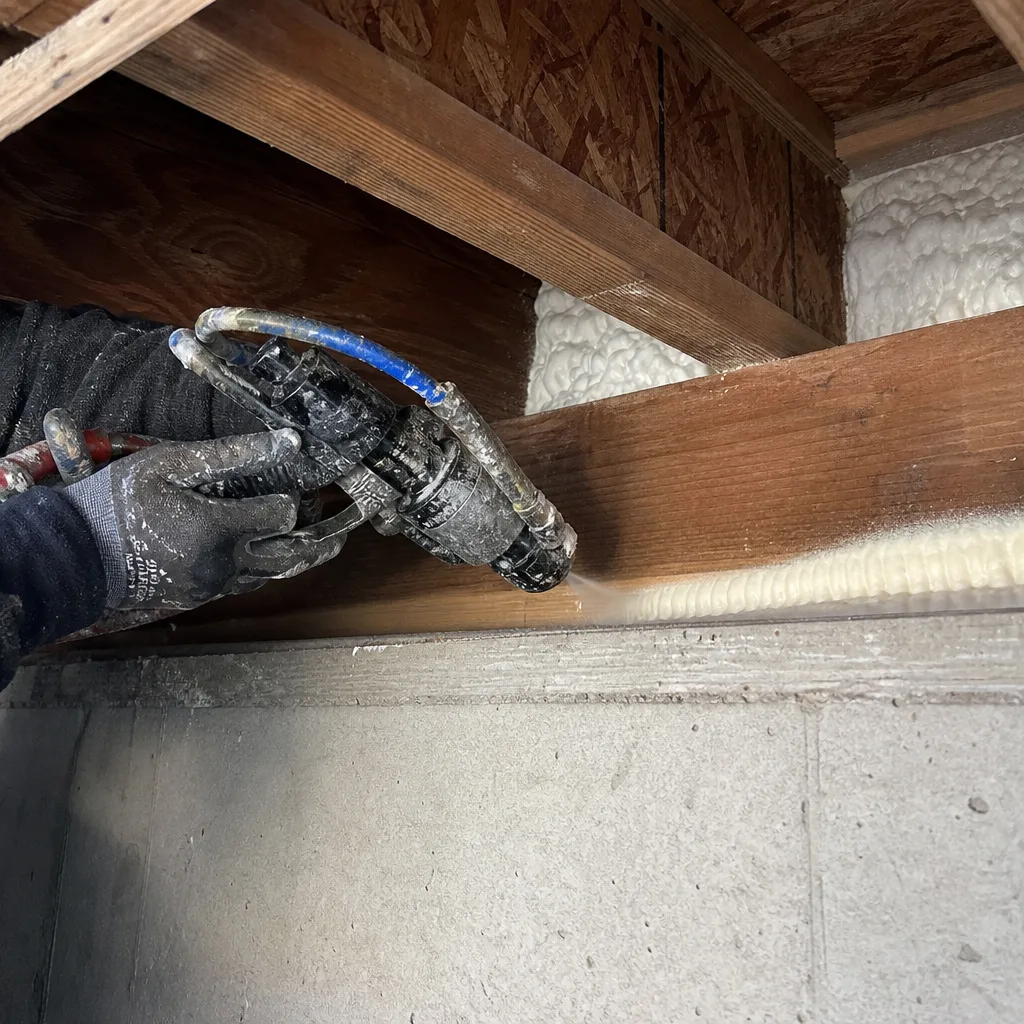
Spray foam insulation contractors in Hawthorne deal with a housing stock that’s genuinely unlike what you’ll find in newer inland subdivisions. Most of the work here is retrofit: walls that were built with empty cavities, single-pane windows still in place, and framing that hasn’t been exposed since the Eisenhower administration. The job involves drilling access holes in the right places, probing the cavity to understand what’s actually behind the stucco or drywall, injecting foam at controlled pressure, and sealing the framing penetrations so air stops moving through the wall. On a typical Hawthorne single-story 2×4 wall, open-cell injection foam runs $2.50 – $4.25 per square foot of wall area, while closed-cell runs $4.00 – $6.50 depending on depth and access difficulty. We handle both, and the recommendation depends on what the cavity tells us.
Cavity Probing Before Any Foam Is Injected
You don’t foam a Hawthorne wall blind. We probe every cavity with a borescope before injection starts, specifically to check for missing sheathing paper, existing wiring, and the actual stud bay depth. This takes fifteen minutes and it prevents the failure that generic crews create when they assume the wall is built like a modern tract home.
Open-Cell vs Closed-Cell in Older Hawthorne Walls
Open-cell foam is the more forgiving material for a 1950s stucco house. It expands less aggressively, so it’s less likely to stress an unreinforced stucco finish, and it air-seals well at lower densities. Closed-cell comes into play when we need structural rigidity or a vapor barrier, but on most of these old Hawthorne walls, open-cell plus focused air-sealing around the framing is the smarter application.
Spray Foam Attic Insulation in Hawthorne
Spray foam attic insulation in Hawthorne solves two problems that fiberglass batts simply can’t address in these older homes. First, it air-seals the thermal boundary at the roofline, which stops the stack effect that pulls conditioned air up through every crack in a 1950s ceiling. Second, it keeps attics dramatically cooler, which matters in Hawthorne because a lot of the west-facing bedrooms on these tract homes get punishing afternoon heat through uninsulated wall and ceiling transitions. A typical Hawthorne attic retrofit with open-cell spray foam at the roofline runs $4,500 to $9,000 for a 1,000 – 1,500 square foot home, and closed-cell runs $6,500 to $13,000 for the same footprint. The cost difference reflects material price, not effort, and we’ll walk you through which foam earns its keep in your specific attic.
Roofline Application for Vented and Unvented Spaces
Most Hawthorne attics are vented, so we spray the roofline and leave the soffit ventilation intact. The foam creates an air barrier at the roofline that turns the attic into semi-conditioned space, which protects ducts and keeps the whole envelope tighter. On unvented or low-slope attics, the approach changes, and we account for that in the assessment.
Air-Sealing Around Original Ceiling Penetrations
Before any foam goes in, we identify every ceiling penetration: light fixtures, bathroom fans, attic hatches, and the gaps around original framing where walls meet ceilings. These old Hawthorne homes leak air through dozens of small gaps, and foam only works as promised if those paths get sealed first. Skipping that step is a demo-level job, not a finished retrofit.
Trusted Brands We Service in Hawthorne
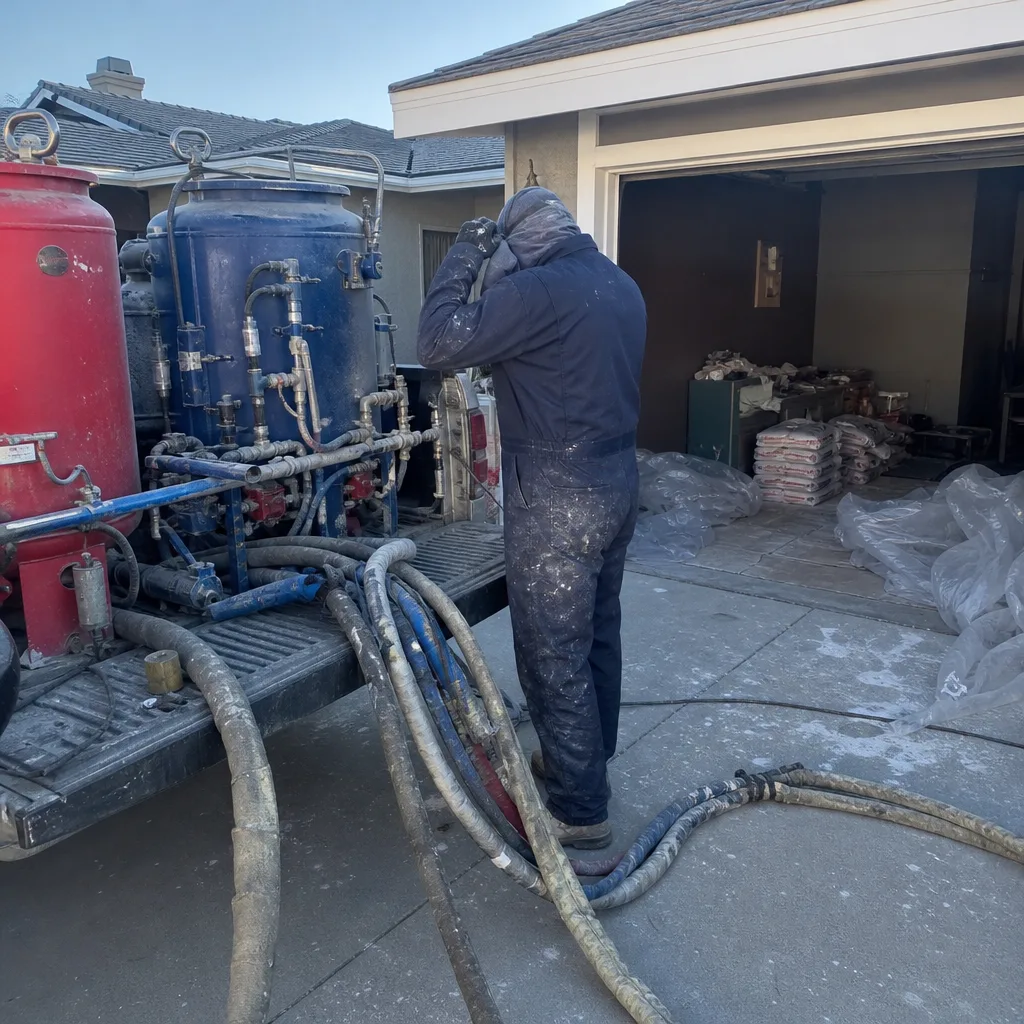
We carry Icynene and Demilec spray foam because both brands have been performance-tested across North American climate zones and both hold up in retrofit applications like the ones we see in Hawthorne every week. For homeowners who want a non-foam option, we also stock Rockwool mineral wool for fire resistance and sound dampening, plus Knauf and CertainTeed fiberglass when a batt or blown-in approach fits the building better. We keep our Hawthorne jobs stocked from our own truck inventory, which means we’re not waiting on a distributor delivery when a cavity is open and the clock is running. The material decision gets made at the house, with the wall opened or probed and the actual conditions visible, not from a sales sheet.
Common Spray Foam Insulation Problems We See in Hawthorne Homes
- Blown-out stucco from unprobed injections: Walls on the east side near the airport and along Prairie Avenue often have no sheathing or sheathing paper behind the stucco, so a full-pressure foam injection can push the exterior finish off the wall. We probe every cavity first, and we’ve repaired enough of these blowouts to know the fix is always more expensive than the probe would have been.
- Foam applied over knob-and-tube or early romex wiring: Homes built in the 1940s and early 1950s still carry original wiring in the walls, and encasing that wiring in closed-cell foam creates a heat-trapping problem that no amount of insulation value justifies. We inspect the cavities with a borescope and isolate or re-route wiring before foam goes in, and if the wiring is still live knob-and-tube, we’ll tell you to have an electrician address it before we spray.
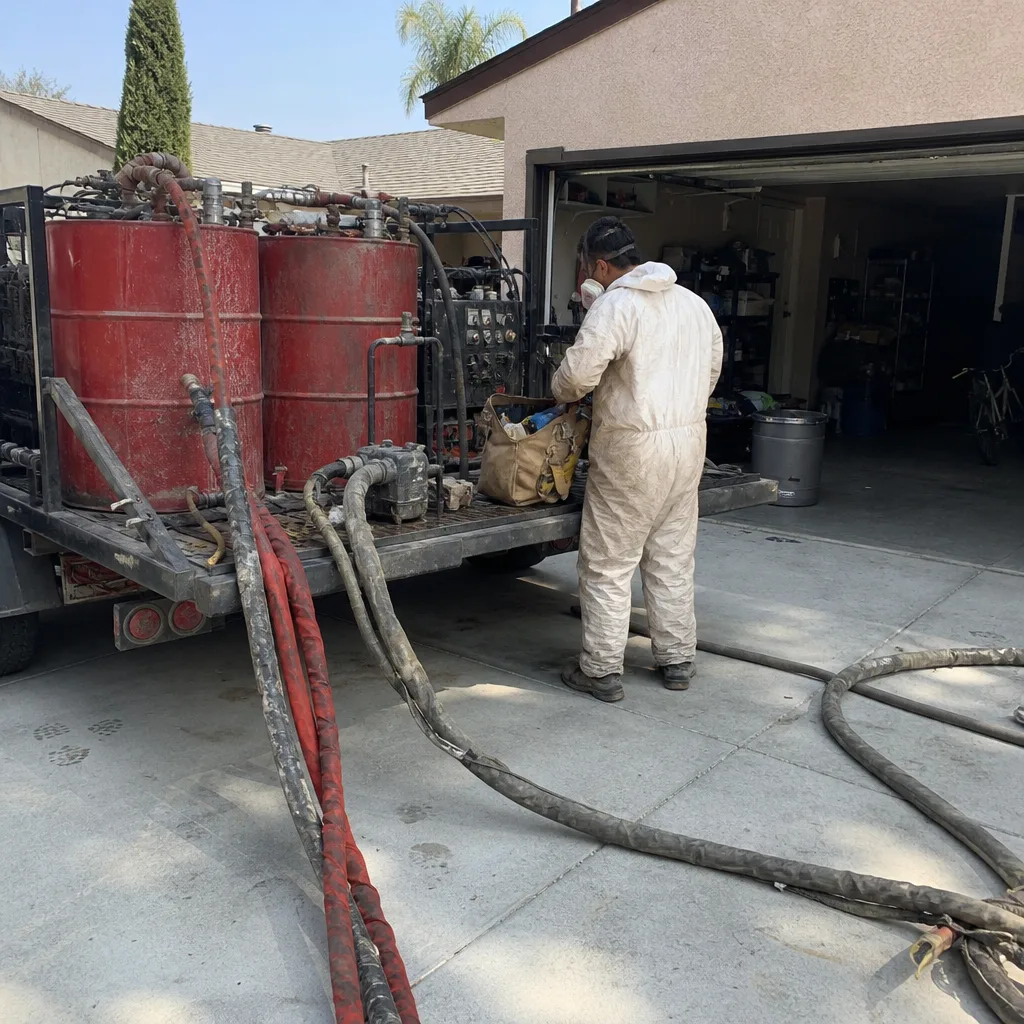
- Rushed passes and skipped air-sealing on tight-access jobs: Alley-load garages and townhome doors in Hawthorne leave barely enough room for the proportioner and hose runs, which is exactly when rushing crews skip the air-sealing step around old framing. We plan the hose runs before the job starts and we don’t let access constraints become an excuse for cutting corners.
- Hot west-facing rooms that fiberglass never fixed: A lot of Hawthorne homeowners have already paid for fiberglass batts in the walls and still have rooms that overheat by 3 p.m. The problem in these old houses isn’t just missing insulation, it’s air moving through the wall assembly. Foam stops the air movement, which is why a properly probed and sealed injection foam works where batts never did.
Pricing for Spray Foam Insulation in Hawthorne, CA
Spray foam insulation in Hawthorne runs $2.50 to $6.50 per square foot depending on foam type, cavity depth, and access conditions. A wall cavity retrofit on a 1950s single-story home typically lands between $4,800 and $11,000 total, and an attic roofline application runs $4,500 to $13,000 for a standard 1,000 to 1,500 square foot home. The factors that move the number are predictable: existing insulation removal, wiring that needs isolation, tight access that slows the crew down, and whether the home is occupied during the work. Closed-cell always costs more than open-cell per board foot because the material itself is more expensive, not because the labor differs. We give free estimates with a written scope that includes what we probed, what we found in the cavities, and what we recommend for your specific walls. Call (866) 271-1602 to schedule one.
We Also Serve Cities Near Hawthorne
Our crews cover Hawthorne’s 90250 and 90251 ZIP codes along with the surrounding communities of Del Aire, Inglewood, Lennox, and Lawndale. That’s where a lot of our Spray Foam Insulation work comes from, and it means we’re never far from a Hawthorne job when the access changes or the wall surprised us. If you’re in one of those neighboring cities, the same probing-first approach applies.
Serving Hawthorne, CA — Our Local Coverage Area
We’re based in the Hawthorne area and know this community well. Use the map below to see our service coverage — if you’re nearby, we can almost certainly help.
FAQs About Spray Foam Insulation in Hawthorne
Yes, if the cavity is probed first and the injection pressure is controlled. We drill from the interior, inspect the wall assembly with a borescope, and use a lower-pressure open-cell injection when there’s no sheathing or sheathing paper behind the stucco. That’s the difference between a clean retrofit and a blown-out exterior, and it’s a failure mode we see primarily on Hawthorne’s east-side and airport-adjacent tracts. Call (866) 271-1602 and we’ll walk you through what your specific wall needs.
Because in Hawthorne, most people’s real complaint is a hot west-facing bedroom or a drafty wall near the airport, not a utility bill. Foam’s air-sealing is what fixes those comfort problems, and the energy savings are a side benefit, not the main event. If your goal is purely energy ROI, we’ll tell you that honestly and may recommend a less expensive material.
No, not with foam. Encasing live knob-and-tube or early romex in closed-cell foam traps heat around the wiring, which creates a concealed fire hazard. We’ll inspect the cavities first, and if original wiring is still active, we’ll recommend you have an electrician address it before any insulation goes in. Once the wiring is updated or abandoned, foam becomes a safe option.
We plan the proportioner and hose placement before the job starts, and we’ve done enough of these tight-access Hawthorne jobs that we know where the equipment will fit on an alley-load lot or through a townhome door. Access constraints are a planning issue, not a reason to rush the work, and we don’t let them become one.
We install Icynene and Demilec spray foam for attic retrofits, both of which are performance-tested brands suited to unvented and vented Hawthorne attics. The choice between open-cell and closed-cell at the roofline depends on your attic configuration and whether you want a vapor barrier, and we’ll recommend one over the other based on what we see in your specific attic.
Written by Noel Arredondo, Owner at Fontana Insulation, serving Hawthorne and the surrounding communities.