
Fast, Reliable Spray Foam Insulation Across Indio
Spray foam insulation in Indio solves a specific problem: west-facing roof decks that push attic temperatures past 150°F and force your AC to run nonstop from May through October. We install open-cell and closed-cell foam at the roofline, rim joists, and crawl spaces throughout 92201, 92202, and 92203, with a focus on radiant-heat rejection rather than the cold-weather logic most insulation contractors bring from coastal markets. Noel Arredondo and our Spray Foam Insulation crew know exactly what these Coachella Valley summers do to a builder-grade attic. Call (866) 271-1602 for a free estimate, and we’ll tell you honestly whether foam is the right move for your home or whether blown-in cellulose does the job for less.
Why Fontana Insulation Is Indio’s Preferred Spray Foam Insulation Company
We work across Indio weekly, from the older stucco-and-slab homes off Highway 111 in 92201 to the newer master-planned streets of Terra Lago and north Indio in 92203. That matters because the two areas need very different foam specs. An older 92201 home often has open framing, mixed remodel layers, and an attic that was never designed for the cooling loads it now carries. A 2000s tract home in 92203 looks cleaner from the outside but usually hides the same problem: original blown-in fiberglass that has settled to four or five inches and is dust-fouled from years of valley wind.
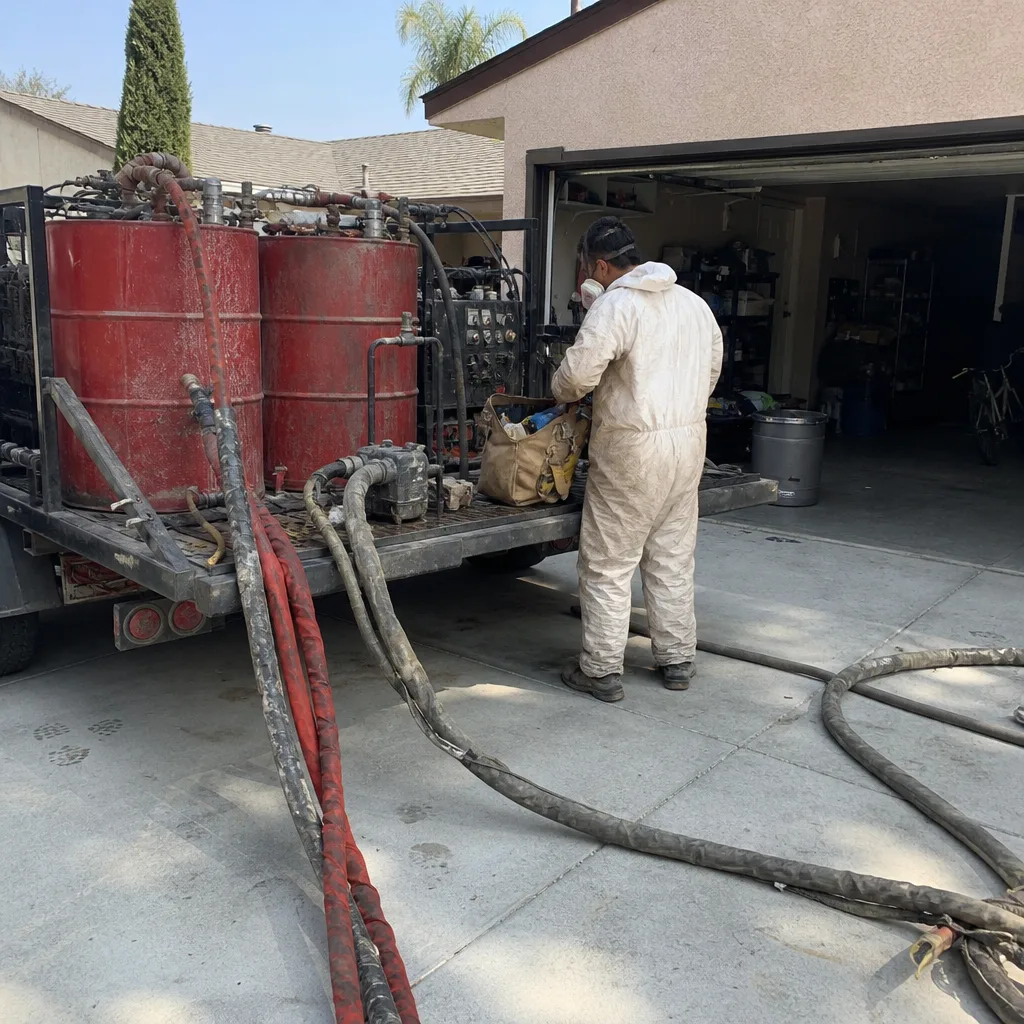
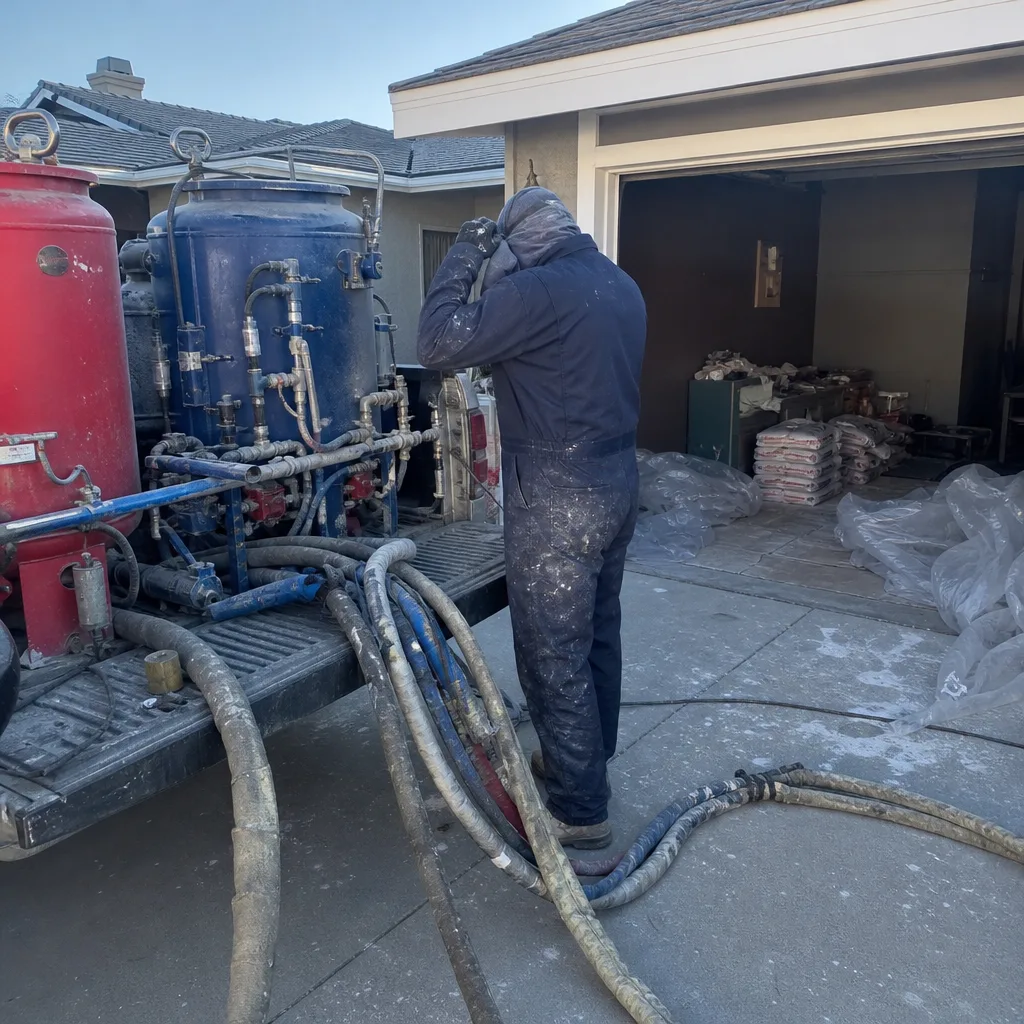
We carry eight insulation brands across four material categories, so when we recommend spray foam for your Indio home, it’s because the application calls for air-sealing and radiant-heat control, not because foam is the only product on our truck. As authorized installers for Icynene and Demilec, we can offer closed-cell and open-cell options matched to your attic’s actual condition. We also stock Rockwool and CertainTeed for cases where a hybrid approach makes more sense. Noel Arredondo built this company around material-agnostic recommendations. The right material for your home’s specific situation is the whole point.
Rim Joist Spray Foam in Indio
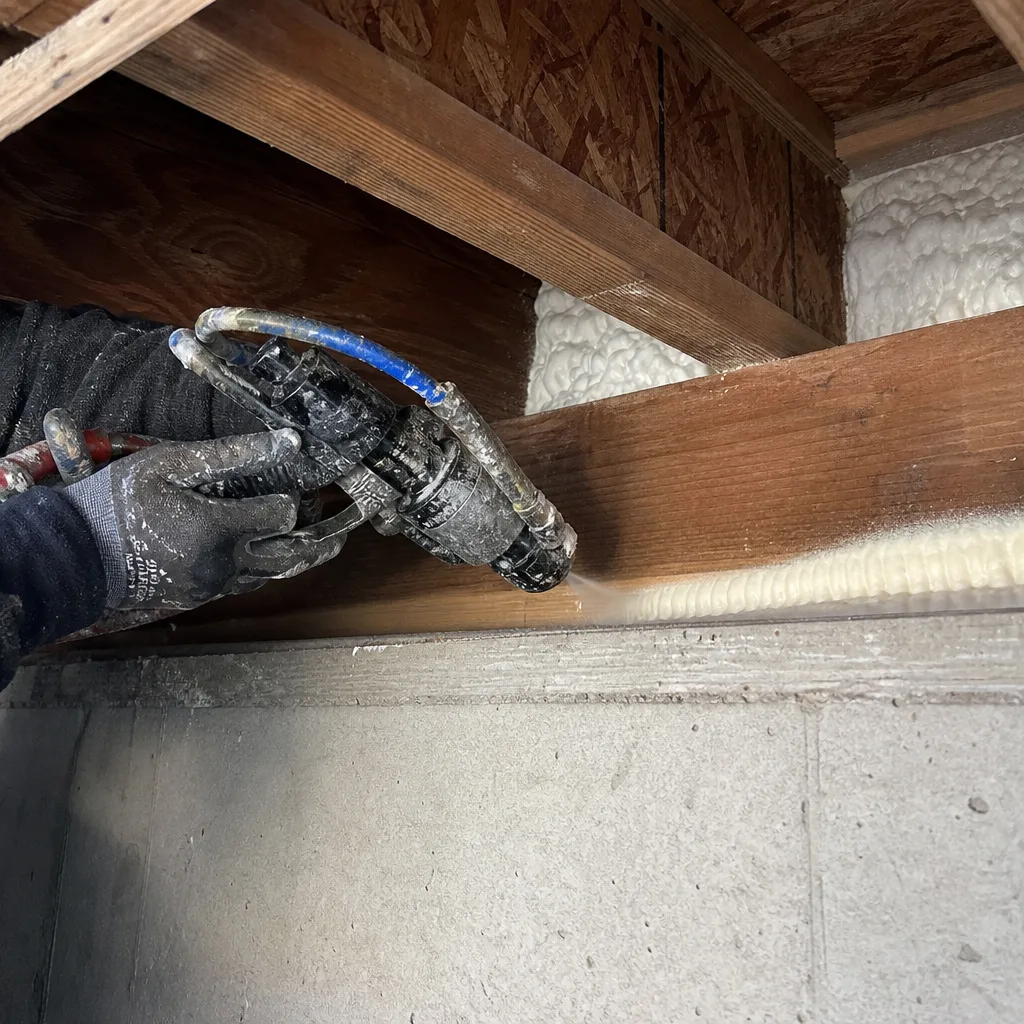
Rim joist spray foam is the first thing we check on Indio tract homes, because builder-grade fiberglass stuffed into the rim joist bays does almost nothing once valley dust and 110°F heat have been working on it for a decade. Rim joists are the short horizontal framing members where your floor system meets the foundation wall, and in Indio’s low-desert climate they act as a dust and heat infiltration point that most homeowners never see. Air-sealing and foaming the rim joists on a typical 92203 two-story runs $1,400 to $2,800 depending on linear footage and access, and it’s often the single biggest comfort upgrade we can make without touching the attic.
Where the Dust Actually Gets In
Wind-blown sand in the Coachella Valley doesn’t just sit on your patio furniture. It works into the rim joist bays through gaps around the sill plate, then rides the pressure differences into your walls and living space. Closed-cell foam at the rim joist kills two problems at once: it seals the air pathway and blocks the radiant heat that radiates up from hot exterior walls.
Pairing Rim Joists with the Attic
A rim joist job alone helps, but the real payback comes when we foam the roofline too. On a 2000s stucco home in Indio, the rim joists and the attic are the two biggest thermal leaks we find, and fixing one without the other leaves a pressure imbalance that pulls dust through the remaining gap. We’ll always scan both before quoting either.
Crawl Space Spray Foam Insulation in Indio
Crawl space spray foam insulation in Indio addresses a problem most desert homeowners assume they don’t have: a vented crawl space that pulls hot, dust-laden air under the house all summer. Crawl spaces are less common in Indio than in coastal cities, but plenty of older 92201 homes and even some 1990s 92203 builds have them, and they’re almost always vented to the outside. Foaming the crawl space ceiling or the foundation walls runs $1,800 to $4,200 depending on square footage, clearance height, and whether we’re also sealing the vents and installing a vapor barrier. In Indio’s low humidity, the moisture-control logic is different from what you’d do in San Diego or Long Beach, and we spec it accordingly.
The Vented Crawl Space Problem in the Desert
In a humid climate, venting a crawl space makes some sense. In Indio, a vented crawl space just means 110°F air and fine sand moving under your floors from June through September. We typically recommend closed-cell foam on the crawl space walls paired with a sealed ground cover, which stops the heat and dust at the perimeter instead of trying to insulate the floor above a hot, dirty cavity.
When to Foam the Ceiling Instead
If your Indio home has an encapsulated crawl space that’s already clean and dry, foaming the floor joists from below can be the simpler option. But in a vented, sandy crawl space, ceiling foam turns into a dust trap. We’ll inspect before we recommend, and we’ll show you what we’re seeing so the call is yours.
Trusted Brands We Service in Indio
We carry Icynene, Demilec, Rockwool, Knauf, CertainTeed, and others because each earns its place in the lineup for a specific Indio application. Icynene closed-cell is our go-to for roofline and rim joist work where radiant heat and dust intrusion are the primary concerns. Demilec gives us a strong open-cell option for interior sound control and wall cavities where air-sealing matters more than vapor resistance. Rockwool and CertainTeed stay on the truck for hybrid jobs where foam handles the sealing and mineral wool or fiberglass handles the fill. No brand loyalty. Just the best fit for your attic, walls, or crawl space. We keep the materials we need for Indio jobs on hand, so we’re not waiting on a distributor in Palm Springs to get your project moving.
Common Spray Foam Insulation Problems We See in Indio Homes
- Settled, dust-loaded builder-grade fiberglass in 1990s-2000s 92203 tract homes. The original attic insulation in many Terra Lago and north Indio houses has settled to half its original depth and picked up years of wind-blown sand. Spraying foam over a failing substrate without air-sealing first just locks the problem in.
- Wind-blown sand coating open-cell foam in vented attics. Open-cell foam’s porous surface acts like a filter in a dusty attic, slowly loading up with sand and losing its insulating value if the ventilation path isn’t corrected first. This is why our Indio specs often lean closed-cell at the roofline.
- Cold-climate vapor-barrier logic applied to a low-desert attic. Some contractors bring the coastal playbook out to the Coachella Valley and install a vapor retarder on the wrong side of the assembly. In Indio’s low-humidity, high-heat attic, that can trap moisture incorrectly and undermine the foam’s performance.
- Adhesion and off-gassing failures from under-thickness foam on 150°F+ roof decks. A west-facing deck in Indio gets hot enough to stress a poorly prepped or under-applied foam lift. We see delamination and shrinkage on foam that was never spec’d for sustained desert thermal load.
Pricing for Spray Foam Insulation in Indio, CA
Rim joist spray foam in Indio typically runs $1,400 to $2,800. Crawl space encapsulation with closed-cell foam lands between $1,800 and $4,200 depending on clearance and square footage. A full roofline foam job on a 1,800-square-foot 92203 tract home generally falls between $4,500 and $8,500 for closed-cell, with open-cell running 20-30% less when the application supports it. Garage ceiling and spray foam roof deck projects in Indio usually land between $1,200 and $3,400. What moves the price: attic accessibility, the condition of existing insulation, and whether we’re air-sealing top plates and penetrations before foaming. Every estimate is free, and Noel walks you through the material choice in plain terms before you commit to anything. Call (866) 271-1602 for exact numbers on your house.
We Also Serve Cities Near Indio
Our crews run spray foam jobs in Bermuda Dunes, La Quinta, Indian Wells, and Palm Desert on the same schedule we keep for Indio. The houses are similar, the heat is the same, and we don’t treat a La Quinta rim joist job any differently than a Terra Lago one. Call (866) 271-1602 and tell us where you are. If you’re in the Coachella Valley, we’re already working nearby.
Serving Indio, CA — Our Local Coverage Area
We’re based in the Indio area and know this community well. Use the map below to see our service coverage — if you’re nearby, we can almost certainly help.
FAQs About Spray Foam Insulation in Indio
Spray foam earns its price in an Indio attic when the real problem is a west-facing roof deck pushing past 150°F and dust infiltrating through gaps in the ceiling plane, because foam is the only insulation that seals as it insulates. Blown-in fiberglass or cellulose slows heat transfer but does nothing for the air leaks and dust pathways around top plates, can lights, and bath fans that let hot attic air pressurize your living space. If we scan your attic and find settled, dust-loaded fiberglass with open penetrations, adding more blown-in on top just buries the problem. Foam at the roofline turns the attic into a conditioned buffer zone instead of a 150°F oven above your ceiling. Call (866) 271-1602 and we’ll tell you which route fits your house and your budget.
Closed-cell spray foam holds up well to Indio’s blowing sand and dust because its surface is dense and non-porous, which is exactly why we lean toward closed-cell at the roofline and rim joists in this market. Open-cell foam is more vulnerable in a vented attic, since its open surface can gradually load up with wind-blown sand and lose performance. The fix isn’t always “always use closed-cell” though. Sometimes correcting the ventilation path first, or moving the thermal boundary to the roofline, makes open-cell a perfectly good choice. The material decision should follow the attic’s actual condition. We’ll show you what we’re seeing before we quote anything.
Most 1990s and 2000s tract homes in 92203 should have their rim joists inspected, because builder-grade fiberglass stuffed into those bays is usually loose, dusty, and letting air move between the foundation and the floor system. If your floors feel warm in the summer or you notice fine dust collecting inside cabinets and closets against exterior walls, your rim joists are probably part of the problem. Foaming them seals the air pathway and cuts the radiant heat coming up from hot slab edges and foundation walls. It’s one of the most cost-effective comfort upgrades we do in Indio. Ask for a rim joist inspection when you call (866) 271-1602 for an attic quote.
Crawl spaces are less common in Indio than slab-on-grade, but enough older 92201 homes and some 1990s builds have them that it’s a real question, and yes, if your crawl space is vented it’s pulling hot, sandy air under your house all summer. Closed-cell foam on the crawl space walls, paired with a ground vapor barrier, stops the heat and dust at the perimeter and turns that dusty cavity into a clean, sealed buffer. Ceiling foam under the floors only makes sense if the crawl space is already clean and encapsulated. We’ll crawl in, take a look, and tell you which approach is worth the money. Free inspection with any attic or rim joist estimate.
In Indio, spray foam is specified for heat rejection and cooling-load reduction, not for trapping winter warmth, which means closed-cell at the roofline and rim joists takes priority over the vapor-retardation details that dominate cold-climate installations. The vapor-barrier logic that matters in Minneapolis or Chicago is often counterproductive in a low-humidity, high-heat desert attic. What matters here is whether the foam can handle a 150°F+ west-facing deck, reject radiant heat before it enters the living space, and keep wind-blown sand out of the assembly. That’s the lens we bring to every Indio job. Call (866) 271-1602 and we’ll walk your house with that lens on.
Get Your Indio Spray Foam Estimate
We sprayed closed-cell Icynene along the roof deck and rim joists of a 2000s stucco tract home in the Terra Lago area of north Indio after the homeowner’s July electric bills spiked and our thermal scan showed a west-facing attic deck hitting 155°F. The original builder-grade blown-in fiberglass had settled to about four inches and was dust-fouled from years of valley wind, so we air-sealed the top plates and foamed the deck to cut the radiant load before it entered the living space. The homeowner reported the upstairs bonus room finally holding temperature through the afternoon peak.
That’s the kind of result foam can deliver in Indio when it’s spec’d for the desert, not for a coastal climate. If your attic is hot, your floors are warm, or your electric bill is climbing every June, call Noel and the Fontana Insulation team at (866) 271-1602. We’ll scan, explain what we find, and give you a straight answer on whether spray foam is the right material for your home. Estimates are free, and we’ll never push foam where another material does the job better.
Written by Noel Arredondo, Owner at Fontana Insulation, serving Indio and the Coachella Valley.