
Insulation Company in Indio, CA
Blown in insulation is the most common retrofit call we handle in Indio, and for a simple reason: the valley’s housing stock was built to 1980s and 1990s standards, when cooling loads were lower and energy was cheaper. A typical 92201 or 92203 home has an attic floor with thin, settled fiberglass batts or a few inches of loose fill that no longer resists the 150°F attic temperatures we record from May through September. Our crews fix this daily in Indio’s stucco tract homes, using materials matched to what the structure actually needs. Call (866) 271-1602 for a free estimate and we’ll tell you what’s really in your attic now.
Why Indio Homes Are Different
Indio sits in the Coachella Valley, where summer highs routinely push past 110°F and attic temperatures can exceed 150°F. That flips the logic insulation advice usually follows. In most of the country, the conversation is about keeping heat in. In Indio, it’s about keeping heat out, and it’s about whether your insulation can hold up under sustained thermal load without sagging, settling, or letting radiant heat cook the ceiling below. The enemy here is the west-facing roof deck. By mid-afternoon in July, a poorly insulated attic turns into a heat exchanger that forces your AC to run almost continuously. Technicians in the 92203 growth areas – Terra Lago, north Indio – regularly find original blown-in attic insulation from the 2000s that’s settled to half its rated depth. Add the valley’s wind-blown dust and fine sand, and you get a third problem almost nobody talks about: infiltration through eave gaps, can lights, and plumbing penetrations that carries dust into the house and undermines whatever thermal barrier exists.
Homes in the older 92201 neighborhoods near downtown Indio are often slab-on-grade stucco builds with little or no wall insulation and attics that were improved piecemeal over the decades. Newer subdivisions in 92203 have more insulation by code, but the low-desert climate punishes anything installed without attention to air-sealing and radiant barriers. Cold-climate vapor-barrier logic applied here can actually create moisture problems, because the humidity is so low and the dominant force is dry heat, not condensation. Indio’s insulation problems are heat rejection, dust control, and cooling-load engineering, not winter weatherproofing, and every material decision has to start from that reality.
Our Main Indio Services
Most Indio homeowners reach out to us about two things: an attic that’s hot enough to raise the indoor temperature by ten degrees, or air leaks around walls and rim joists that make AC bills climb every time the temperature spikes. Here’s what each involves in the valley.
Attic Insulation in Indio
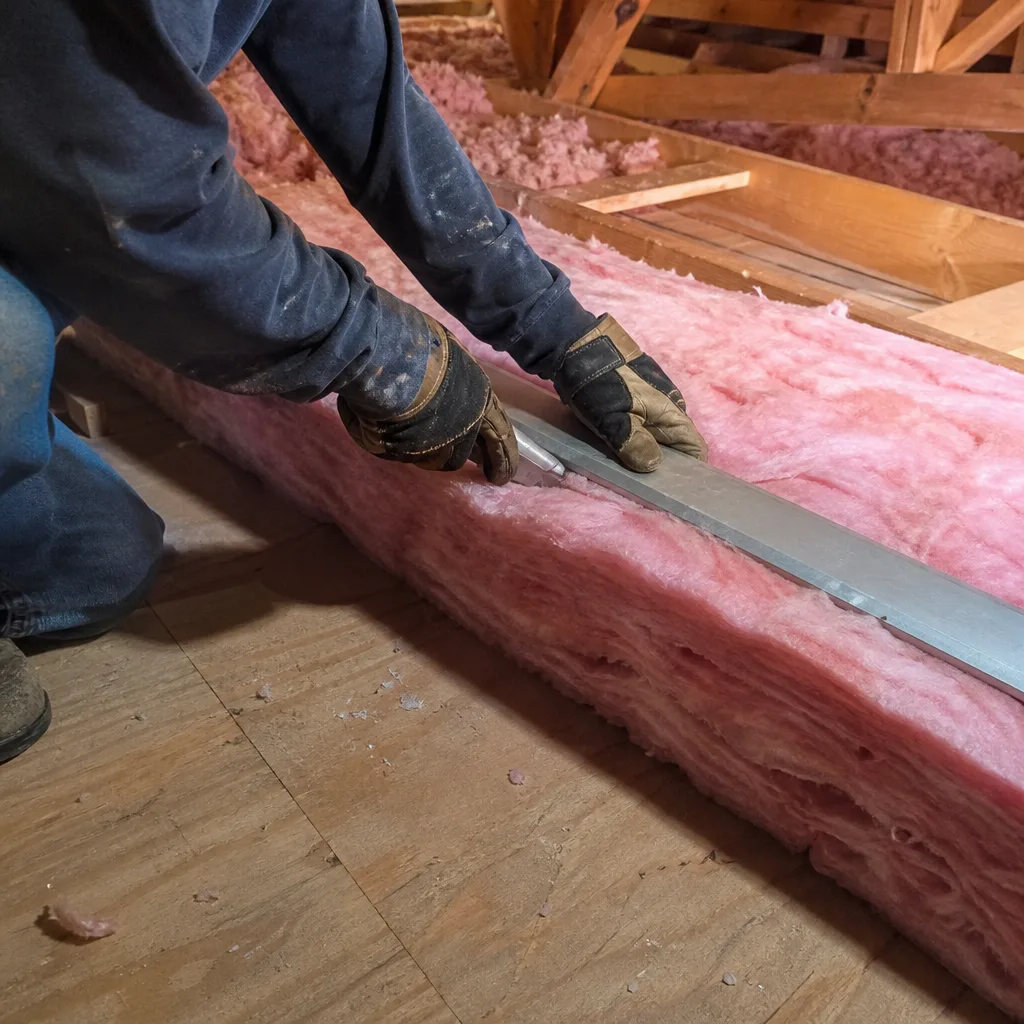
An Indio attic is the single highest-impact place to upgrade in a desert home. We remove or restore whatever’s up there – often settled blown-in from the 1990s – then install material matched to the roof pitch, ceiling condition, and venting setup. In the 92201 corridor and older stucco homes near downtown, we frequently add baffles and air-seal penetrations before insulating, because dust intrusion along eave lines is a real problem. You get one contractor handling the whole job, not a subcontractor. Learn more on our Attic Insulation in Indio page.
Spray Foam Insulation in Indio
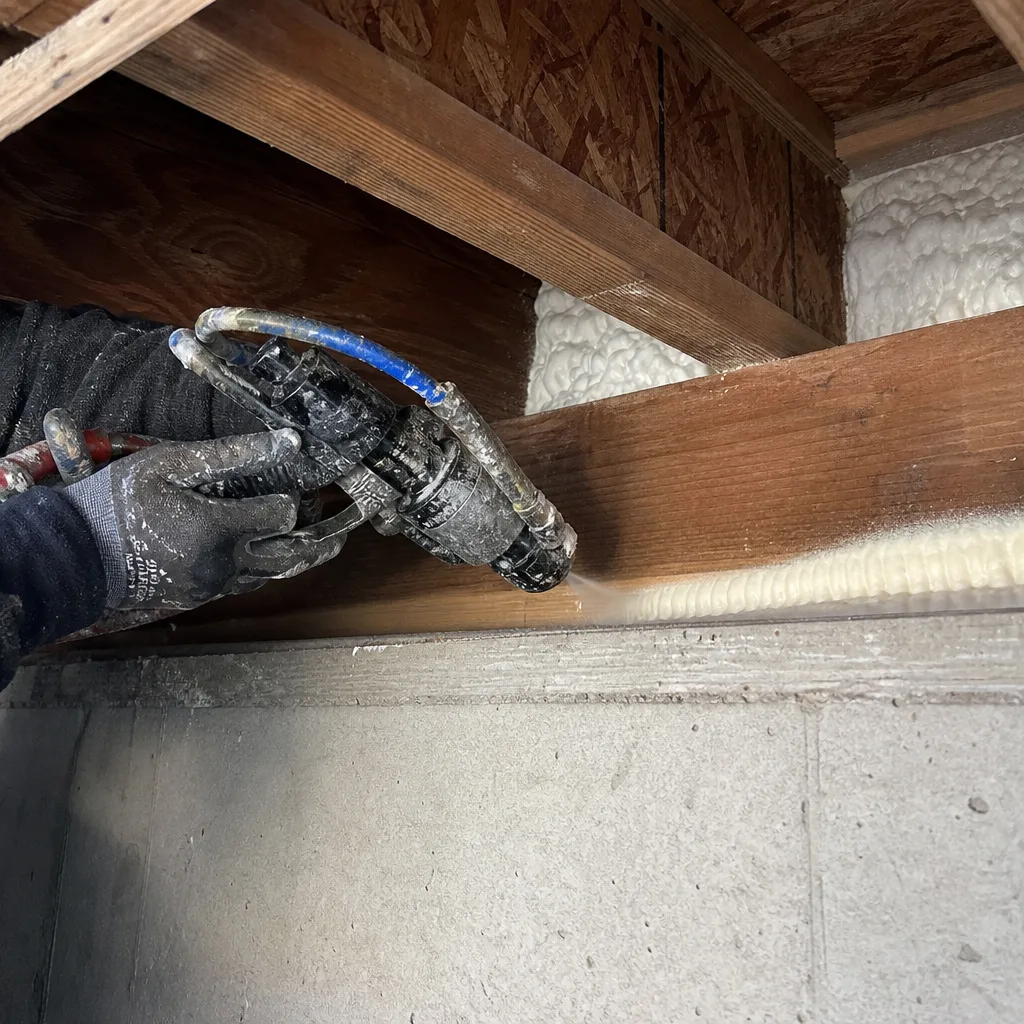
Spray foam earns its place in Indio when air-sealing matters as much as R-value: cathedral ceilings with no vent channel, rim joists, and wall cavities where blown-in or batt material can’t reach. We install open- and closed-cell systems from Icynene and Demilec, two brands tested extensively in hot-climate applications. A closed-cell foam on the underside of a roof deck can dramatically cut radiant heat transfer from a west-facing roof – the exact problem that cooks Indio attics all summer. See the details on our Spray Foam Insulation in Indio page.
What happens when you call
- 1
A real person answersNo phone trees — you reach a local pro.
- 2
You get an upfront price rangeHonest numbers before anyone is dispatched.
- 3
A background-checked tech heads outLicensed & insured, dispatched right away.
- 4
You approve before work beginsNothing starts until you say go.
Blown In Insulation in Indio
Blown in insulation in Indio usually means one of two things: restoring an attic floor to a proper thermal depth, or filling wall cavities in an existing stucco home that was built with empty or minimally insulated walls. The majority of calls we get are for attic floors in 1990s-2000s tract homes where the original loose fill has settled, compressing to an inch or two of dust-colored material that does almost nothing under a 150°F roof deck. We also see a steady stream of additions and remodel projects where a new bonus room or garage conversion needs insulation without tearing out drywall. For the full scope of this work, see our Blown In Insulation hub.
Cellulose Insulation
Signs you need it
You can see the tops of your ceiling joists in the attic, or indoor rooms stay warm hours after the AC cycles off.
What it costs in Indio
Cellulose insulation in Indio typically runs $1.10 to $1.60 per square foot installed, depending on depth and whether old material must be removed first.
How we do it
We remove or level the existing material, air-seal penetrations and top plates, then dense-pack or loose-fill GreenFiber cellulose to the target depth and density for your ceiling assembly.
Blown In Attic Insulation
Signs you need it
Your attic feels like an oven at noon, your AC runs in long cycles, or the existing loose fill is compressed to less than half its original depth.
What it costs in Indio
Blown in attic insulation in Indio usually lands between $1,500 and $3,900 for a typical single-story 1,500 to 2,200 square foot home, including air-sealing and rafter venting where needed.
How we do it
We prep the attic deck, air-seal penetrations, install or upgrade eave baffles, and blow the material to a consistent depth matched to your target R-value and the valley’s cooling loads.
Blown In Cellulose Insulation
Signs you need it
Wall cavities are empty or poorly filled, rooms get dusty and hot, or you’re remolding and need a recycled-content option.
What it costs in Indio
Blown in cellulose in Indio walls generally runs $1.50 to $2.50 per square foot of wall area, with dense-pack applications at the higher end.
How we do it
We drill access holes from the interior or exterior, dense-pack the cavities from bottom to top, then patch and seal the access points cleanly.
Blown In Fiberglass Insulation
Signs you need it
You want a clean, low-dust attic floor upgrade and the existing material is batts that have pulled away from the joists.
What it costs in Indio
Blown in fiberglass in Indio runs $0.90 to $1.40 per square foot for standard attic depths using CertainTeed or Johns Manville products.
How we do it
We clear and prep the attic floor, install eave baffles if needed, and blow the fiberglass to a consistent depth with a calibrated machine to avoid voids.
Loose Fill Insulation
Signs you need it
Your attic has odd framing, low clearances, or inaccessible corners that batts can’t conform to.
What it costs in Indio
Loose fill insulation in Indio starts around $0.90 per square foot for blown-in material and goes up from there based on target R-value and prep work.
How we do it
We map the space, air-seal and dam any light fixtures or chases, then blow loose fill to a uniform depth with careful attention to coverage around trusses and vents.
What Blown In Insulation Costs in Indio
| Item | Typical range in Indio |
|---|---|
| Blown in attic insulation (per sq ft) | $0.90 – $1.60 |
| Cellulose insulation (per sq ft) | $1.10 – $1.60 |
| Blown in fiberglass (per sq ft) | $0.90 – $1.40 |
Does blown in insulation actually help with Indio heat?
Yes, when it’s deep enough and the attic is air-sealed first. Blown in material blocks heat transfer from the 150°F attic air into the ceiling, and proper depth – typically 10 to 14 inches for R-38 to R-49 in our climate zone – makes a measurable difference in cooling load.
Can you blow in insulation over existing material in an Indio attic?
Often, yes. If the existing material is dry, not rodent-infested, and not compressed, we can blow new material on top to reach the planned depth. If it’s degraded or full of dust and droppings, it should be removed first for the new material to perform.
Brands We Service in Indio
We carry Rockwool mineral wool for fire-resistant, sound-dampening applications and Icynene spray foam for air-sealing hot Indio roof decks. CertainTeed fiberglass and Demilec foams round out the most common Indio requests. See all our our brands and what each one does best.
Pricing for Insulation Company in Indio, CA
| Service | Typical range in Indio |
|---|---|
| Attic insulation (per sq ft) | $1.50 – $3.50 |
| Spray foam insulation (per sq ft) | $2.00 – $6.00 |
| Cellulose wall insulation (per sq ft) | $1.50 – $2.50 |
| Blown in attic insulation (per sq ft) | $0.90 – $1.60 |
| Blown in fiberglass (per sq ft) | $0.90 – $1.40 |
| Cellulose attic insulation (per sq ft) | $1.10 – $1.60 |
| Loose fill insulation (per sq ft) | $0.90 – $1.60 |
| Blown in cellulous insulation (per sq ft) | $1.50 – $2.50 |
| Existing insulation removal (per sq ft) | $0.60 – $1.10 |
| Attic air sealing (per sq ft) | $0.50 – $1.20 |
In Indio, price moves with the age of the structure. Older 92201 homes with shallow attic framing, settled material that needs full removal, or moisture stains from past swamp cooler leaks cost more to prep. Larger jobs in 92203 newer subdivisions may involve high ceilings or hard-to-reach attics. You get an upfront, line-item price before we start, not an estimate that drifts upward mid-job.
Neighborhoods We Serve in Indio
Our crews work across all three Indio ZIP codes nearly every week during the fall and spring prep seasons, and we’re familiar with the differences between the older downtown grid and the newer northern developments.
- Terra Lago
- North Indio (92203)
- Downtown Indio (92201)
- Indio Hills area
- Shadow Hills
We can usually get a crew to most Indio addresses within a day or two for estimates, and scheduling for install work depends on material availability and attic accessibility.
Service Area – Cities Near Indio
We handle insulation projects throughout the Coachella Valley, including Bermuda Dunes, CA, La Quinta, CA, Indian Wells, CA, and Palm Desert, CA. If you’re a homeowner in one of the surrounding cities and want the same brand-neutral, material-matched approach, call us.
Serving Indio, CA — Our Local Coverage Area
We’re based in the Indio area and know this community well. Use the map below to see our service coverage — if you’re nearby, we can almost certainly help.
FAQs About Insulation Company in Indio
Yes. We install in 92201, 92202, and 92203, including the newer subdivisions in north Indio and the older stucco homes around the downtown core. Each area has different framing and attic styles, and our crew leaders know both well.
Most attic insulation upgrades in Indio don’t require a building permit because they’re considered repair or maintenance work on existing structures. If your project involves structural changes like a new addition or a vaulted ceiling conversion, the city may require permitting, and we’ll talk through that before work starts.
Yes. We take on single-room additions, garage conversions, and partial attic upgrades in Indio regularly. Smaller jobs still get the same upfront pricing and material options, and we work around the valley’s heat to schedule installs when attic conditions are safest.
Call (866) 271-1602 for a free, no-pressure estimate. We’ll look at what’s in your attic or walls, tell you honestly whether it needs help, and quote the job line by line. Serving Indio and the surrounding Coachella Valley.
What happens when you call
- 1A real person answersNo phone trees — talk to a local insulation pro.
- 2You get an upfront price rangeHonest numbers before anyone is dispatched. No surprises.
- 3A background-checked tech heads outLicensed & insured, typically within 1-hour.
- 4You approve before work beginsNothing starts until you say go.
What Indio Customers Say
"Installed baffles at the soffits so the new insulation didn't block the ventilation, which the previous contractor apparently never considered."
— Michelle Bennett"Attic was at maybe R-11 from the 1970s and blown in over the top would have just buried the problem. They removed the old material, air sealed the top plates and penetrations first, then blew in to R-49. The upstairs is a completely different house in August."
— Sarah Fletcher"Work is good and the house is noticeably more comfortable. There was insulation debris left in the hall closet under the attic access that I had to clean up."
— Holly Mercer