
Fast, Reliable Spray Foam Insulation Across Home Gardens
Spray foam insulation in Home Gardens usually means retrofitting a home built long before anyone here worried about sealed attics. Most of the housing stock in this unincorporated pocket between Corona and the I-15 corridor dates to the mid-20th century, when Title 24 was barely a concept and attics were just dead space. We know these houses. We know the cramped attics, the settled fiberglass, and the duct runs sweating into triple-digit heat. If you need an honest read on whether spray foam is the right call for your Home Gardens home, call us at (866) 271-1602 for a free estimate. We’re led by Noel Arredondo, and we’ve spent years working the tight lots and older builds that define this ZIP.
Why Fontana Insulation Is Home Gardens’s Preferred Spray Foam Insulation Company
Home Gardens isn’t a tract-home suburb, and the insulation work here reflects that. Where newer Corona developments have standard attic clearances and predictable framing, this community throws us low-slope roofs, mobile-home additions, and access hatches you have to shimmy through sideways. Our crews work this area regularly enough to know what’s behind the hatch before they open it. Homeowners across the 92879 ZIP call us because we don’t blink at an attic with 18 inches of headroom or a rim joist buried behind decades of stucco patch. We plan for that. We bring the right foam, the right hoses, and the patience to air-seal a space most contractors won’t fit into.
Noel Arredondo built the team around a simple rule: recommend the material the house needs, not the one that’s easiest to sell. That matters here. A Home Gardens homeowner with a shaded mid-century ranch and a hot west-facing wall has different needs than someone in a manufactured home with a metal roof. We carry open-cell and closed-cell foam from Icynene and Demilec, plus fiberglass, mineral wool, and cellulose options across eight brands total. If spray foam isn’t the right tool for your situation, we’ll tell you. That straight talk is why Home Gardens customers keep our number.
Garage Spray Foam Insulation in Home Gardens
Garage spray foam insulation in Home Gardens is one of the most cost-effective upgrades we do, mostly because so many garages here are attached, uninsulated, and face the afternoon sun. Older Home Gardens homes frequently have garage walls that were never insulated at all. The drywall sits directly on framing, and during summer the garage turns into a heat sink that radiates into adjacent living space and makes the kitchen or hallway sticky by 4 p.m. We spray closed-cell foam against the shared wall and the garage ceiling, which drops interior garage temps dramatically and keeps the house side of the wall dry and stable.
For a typical single-bay attached garage in Home Gardens, expect a spray foam job on the shared wall and ceiling to run roughly $1,400 to $2,800 depending on square footage and whether the ceiling joists are accessible.
Shared-Wall Heat Transfer
When a garage shares a full wall with a bedroom or living room, that wall needs an air and thermal break. Closed-cell foam at two to three inches gives you both in one pass, plus enough rigidity to stiffen older framing. We see this constantly near the Magnolia Avenue corridor.
Garage Ceilings Under Living Space
If there’s a bonus room or bedroom above the garage, the ceiling cavity is pulling heat up from the garage and pushing it through your floor. Foaming the garage ceiling lid and rim joists seals that stack effect. Home Gardens lots are tight, but the fix is contained and usually done in a single visit.
Closed Cell Spray Foam Insulation in Home Gardens
Closed cell spray foam insulation in Home Gardens is the workhorse material for the attic lids, rim joists, and roof decks we deal with on these older, tight lots. It gives you structural rigidity, a vapor barrier, and roughly R-6.5 to R-7 per inch, which matters when the attic deck is baking at 140°F in August. Because Home Gardens homes often have limited attic access and shallow rafter bays, closed-cell is frequently the only foam that fits where we need it. It in, expands, and holds its shape without sagging against a hot roof deck.
A typical closed-cell rim joist and top-plate sealing job on a mid-century Home Gardens home runs $1,800 to $3,400. Full attic lid sealing on a smaller home starts around $3,200 and can reach $6,000 if the deck needs full coverage.
Rim Joist Air Sealing
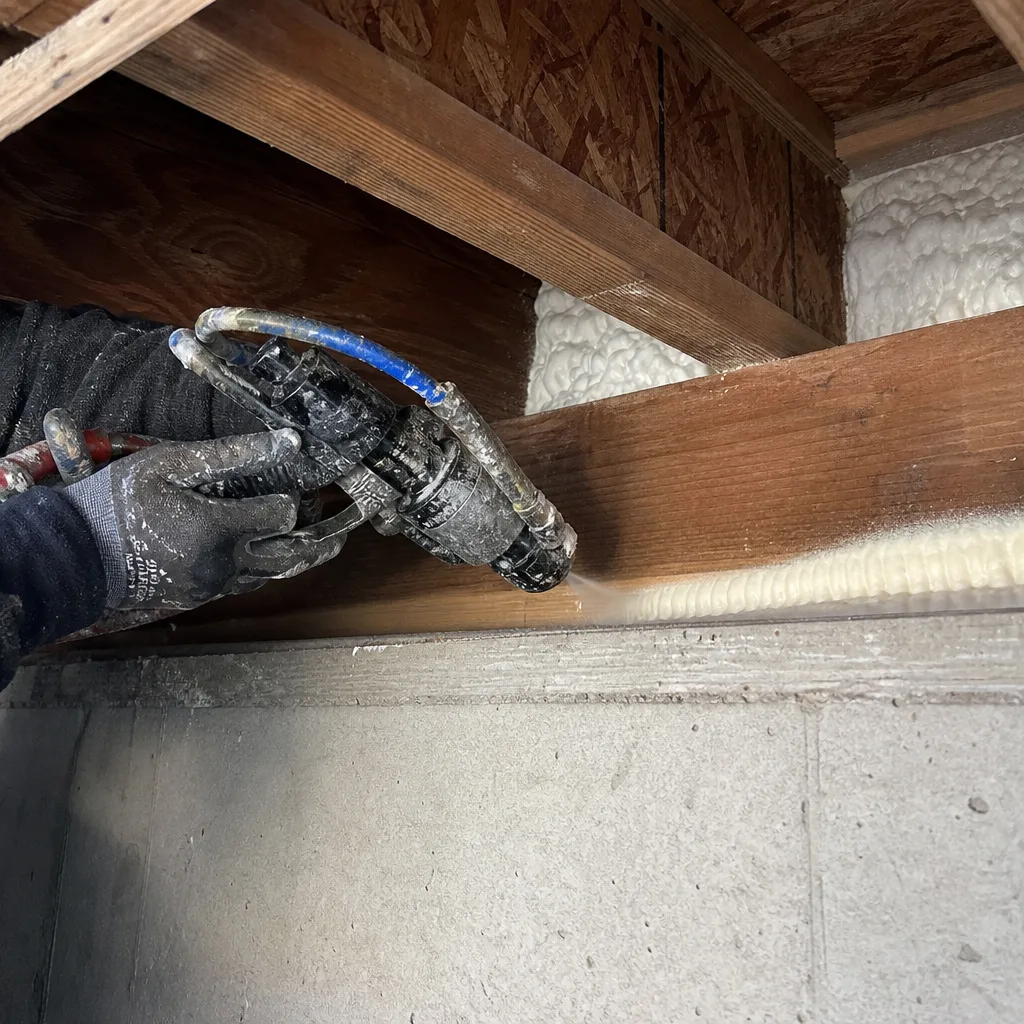
The rim joist is where the floor framing meets the foundation wall, and in Home Gardens homes built before air-sealing standards, it’s usually wide open. Hot outside air pushes in through the rim during summer, and cool conditioned air leaks out. Two inches of closed-cell foam along the rim band stops that exchange cold. On a recent job off Magnolia Avenue near the Corona line, our crew opened a cramped attic hatch and found two-inch settled fiberglass, an unsealed flex-duct run sagging against 105°F attic decking, and no air barrier at the top plates. We flash-coated the lid, rims, and duct boots with closed-cell Demilec, sealing the bypasses that were pulling inland heat down into the living space, and the homeowner reported the back bedrooms finally catching up to the thermostat during triple-digit August afternoons.
Roof Deck Underside for Cramped Attics
When an attic has no room for blown-in material, foaming the underside of the roof deck converts the attic into a conditioned space. This is the move for Home Gardens homes with low-slope roofs and no usable attic floor area. It costs more up front, but it turns a useless, superheated void into a buffer zone that actually protects your ductwork.
Trusted Brands We Service in Home Gardens
We install and service spray foam from Demilec and Icynene because those two brands have the longest performance histories in North American residential foam. We also stock Knauf, Rockwool, and CertainTeed materials because the right answer for one Home Gardens house isn’t always foam. Knauf and CertainTeed give us strong fiberglass options for attic blow-in and batt applications where air-sealing is already handled. Rockwool mineral wool earns its place for homeowners near the industrial edges of Corona who want greater fire resistance and sound dampening against freeway noise from the I-15 corridor. We keep materials staged for Home Gardens jobs at our Fontana facility, so we’re not waiting on distributor trucks when your attic is already open.
Common Spray Foam Insulation Problems We See in Home Gardens Homes
- Settled legacy fiberglass in pre-Title 24 attics. Most of these attics had a thin layer of fiberglass installed decades ago, and it has collapsed into the ceiling cavity. The lid is open and radiating heat downward all summer. We remove or fluff what’s salvageable and seal the lid with foam before adding anything new.
- Unsealed flex-duct runs baked into a hot attic. Homes in Home Gardens commonly have flex duct laying directly on attic decking that hits 130°F or higher. Even after new insulation, a leaky duct run in that environment eats your cooling budget. We seal boots and connections as part of the foam scope.
- Top-plate bypasses that pull heat down through the walls. The gap where the wall framing meets the attic floor is open in nearly every pre-Title 24 house we open. It’s a chimney for superheated air. Foam-sealing top plates is the single highest-value fix we do in this ZIP.
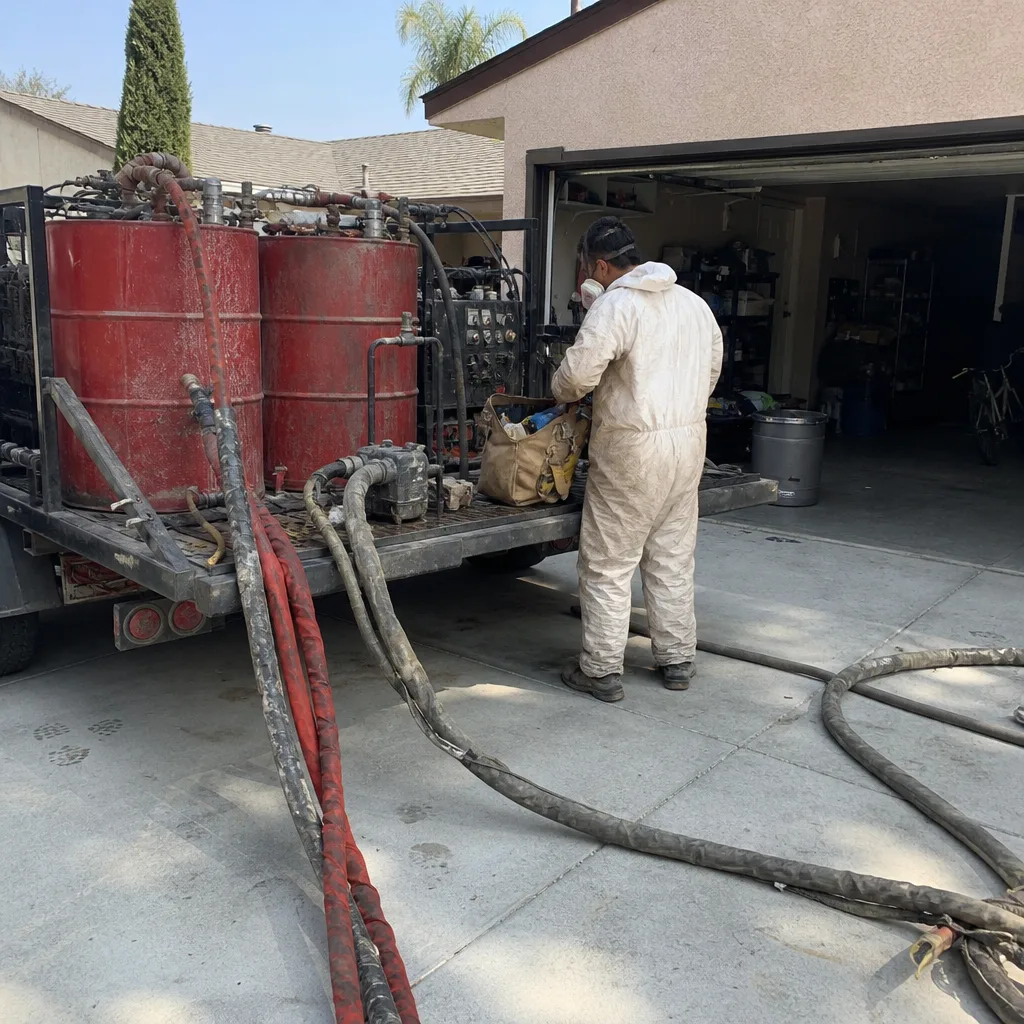
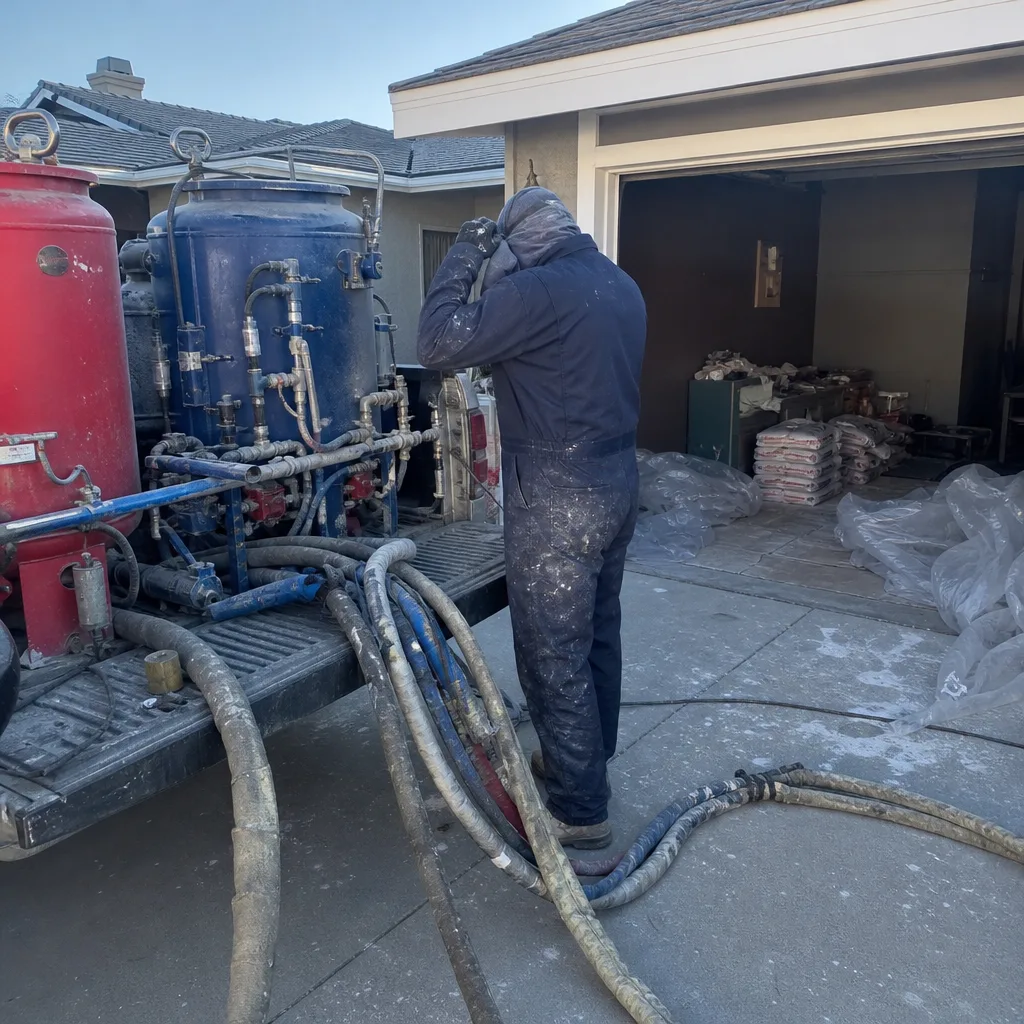
- Cramped lots and inaccessible rim joists. Home Gardens has dense, awkward lot layouts, and many homes have one side sitting close enough to the neighbor that the rim joist was never accessible. We use narrow-bead foam guns and long hoses to get where the original builder never intended anyone to go.
Pricing for Spray Foam Insulation in Home Gardens, CA
Home Gardens pricing tracks close to the rest of the Corona-Norco area, but the older housing stock and limited attic access push some jobs toward the higher end. A focused rim joist and top-plate sealing job runs $1,800 to $3,400. Garage ceiling and shared-wall foam runs $1,400 to $2,800. Full closed-cell attic lid sealing starts around $3,200 and can hit $6,000 on homes with complex rafter geometry. A complete roof-deck conversion for a cramped pre-Title 24 attic typically lands between $5,500 and $9,500 depending on square footage and roof pitch. We give honest, itemized ranges before any work starts, and the estimate call is free. Call (866) 271-1602.
We Also Serve Cities Near Home Gardens
Fontana Insulation runs crews throughout the Corona area, including Home Gardens and the surrounding communities of Corona, Eastvale, Norco, and El Cerrito Corona. If your project sits just outside the 92879 line, we’ll still schedule it. The same Spray Foam Insulation team handles all of these areas, so you’re not getting a different crew or a different standard.
Serving Home Gardens, CA — Our Local Coverage Area
We’re based in the Home Gardens area and know this community well. Use the map below to see our service coverage — if you’re nearby, we can almost certainly help.
FAQs About Spray Foam Insulation in Home Gardens
Because the insulation wasn’t the only problem. Blowing fiberglass into an attic that still has open top plates, unsealed duct boots, and rim-joist gaps is like adding a sweater over a leaky water pipe. The heated air still moves through the bypasses. In Home Gardens homes built before Title 24, you almost always need air sealing with spray foam before the insulation counts for anything. Call (866) 271-1602 and we’ll inspect the actual bypasses in your attic.
Yes, with conditions. Mobile-home attics and under-floor cavities are shallower than site-built homes, so we typically use closed-cell foam at reduced thickness to avoid over-expansion against thin paneling and metal roof framing. The bigger issue is ventilation. We check for existing roof vents and moisture issues before foaming the lid. Home Gardens has several mobile-home clusters, and we’ve done enough of them to know what holds up in this climate.
Usually yes, especially for attached garages with living space above or beside them. Closed-cell gives you air sealing, vapor control, and enough structural stiffness to firm up older garage framing, all in one pass. For a detached garage that’s only used for parking, open-cell or even Rockwool batts may be the smarter spend. We’ll give you an honest recommendation based on how you use the space and what’s on the other side of the wall.
Yes, that’s exactly what closed-cell foam is designed for. The foam is applied directly to the underside of the roof deck, creating an insulating and air-sealing layer that stops radiant heat from entering the attic in the first place. In Home Gardens, where roof deck temps regularly exceed 140°F in the summer, this is the highest-impact retrofit for homes with no usable attic floor. The foam holds its shape against a hot deck and won’t settle or sag.
We bring long hoses, narrow-bead applicators, and crews who don’t mind working in 20-inch clearances. Pre-Title 24 homes in Home Gardens often have no room to blow in loose-fill, so we often hand-foam the lid and rim in tight bays instead. That’s the constraint the newer tract homes next door in Corona rarely present. If your attic is too tight for conventional work, we’ll figure out an access plan on site before quoting anything firm.
Written by Noel Arredondo, Owner at Fontana Insulation, serving Home Gardens and the surrounding Corona area.