
Fast, Reliable Spray Foam Insulation Across Colton
Spray foam insulation in Colton addresses two problems at once: attic temperatures that climb past 150°F in summer and air leaks that let conditioned air escape year round. Most Colton homes we assess need either open-cell foam against the roof deck or targeted rim joist sealing, depending on the age of the house and the condition of what’s already up there. If you’re in the 92324 zip code and your upstairs rooms never quite cool down, call us at (866) 271-1602. We’ll tell you honestly whether foam is the right fix or whether blown-in insulation makes more sense for your situation.
Why Fontana Insulation Is Colton’s Preferred Spray Foam Insulation Company
We’re based just up the road in Fontana, which means a Colton job isn’t a trip across the county for us. Our crews know the difference between a mid-century stucco home near downtown and a 1990s tract house off Washington Street, and that affects everything from how we prep the attic to how we quote the work.
Noel Arredondo built Fontana Insulation around a material-agnostic approach. We carry eight insulation brands, so when we recommend open-cell foam from Icynene or Demilec for your Colton attic, it’s because that’s the right application for your roof deck and venting setup, not because it’s the only product on our truck. Colton homeowners dealing with 100°F+ summers need straight answers about what works, and that’s what we deliver.
We’ve worked extensively in Colton’s older neighborhoods, where attics hold surprises: settled rock wool, vermiculite, knob-and-tube-era penetrations, disconnected bath fans. Knowing what to look for before spraying saves you from a foam job that fails at the adhesion layer or traps moisture under the roof deck.
Open Cell Spray Foam in Colton
Open Cell Spray Foam is the most common spray foam we install in Colton attics, and for good reason: it expands to fill irregular framing, air-seals the roofline, and handles the wide temperature swings between Colton’s brutal summer afternoons and cool desert nights better than most materials. It’s also vapor-permeable, which matters in older Colton homes where moisture needs a path out rather than getting trapped against the sheathing.
In a mid-century Colton attic with original rock wool that’s settled to half depth, we typically remove the old material entirely before spraying open cell foam against the roof deck. Skipping that removal step is how you end up with foam that doesn’t bond and debris embedded in your insulation. A typical open-cell attic job in Colton runs $2,800 to $5,400 depending on square footage and roof pitch.
The Right Fit for Older Stucco Homes
Colton’s downtown-core stucco homes were often built with undersized or mismatched attic venting. Sealing those attics with spray foam without checking intake and exhaust balance first can trap heat and moisture exactly where you don’t want it. We verify venting before we spray, which is a step newer edge-of-town tract homes with engineered ridge vents rarely require.
Air Sealing Beyond the Attic
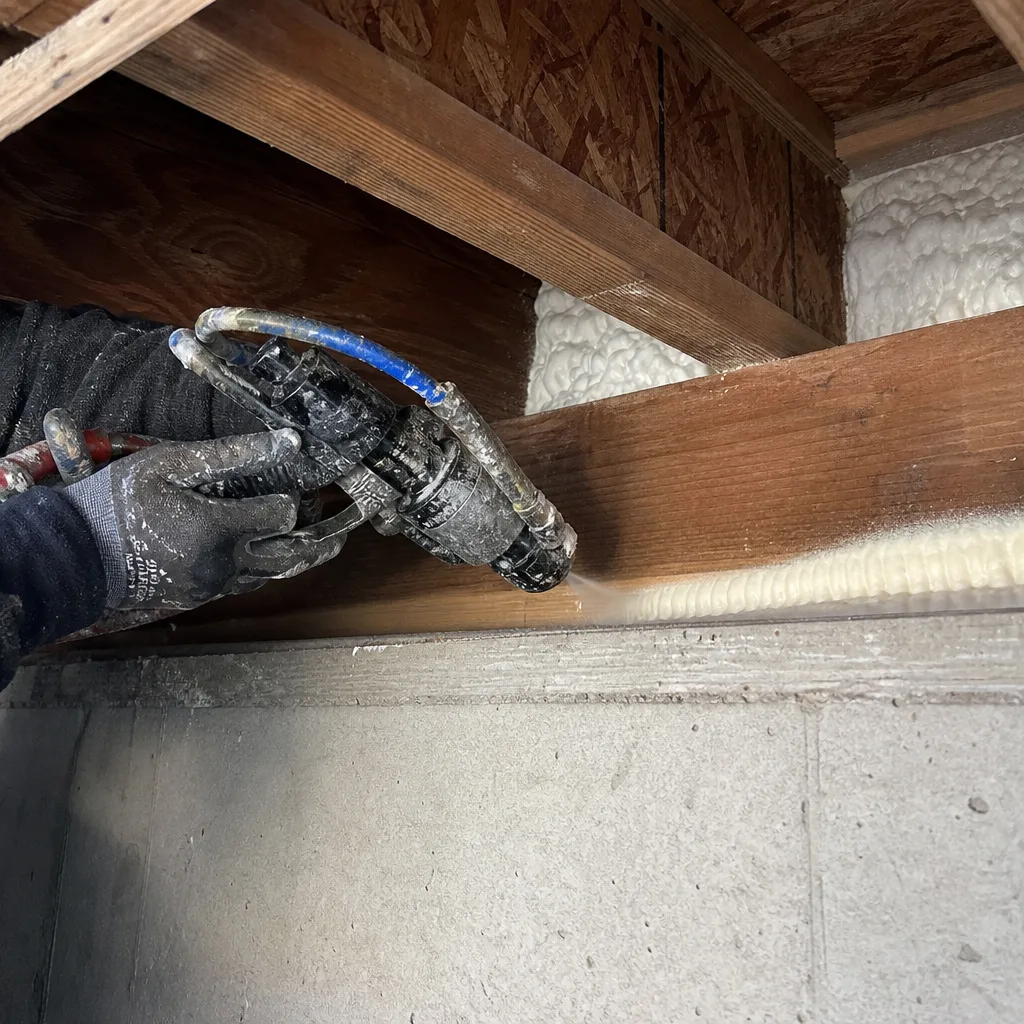
Open-cell foam also handles rim joist sealing in Colton crawl spaces and basements, stopping the stack effect that pulls hot exterior air into living space during summer. For Colton homeowners fighting high cooling bills, rim joist work is often the highest-value retrofit per square foot.
Spray Foam Insulation Contractors in Colton
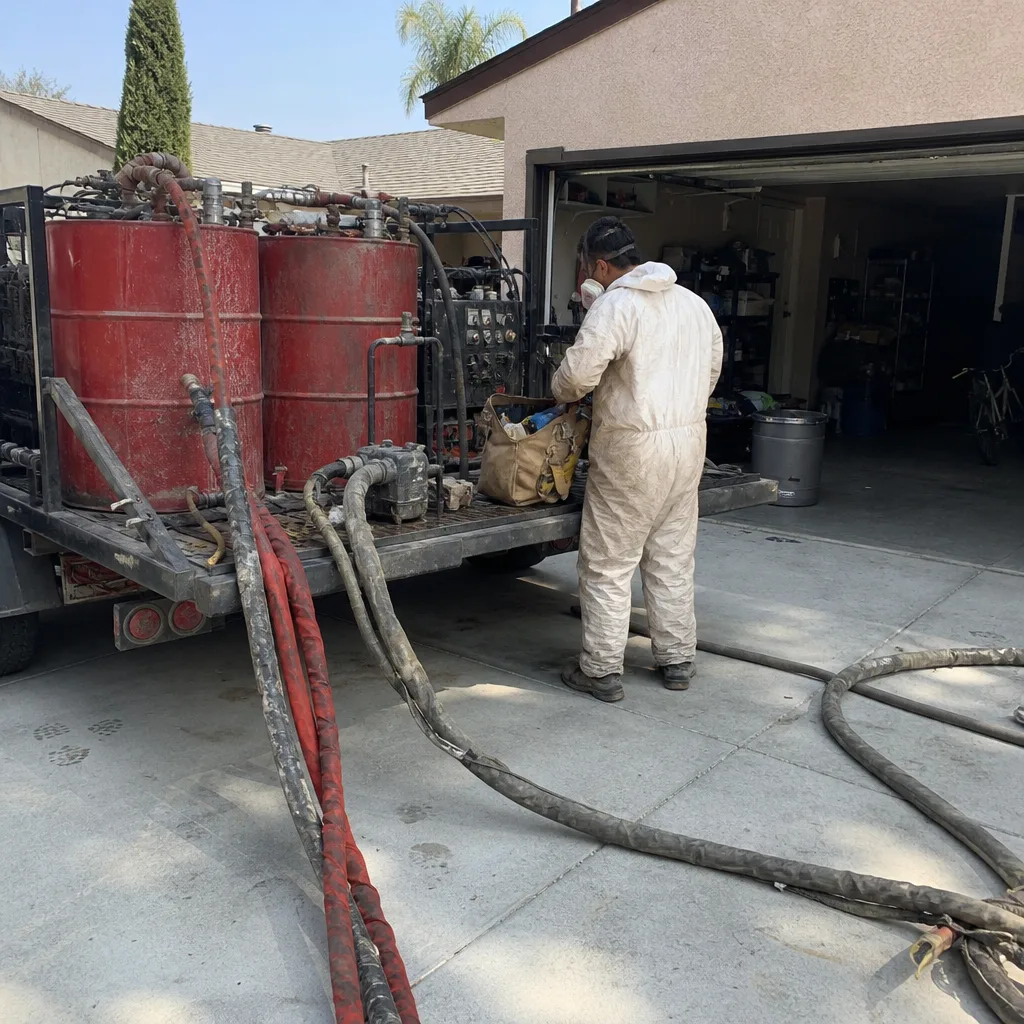
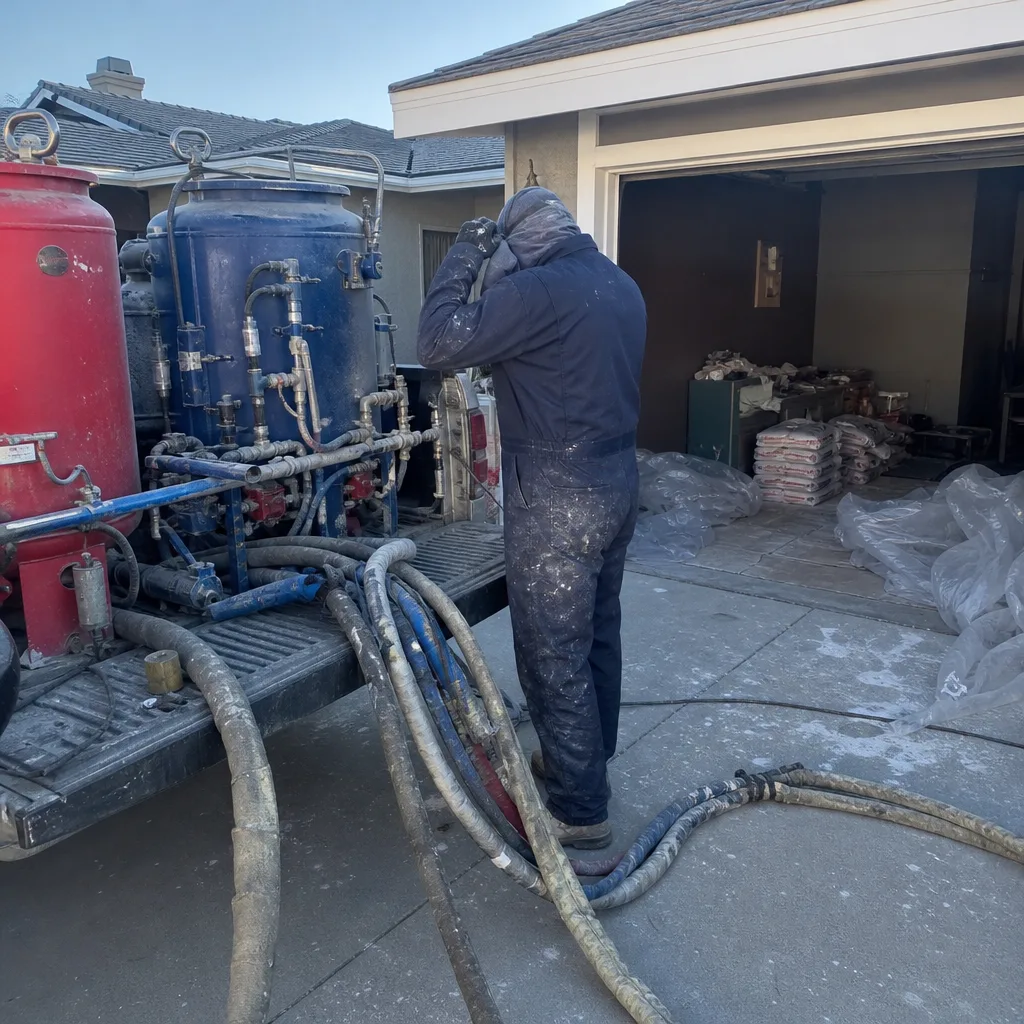
Spray Foam Insulation Contractors in Colton aren’t all the same, and the difference shows up in the prep work. On a mid-century single-story stucco home near the historic downtown core, our crew found original rock wool settled to roughly half depth and contaminated with dust and rodent debris, so we removed it before spraying open cell foam against the roof deck. We capped the legacy knob-and-tube-era penetrations with Owens Corning and Demilec foam and confirmed venting balance, and the attic that once spiked past 150°F on 100°F+ summer days now holds a stable conditioned temperature.
That kind of job is common in Colton’s older housing stock. It’s not glamorous work, but it’s the difference between a foam job that performs and one that fails in three years. We handle removal, prep, spraying, and final air-sealing in-house, no subcontractors. When you hire us for spray foam in Colton, the same crew handles the job from start to finish.
Closed-Cell for Rim Joists and Roof Decks
Closed-cell spray foam costs more, typically $3.20 to $4.80 per board foot installed in Colton, but it adds structural rigidity and acts as a vapor barrier. We recommend it for rim joists in crawl spaces subject to moisture and for unvented roof deck assemblies where building code calls for a Class II vapor retarder.
When Removal Comes First
In Colton’s 1980s to 2000s tract houses, the original R-11 or R-13 attic insulation has usually settled or been compressed by storage. Spraying foam over compressed fiberglass doesn’t fix the thermal gap. We remove the old layer, inspect the top plates and penetrations, then spray a continuous foam seal that stops the 150°F+ attic heat from bleeding into living space.
Trusted Brands We Service in Colton
We carry Icynene and Demilec spray foam for Colton customers because both brands have extensive performance testing across the temperature extremes we see in San Bernardino County. For homes where spray foam isn’t the right call, we also install Johns Manville and CertainTeed fiberglass, Knauf batt insulation, and Rockwool mineral wool. That’s the point of our approach: no brand loyalty, just the best fit for your attic, walls, or crawlspace. We keep the materials stocked in Fontana, so a Colton job doesn’t mean waiting on a distributor.
Common Spray Foam Insulation Problems We See in Colton Homes
- Foam sprayed over settled rock wool or vermiculite. Downtown Colton stucco homes built before 1970 often have original rock wool or vermiculite that has settled to half its intended depth and absorbed decades of dust, pests, and roof debris. Spraying foam directly over it causes adhesion failure, and the foam pulls away from the roof deck within a few years.
- Sealing an older attic without checking venting balance. Colton’s older homes frequently lack the intake and exhaust sizing that spray foam requires once the attic becomes a conditioned space. Trapped heat and moisture under the roof deck leads to warped sheathing, mold, and premature shingle failure.
- Foam applied too thin on mid-century attic framing. Some Colton attics have 2×4 or undersized rafter bays that make it hard to achieve a full fill with open-cell foam. Thin foam leaves gaps at the top plate and eave edges, which is exactly where 150°F+ summer attic air pushes into living space.
- Bath fans and dryer vents buried under foam. Many older Colton homes have bath fans venting directly into the attic. Foam seals those moisture sources in place unless the crew re-routes the ducts and caps the old penetrations first, which is standard practice on our Colton jobs.
Pricing for Spray Foam Insulation in Colton, CA
Open-cell spray foam attic retrofits in Colton typically run $2,800 to $5,400 for an average single-story home, including removal of the old insulation when needed. Closed-cell foam on a rim joist or small roof deck section runs $3,200 to $4,800 per job, or $3.20 to $4.80 per board foot installed. A full attic removal with rock wool or vermiculite remediation before spraying adds $800 to $1,800 depending on contamination levels. The main cost drivers in Colton are attic height (low-pitched mid-century roofs are harder to work in), how much old material needs to come out, and whether we need to add or correct venting. Call (866) 271-1602 for a free estimate. We’ll give you a written quote with a specific price, not a range, before any work starts.
We Also Serve Cities Near Colton
Our crews work throughout the Inland Empire, including Grand Terrace, Highgrove, Loma Linda, and Rubidoux. If you’re in Colton or any of these nearby communities, you can reach us at the same number. Learn more about our Spray Foam Insulation in Colton work or browse our full Spray Foam Insulation service details.
Serving Colton, CA — Our Local Coverage Area
We’re based in the Colton area and know this community well. Use the map below to see our service coverage — if you’re nearby, we can almost certainly help.
FAQs About Spray Foam Insulation in Colton
No, we don’t recommend it. Rock wool and vermiculite in downtown Colton attics are usually settled, dusty, and contaminated, which prevents foam from bonding to the roof deck and seals contaminants into your air barrier. We remove the old material first, then spray. Call (866) 271-1602 for a free assessment of your attic.
Only if the attic venting isn’t right. Mid-century Colton stucco homes were often built with undersized intake and exhaust openings, and sealing that attic without verifying venting balance can trap both heat and moisture. Our Colton crews check the venting math before spraying, and we add or adjust intake and exhaust when needed. That’s the step most contractors skip.
Open cell is usually the better choice for Colton attic rooflines because it’s vapor-permeable and expands to fill irregular mid-century framing. Closed cell makes sense for rim joists and areas with moisture exposure, but it costs more and isn’t necessary for most Colton attic retrofits. We’ll recommend the right one after looking at your attic, not before.
Not always. If your Colton attic has radiant heat gain through the roof deck, spray foam reduces the temperature differential but doesn’t remove the heat source. Homes with original R-13 or R-11 attic insulation that has settled often need removal and a radiant barrier or additional venting alongside foam. Call (866) 271-1602 and we’ll tell you what your specific attic actually needs.
We remove the compressed fiberglass layer entirely, inspect the top plates and penetrations for air leaks, then spray a continuous foam seal. Leaving settled insulation under foam creates a thermal gap and wastes the foam’s air-sealing benefit. The removal step is standard on our Colton jobs, not an upcharge.
Written by Noel Arredondo, Owner at Fontana Insulation, serving Colton and the Inland Empire.