
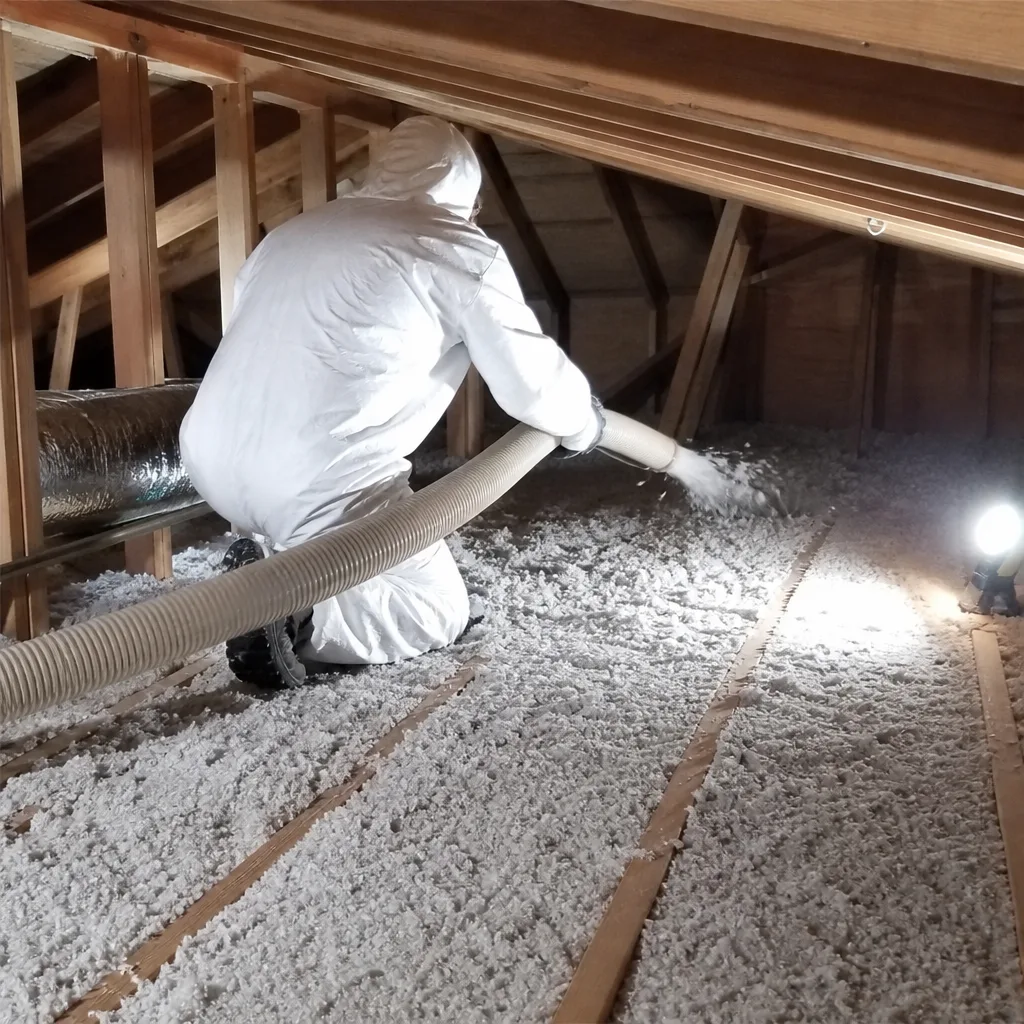
Fast, Reliable Attic Insulation Across Corona
Attic insulation in Corona is not a luxury upgrade. It’s the difference between a house that holds 78 degrees without flinching and one that cycles the AC nonstop from June through October while the attic bakes at 150-plus degrees. We work throughout Corona’s tract-home corridors every week, from the 1980s subdivisions south of the 91 to the newer builds climbing into the hills off Green River Road. Our crews know the housing stock here because we’ve crawled through hundreds of Corona attics: tight pitches, settled batts, HVAC runs that punched right through the thermal boundary and were never sealed. Call (866) 271-1602 and we’ll tell you exactly what your attic needs and what it’ll cost before we touch anything.
Why Fontana Insulation Is Corona’s Preferred Attic Insulation Company
We’re insulation specialists, not general contractors who dabble in whatever the job calls for. That distinction matters when the issue is air sealing a Chase Ranch attic that’s bleeding conditioned air through a dozen unsealed penetrations, or retrofitting an unvented attic in Sierra Del Oro without creating a moisture trap. Noel Arredondo leads our team with a brand-neutral approach: we stock eight major insulation brands across four material categories, and we’ll recommend whatever actually fits your attic’s geometry, your house’s age, and your cooling bill goals. Nobody on our crew earns a commission for pushing spray foam over cellulose. We install what the house needs.
Corona homeowners call us because the recommendation feels honest. A 1997 tract home off Magnolia with original R-19 batts needs something different than a 2015 build near Dos Lagos that’s chasing energy-efficiency credits. We’ll walk you through the trade-offs in plain English: R-value per dollar, air-sealing value, fire resistance, sound damping, recycled content. Then we install it right and stand behind the work.
Attic Cleaning Services in Corona
Attic Cleaning Services in Corona usually mean removing years of dust, debris, and pest droppings that buried the original insulation and compromised its R-value. In older tract homes around Chase Ranch and Horsethief Canyon, we frequently find attics where the builder-grade insulation is so filthy and compacted that it’s doing almost nothing. Cleaning isn’t cosmetic here. It’s the necessary first step before adding new material or replacing what’s failed. A standard attic cleaning in Corona runs between $1,200 and $2,800 depending on attic size, accessibility, and how much contamination we’re dealing with. Rat or mouse activity pushes the job into the higher range because we’re removing contaminated insulation, not just vacuuming dust.
Rodent Remediation Prep
Corona’s dry washes and open space push rats and mice into attics more often than homeowners expect, especially in neighborhoods backing up to the Santa Ana River corridor or the foothills. We remove the fouled insulation, sanitize the deck, and prep the space so new insulation goes down clean. Trapping and exclusion are separate trades; we’ll tell you if you need that too.
Pre-Insulation Deep Clean
If we’re topping up your attic insulation or doing a full replacement, we handle cleaning first. Loose dirt and old droppings interfere with even coverage and air-sealing foam adhesion. Expect us to pull old debris out by hand and with a HEPA-equipped vacuum, then assess the deck condition before any new material lands.
What happens when you call
- 1
A real person answersNo phone trees — you reach a local pro.
- 2
You get an upfront price rangeHonest numbers before anyone is dispatched.
- 3
A background-checked tech heads outLicensed & insured, dispatched right away.
- 4
You approve before work beginsNothing starts until you say go.
Attic Mold Removal in Corona
Attic Mold Removal in Corona catches a lot of homeowners off guard. Corona’s semi-arid climate doesn’t create the same obvious humidity you’d see in a coastal city, but it still happens: bathroom fans venting directly into the attic, dryer exhaust failing short of the roof, unvented attics trapping moisture against the sheathing during cold winter nights. Mold builds slowly, then shows up as dark staining on the underside of the roof deck. We treat the source first, not just the stain. That means fixing the ventilation problem, removing affected insulation, sanitizing the deck and framing, and then reinstalling material that won’t trap moisture against the wood. Attic mold removal in Corona typically runs $1,500 to $4,500, with the range driven by the square footage of affected sheathing and whether we’re replacing all the insulation or just sections. The broad range reflects what we find under the surface; we always inspect before we quote.
Ventilation Correction
In Corona’s unvented attic stock, mold is often a ventilation failure, not a leak. We’ll assess baffles, soffit vents, and ridge or gable vent balance before recommending a fix. Adding insulation to a poorly vented attic will make the mold worse, and we won’t do that to your house.
Insulation Replacement After Mold
Once the deck is clean and dry, we replace the removed insulation with material suited to the attic’s configuration. Open-cell spray foam can work in unvented assemblies, but only when installed with the correct clearance and ventilation strategy. We’ll match the material to the moisture profile of the attic, not just the R-value.
Trusted Brands We Service in Corona
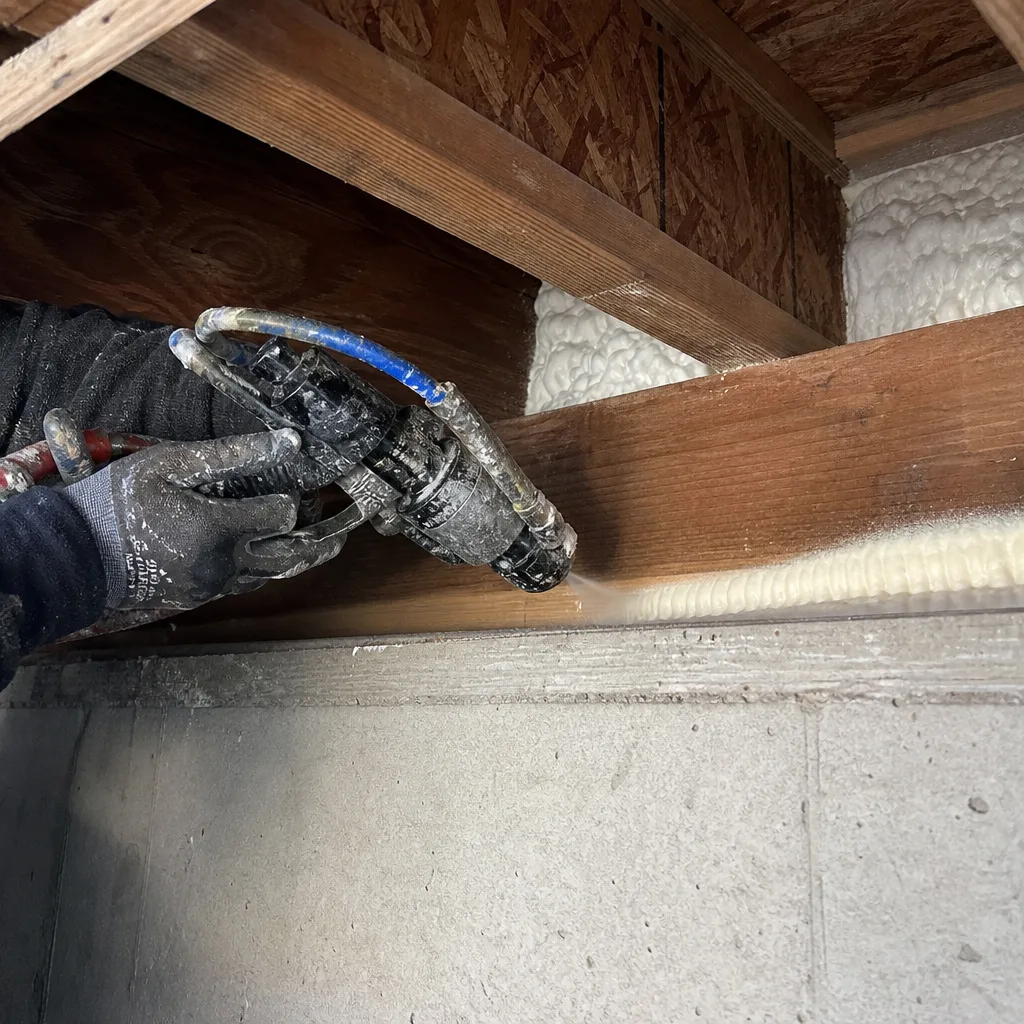
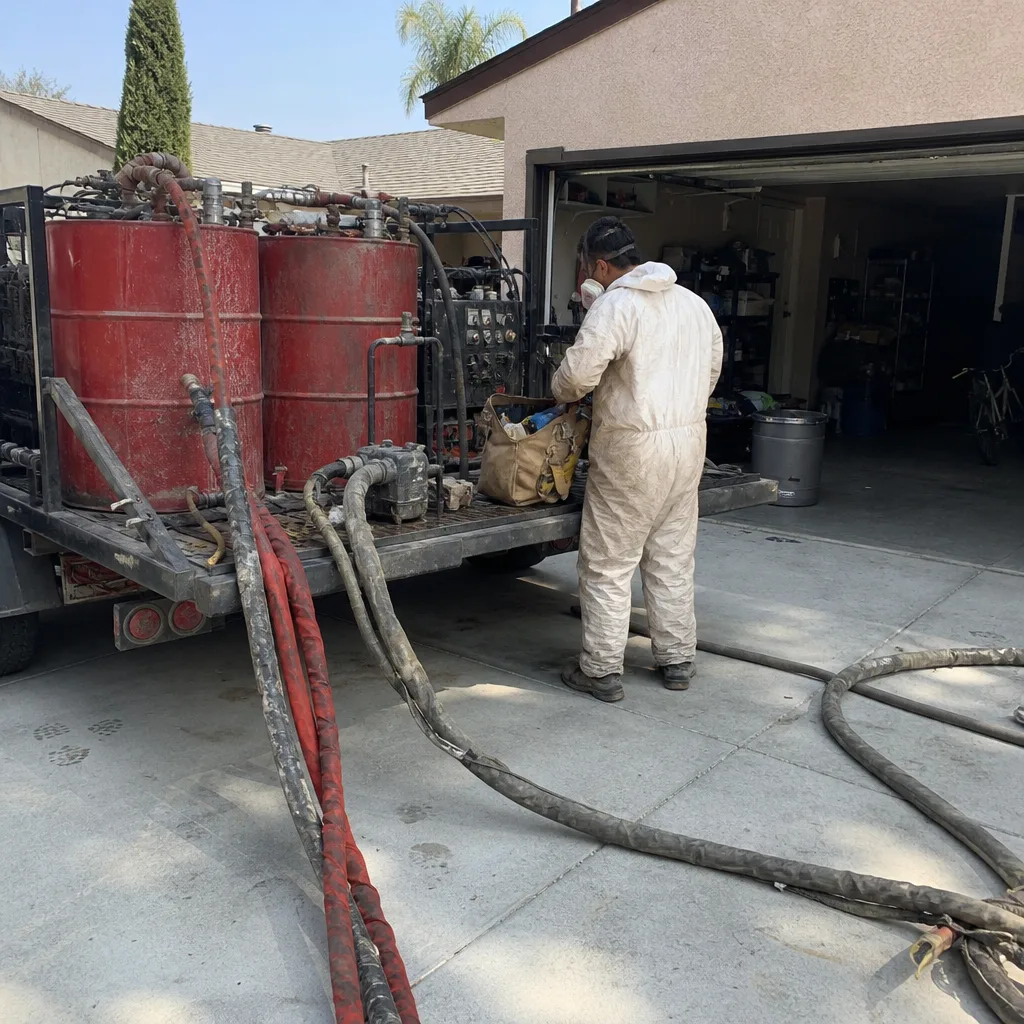
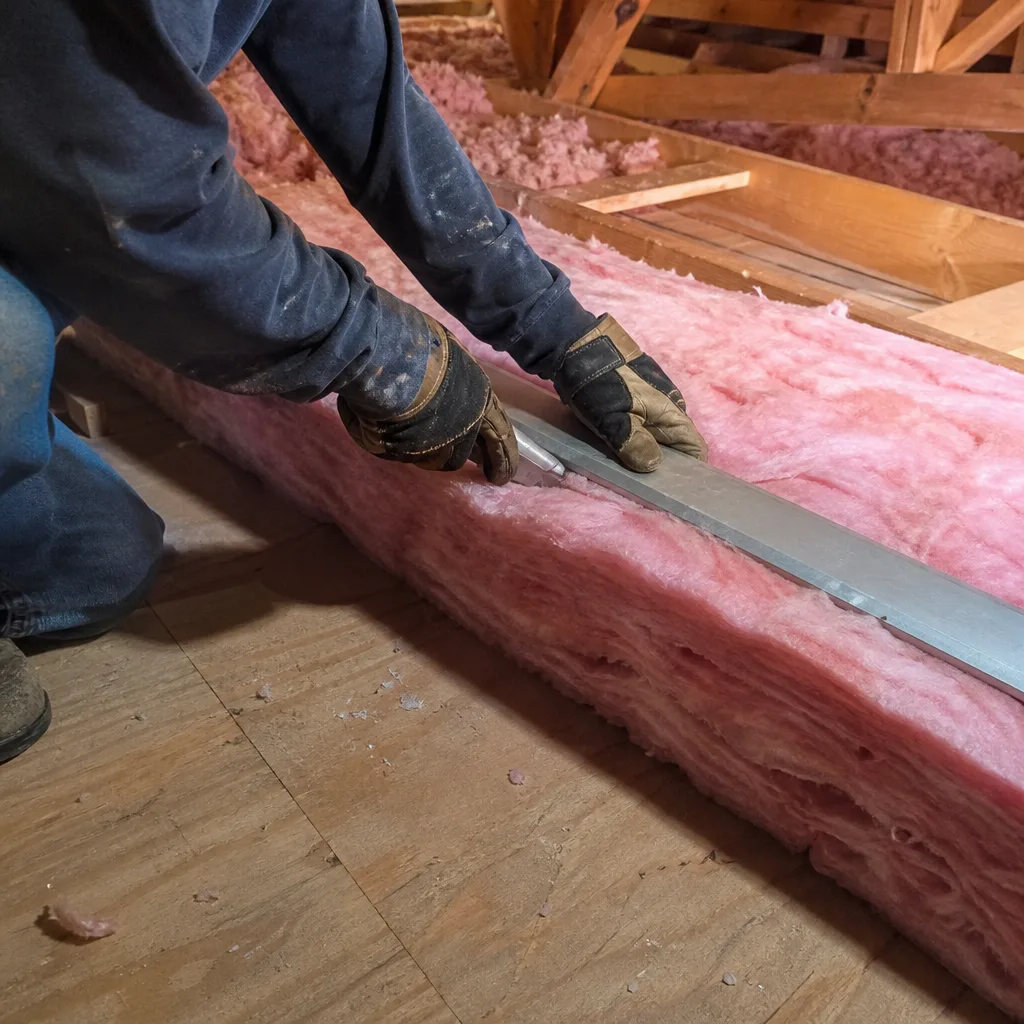
We run a multi-brand truck because no single manufacturer makes the right product for every Corona attic. Attic insulation work here spans fiberglass batts, blown-in fiberglass, open-cell spray foam, closed-cell spray foam, and mineral wool. We carry Owens Corning and CertainTeed fiberglass because they’re the two most widely warrantied batt and blown products in the industry, and we install them daily. We carry Rockwool because it’s the best answer when a homeowner wants fire resistance and sound damping along with thermal performance, and almost no other local contractor stocks it. And we’re authorized installers for Icynene spray foam, which earns its keep in Corona’s unvented attic retrofits where air sealing has to happen in the same pass as insulation. When you call, expect a conversation about materials, not a sales pitch for one brand.
Common Attic Insulation Problems We See in Corona Homes
- Settled builder-grade R-19 batts. We see this in nearly every 1980s and 1990s corona tract home we open. The original batts compress to three inches or less in the center of the attic, leaving bare spots exactly where you need coverage most.
- Unsealed penetrations around HVAC and wiring. Corona’s cooling loads are relentless, and every unsealed hole through the ceiling plane is a small leak that adds up across an entire attic floor. We air-seal before we insulate.
- West-facing attic hot spots. In neighborhoods like Horsethief Canyon, the afternoon sun hammers the west roof plane for hours. If insulation is thin or uneven there, you’ll feel it as a hot upstairs bedroom or a second-floor system that can’t keep up.
- Unvented attic build-ups. Many Corona homes built in the 2000s have unvented or minimally vented attics. Adding insulation without addressing ventilation creates a moisture trap that leads to mold and sheathing rot.
Pricing for Attic Insulation in Corona, CA
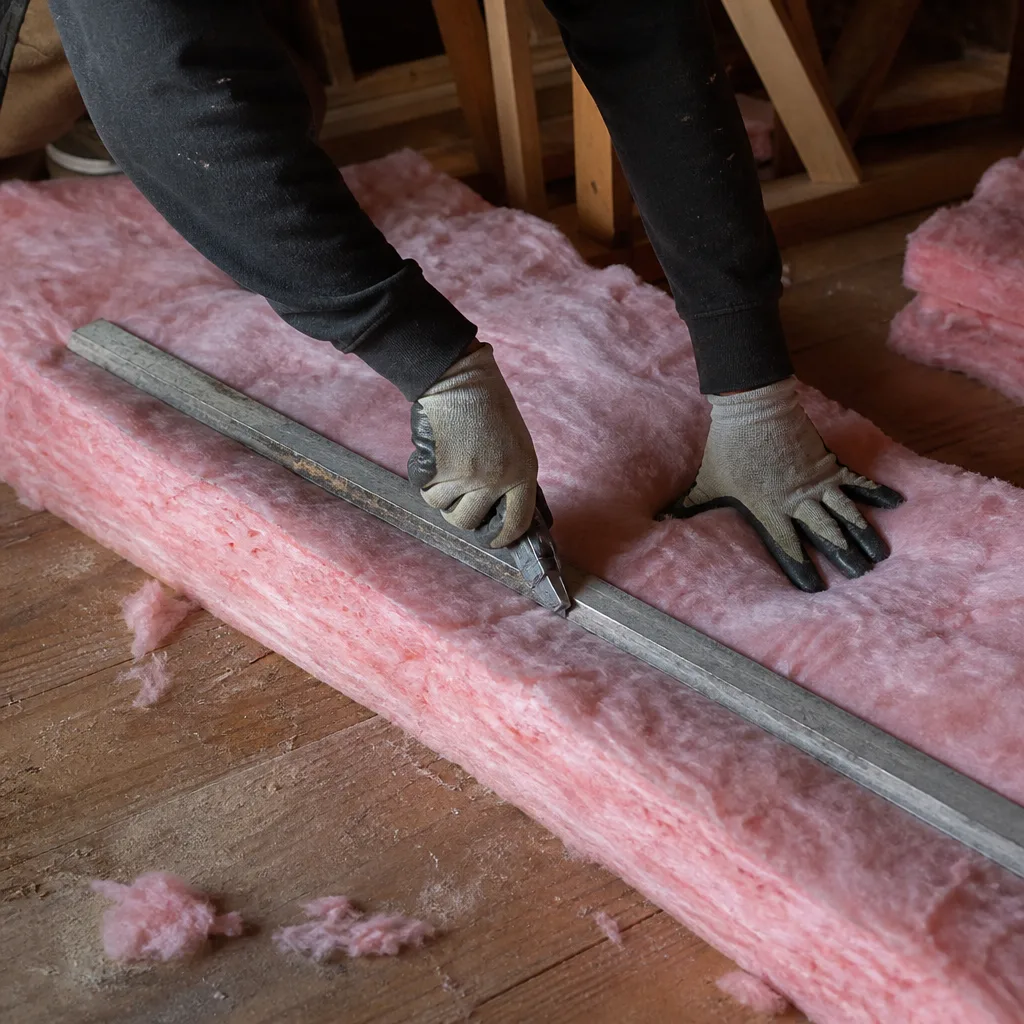
Attic insulation pricing in Corona depends on the material, the square footage of your attic, and how much prep work is involved. For a typical 1,500 to 2,000 square foot tract home, blown-in fiberglass attic insulation (including air sealing) typically runs $1,800 to $3,600. Batt insulation runs a bit lower, $1,500 to $2,800, but won’t air-seal as effectively. Spray foam is the premium option at $3,500 to $7,000 for a full attic encapsulation, and it’s the right call for unvented attics or homeowners solving for both insulation and air tightness. Attic top-ups, where we add material over existing insulation, run $800 to $1,500. Every quote starts with a free attic inspection and a written number. Call (866) 271-1602 and we’ll schedule it.
We Also Serve Cities Near Corona
Fontana Insulation handles Attic Insulation in Corona and the surrounding communities, including Home Gardens, El Cerrito Corona, Eastvale, and Norco. If you’re in one of those areas and dealing with the same inland heat and builder-grade insulation problems we see throughout the 91 corridor, the same crew and the same process apply.
Serving Corona, CA — Our Local Coverage Area
We’re based in the Corona area and know this community well. Use the map below to see our service coverage — if you’re nearby, we can almost certainly help.
FAQs About Attic Insulation in Corona
Because homes built in Corona in the 2000s were insulated to the Title 24 standards of that year, not today’s, and those standards have moved significantly. Most 2000s-era tract homes in Corona left the builder with R-30 attic insulation at best, while current code for this climate zone calls for R-38 to R-49. Add in the inevitable settling, HVAC work in the attic, and the intense summer heat that degrades some materials over time, and a 2005 attic is frequently under-insulated by 30 to 40 percent today. We inspect and measure before we upgrade, so you’ll see exactly what’s up there. Call (866) 271-1602 to schedule a free attic assessment.
Corona’s summer heat and wildfire smoke season change the job requirements. Heat is the obvious one: attics routinely hit 150°F or more, and that thermal load pushes straight down into your living space if the attic floor isn’t properly insulated and air-sealed. Smoke is the subtler problem. During fire season, fine particulate infiltrates through attic vents and seams, settles into insulation, and gets pulled into the house through ceiling penetrations. In Corona, proper attic insulation should always be paired with air sealing, and many homeowners benefit from adding a radiant barrier to reduce the attic’s peak temperature. This combination keeps heat and smoke out far better than insulation alone.
The tell-tale signs are uneven room temperatures, especially in upstairs bedrooms that face west, cooling bills that climb every summer, and insulation you can see has settled below the top of the ceiling joists. We also find homes where HVAC techs have moved insulation aside over decades of service visits and never put it back. In Chase Ranch and Horsethief Canyon, we regularly find hot spots where the insulation has compressed to under three inches or been scraped aside entirely. If you’re seeing any of those signs, an attic inspection costs nothing and tells you what’s going on. Call (866) 271-1602.
Yes, but the material and method matter more in an unvented attic than in a vented one. Open-cell or closed-cell spray foam is often the right answer because it insulates and air-seals in a single pass, and it can be applied directly to the roof deck in an unvented assembly when installed to the manufacturer’s specification. Batts or blown-in fiberglass in an unvented attic risk trapping moisture against the sheathing, which leads to mold. We’ll assess the attic’s configuration, the existing ventilation, and the roof condition, then recommend a system that won’t create a moisture problem.
Mold in Corona attics is less common than in coastal cities, but when it appears the cause is almost always trapped moisture from bathroom fans, dryer vents, or unvented attic conditions rather than ambient humidity. Removal means fixing the moisture source first, removing and disposing of affected insulation, sanitizing the deck and framing with an antimicrobial treatment, and then reinstalling insulation that won’t trap moisture. Ranges run $1,500 to $4,500 depending on the affected square footage. We’ll inspect and give you a written scope before any work begins.
Written by Noel Arredondo, Owner at Fontana Insulation, serving Corona and the Inland Empire.