
Fast, Reliable Attic Insulation Across Cabazon
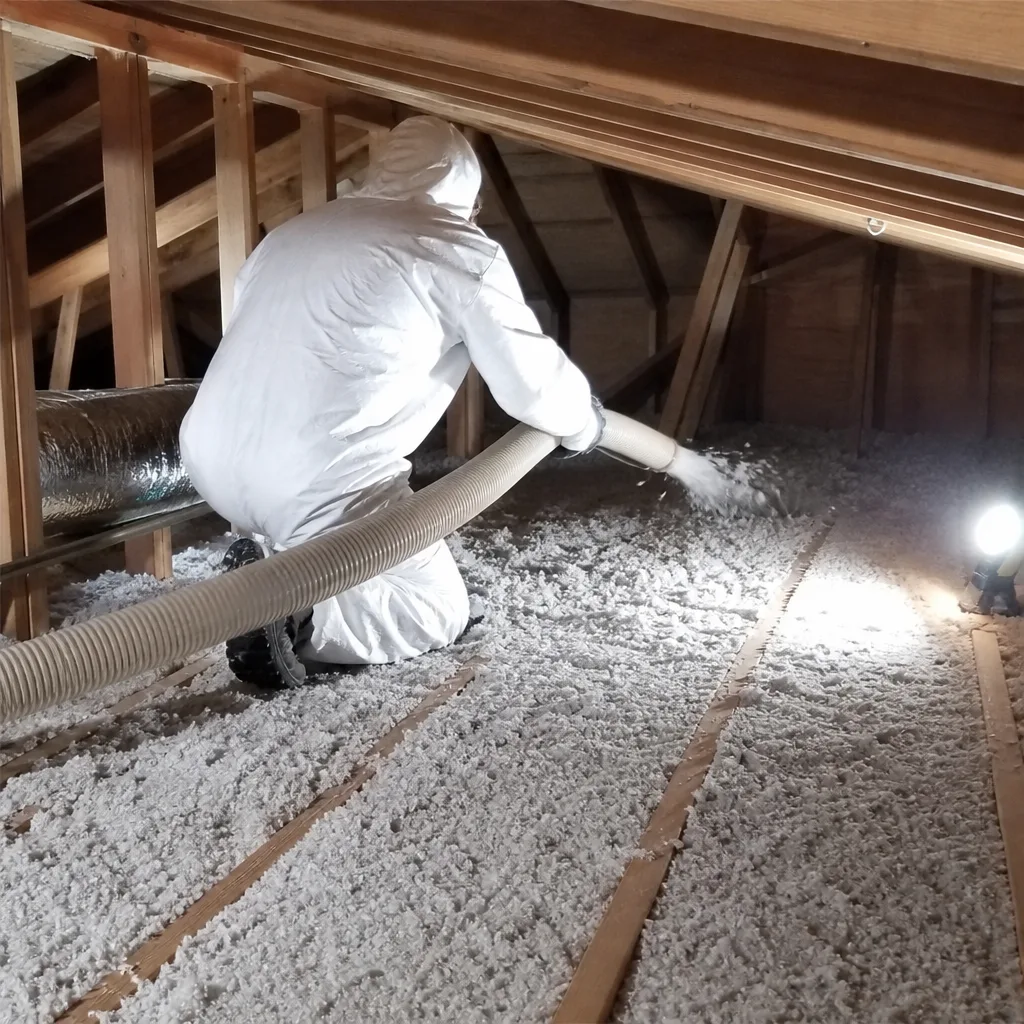
Attic insulation in Cabazon runs anywhere from $1.50 to $3.80 per square foot for blown-in fiberglass, with radiant barrier adding $0.80 to $1.60 per square foot. Most Cabazon homes we assess need both because of the San Gorgonio Pass wind corridor, not just one or the other. Our crews know this stretch of the pass well: the wind doesn’t just cool things down, it actively strips heat from under-insulated attics and works against whatever R-value you paid for. Call (866) 271-1602 for a free estimate and we’ll send a specialist who actually understands how Cabazon attics behave.
Why Fontana Insulation Is Cabazon’s Preferred Attic Insulation Company
We carry eight insulation brands across four material categories, so when we walk into a Cabazon attic we’re choosing from the full toolbox instead of pushing whatever’s left in the warehouse. That matters here. A manufactured home off Morongo Trail has different thermal needs than a 1960s stick-built house near the casino corridor, and a house on the windward side of the pass needs a different air-sealing sequence than one tucked into the hills. Noel Arredondo built our approach around that simple idea: match the material to the house, not the other way around.
Cabazon homeowners call us because we’re brand-agnostic and we don’t subcontract. Our attic insulation, spray foam, and blown-in crews are all in-house. That means the person who air-seals your top plates is the same person accountable for the final result. We stock Rockwool, Knauf, CertainTeed, and Icynene products locally and can usually be in Cabazon within a couple of days depending on crew scheduling.
Attic Ventilation in Cabazon
Attic Ventilation in Cabazon means building a balanced intake-exhaust system that works with the pass winds, not against them, so heat and moisture leave the attic without creating convective loops. Cabazon homeowners need this when their attic is still hot hours after sunset, or when they notice condensation or mildew forming on roof sheathing in winter. For a typical Cabazon attic, ventilation work runs $400 to $900 depending on whether we’re adding soffit vents, reworking gable vents, or installing a ridge vent.
Wind-Balanced Ventilation Design
The San Gorgonio Pass doesn’t blow evenly. Some Cabazon attics get hammered from one side while the other stays stagnant. Our crew sizes intake and exhaust openings to account for prevailing wind direction, which prevents the negative-pressure zones that pull conditioned air out of the living space.
Preventing Convective Loops at Gable Vents
When hot outside air enters gable vents, rises to the ridge, and recirculates, your attic fan and your insulation both lose. We see this constantly in Cabazon homes built before the 1990s. The fix is usually sealing one set of vents and adding a continuous ridge or powered exhaust, then verifying airflow with a smoke test before we call the job done.
Radiant Barrier in Cabazon
Radiant Barrier in Cabazon is a reflective layer installed against the roof deck that blocks radiant heat from loading the attic during 100°F-plus summer days, which is the single biggest driver of attic heat gain here. Cabazon homeowners need this when their attic insulation is already at or above R-38 yet the house still bakes by mid-afternoon. Radiant barrier installation for a typical Cabazon attic runs $1,800 to $3,400 depending on square footage and roof complexity.
Foil Radiant Barrier Installation
We staple or laminate a low-emissivity foil facing to the underside of the roof rafters, creating an air gap that reflects heat back toward the roof deck. In Cabazon this matters more than in most of the Inland Empire because the pass gets uninterrupted solar exposure with no coastal haze to soften the load. The foil itself doesn’t degrade in high heat, which is why we prefer it over spray-on radiant coatings for this climate.
Radiant Barrier with Blown-In Insulation
Pairing a radiant barrier with blown-in fiberglass or cellulose is the standard we recommend for most Cabazon attics. The barrier handles the radiant component; the blown-in material handles conductive heat transfer through the ceiling. Without the barrier, added insulation depth hits diminishing returns once attic temps climb past 140°F, which happens routinely here in July and August.
Trusted Brands We Service in Cabazon
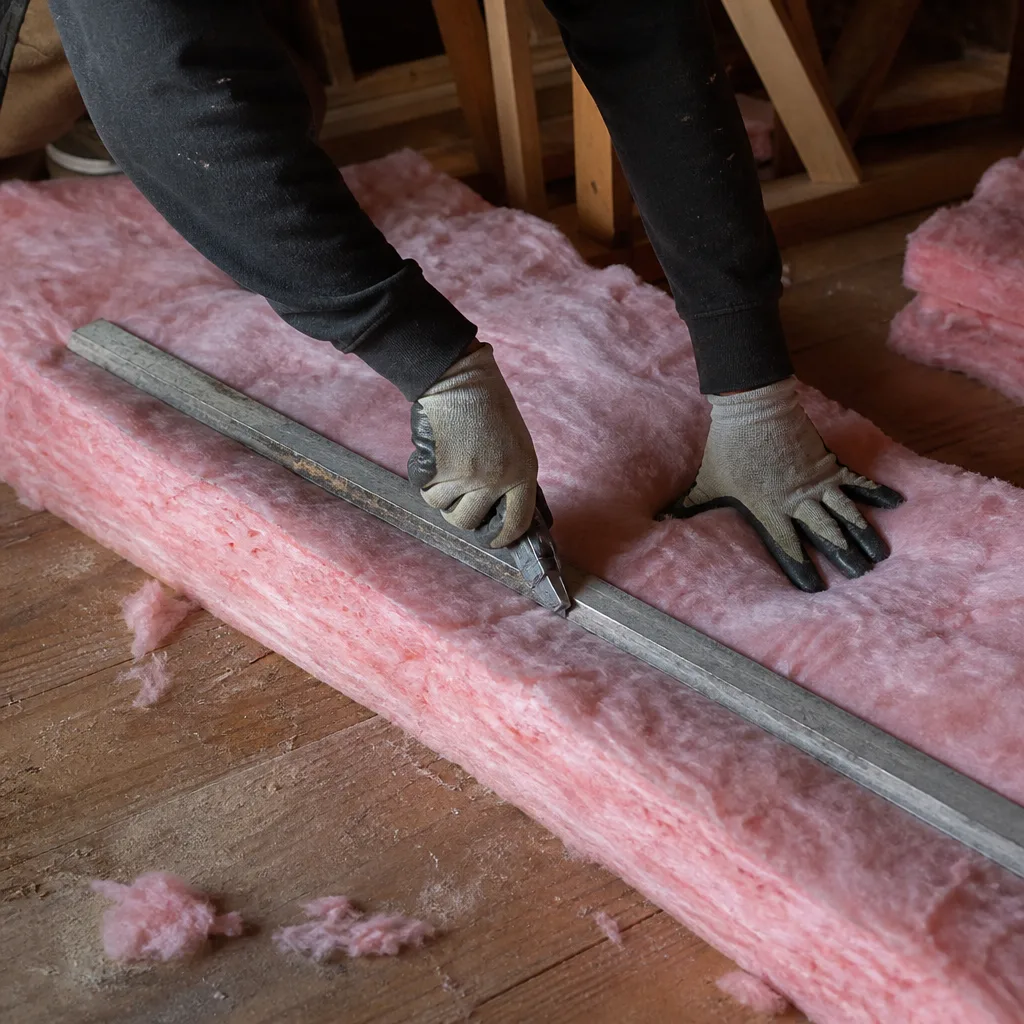
We install Knauf fiberglass because it offers a tight, uniform density in both batts and blow-in form, which suits Cabazon’s smaller attic cavities and manufactured-home applications. Rockwool mineral wool earns its spot for Cabazon homeowners who want fire resistance and sound dampening, especially near highway noise from the 10. And CertainTeed fiberglass is a workhorse we stock for Cabazon retrofit jobs because its batts hold R-value even after being disturbed during air-sealing work. We also carry Icynene spray foam for Cabazon attics with unusual geometries or metal roofing, where blanket materials can’t maintain a continuous thermal boundary. Parts and materials for Cabazon jobs are stocked at our Fontana yard, so we’re not waiting on a distributor to start your project.
Common Attic Insulation Problems We See in Cabazon Homes
- Wind washing through top plates: The pass winds push air through unsealed top plates and soffits, which erodes the effective R-value of blown-in material within a season or two. Cabazon homes with exposed soffit vents and older framing are most susceptible.
- Convective loops at gable and ridge vents: Hot pass air enters low on the windward side, rises through the attic, and exits the leeward vents, creating a continuous heat cycle. Even brand-new insulation can’t hold a thermal boundary under those conditions without air sealing first.
- Legacy single-pane windows compounding the load: Many Cabazon homes built before the 1980s still have single-pane glass, which lets solar gain bypass the attic entirely and heat the living space from the walls. Insulation helps, but the envelope needs addressing as a system.
- Missing radiant barriers on older roofs: Homes in Cabazon without a radiant barrier see attic decks hit 150°F or more in summer, radiating heat downward through any insulation layer. Adding R-value alone doesn’t stop that mechanism.
Pricing for Attic Insulation in Cabazon, CA
We Also Serve Cities Near Cabazon
Our attic insulation crews regularly work in Banning, Idyllwild, Idyllwild-Pine Cove, and Garnet, so if you’re in a neighboring community or know someone in the pass who needs attic work done, we’re already in the area. For more detail on the full scope of our work, see our Attic Insulation service page or the Cabazon city overview.
Serving Cabazon, CA — Our Local Coverage Area
We’re based in the Cabazon area and know this community well. Use the map below to see our service coverage — if you’re nearby, we can almost certainly help.
FAQs About Attic Insulation in Cabazon
Why does my Cabazon attic still feel hot after adding insulation last year?
Because Cabazon sits in the San Gorgonio Pass wind corridor, wind washing and convective loops are likely stripping the effective R-value from your new insulation, which means depth alone doesn’t solve the problem. We were called to a small single-family home off Broadway in Cabazon where the owner had blown in new fiberglass a few seasons back, yet the house still cooked by mid-afternoon. Our crew found wind-driven air washing through the open top plates and a convective loop at the gable vents, so the new batts were intact but effectively short-circuited. We air-sealed the envelope first, then re-installed with a radiant barrier and balanced attic ventilation; the client reported the afternoon peak load eased noticeably the first week. Call (866) 271-1602 and we’ll diagnose your attic the same way.
Does a radiant barrier make sense on a Cabazon roof, or is high-R insulation enough?
A radiant barrier makes sense in Cabazon because the desert sun loads roof decks with radiant heat that high-R insulation alone can’t stop. Most Cabazon homes we assess benefit from both: the barrier blocks radiant heat at the deck, and the insulation handles conductive heat through the ceiling. Without the barrier, you’re paying for insulation that’s fighting a losing battle against 150°F attic temps every afternoon from June through September.
What’s different about insulating a manufactured home in Cabazon versus a stick-built house?
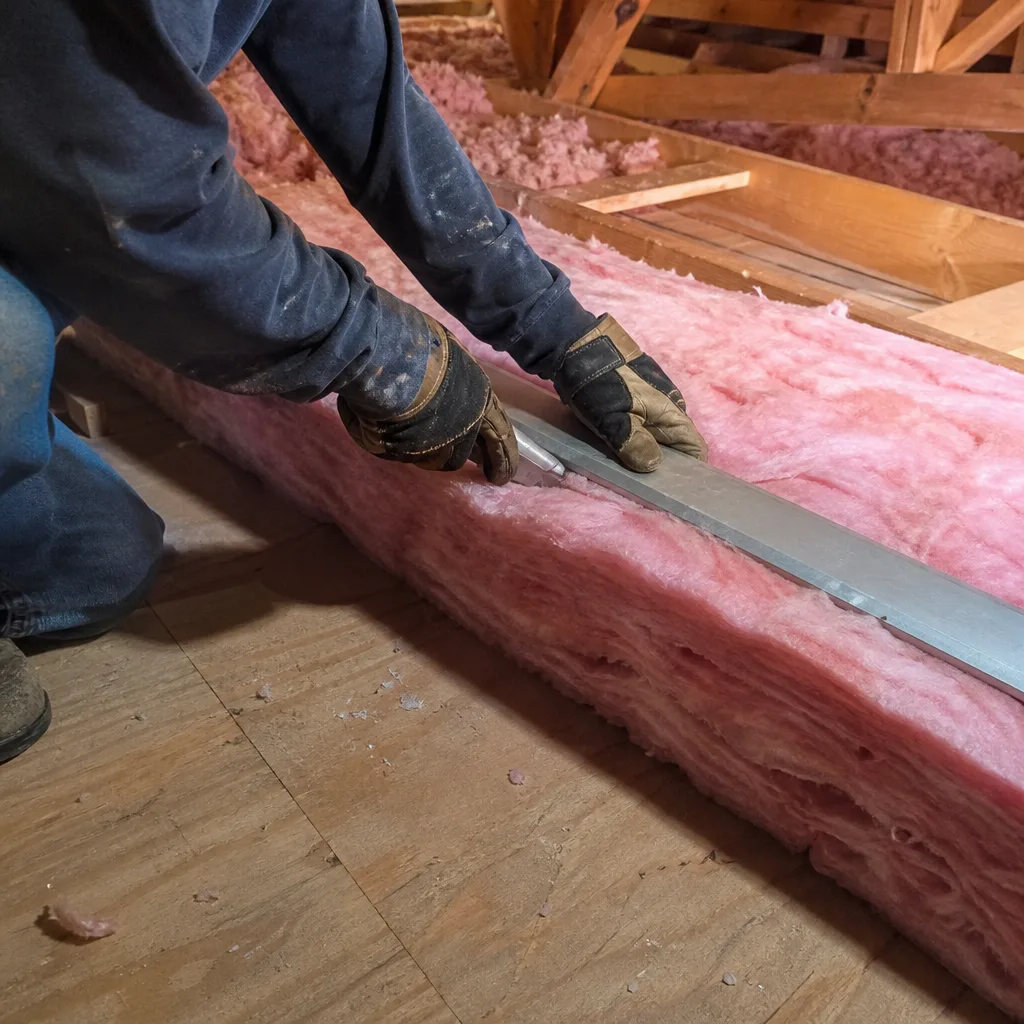
Manufactured homes in Cabazon typically have shallower attic cavities, lighter framing, and fewer ventilation paths, so standard R-38 batts often don’t fit without compression, which reduces their effective R-value. Blown-in material usually works better because it conforms to irregular cavities, and we often pair it with a radiant barrier and air sealing at the belly and rim areas to address the envelope weaknesses that stick-built homes don’t have. The sequence is different; the goal is the same.
How does Cabazon’s freeze-thaw and wind swing affect which insulation we should choose?
Cabazon’s diurnal swings mean your attic material needs to handle 100°F days followed by below-freezing winter nights without settling, shifting, or losing loft. Wind-driven pressure cycles also tend to compact loose material over time. That’s why we favor mineral wool or dense-packed blow-in for Cabazon attics, because they hold their structure under those conditions better than low-density fiberglass.
Should we repair or upgrade the attic insulation on our older Cabazon home?
Most older Cabazon homes built before 1990 need a full upgrade, not a repair, because the original insulation was rated for a different climate and has likely settled, been wind-washed, or never covered the full thermal boundary. If your attic has original R-19 or less, no amount of top-up will fix the underlying problem. We’ll show you exactly what’s up there and what a proper air-seal, ventilate, and insulate sequence would cost before you commit to anything.
Call Fontana Insulation for Attic Insulation in Cabazon
If your Cabazon home can’t hold its temperature, the problem is rarely just low R-value. It’s wind washing, it’s missing air sealing, it’s a thermal boundary that was never finished. We’ll send an insulation specialist who knows the difference and can explain your options in plain language. Call (866) 271-1602 for a free estimate, or reach out through our site and we’ll get back to you within one business day.
Written by Noel Arredondo, Owner at Fontana Insulation, serving Cabazon and the San Gorgonio Pass communities.