
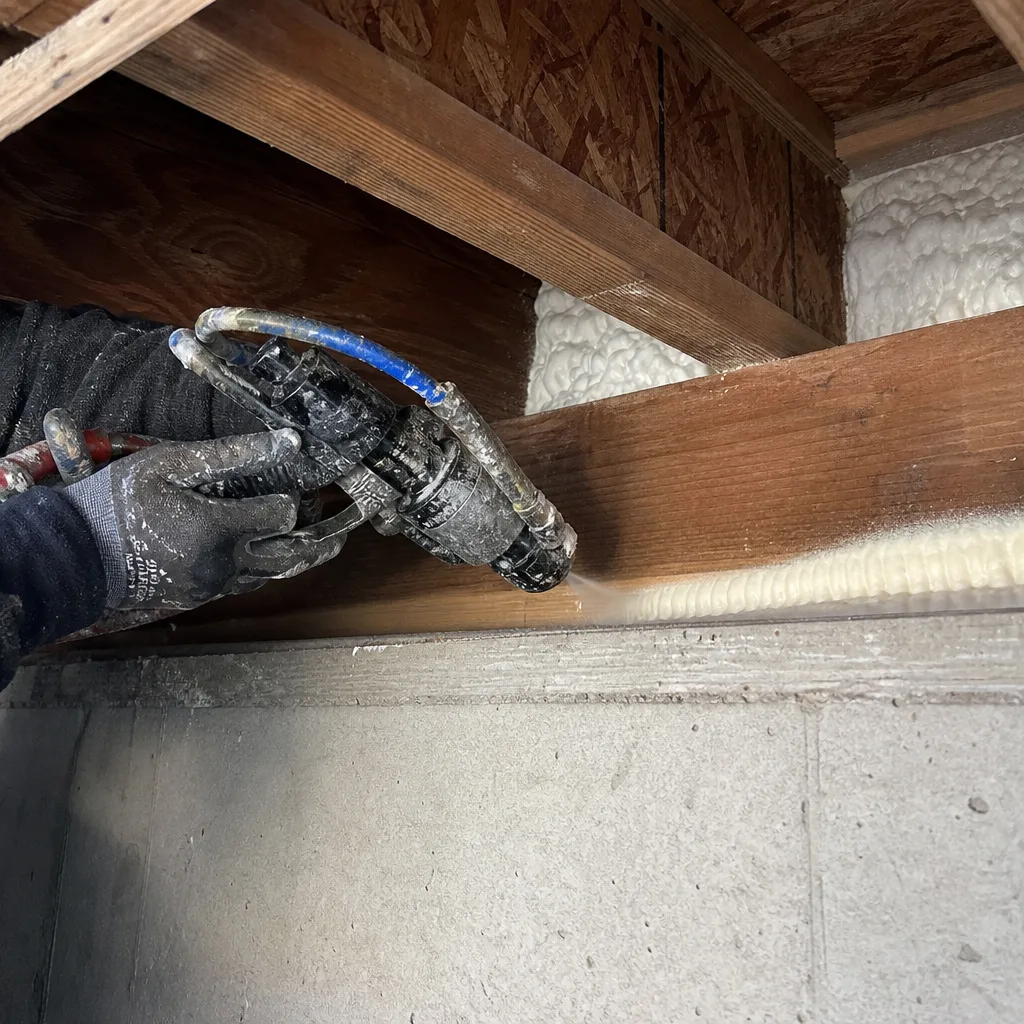
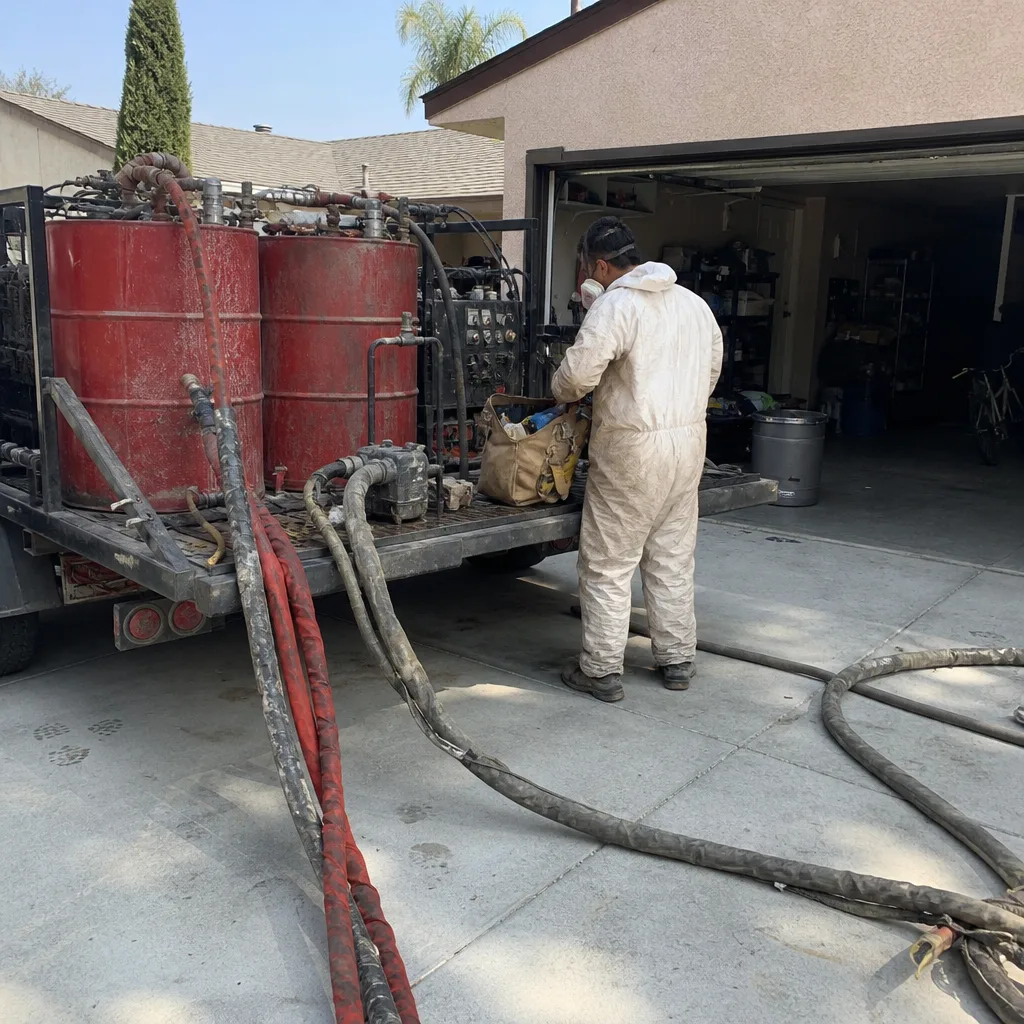
Fast, Reliable Spray Foam Insulation Across Santa Monica
Spray foam insulation in Santa Monica is about moisture control before it’s about energy savings. The coastal marine layer pushes humid air into wall cavities every afternoon from May through August, and in homes built before 1960 with stucco directly over wood framing, that moisture has nowhere to go. We install closed-cell and open-cell spray foam calibrated for exactly these conditions. If you’re dealing with musty walls, drafty rooms, or a hot attic near Ocean Park or the 90402 flats, call us at (866) 271-1602 for a free assessment.
Our Spray Foam Insulation team works throughout the 90401, 90402, 90410, and 90411 zip codes, and we know the difference between a Pico Boulevard bungalow and a Sunset Park duplex in terms of framing, stucco condition, and the right foam spec.
Key Takeaways:
- Santa Monica’s marine layer makes moisture management the primary reason to choose spray foam here, not just R-value.
- Closed-cell foam acts as a vapor barrier, which matters critically in pre-1960 stucco homes with no sheathing.
- We carry Icynene and Demilec, two of the most performance-tested foam brands in North America.
- No brand loyalty here. We match the foam to your wall assembly, not to what’s cheapest in our warehouse.
Why Fontana Insulation Is Santa Monica’s Preferred Spray Foam Insulation Company
Noel Arredondo built Fontana Insulation around a simple idea that most insulation contractors resist: carry more brands than you need, so the recommendation is based on the house, not the inventory. We stock eight major insulation brands across fiberglass, mineral wool, spray foam, and cellulose. When a Santa Monica homeowner calls us about a 1920s bungalow with soaked fiberglass behind stucco, the answer isn’t automatically spray foam. Sometimes closed-cell is right. Sometimes air-sealing plus Rockwool gets the job done. We explain the difference and let you decide.
For the older westside housing stock, that brand-neutral approach matters more than anywhere else in LA. A 1948 courtyard apartment in 90405 with knob-and-tube wiring needs a different solution than a 1980s condo near Century City. We’ve opened enough walls in Santa Monica to know what’s coming before the first cut: wet fiberglass, no building paper, bare studs. That local familiarity means fewer surprises for you, and a more honest quote from day one.
We’re authorized installers for Icynene and Demilec, two of the most rigorously tested closed-cell foam products on the market. When a vapor barrier is the difference between a dry wall and a mold problem, we don’t gamble on off-brand foam. Call (866) 271-1602 and we’ll talk through your specific situation.
Closed Cell Spray Foam Insulation in Santa Monica
Closed Cell Spray Foam Insulation is the material we recommend most often in Santa Monica’s 90402 and 90405 neighborhoods, and for a reason that has nothing to do with energy savings. Homes built in the 1920s through 1950s along Montana Avenue, in Ocean Park, and in the Wilshire-Montana area were often stuccoed directly over wood studs with no sheathing or building paper behind the stucco. That means any condensation that forms inside the wall soaks directly into the framing. Closed-cell foam, when sprayed against the back of the stucco, creates a hard vapor barrier that keeps marine-layer moisture out of the wood. It’s not an upgrade in this housing stock. It’s a repair.
Typical closed-cell foam projects in Santa Monica run $4.50 to $7.50 per board foot installed, which translates to roughly $8,000 to $15,000 for a full 1,200 square foot attic or rim joist and wall cavity retrofit, depending on access. For a 1920s one-story bungalow with open wall cavities, expect the lower end. For a 1950s apartment with plaster walls and limited access, expect the higher end.
Marine-Layer Vapor Barrier Work
In the 90402 flats north of Montana, the original stucco on wood-frame walls often has no sheathing or building paper behind it. Spray foam here must be closed-cell to act as a vapor barrier against marine-layer condensation that would otherwise soak bare wood and fiberglass. We’ve seen walls where the old fiberglass was so wet you could wring it out.
Wall Cavity Retrofit
When we open a pre-1960 Santa Monica wall, we look for two things before spraying: active leaks and knob-and-tube wiring. Foam over either one is a future problem. We reroute wiring first, seal penetrations from the outside, then spray closed-cell foam at 2 inches minimum to hit both the air-sealing and vapor-barrier targets.
Open Cell Spray Foam in Santa Monica
Open Cell Spray Foam is the right call in Santa Monica when the goal is air-sealing and sound dampening in a dry assembly. It expands far more than closed-cell, which makes it better at filling odd cavities in 1960s and 70s low-rise apartment buildings where ceiling joists and dropped soffits create irregular spaces. But open-cell foam is vapor-permeable. In a pre-1960 stucco wall with no sheathing, open-cell installed against bare wood will trap marine-layer moisture and rot the framing from the inside out. We won’t spec it there.
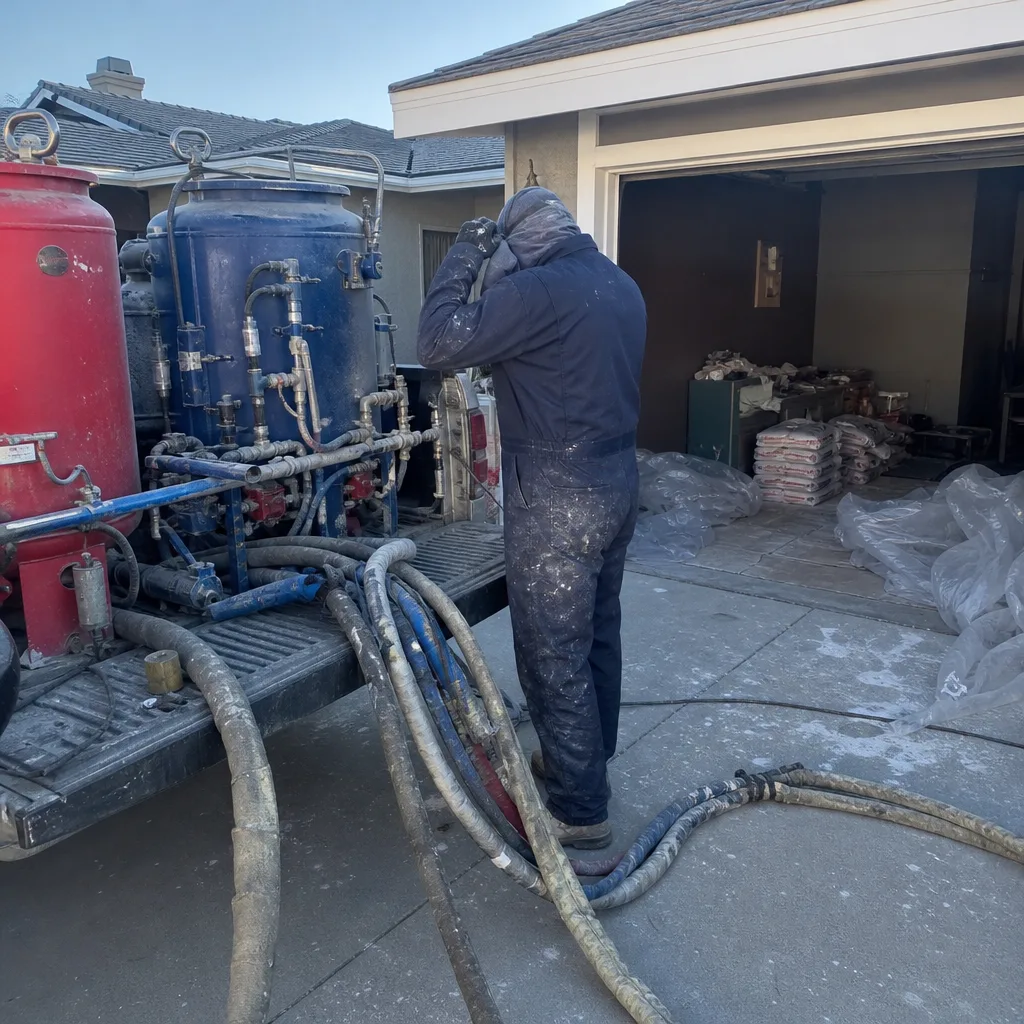
Open-cell foam in Santa Monica runs $2.50 to $4.00 per board foot installed, which puts a full attic air-seal in the $5,000 to $9,000 range for most homes. It’s a strong choice for interior wall cavities, sound attenuation between units in a duplex or fourplex, and attic rooflines where the ceiling is already well air-sealed.
Interior Wall and Sound Work
In Ocean Park and Sunset Park, where homes sit close to neighbors and street noise carries, open-cell foam does impressive work as a sound dampener. We spray it into interior partition walls during remodels, and the before-and-after difference is immediate.
Attic Air-Sealing
Santa Monica attics bake during Santa Ana events, but the bigger issue year-round is humidity. Open-cell foam sprayed to the roofline creates a conditioned attic that stops hot air intrusion and keeps June Gloom moisture out of the insulation. For 1970s and newer construction with proper sheathing, this is often the most cost-effective spray foam application.
Trusted Brands We Service in Santa Monica
We carry Icynene and Demilec for spray foam because those two brands have the longest independent test history in North America, particularly on moisture vapor transmission and fire resistance. For customers in Santa Monica who want a mineral wool alternative, we stock Rockwool, which offers fire resistance and sound dampening that foam alone doesn’t provide. We also work with Johns Manville, Knauf, and CertainTeed fiberglass where blown or batt insulation genuinely fits the assembly better. Our trucks carry material for all of it, so we’re not making a second trip for a brand we don’t stock.
Common Spray Foam Insulation Problems We See in Santa Monica Homes
- Wet fiberglass behind stucco with no sheathing. In the 90402 flats and Ocean Park 90405 cottages, decades of June Gloom condensation has soaked the original insulation. When we open these walls, the fiberglass is often damp and musty, and the wood behind it is stained. Closed-cell foam is the fix.
- Foam sprayed over knob-and-tube wiring. Pre-1960 Santa Monica rentals and bungalows often still have active knob-and-tube circuits. Foam over old wiring can cause overheating because the foam traps heat the old insulation allowed to dissipate. Wiring must be rerouted or replaced before spraying.
- Blistered and delaminated foam in courtyard apartments. In 1920s to 1950s courtyard buildings with deferred maintenance, foam sprayed over active leaks or unsealed wall penetrations will blister as trapped condensation pushes back through. You can see the delamination from a ladder. The fix is sealing from the exterior first, then respraying.
- Open-cell foam installed in no-sheathing walls. A contractor who doesn’t know Santa Monica’s older housing stock will sometimes spray open-cell foam into a 1930s stucco wall cavity. It traps moisture against bare wood and the musty smell returns within a year. We’ve replaced several of these jobs done by inland contractors.
Pricing for Spray Foam Insulation in Santa Monica, CA
Closed-cell spray foam in Santa Monica runs $4.50 to $7.50 per board foot installed, and a typical wall cavity or attic retrofit lands between $8,000 and $15,000 depending on access and the condition of the existing framing. Open-cell foam runs $2.50 to $4.00 per board foot, with full attic air-seals in the $5,000 to $9,000 range. Rim joist work in crawlspaces around 90401 and 90402 typically runs $1,800 to $3,200. The biggest cost variables are wall access, knob-and-tube remediation, and whether we’re removing wet fiberglass before spraying. Estimates are free, and we’ll give you a line-item breakdown before any work starts. Call (866) 271-1602 to schedule a walkthrough.
We Also Serve Cities Near Santa Monica
Our spray foam crews regularly work in Venice, Century City, Culver City, and Beverly Hills, and we apply the same wall-assembly-specific approach there that we use in Santa Monica. If you’re near the border of any of these cities, the same team covers your job with the same brand-neutral material selection.
Serving Santa Monica, CA — Our Local Coverage Area
We’re based in the Santa Monica area and know this community well. Use the map below to see our service coverage — if you’re nearby, we can almost certainly help.
FAQs About Spray Foam Insulation in Santa Monica
Spray foam fails in Santa Monica’s older stucco walls because most installers use open-cell foam, which is vapor-permeable, and they spray it against bare wood with no sheathing or building paper behind the stucco. Marine-layer condensation soaks into the foam and never dries, leading to hidden rot and a musty smell that returns within a year. Closed-cell foam applied at 2 inches minimum solves this because it acts as a vapor barrier. Call (866) 271-1602 and we’ll spec the right foam for your exact wall assembly.
No, spray foam should not be applied over active knob-and-tube wiring in a 1920s Santa Monica bungalow. The foam traps heat that the old open-air wiring relies on dissipating, creating a fire hazard. The wiring must be decommissioned or rerouted first. We handle that coordination before spraying, and it typically adds $1,500 to $4,000 to the project depending on how much circuitry is involved.
For a Santa Monica coastal home, closed-cell spray foam is denser, acts as a vapor barrier, and is the right choice for pre-1960 stucco walls with no sheathing. Open-cell spray foam is lighter, expands more, and is better for sound dampening and air-sealing in dry, properly sheathed assemblies. In the 90402 and 90405 neighborhoods, closed-cell is almost always the safer wall-cavity choice.
We prevent mold behind stucco in a 1950s courtyard apartment by sealing every exterior penetration before spraying, confirming there are no active leaks, and using closed-cell foam that acts as a vapor barrier against the back of the stucco. If the existing cavity insulation is wet, we remove it first. If there’s knob-and-tube wiring, we reroute it. Skipping any of those steps is how the mold comes back.
Most spray foam insulation work in Santa Monica is allowed under the city’s insulation permit exemption for existing residential buildings, but wall-cavity work that involves opening significant portions of the wall envelope may trigger a permit requirement. We’ll check with the city for your specific property during the estimate. Call (866) 271-1602 and we’ll confirm before any work is scheduled.
Written by Noel Arredondo, Owner at Fontana Insulation, serving Santa Monica and the westside since day one.