
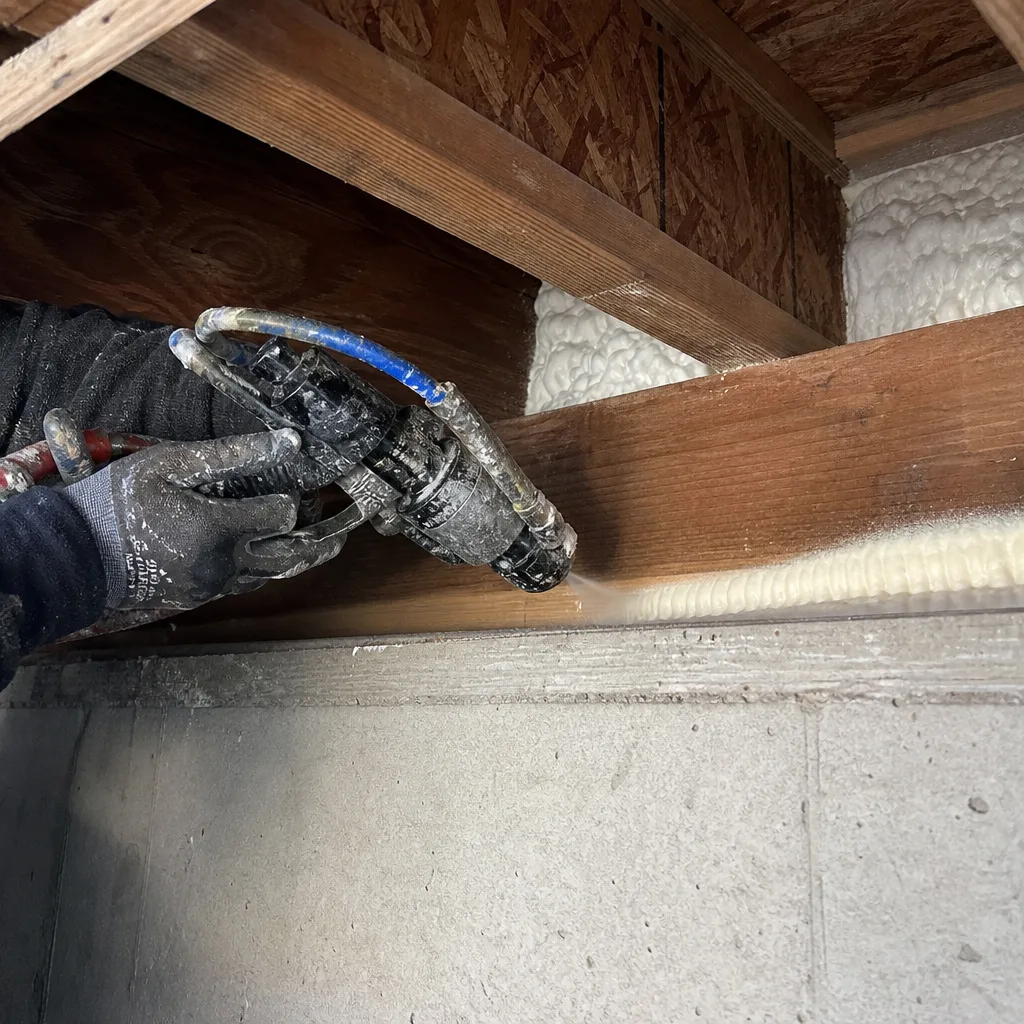
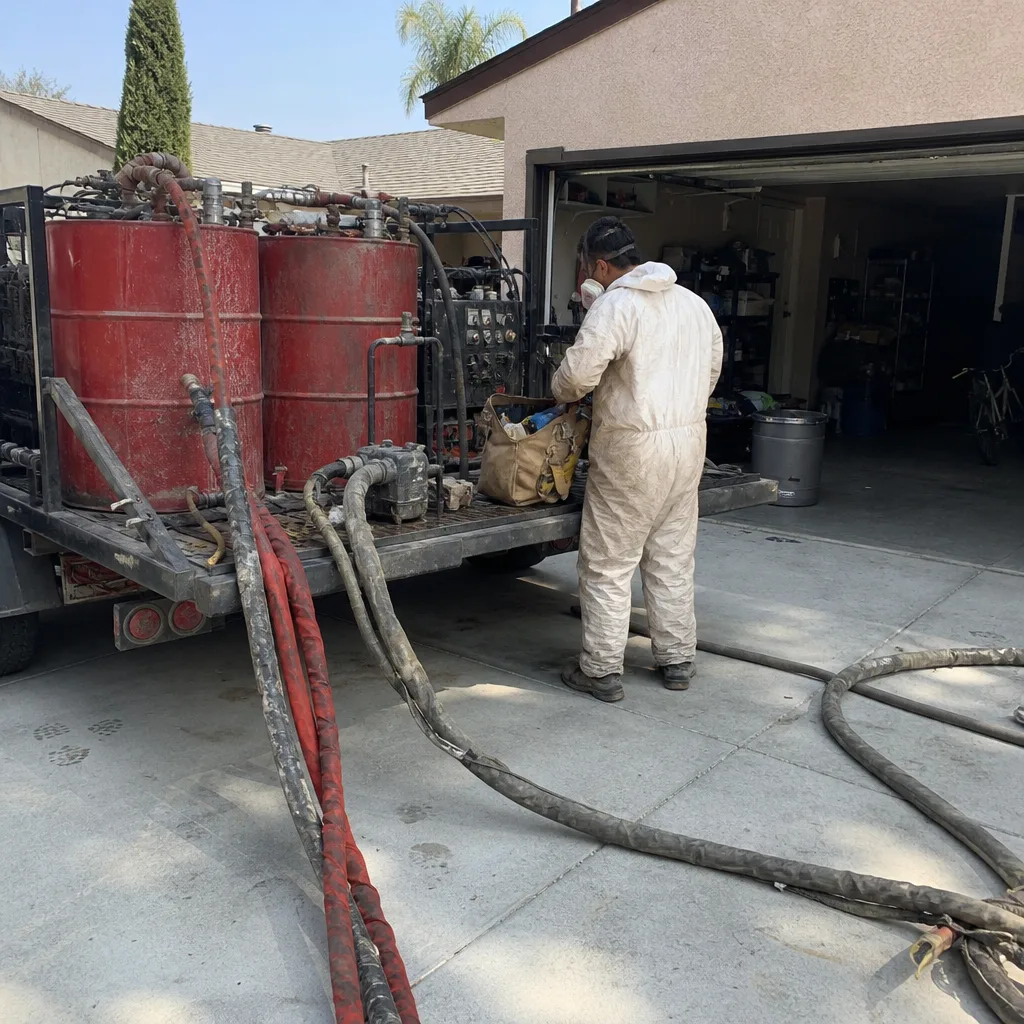
Fast, Reliable Spray Foam Insulation Across Huntington Beach
Spray foam insulation in Huntington Beach typically costs $3.50 to $7.00 per board foot for closed-cell and $1.80 to $3.40 per board foot for open-cell, with most whole-attic jobs landing between $4,800 and $12,500 depending on square footage and foam depth. Closed-cell foam is the right call for most homes west of Edwards Street toward Pacific Coast Highway, where the marine layer saturates attics from May through July, while open-cell often works fine inland east of Newland. We’re a Fontana-based insulation specialist serving Huntington Beach with same-week scheduling and crews that know the difference between a 92648 fog-belt attic and a 92647 tract home. Call (866) 271-1602 for a free estimate and we’ll tell you which foam actually makes sense for your house, not just which one we stock more of.
Huntington Beach’s microclimates change the insulation math street by street. A home off Brookhurst near the wetlands faces different moisture conditions than a remodel up in the hills near the 92646 boundary. That’s the thing most insulation sales pitches miss. We don’t miss it.
Why Fontana Insulation Is Huntington Beach’s Preferred Spray Foam Insulation Company
Our techs work in Huntington Beach every week, so we’ve seen the full range of what this city throws at insulation: salt air corroding attic fasteners within a few blocks of the sand, fog-driven condensation in 1970s bungalows, and builder-grade foam failing in 1990s tract attics. That repetition gives us something no online estimate tool can fake. We know which assemblies survive here and which ones turn into mold problems in two seasons. Huntington Beach homeowners regularly tell us the consultation was the first time anyone explained the trade-offs between open-cell, closed-cell, and mineral wool without pushing whatever was already in the truck.
Noel Arredondo built Fontana Insulation around a material-agnostic model. We carry eight nationally recognized brands across fiberglass, mineral wool, spray foam, and cellulose, so the recommendation matches your attic or wall cavity, not our inventory. For Huntington Beach specifically, that means we’re comfortable saying open-cell is the right fit for an interior wall in a Fountain Valley-adjacent neighborhood while telling a homeowner near the pier they need closed-cell on the underside of their roof deck. It also means we won’t tell you spray foam is the only answer when a foil-faced batt or Rockwool board is the better call. Written by Noel Arredondo, Owner at Fontana Insulation, serving Huntington Beach since our founding.
We answer our own phone. When you call (866) 271-1602, you’ll talk to someone who can discuss your project specifics, not a call center reading off a script. Estimates in Huntington Beach are free, and if we tell you spray foam is the wrong material for your situation, we’ll steer you to the right one from our lineup.
Spray Foam Attic Insulation in Huntington Beach
Spray Foam Attic Insulation in Huntington Beach is the highest-demand job we do in this city, particularly in the 1950s-1970s tract homes that dominate 92647 and fill much of 92646. A typical attic spray foam job in Huntington Beach runs $5,200 to $11,800 for closed-cell applied directly to the roof deck, with open-cell options coming in lower at $3,600 to $7,500. The decision isn’t about preference. It’s about your home’s drying direction and how close you live to the fog line. Homes west of the Santa Ana River, especially those in 92648, need closed-cell or foil-faced assemblies because the marine layer pushes dew points high enough to condense inside open-cell foam. Homes further inland in 92646 can often safely use open-cell, which costs less per board foot and still air seals effectively when installed correctly.
One thing that surprises a lot of Huntington Beach residents: spray foam isn’t primarily about R-value here. It’s about air sealing and vapor management. The city’s onshore flow and overnight fog mean attic condensation is the primary failure mode, not heat loss through the roof.
Closed-Cell for Fog-Belt Homes
Within a few blocks of Pacific Coast Highway in 92648, we routinely specify closed-cell foam at 2 to 3 inches on the roof deck because it acts as a vapor retarder. Kraft-faced fiberglass batts in these homes often show moisture staining within five to ten years of installation. Closed-cell foam stops that moisture from condensing inside the assembly in the first place.
Open-Cell Where Drying Matters
Inland 92646 and parts of 92647 see less sustained fog, and open-cell foam offers a lower-cost path to air sealing an attic without trapping moisture in wall cavities. We’ve also used open-cell in attic knee walls and scuttle holes where full-deck coverage doesn’t make sense. The key is applying it where the assembly can still dry to one side, which in Huntington Beach’s climate almost always means inland, not beachside.
Spray Foam Wall Insulation in Huntington Beach
Spray Foam Wall Insulation in Huntington Beach is most common in two scenarios: retrofit work on older homes with uninsulated or under-insulated stucco walls, and new additions where owners want better air sealing than fiberglass can deliver. Wall cavity spray foam in Huntington Beach usually falls between $2,800 and $6,500 for a typical addition or a two-car garage conversion, depending on cavity depth and whether open-cell or closed-cell is specified. Garage conversions deserve special attention here. Huntington Beach has a high concentration of above-garage conversions and garage-to-living-space remodels, and those projects are where we see the most builder mistakes. Spray-foaming a garage conversion without addressing the vapor profile of that assembly is how you end up with mildew on the interior face of the foam.
Huntington Beach’s housing stock leans mid-century single-story for the most part. Walls in those 1950s-1970s homes are often uninsulated, which anyone who’s lived here through a winter damp spell already knows. Foam changes that quickly.
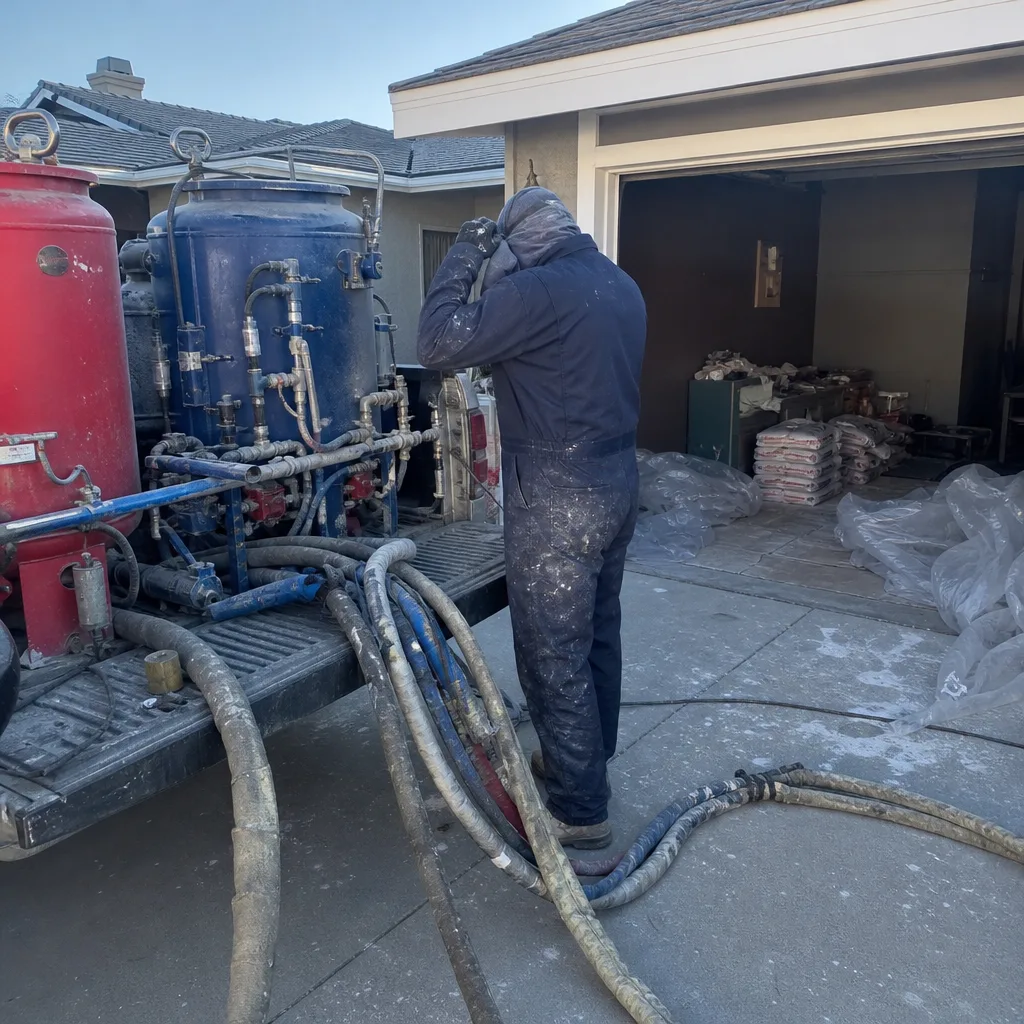
Retrofit and Addition Walls
For an addition off the back of a 92647 home or a garage conversion in 92646, we generally recommend closed-cell foam in exterior walls. It delivers a higher R-value per inch than open-cell, which matters when wall cavities are only 3.5 inches deep, and it provides the air barrier and vapor control this coastal climate demands. We’ve pulled apart enough of these jobs to know that skimping on the foam type here leads to condensation against the stucco.
Stucco and Block Construction
Some Huntington Beach homes built in the 1960s and early 1970s use block or double-wall construction on exterior walls. Spray foam works well here because it adheres directly to the masonry and fills gaps that batts can’t reach. For these applications we lean on closed-cell Icynene or Demilec products, both of which we’re authorized to install and both of which perform consistently in humid, salt-adjacent air.
Trusted Brands We Service in Huntington Beach
We don’t carry eight brands to hit a marketing number. We carry them because Huntington Beach homes vary enough that no single foam product covers every application. Icynene and Demilec are our go-to spray foam lines, both performance-tested for the humid, marine-layer environment we deal with here daily. We also stock CertainTeed and Johns Manville fiberglass for situations where spray foam isn’t the right answer at all, plus Rockwool mineral wool for clients who want fire resistance and sound dampening along with thermal performance. When you call (866) 271-1602 for a Huntington Beach estimate, the conversation starts with your house and your comfort problems, not with a brand we’re trying to move.
Common Spray Foam Insulation Problems We See in Huntington Beach Homes
- Marine-layer condensation inside builder-grade open-cell foam. Fog-belt homes in 92648 and 92649 routinely show open-cell foam that has absorbed months of high-humidity air and lost its adhesion to the roof deck. The foam sags, gaps open, and condensation drips onto the garage ceiling or drywall below. The fix is removal and replacement with a closed-cell product.
- Kraft-faced batts behind spray-foamed walls trapping moisture. When a contractor sprays the cavity but leaves the old kraft paper facing against the interior drywall, the assembly can’t dry. Mildew forms on the facing. We see this often in remodeled 1970s homes around 92647 where someone did the work in stages and lost track of the layering.
- Santa Ana wind dust contaminating foam adhesion surfaces. Before foam is applied, Santa Ana events push fine dust into attics through poorly sealed penetrations around recessed cans and top plates. Foam applied over that dust delaminates within months. We clean and prep every surface before spraying, which is slower but it’s the only way foam bonds correctly.
- Moisture-stained and rusted attic staples near the beach. In homes within a few blocks of the sand, salt air corrodes fasteners quickly and kraft-faced batt insulation wicks fog moisture into the paper. We recommend unfaced or foil-faced products in these locations, and closed-cell spray foam on the roof deck for a permanent seal.
Pricing for Spray Foam Insulation in Huntington Beach, CA
Huntington Beach spray foam pricing comes down to foam type, square footage, and depth. Open-cell attic foam runs $1.80 to $3.40 per board foot and closed-cell runs $3.50 to $7.00 per board foot. A standard 1,200-square-foot attic at 3 inches of closed-cell typically lands around $7,000 to $9,500. Garage conversions and wall cavity work fall lower, usually $2,800 to $6,500 for a typical project. Coastal homes in 92648 and 92649 trend toward the higher end because closed-cell is usually required and prep work is more involved. Inland 92646 and 92647 projects often cost less. We offer free estimates across Huntington Beach and nearby cities. Call (866) 271-1602 and we’ll give you an actual number, not a ballpark that gets revised twice.
We Also Serve Cities Near Huntington Beach
Fontana Insulation serves Spray Foam Insulation in Huntington Beach and the surrounding communities, including Midway City, Fountain Valley, Westminster, and Costa Mesa. If you’re a homeowner or remodeler in any of these areas, our Spray Foam Insulation team brings the same material-agnostic consultation and the same careful prep work we’re known for in Huntington Beach.
Serving Huntington Beach, CA — Our Local Coverage Area
We’re based in the Huntington Beach area and know this community well. Use the map below to see our service coverage — if you’re nearby, we can almost certainly help.
FAQs About Spray Foam Insulation in Huntington Beach
Spray foam pulls away from the roof deck in Huntington Beach when moisture disrupts the bond between the foam and the substrate. The marine layer keeps dew points elevated for months at a time west of the 405, and open-cell foam absorbs that humidity, gains weight, and loses adhesion. It’s most common with builder-grade open-cell installed in 1990s and 2000s tract homes, especially in 92647 and parts of 92646. The fix is removing the failed foam and replacing it with closed-cell Icynene or Demilec applied after thorough surface prep. Call (866) 271-1602 and we’ll assess your attic in person.
Yes, but only if the foam type and placement are matched to your home’s drying direction. Garage conversions in Huntington Beach are common, and the mistake we see most often is open-cell foam installed against a wall or ceiling that can’t dry outward. In a coastal home in 92648, the exterior side is wet most of the year, so a closed-cell product that stops vapor movement is the safer call. Inland 92646 homes often have more drying capacity. In a 1990s tract off Goldenwest Street in 92647, we opened an attic above a converted garage to find builder-grade open-cell foam that had pulled away from the roof deck and soaked up marine-layer humidity. We removed the failing foam, sprayed closed-cell Icynene directly to the deck, and sealed the HVAC plenum and top plates while we were in there, no more condensation dripping onto the garage ceiling. That’s the kind of assessment we’ll do for your conversion before we quote anything.
The marine layer doesn’t change the rated R-value of the foam itself, it changes the real-world performance and the risk profile. Open-cell foam that stays dry will deliver its rated R-value. But once it absorbs moisture from weeks of fog and onshore humidity, its effective thermal performance drops. The bigger issue is durability. Closed-cell foam in Huntington Beach keeps its full R-value and its structural bond because it doesn’t take on moisture. Near the beach, that difference is what separates a 30-year assembly from a 5-year replacement job.
We primarily install Icynene and Demilec spray foam, both of which we’re authorized to install. These two product lines are among the most performance-tested in North America and they hold up well in humid coastal climates. We also carry Johns Manville, CertainTeed, and Knauf fiberglass, plus Rockwool mineral wool, for the situations where spray foam isn’t the right application in a Huntington Beach home. The brand match always follows the application, not the other way around.
Santa Ana winds don’t damage cured foam directly, but they cause problems before and during installation. The winds push fine dust through unsealed attic penetrations around recessed cans, plumbing stacks, and top plates, and foam applied over that dust delaminates within months. That’s why we clean and prep every surface before spraying, and why we always air-seal the penetrations themselves while we’re in the attic. Homes in 92646 and eastern 92647 see the worst of the Santa Ana dust because they’re further from the moisture that keeps it settled. Call (866) 271-1602 to schedule a free estimate and we’ll walk you through what your attic actually needs.
Call Fontana Insulation today at (866) 271-1602 for a free, no-pressure spray foam estimate in Huntington Beach. We’ll explain the options, match the material to your home’s specific location and construction, and give you a written quote you can compare honestly.
Written by Noel Arredondo, Owner at Fontana Insulation, serving Huntington Beach and surrounding communities.