
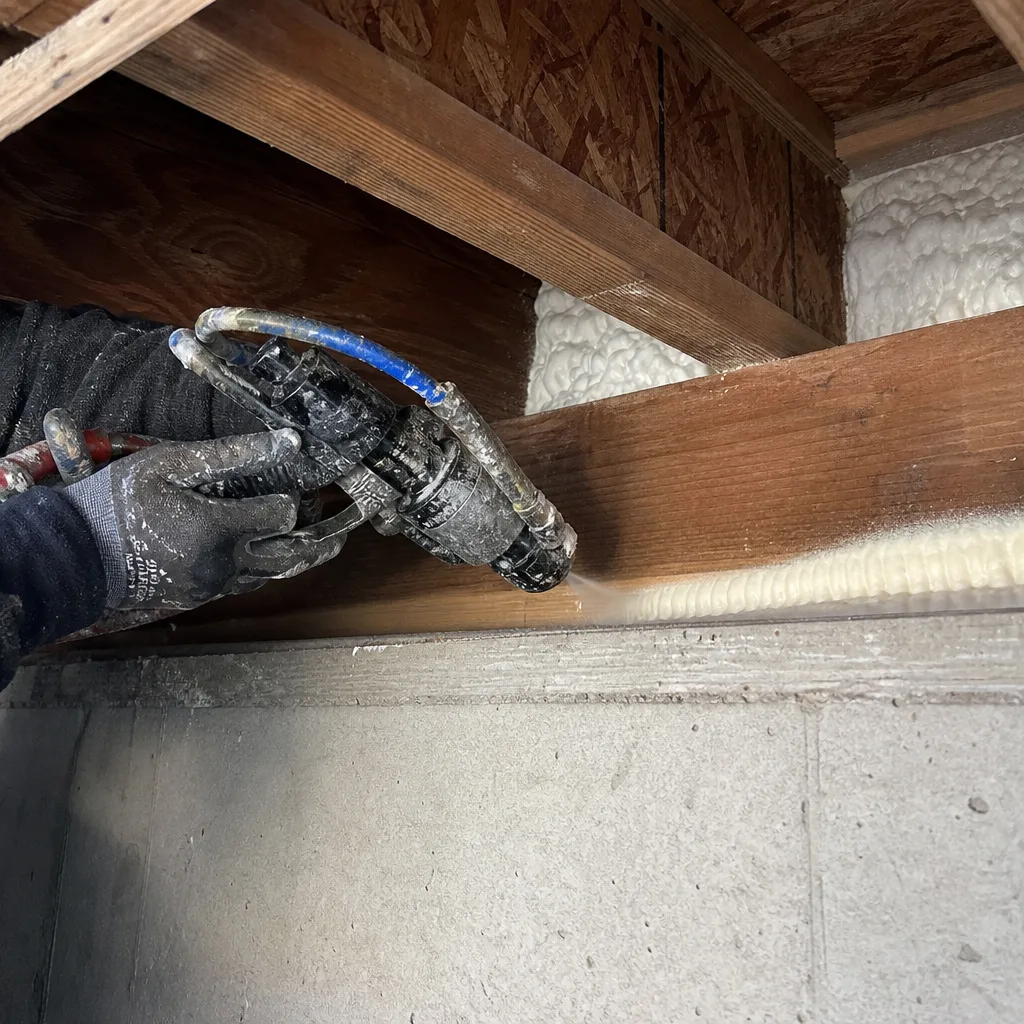
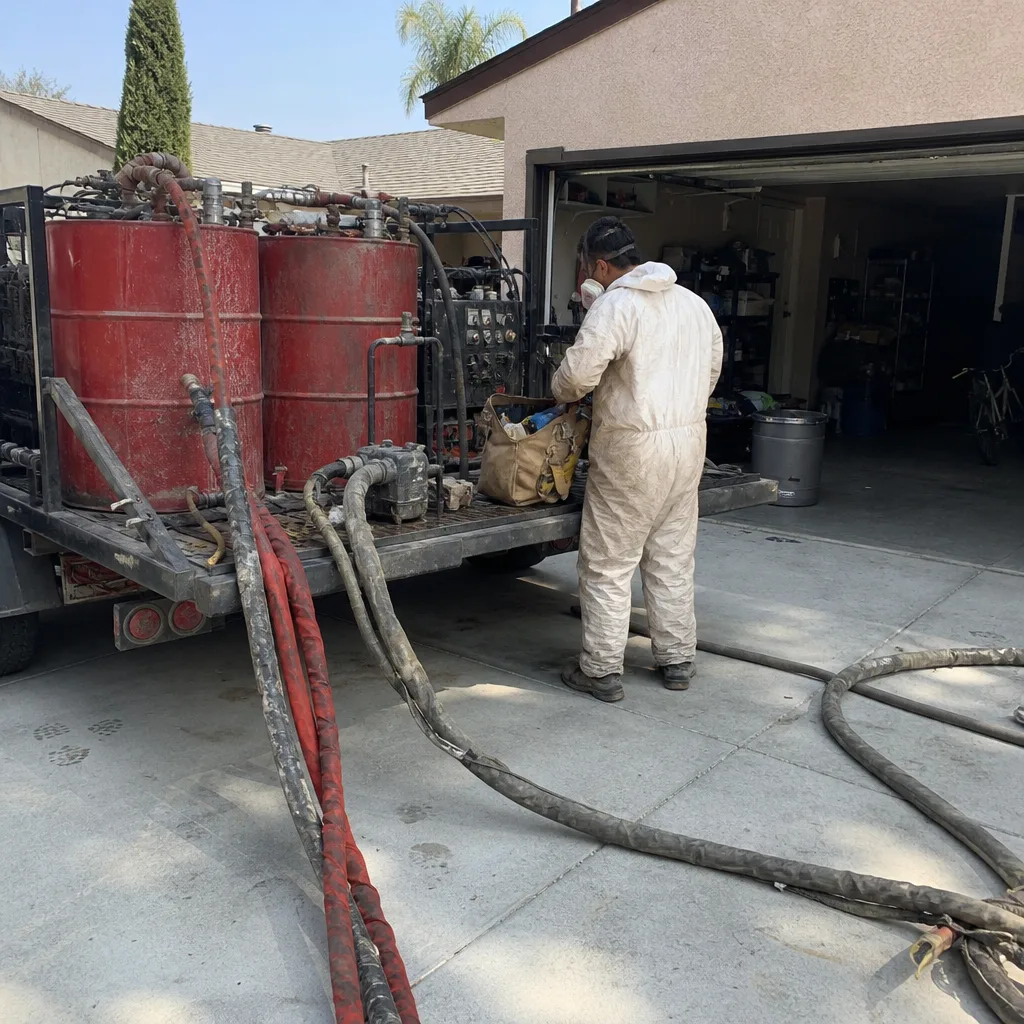
Fast, Reliable Spray Foam Insulation Across Garnet
Spray foam insulation in Garnet typically runs $2.50 to $6.50 per board foot installed, with a full attic application in a mid-century ranch home landing between $3,800 and $8,200 depending on foam type and square footage. We respond to Garnet calls from our Fontana base and know exactly what these high-desert homes need when the thermometer swings from 105°F in July to below freezing on January nights. If your Garnet house can’t hold temperature, call us at (866) 271-1602 for a straight answer and a free estimate.
We’re not new to this part of the San Gorgonio Pass. The housing stock, the dust, the heat cycling: it all plays into which foam and which application actually works here. More on that below.
Why Fontana Insulation Is Garnet’s Preferred Spray Foam Insulation Company
Noel Arredondo built Fontana Insulation around a simple idea: carry the full toolbox and recommend what the house actually needs. We stock eight brands across fiberglass, mineral wool, spray foam, and cellulose, including Icynene and Demilec for closed- and open-cell foam work. That means when we look at a Garnet attic with compacted blown-in insulation and wind-driven dust, we’re not trying to sell you the one product we happen to have in the truck. We’re matching material to the failure we’re seeing.
Garnet homeowners call us because the temperature swing here is brutal on insulation. We’ve seen the pattern enough to know what we’ll find before we open the attic hatch. That local familiarity saves time during the job and gets your house sealed up right the first time. Our Spray Foam Insulation team handles everything in-house: no subcontracted crews, no brand pressure, just the right application for the structure you live in.
Spray Foam Attic Insulation in Garnet
Spray Foam Attic Insulation in Garnet addresses the single biggest energy leak we see in this community: attics full of settled, degraded blown-in material that’s lost half or more of its original R-value. In a Garnet summer, attic temperatures can push past 140°F. When your ceiling insulation has compacted from six inches to three, that heat pours straight into your living space and your AC works double shifts. We remove the spent material, air-seal the attic floor, and apply foam that expands to fill every gap.
Compacted Insulation Removal and Air-Sealing
Before any foam goes in, the old material has to come out. In Garnet’s dry desert air, decades of heat cycling compress blown-in fiberglass and cellulose until it’s dense, dusty, and nearly useless. We remove it, inspect the ceiling plane for gaps around penetrations, and seal those openings before installing new insulation. The air-sealing step matters as much as the foam itself. Skip it and you’re still losing conditioned air through cracks the old insulation was hiding.
Attic Floor vs. Roof Deck Application
Most Garnet ranch homes with vented attics do best with spray foam applied to the attic floor, creating a thermal boundary at the ceiling line. Homes with ductwork running through the attic, which is common in the mid-century builds here, often benefit more from a conditioned attic where foam goes directly on the underside of the roof deck. That keeps the ducts inside the conditioned envelope and stops them from baking in 140°F air. We’ll tell you which approach fits your house after we see the attic.
Spray Foam Wall Insulation in Garnet
Spray Foam Wall Insulation in Garnet solves a problem these wood-frame ranch and manufactured homes share: wall cavities stuffed with fiberglass batts that have cracked, settled, and left gaps after 40 to 60 years of extreme temperature swings. When daytime highs sit above 100°F and nighttime lows drop below freezing, the wall assembly expands and contracts constantly. Old batts don’t handle that well. Foam does because it adheres to the sheathing and framing, sealing the cavity and stopping air movement.
Retrofitting Existing Wood-Frame Walls
On 1960s ranch homes around Garnet, we often find wall cavities with batts that have slumped to the bottom third of the stud bay. The top two-thirds of the wall is uninsulated. Open-cell spray foam injected into these cavities fills the entire bay, bonds to the sheathing, and eliminates the air gaps that make rooms feel drafty in winter and stuffy in summer. It’s a retrofit that works without tearing out drywall.
Dust Intrusion and Air Sealing
Garnet sits in the San Gorgonio Pass, where wind picks up fine dust and drives it through every gap in the building envelope. Wall penetrations, outlet boxes, and the seam between wall and floor all let that dust in. Closed-cell foam applied at rim joists and band joists cuts off a major entry point. For wall cavities, the foam’s air-sealing properties block the pathways dust uses to get inside. We find dust caked inside wall insulation regularly on Garnet jobs.
Trusted Brands We Service in Garnet
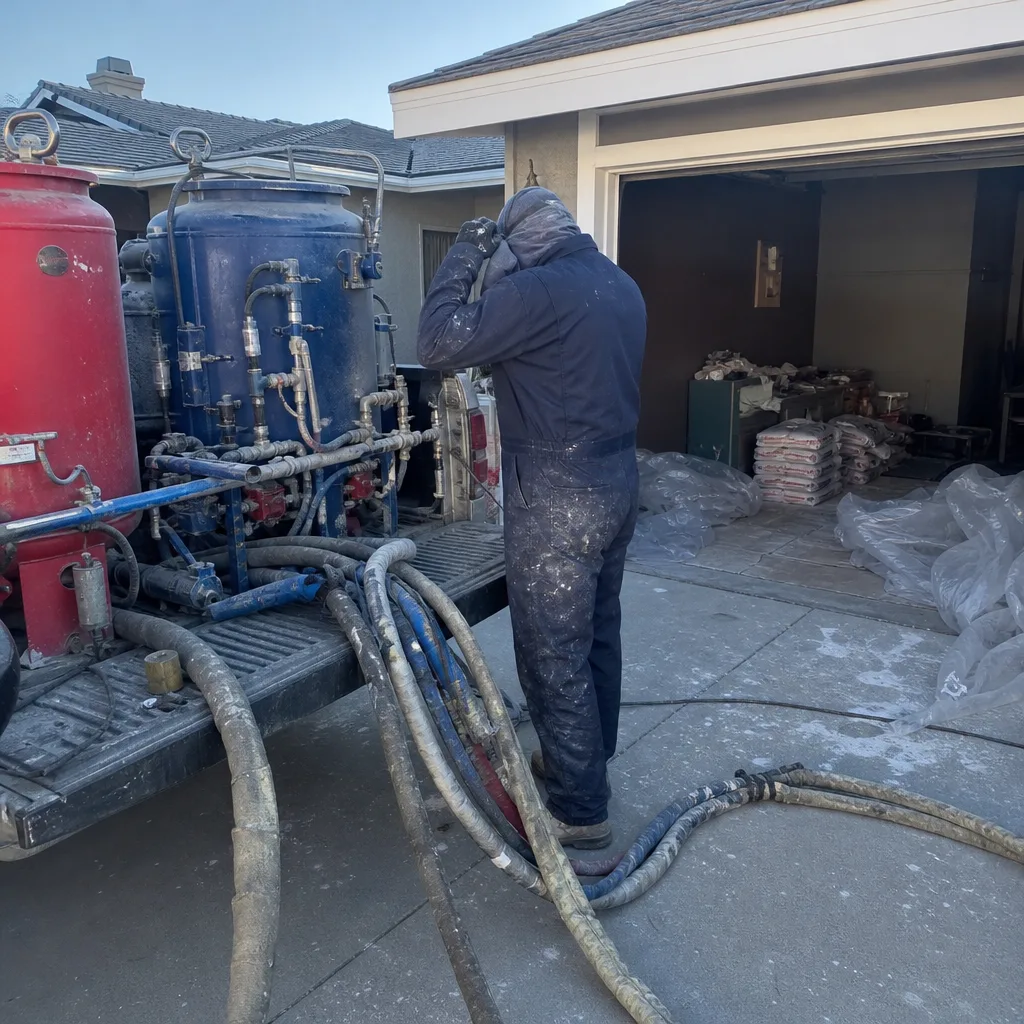
We carry Icynene and Demilec spray foam because both brands have decades of performance testing behind them, and Garnet’s conditions demand foam that holds up. Icynene’s open-cell formulations are excellent for interior wall cavities and attic floors where sound control and flexibility matter. Demilec’s closed-cell foams add structural rigidity and a vapor barrier, which helps in wall assemblies facing wide temperature swings. We keep full product support for both lines, so Garnet customers aren’t waiting on parts or material approvals when a job is underway. Rockwool mineral wool is also on the truck for clients who prioritize fire resistance and sound dampening alongside thermal performance. If your home needs a different material than foam, we’ll tell you.
Common Spray Foam Insulation Problems We See in Garnet Homes
- Compacted attic insulation from desert heat cycling. A 1960s ranch in Garnet often has blown-in insulation compressed to half its original depth. Heat cycling through San Gorgonio Pass summers and cold winter nights settles the material until R-value drops well below what the label promised.
- Wind-driven dust clogging attic insulation. Dust blowing through attic vents settles into the insulation and reduces its effectiveness. We see this constantly in Garnet; the fine desert dust coats fibers and fills air pockets until the material performs like a worn-out blanket.
- Degraded wood-frame wall insulation. Extreme day-night temperature swings crack and settle fiberglass batts in wall cavities. The result is cold walls in January and hot walls in July even when the thermostat says the house is conditioned.
- Undersized or missing rim joist insulation. In manufactured homes and early ranch builds throughout Garnet, the rim joist area was rarely insulated when the home was built. That band around the floor line leaks conditioned air and invites dust. Spray foam is the right fix for this gap.
Pricing for Spray Foam Insulation in Garnet, CA
Open-cell spray foam in Garnet runs $2.50 to $4.00 per board foot installed. Closed-cell foam runs $4.00 to $6.50 per board foot. A full attic floor application in a typical 1,200-square-foot Garnet ranch home lands between $3,800 and $5,800 for open-cell. Wall cavity retrofits range from $5,000 to $11,000 depending on accessible wall area and whether existing insulation has to come out first. Rim joist work on a standard ranch runs $1,200 to $2,400. These are real ranges from jobs we’ve priced in the area, not estimates from a national chart. Call (866) 271-1602 and we’ll give you a firm quote after a site visit.
We Also Serve Cities Near Garnet
Our crews cover the high desert and the Coachella Valley, including Garnet, Desert Edge, Desert Hot Springs, Palm Springs, and Morongo Valley. If you’re in one of these communities and your insulation isn’t holding up to the heat and the wind, the same team that works in Garnet can handle your job.
Serving Garnet, CA — Our Local Coverage Area
We’re based in the Garnet area and know this community well. Use the map below to see our service coverage — if you’re nearby, we can almost certainly help.
FAQs About Spray Foam Insulation in Garnet
Garnet’s climate accelerates insulation breakdown through extreme temperature swings and very low humidity, causing traditional materials to settle and crack, while spray foam’s adhesion to the framing prevents the settling and air gaps that reduce performance. The foam maintains consistent R-value through the expansion and contraction cycles that wreck fiberglass batts and blown-in insulation. Call (866) 271-1602 for an assessment of what your attic actually has right now.
Garnet’s decades of hot summers and cold winter nights cause blown-in insulation to lose loft and compress under its own weight, typically settling to half its original depth and cutting R-value significantly. On a recent job in the Garnet area, we found a 1960s ranch home with blown-in attic insulation compacted to about three inches, roughly half its original depth, and wood-frame walls with settled fiberglass batts. We removed the degraded material, air-sealed the attic floor, and applied Icynene spray foam to the attic and walls, restoring thermal performance and blocking wind-driven dust intrusion through the attic vents.
Yes, spray foam’s air-sealing properties block the gaps and penetrations that allow wind-driven dust from the San Gorgonio Pass to enter attics and walls, which is a persistent problem for Garnet homes. The foam fills cracks and adheres to framing, closing off the pathways dust uses to get through attic vents and wall penetrations. For exact coverage options that fit your home’s vent setup, call (866) 271-1602.
For Garnet’s wood-frame ranch and manufactured homes, open-cell foam typically works well for wall cavities and attic floors, while closed-cell foam adds structural strength and moisture resistance for rim joists and areas exposed to higher humidity. The right choice depends on your home’s framing, existing insulation, and whether the attic stays vented or becomes conditioned. We’ll show you both options and quote each one so you can compare.
Your Garnet home likely needs spray foam insulation if rooms stay hot in summer despite AC, walls feel cold in winter, energy bills climb year over year, or you see dust accumulating near outlets and baseboards. Attic hatch inspection showing insulation below six inches deep is another clear sign. Call (866) 271-1602 and we’ll inspect the whole thermal envelope at no charge.
Ready to stop losing conditioned air to the desert? Call Fontana Insulation at (866) 271-1602 for a free estimate on spray foam insulation in Garnet. Noel and the team will assess your attic and walls, explain what’s happening, and quote you the right material for the job. We serve Garnet, Desert Edge, Desert Hot Springs, Palm Springs, and Morongo Valley.
Written by Noel Arredondo, Owner at Fontana Insulation, serving Garnet and the surrounding high desert communities.