
Fast, Reliable Spray Foam Insulation Across Covina
Spray foam insulation in Covina typically costs $2,800 to $6,400 for an attic air-sealing and foam package on a mid-century ranch, with open-cell running $1.90 to $2.80 per board foot and closed-cell $2.60 to $3.80 per board foot in this market. We work the 91722, 91723, and 91724 zip codes every week, and most jobs are scheduled within 5 to 7 business days. Covina’s summer heat is why most people call us: triple-digit days turn attics into ovens, and the air conditioner carries the whole load. If you’re tired of upstairs rooms that never cool down or an attic that radiates heat through the ceiling, call Noel and the crew at (866) 271-1602 for a site assessment and a straight answer on whether foam is the right move for your house.
Why Fontana Insulation Is Covina’s Preferred Spray Foam Insulation Company
Fontana Insulation is a Spray Foam Insulation specialist serving the eastern San Gabriel Valley, and we’ve spent enough time in Covina attics to know what this housing stock actually looks like under the shingles. The 1950s and 1960s ranch homes off Badillo and Citrus Avenue were built tight to the ground with low-pitch roofs, and most still carry whatever fiberglass the original builder blew in. That material has been settling for 60 years. By the time we see it, it’s thin at the peak and thick against the eaves, often blocking the soffit vents entirely. We know the difference between a house that just needs more insulation and a house that needs air-sealing before any foam touches the deck, and that’s what Covina homeowners get from us: a diagnosis, not a default upsell. Noel Arredondo runs every project the same way, whether it’s a 2-bedroom ranch on a quarter acre north of the 10 or a larger custom build east toward Charter Oak. Insured and bonded, with crews who have sprayed foam in triple-digit heat enough times to know what proper cure looks like.
We carry eight brands across fiberglass, mineral wool, spray foam, and cellulose, so our recommendation is driven by your attic, not our inventory. That’s why we can tell a homeowner honestly when open-cell foam is overkill for a conditioned space and when closed-cell is what a rim joist or crawlspace actually needs. We’re an authorized installer for Icynene and Demilec spray foam, two of the most performance-tested foam lines in North America. If mineral wool is the better fit for fire resistance or sound dampening on a shared wall, we stock Rockwool. Most Covina contractors carry one product line and sell it to every house. We’d rather match the material to the thermal boundary.
Spray Foam Insulation Contractors in Covina
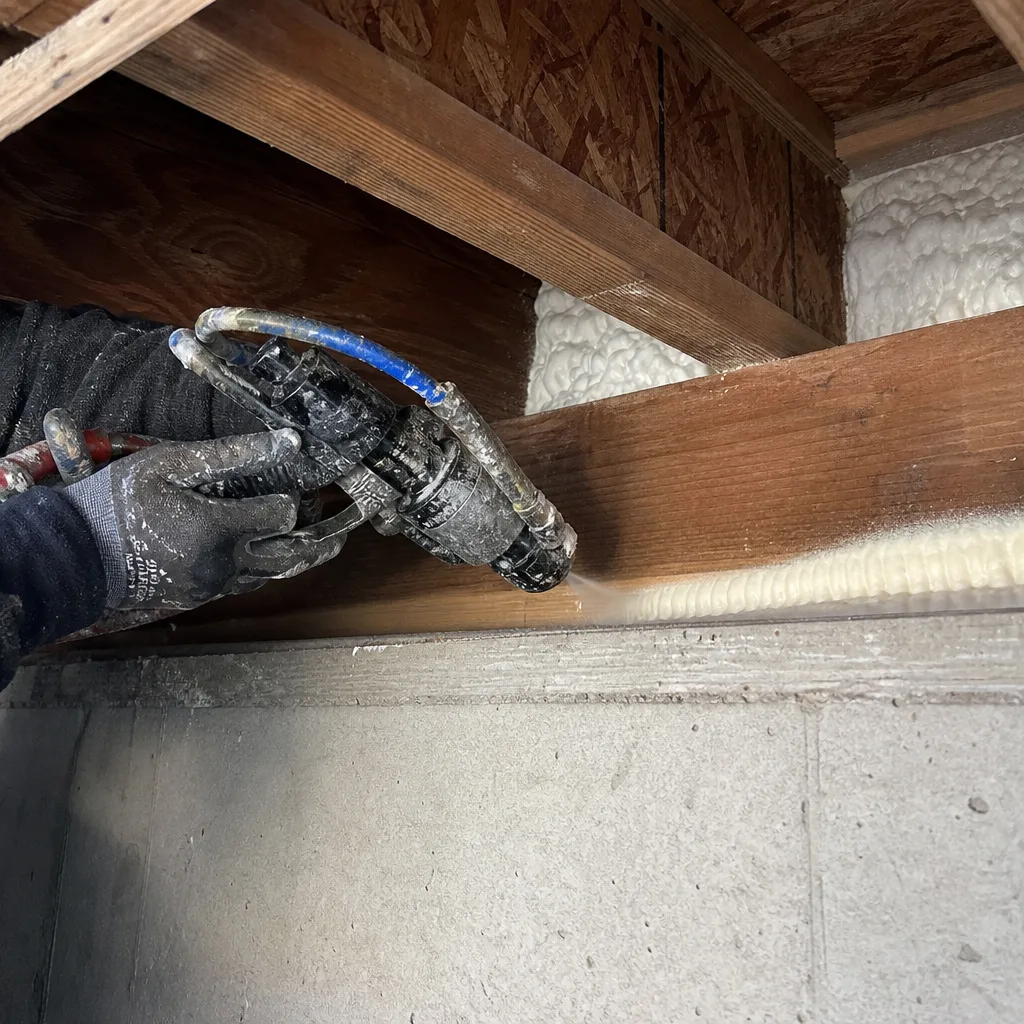
Spray Foam Insulation Contractors in Covina deal with a specific set of conditions: wood-frame ranch construction, low-pitch hip roofs, hot attics, and old blown-in fiberglass that’s no longer doing its job. A proper spray foam job involves more than spraying. It starts with finding the thermal bypasses: top plates, can light boxes, plumbing chases, and the gap where the drywall meets the framing. Those get sealed, and only then does foam go in. A typical attic air-seal and open-cell package in Covina runs $2,900 to $4,800 depending on attic square footage and how much old material has to come out first. Closed-cell on rim joists or a garage ceiling generally lands between $3,100 and $5,200.
What a Covina Spray Foam Job Actually Involves
Most of what we do in Covina is remove or push aside the old fiberglass, air-seal the attic floor, install foam baffles at the soffits, and then spray the foam to the target depth. In older ranches, the soffit vents are often buried, which is why baffles matter so much. Skip them, and you’ve trapped heat and moisture in the attic with nowhere to go. Our crews do not skip them.
When Covina Homeowners Should Consider Spray Foam
If your upstairs rooms stay 10 degrees warmer than the rest of the house in July, or if you can feel heat radiating from the ceiling after the sun goes down, foam is worth a look. If you’re already tearing out a ceiling or re-roofing, that’s the other window. Spray foam applied to the underside of the roof deck turns the attic into a semi-conditioned space, which changes how the whole house behaves. It’s not the right play for every house in the 91723 area, but it’s the right play for a lot of them.
Spray Foam Attic Insulation in Covina
Spray Foam Attic Insulation in Covina comes down to one decision: do you insulate the attic floor and keep the attic a hot box, or do you spray the roofline and bring the attic inside the home’s thermal boundary? Most Covina homes built in the 1950s through 1970s were designed for the first option. The problem is that the original insulation is shot, the ducts are sitting in 130-degree heat, and the HVAC system is working twice as hard as it should. Spray foaming the roofline drops that attic temperature dramatically, which is why it’s become the dominant request in this area over the past several years.
Open-Cell vs. Closed-Cell for Covina Roof Decks
Open-cell foam is the standard choice for most Covina roof decks. It expands aggressively, seals incidental air leaks, and costs less per board foot. In our climate, which means long cooling seasons rather than deep freezes, open-cell delivers the performance most homeowners need. Closed-cell earns its premium when moisture control or structural rigidity matters, like a garage ceiling conversion or a rim joist that sees a lot of temperature swing.
The Baffle-and-Seal Step Most Crews Skip
Here’s the part we can’t stop emphasizing: in Covina, the soffit vents are the make-or-break detail. We recently sprayed open-cell foam in the attic of a 1962 ranch on East Puente Street after finding original fiberglass slumped against the soffit vents, blocking airflow. Our crew air-sealed the top plates and installed baffles before applying Icynene, then verified attic ventilation, cutting summer attic temps by roughly 20°F. Many crews skip this step because it’s slower. It’s also the difference between an attic that works and one that bakes.
Trusted Brands We Service in Covina
We’re an authorized installer for Icynene and Demilec spray foam, and those are the two brands we reach for most often on Covina jobs. Icynene’s open-cell product has a long track record in hot-climate attics, and Demilec’s closed-cell line holds up well on rim joists and garage ceilings where dimensional stability matters. For clients who want mineral wool, we stock Rockwool, which is the pick when fire resistance or sound dampening between a garage and a bedroom is the priority. We also carry CertainTeed fiberglass for re-blow applications where foam isn’t the answer. The point is material choice, not brand loyalty.
Common Spray Foam Insulation Problems We See in Covina Homes
- Foam sprayed over clogged soffit vents without baffles. This traps heat and moisture in the attic and turns a sealed attic into a mold risk. We see this on houses where a previous crew treated foam as a single-step product instead of a system.
- New foam applied directly onto old, compacted fiberglass. Without air-sealing the top plates and removing the failed insulation first, thermal bypasses stay open. The homeowner pays for foam and still gets hot ceilings in August.
- Improper chemical ratio or off-gassing from cheap foam kits. Covina’s triple-digit heat accelerates the cure, and if the A and B sides aren’t mixed right, the foam never fully cures. The smell lingers and the performance suffers. We see this most often with unlicensed side jobs.
- Foam near can lights and older wiring without proper clearances. This is a fire safety issue, not just a comfort issue. In 1960s Covina ranches, the original can lights are rarely IC-rated, which means foam needs a box or barrier around them. We check before we spray.
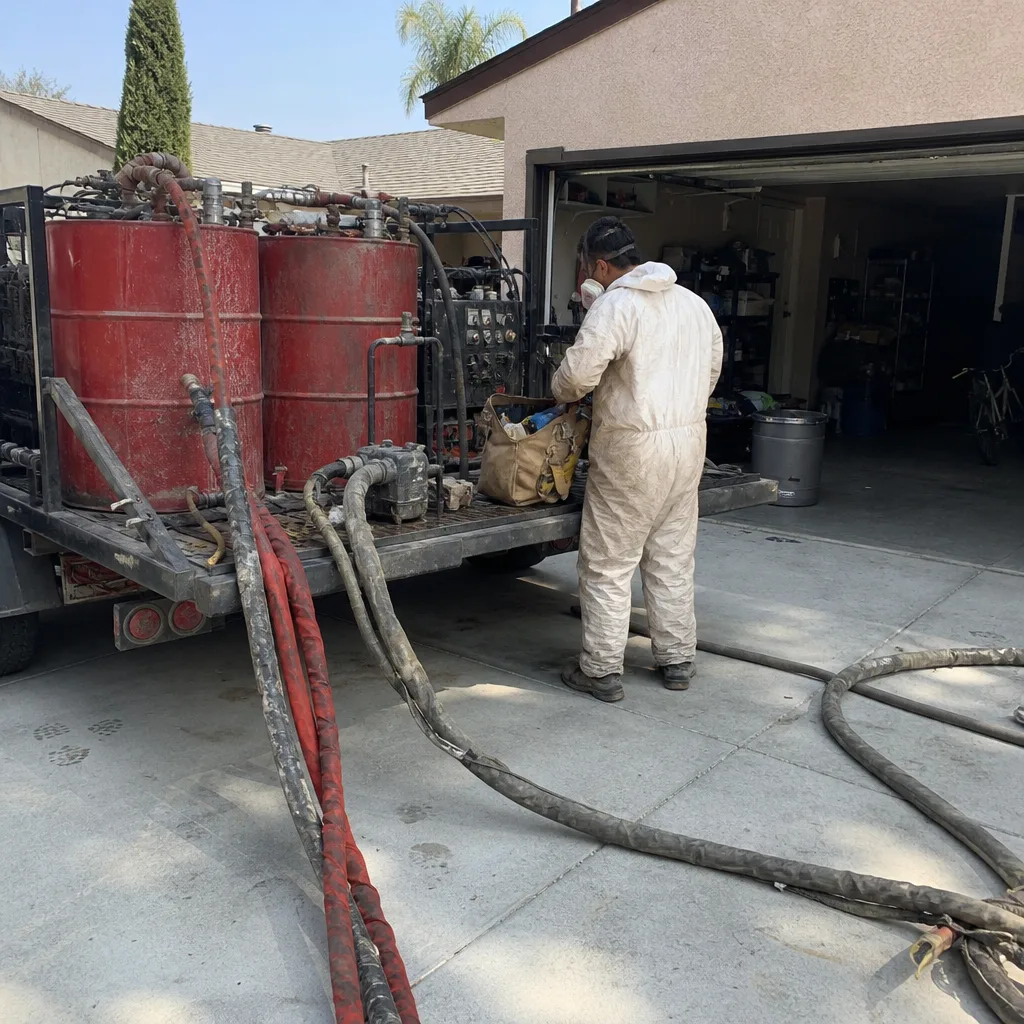
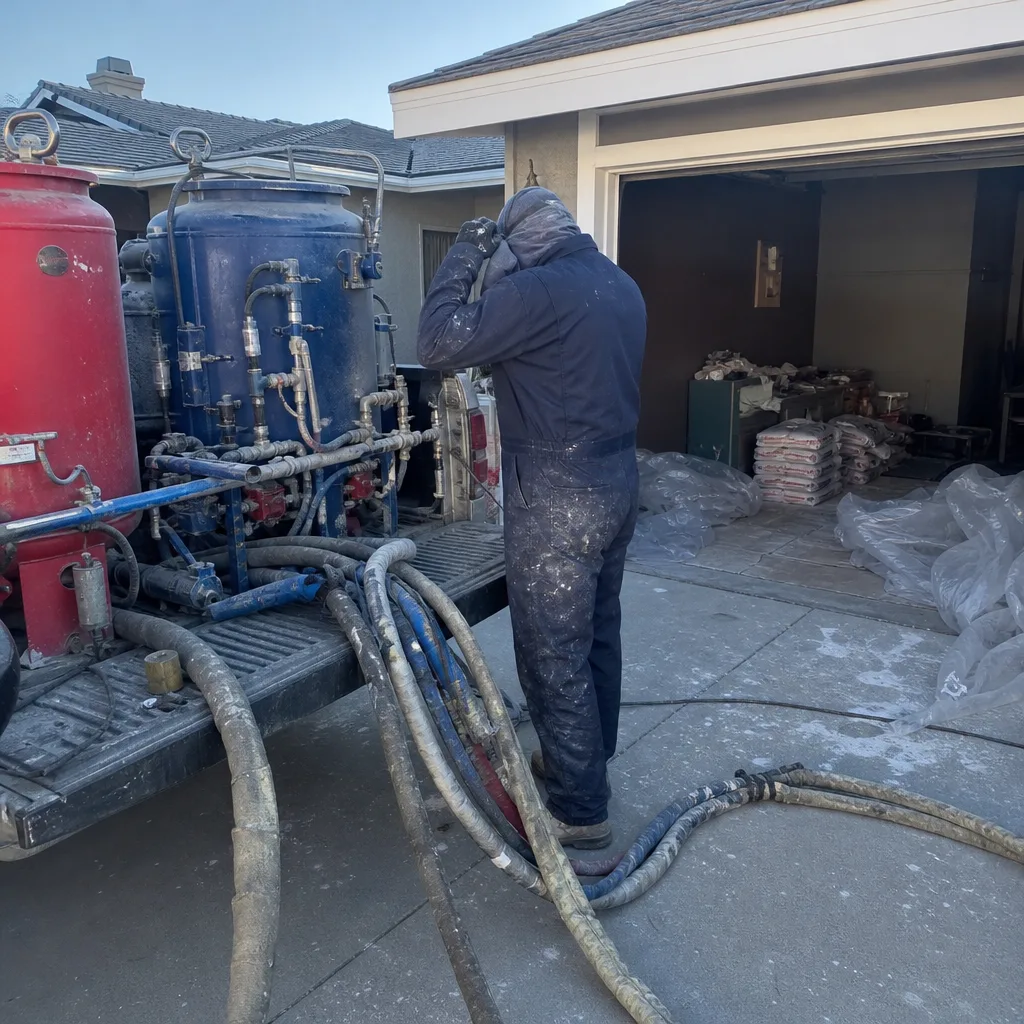
Any spray foam application involves chemicals that require proper mixing, temperature control, and ventilation management. This is not a DIY project, and spray foam kits from the hardware store are the source of most of the failed jobs we fix. A trained professional with the right rig and experience in hot-weather application is worth the money.
Pricing for Spray Foam Insulation in Covina, CA
A full attic air-seal, baffle install, and open-cell spray foam package in Covina runs $2,800 to $4,900 for a typical 1,100 to 1,600 square foot ranch. Closed-cell foam runs higher, generally $4,200 to $6,400 for the same footprint, because the material costs more per board foot and takes longer to apply. Rim joist spray foam in a crawlspace lands between $1,400 and $2,800. Garage ceiling foam runs $1,200 to $2,400 depending on whether it’s open-cell on a standard two-car garage or closed-cell on a converted space. The biggest cost variables are attic size, how much old insulation has to be removed, and whether we’re spraying the roof deck or the attic floor. Call (866) 271-1602 and Noel will give you a free estimate with a clear line-item breakdown before you commit.
We Also Serve Cities Near Covina
Our Spray Foam Insulation in Covina coverage extends into the surrounding San Gabriel Valley cities, including Irwindale, Azusa, Citrus, and West Covina. If you’re in one of those areas, the same crew and the same load-up-and-do-it-in-one-trip approach applies. Covina is home base for most of this schedule, so call (866) 271-1602 and we’ll get you on the calendar.
Serving Covina, CA — Our Local Coverage Area
We’re based in the Covina area and know this community well. Use the map below to see our service coverage — if you’re nearby, we can almost certainly help.
FAQs About Spray Foam Insulation in Covina
Air-sealing closes the bypasses that let conditioned air escape into the attic, and without it, spray foam only works as a thermal blanket, not as an air barrier. In Covina’s mid-century ranches, the top plates, plumbing chases, and can light boxes leak enough air to erase a big share of the foam’s benefit. We seal those gaps before we spray, which is the step that separates a system that works from one that underperforms. Call (866) 271-1602 for a free attic assessment.
No. Spray foam needs to bond to a clean surface, whether that’s the roof deck or the attic floor, and old blown-in fiberglass or cellulose will prevent proper adhesion. In Covina, that old material has usually slumped toward the eaves and compressed, so we remove it, address the soffit vents, and then spray. Applying foam over it is a waste of money. We’ll tell you exactly what removal costs during the estimate.
Open-cell foam is the most common choice for Covina roof decks because it expands to fill irregular cavities, air-seals effectively, and costs less per board foot. In our long cooling season, it handles the delta between a 105°F attic and a 75°F living space without issue. Closed-cell is the upgrade when you need a vapor barrier or structural rigidity, like on a rim joist. We’ll show you the numbers for both and let the house decide.
Spray foam reduces the heat transfer through your ceiling and roof, which means your air conditioner runs for shorter cycles to hold a set temperature. In a Covina house where the attic reaches 130°F in July, dropping that to closer to 90°F with roof-deck foam changes how the entire upstairs feels. The exact energy savings depend on your home’s size, orientation, and existing insulation, so we quantify that during the site visit rather than guessing.
California’s Title 24 energy code sets minimum R-value requirements for attic insulation, and Covina building permits are tied to that standard. For spray foam, the required R-value depends on whether it’s applied to the attic floor or the roof deck. A site assessment determines what your specific house needs to meet code and how many inches of foam that translates to. Call (866) 271-1602 for an estimate that includes current code compliance.
Written by Noel Arredondo, Owner at Fontana Insulation, serving Covina and the San Gabriel Valley.