
Spray Foam Insulation in Boyle Heights: What It Costs and How It Works
Spray foam insulation in Boyle Heights typically runs $1.50 to $3.80 per board foot installed, with a full attic retrofit on a 1920s bungalow landing between $2,800 and $6,200 depending on roof slope, access clearance, and whether knob-and-tube wiring requires isolation first. Most Boyle Heights jobs take one to two days once the crew gets into the attic or porch cavity. If you’re dealing with a hot second-floor bedroom or an enclosed back porch that’s unusable in summer, call Fontana Insulation at (866) 271-1602 and we’ll walk the space with you before quoting anything.
The honest answer on spray foam here is that it’s rarely a one-material decision. Boyle Heights homes built before 1940 have plaster-and-lath walls, low-clearance attics, and often unventilated additions. That changes what foam can do, where it goes, and what it costs compared to a newer stucco box in Downey. Our Spray Foam Insulation team carries both open-cell and closed-cell options from Icynene and Demilec, and we’ll tell you which one fits your specific roofline, wiring situation, and budget without pushing whatever is easiest to stock.
Why Fontana Insulation Is the Spray Foam Contractor Boyle Heights Homeowners Call
Noel Arredondo built Fontana Insulation around a material-agnostic approach, and it matters most in neighborhoods like Boyle Heights where every house is a little different. We carry eight insulation brands across four material categories, which means we don’t start a job trying to force fiberglass where open-cell foam is the better air seal, or spray foam where mineral wool makes more sense. The recommendation follows the house.
We work regularly in the flats around Evergreen Cemetery, up toward Hollenbeck Park, and the hillside streets off Soto and Boyle. The homes tell a story: original 1920s framing, a mid-century addition somebody enclosed without insulation, maybe an attic nobody has been in for thirty years. Knowing what you’re going to find before you open a wall is half the job. The other half is explaining it to the homeowner in whatever language they’re comfortable in. Our crews do Spanish-language job-site communication on most Boyle Heights projects, and we show before-and-after thermal photos so you can see what the foam actually changed.
For a free assessment of your attic, walls, or that enclosed porch, call (866) 271-1602. We come out, look at what’s there, and tell you what we’d do if it were our house. Sometimes the right answer is not spray foam at all, and we’ll say that plainly.
Open Cell Spray Foam in Boyle Heights
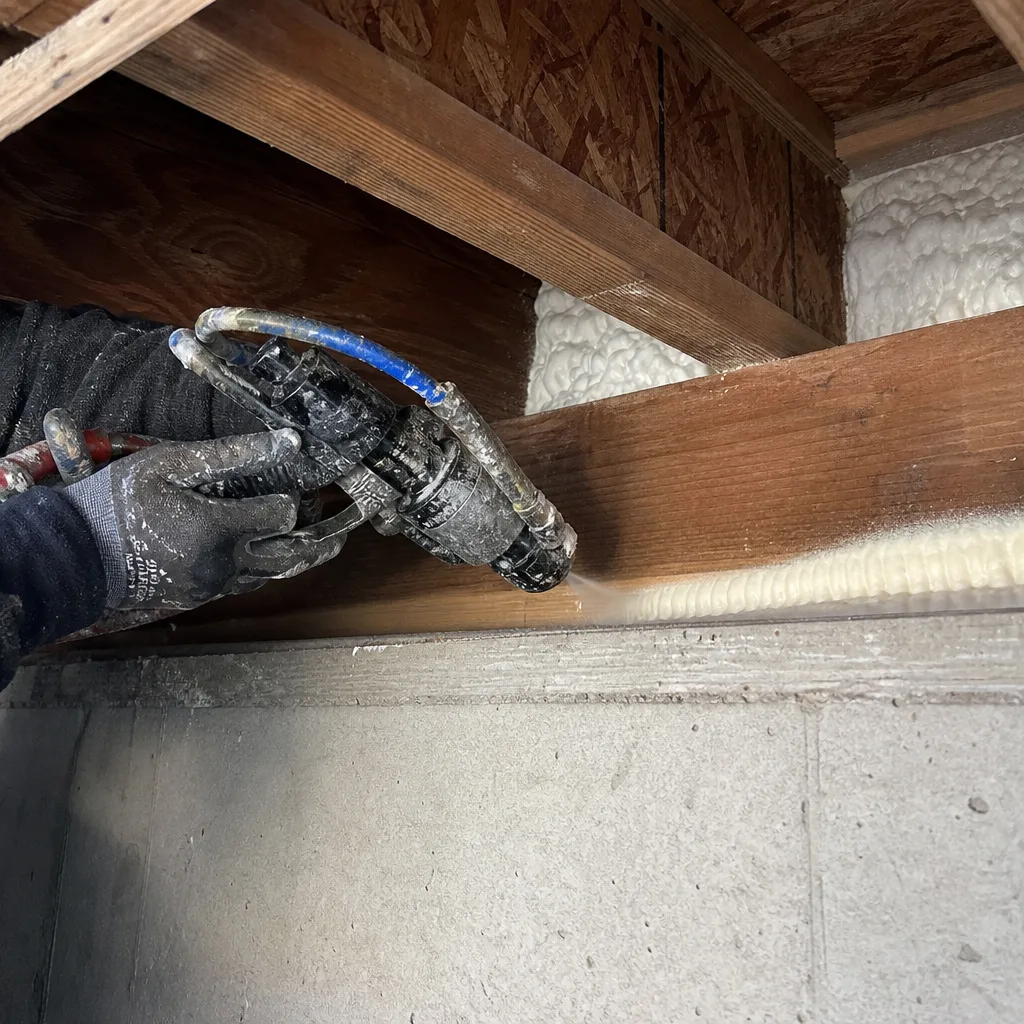
Open Cell Spray Foam in Boyle Heights is the most common retrofit material we install in pre-1940 bungalows because it expands gently into irregular framing, doesn’t add significant weight to old plaster ceilings, and air-seals the gaps that century-old construction always has. It runs $1.50 to $2.50 per board foot here, so a typical low-clearance attic of 800 to 1,200 square feet lands between $2,200 and $4,000. Open cell is our default recommendation for enclosed back porches and attic rooflines where ventilation exists, because it breathes enough to let moisture escape while still cutting the bulk of the summer heat load.
Why open-cell suits older framing
Old growth Douglas fir framing from the 1920s moves. It expands and contracts with humidity swings that newer engineered lumber doesn’t. Open-cell foam flexes with that movement instead of rigidifying the assembly, which reduces the chance of cracking at the foam-to-framing interface over time. In Boyle Heights specifically, where we’re working inside plaster-and-lath cavities with irregular stud spacing, the soft expansion profile of open-cell means fewer voids and a more complete air seal.
Where open-cell is the wrong call
If an enclosed porch or addition has no ventilation and you seal the roofline with open-cell, you’re inviting condensation where humid air meets the cool underside of the roof deck. We’ve seen it happen. In those cases we recommend closed-cell foam for the first inch against the deck, then open-cell over it, or we walk you through adding ventilation first. That’s the kind of material trade-off conversation we’d rather have before the foam goes in than after a water stain shows up on your ceiling.
Spray Foam Insulation Contractors in Boyle Heights
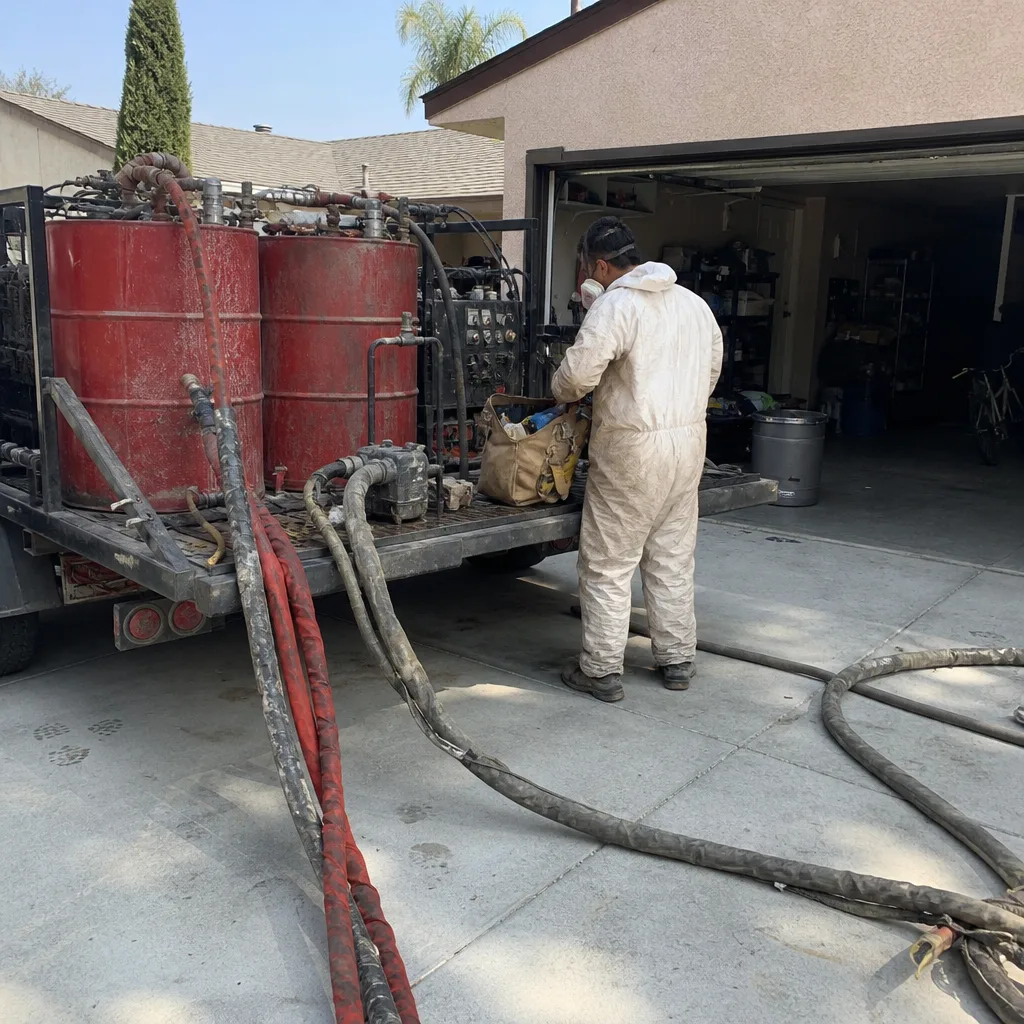
Spray Foam Insulation Contractors in Boyle Heights need to understand knob-and-tube wiring, plaster-and-lath construction, and the building department’s retrofit requirements before they ever unpack a spray rig. We’ve worked enough jobs between 1st Street and Cesar Chavez to know what old wiring looks like inside a wall cavity and when it has to be isolated before foam touches it. Closed-cell spray foam for rim joists and cantilevered floors runs $2.50 to $3.80 per board foot in this market; wall cavity retrofits using injection or slow-rise foam come in at $1.80 to $3.10 per board foot depending on density and access.
Working around knob-and-tube
Spray foam directly over live knob-and-tube wiring creates a fire hazard, and any competent inspector will flag it. The foam traps heat and the aging insulation on those conductors wasn’t rated for that environment. On a 1920s bungalow off East 1st Street, we found the enclosed back porch had zero insulation and unvented attic space hitting 140°F in summer. We isolated the knob-and-tube runs first, then applied open-cell foam to the porch walls and roofline. The homeowner told us the room became usable year-round and their summer cooling bills dropped noticeably.
When the attic won’t let you in
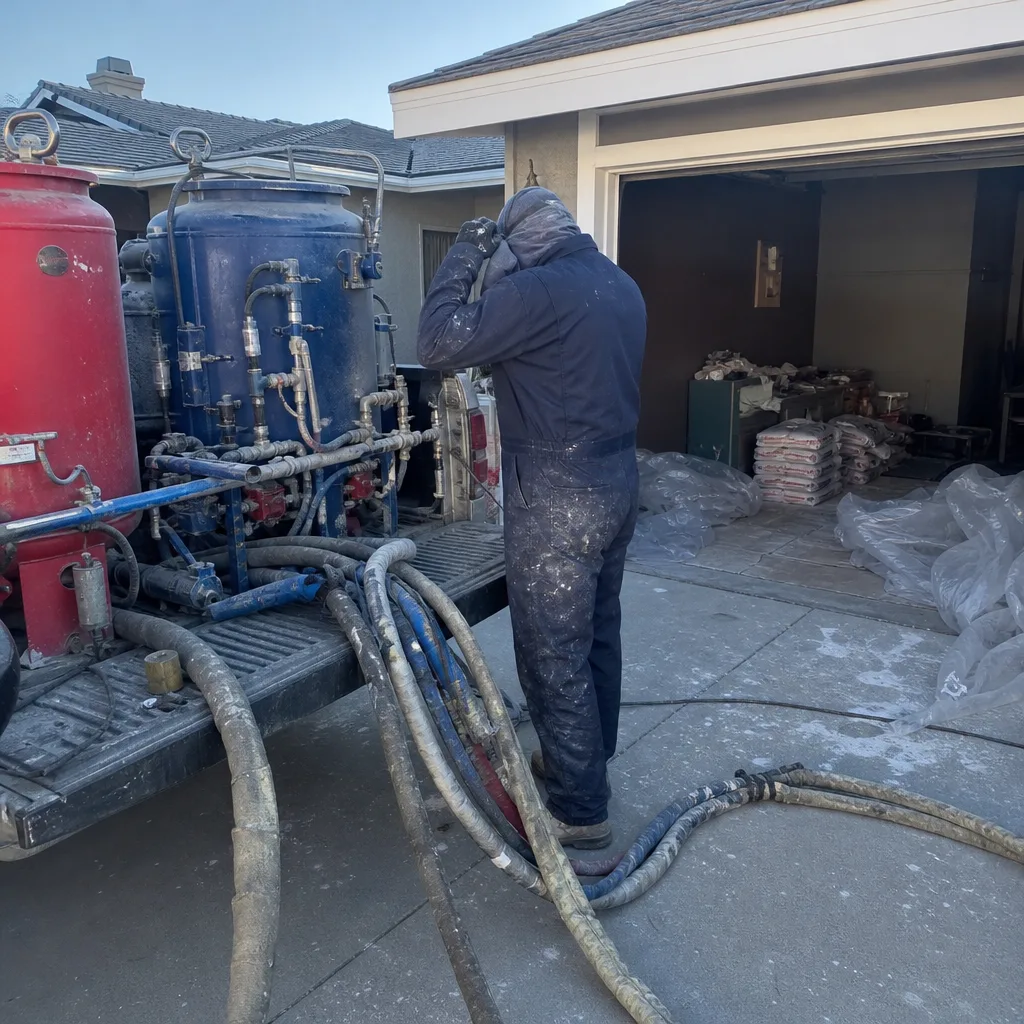
Some Boyle Heights attics are so low-clearance that a standard spray rig can’t get a tech more than eight feet past the scuttle hole. We don’t force the issue and glob foam in blind. Instead we map what we can reach, spray what’s accessible, and recommend blown-in Boyle Heights coverage for the rest if air sealing isn’t critical back there. Honest access in a 90023 attic matters more than a uniform foam job that covers the wrong surfaces and misses the thermal boundary entirely.
Trusted Brands We Install in Boyle Heights
We stock Icynene and Demilec spray foam because both brands have documented long-term test data on thermal drift and air permeance, not because a distributor gave us a spiff. For Boyle Heights jobs where open-cell foam is paired with a mineral wool fire barrier in a shared wall between the house and a garage or an ADU, we pull Rockwool from our lineup. And when a homeowner tells us their budget just won’t stretch to full foam coverage, we’re glad to carry CertainTeed and Johns Manville fiberglass as honest fallback options rather than pretending foam is the only answer. Carrying eight brands means the material matches the house and the budget, not our inventory. That’s the whole point.
Common Spray Foam Insulation Problems We See in Boyle Heights Homes
- Foam over knob-and-tube without isolation. This is the big one. Older Boyle Heights homes still have live knob-and-tube in walls and attics. Foam encapsulating that wiring traps heat and creates a fire hazard that fails inspection and risks the house. We isolate or recommend rewiring before foam goes near it.
- Foam sprayed over old newspaper or batt remnants in low attics. A lot of these 1920s and 1930s homes had newspaper or a thin layer of degraded batt stuffed under the floorboards decades ago. Spraying foam directly over that traps whatever moisture is already in the old material and hides rot. We clear what we can reach before spraying, and we tell you what we found.
- Closed-cell foam sealing moisture into unvented enclosed porches. Boyle Heights bungalows love a back porch someone enclosed in the 1960s with no soffit vents, no ridge vent, nothing. Closed-cell foam alone in that space can trap humidity and grow mold if there’s any water intrusion. These jobs always need a dehumidification or ventilation plan alongside the foam.
- Over-edging the budget with full-wall foam when the attic was the real problem. Some homeowners get quoted wall cavity foam on all four sides when the actual complaint is a second-floor bedroom that bakes every afternoon. In a climate like the Eastside’s, the attic and roofline are where the heat is. We’d rather fix the thermal boundary first and reassess before recommending walls.
Pricing for Spray Foam Insulation in Boyle Heights, CA
For planning purposes, here’s what Boyle Heights homeowners are looking at. Open-cell attic and porch roof applications: $1.50 to $2.50 per board foot. Closed-cell rim joist and cantilever work: $2.50 to $3.80 per board foot. Wall cavity injections on plaster-and-lath homes: $1.80 to $3.10 per board foot depending on cavity depth and accessibility. A full attic retrofit in a 90023 bungalow usually falls between $2,800 and $6,200. That range reflects attic size, whether knob-and-tube wiring is present, how much ceiling access exists, and whether we’re working around old material that has to come out first. Every estimate we give is free and itemized, and we’d rather show you exactly what you’re paying for than make a guess. Call (866) 271-1602 and we’ll schedule a walkthrough.
We Also Serve Cities Near Boyle Heights
Fontana Insulation runs crews throughout East Los Angeles, Maywood, Commerce, and Bell. If you’re right over the city line or have family in one of those neighborhoods, the same team covers it. One phone number for the whole Eastside: (866) 271-1602.
Serving Boyle Heights, CA — Our Local Coverage Area
We’re based in the Boyle Heights area and know this community well. Use the map below to see our service coverage — if you’re nearby, we can almost certainly help.
FAQs About Spray Foam Insulation in Boyle Heights
Yes, in most cases. We use injection or slow-rise foam techniques that enter wall cavities through small access holes drilled from the exterior or through interior baseboards, then patch and finish. Plaster-and-lath walls complicate access but don’t stop the job. The limiting factors are knob-and-tube wiring in the cavity, which must be isolated or rewired first, and any pre-existing moisture damage behind the lath. Call (866) 271-1602 and we’ll tell you what your specific walls will require after an inspection.
Spray foam outperforms batt or blown-in insulation in Boyle Heights’s hot inland climate because it air-seals the framing gaps and pinholes that let superheated attic air push down into living space. On 90°F-plus days and during Santa Ana events, a vented attic can hit 140°F or higher; foam on the roofline keeps that heat outside the thermal boundary instead of just slowing it down like fiberglass does. The difference is most noticeable in upstairs bedrooms and enclosed porches that face southwest sun.
Have a licensed electrician evaluate the runs. Live knob-and-tube inside a wall or attic cavity should be isolated from direct foam contact or replaced before we spray; foam traps heat against aging conductors and poses a fire risk that inspectors in the 90023 area will reject. We coordinate with your electrician to sequence the work so foam goes in after the wiring is made safe. Trying to spray around it without that step is a shortcut nobody should offer you.
Yes. Boyle Heights has a large Spanish-speaking homeowner base, and our crews communicate on-site in Spanish routinely. If you prefer to walk through the material options, the estimate, or the inspection findings in Spanish, just tell us when you call (866) 271-1602 and we’ll have the right person on your job.
Yes, and these are some of the best candidates for spray foam in the neighborhood. Enclosed back porches from mid-century additions often have no insulation and no ventilation, which makes them unusable in summer and cold at night in winter. Open-cell foam on the porch roofline and walls brings that space inside your home’s thermal boundary. The catch is that if there’s no ventilation and you use closed-cell, you risk trapping moisture, so we’ll evaluate the assembly and recommend the right foam density plus a ventilation or dehumidification plan.
Ready to talk about your Boyle Heights home? Call Fontana Insulation at (866) 271-1602 for a free, no-pressure assessment. We’ll walk your attic, your walls, or your enclosed porch, explain what’s actually going on in there, and give you a straight answer on whether spray foam is the right fit. Estimates are free and the recommendation always points at your house, not our inventory.
Written by Noel Arredondo, Owner at Fontana Insulation, serving Boyle Heights and the Eastside with material-agnostic insulation retrofits.