
Insulation Company in Azusa, CA
Blown in insulation is the most common request we field from Azusa homeowners, and it’s usually the right answer for houses built between the 1950s and 1980s that still have thin, settled fiberglass batts in the attic. The extreme diurnal swing here, with daytime highs often reaching 100°F and cool canyon air dropping in at night, means attics bake and cool so rapidly that existing insulation gets pushed well past its useful life. If your energy bills climb every summer and your AC runs constantly, call Fontana Insulation at (866) 271-1602 for a free attic assessment.
Why Azusa Homes Are Different
Azusa sits at the mouth of the San Gabriel Mountains, which creates a thermal pattern most San Gabriel Valley cities don’t experience to the same degree. Homes in the flatlands off Foothill Blvd and Alosta Ave get the full inland heat load, while properties closer to the canyon mouths along the northern edge cool down faster at night. That wide swing is hard on insulation because it creates more thermal cycling, which breaks down fiberglass batts faster than steady heat would. We regularly open attics in Azusa’s 1950s through 1970s tract homes and find original batts compressed to half their rated thickness, leaving R-values that are a fraction of what the label once promised.
The housing stock itself is mostly single-story, wood-frame construction with stucco exteriors and low-pitch roofs. Low-pitch roofs mean shallow attic cavities, which limits how much insulation can be added without careful material selection. Blown in fiberglass or cellulose works well here because it fills irregular cavities and settles into a continuous thermal blanket, something batts can’t do in odd-shaped attic spaces. And because Azusa is at the base of the San Gabriels, a growing number of homeowners along the northern edges near the canyon mouths are asking about ember-resistant attic venting and non-combustible insulation upgrades. Rockwool is the material we recommend most often for that concern, since mineral wool doesn’t ignite and adds measurable fire resistance to the attic assembly.
Our Main Azusa Services
Most Azusa homeowners call us about one of two things: an attic that’s baking the second floor of the house, or air leaks that let conditioned air escape through walls and rim joists. Both have dedicated Azusa pages with full details.
Attic Insulation in Azusa
Azusa attics take a beating from the summer sun, especially on low-pitch roofs with limited ventilation. We often find fiberglass batts from the original build that have sagged away from the roof deck or been pushed aside by decades of cable and HVAC work. Our approach starts with measuring the existing R-value, checking ventilation, then recommending a material that matches your attic’s actual dimensions and your home’s cooling load. For many 1950s through 1970s homes, that means blowing in cellulose or fiberglass over the old batts to hit modern R-value targets. Read the full breakdown on our Attic Insulation in Azusa page.
Spray Foam Insulation in Azusa
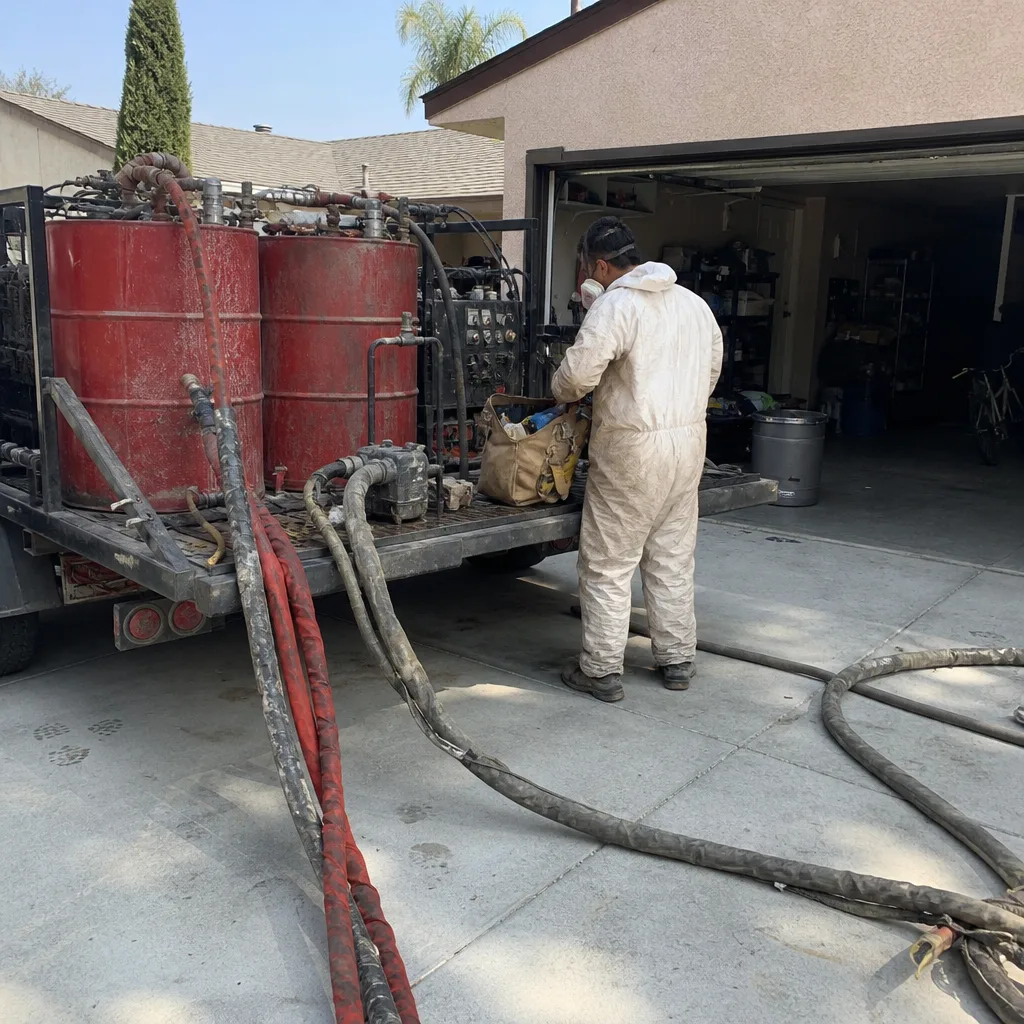
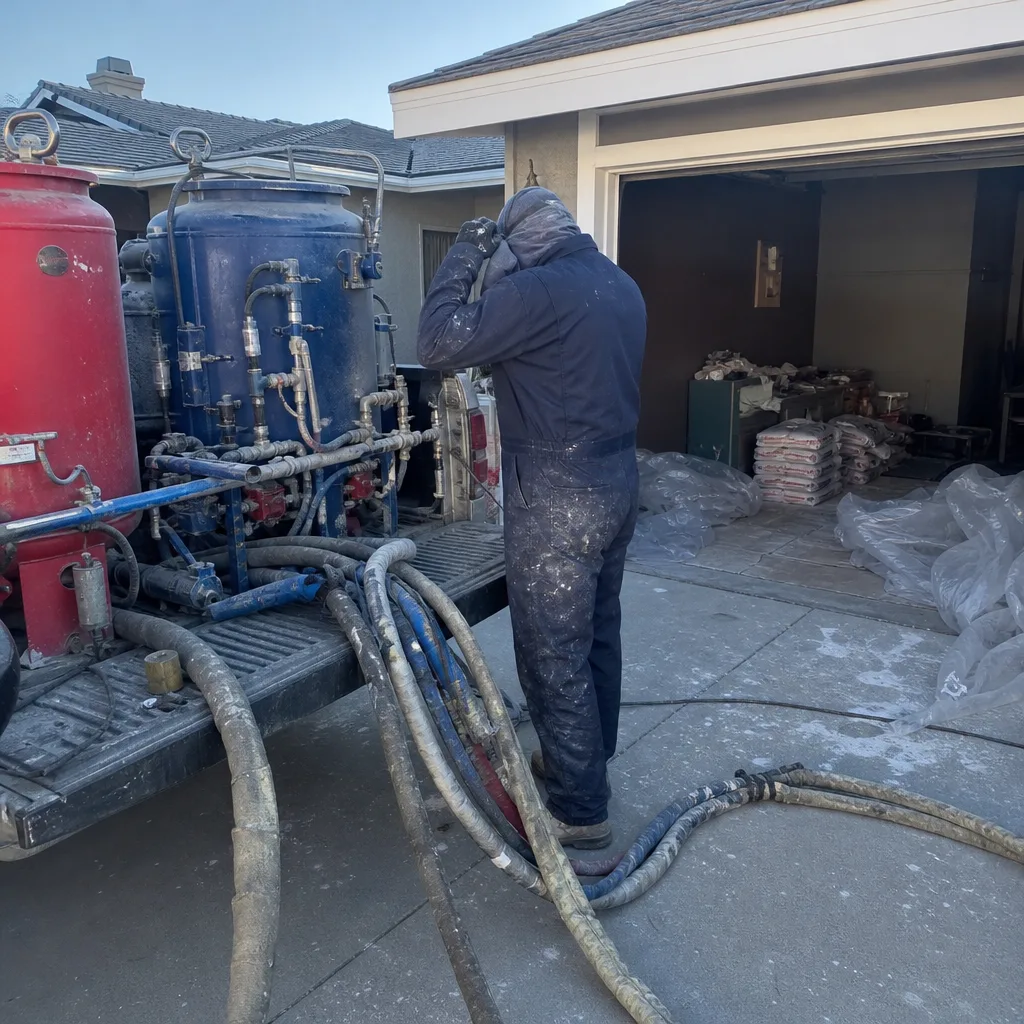
Spray foam earns its place in Azusa when air sealing matters as much as R-value. Older wood-frame homes with stucco exteriors have thousands of small air leaks that let cooled air escape in summer and let Santa Ana wind-driven dust and heat in during fall. Closed-cell foam seals those gaps and adds structural rigidity, which is useful for homes near the foothills that see stronger wind gusts. Open-cell foam works well in interior walls and floors where sound dampening matters, like bedrooms facing Foothill Blvd or the freeway. See the full material comparison and Azusa-specific pricing on our Spray Foam Insulation in Azusa page.
What happens when you call
- 1
A real person answersNo phone trees — you reach a local pro.
- 2
You get an upfront price rangeHonest numbers before anyone is dispatched.
- 3
A background-checked tech heads outLicensed & insured, dispatched right away.
- 4
You approve before work beginsNothing starts until you say go.
Blown In Insulation in Azusa
Blown in insulation in Azusa is our most-requested service because it’s the fastest, most cost-effective way to bring an older attic up to modern thermal performance without tearing out drywall or rebuilding the roof. The 1950s through 1970s tract homes that dominate this city were built when R-11 or R-19 batts were considered adequate, and after five or six decades of settling, compaction, and rodent activity, many attics are running well below that. Blown in cellulose or fiberglass fills the gaps batts leave behind and creates a continuous thermal boundary that handles Azusa’s hot days and cool canyon nights far better than the original material ever did. We offer the full range of blown in options, all covered in more depth on our Blown In Insulation service hub page.
Cellulose Insulation
Signs you need it
Your attic has old, dusty batts that have settled or been displaced, and you want a recycled-content material that fills every cavity without gaps.
What it costs in Azusa
Cellulose insulation in Azusa typically runs $1.00 to $1.50 per square foot installed, depending on the target R-value and access to the attic.
How we do it
We air-seal the attic floor penetrations, then blow GreenFiber cellulose through a hose to the specified depth, hitting the R-value target we agreed on before the job starts.
Blown In Attic Insulation
Signs you need it
Your second floor is consistently 8 to 12 degrees hotter than the first floor in summer, or your AC runs for hours without reaching the set temperature.
What it costs in Azusa
Blown in attic insulation for a typical Azusa ranch home runs $1.50 to $3.50 per square foot installed, with final cost driven by the target R-value and whether old material needs removal first.
How we do it
We assess the existing insulation depth and condition, seal the attic bypasses, then blow fiberglass or cellulose to the agreed depth and verify with a depth marker at multiple points across the attic.
Blown In Fiberglass Insulation
Signs you need it
Your attic has bare or nearly bare areas where old batts have been removed or compressed, and you want a material that won’t settle as much over time.
What it costs in Azusa
Blown in fiberglass in Azusa typically costs $1.20 to $2.50 per square foot installed, depending on the depth needed to hit the target R-value.
How we do it
We prepare the attic by sealing air leaks and protecting can lights and vents, then blow Johns Manville or Knauf fiberglass to the specified depth using calibrated equipment.
Blown In Cellulose Insulation
Signs you need it
You want maximum thermal performance per inch and prefer a material made from recycled paper products rather than virgin fiberglass.
What it costs in Azusa
Blown in cellulose for an average Azusa attic runs $1.00 to $2.20 per square foot installed, with the higher end reflecting deeper fills for homes near the foothills that want extra thermal mass.
How we do it
We run the GreenFiber cellulose through a high-output blowing machine and layer it to the exact depth required, then fluff any compacted spots so the R-value is consistent across the whole attic.
What Blown In Insulation Costs in Azusa
| Item | Typical range in Azusa |
|---|---|
| Cellulose insulation (installed) | $1.00 – $1.50 per sq ft |
| Blown in attic insulation (installed) | $1.50 – $3.50 per sq ft |
| Blown in fiberglass (installed) | $1.20 – $2.50 per sq ft |
Call (866) 271-1602 for an exact quote on your Azusa home. Estimates are free, and we give you the number before any work begins.
How long does blown in insulation last in Azusa’s climate?
Blown in cellulose and fiberglass both last 20 to 30 years in Azusa, but settlement of 10 to 15 percent is normal in the first two years. We slightly overfill to account for that, so the final R-value holds steady. Call (866) 271-1602 to have us check your attic’s current depth.
Can you blow insulation over my existing attic batts in Azusa?
Yes, in most cases we blow cellulose or fiberglass directly over existing batts, provided the old material is dry and free of mold. The new layer fills the gaps and compresses slightly where needed. Call (866) 271-1602 for a free attic inspection to confirm your situation.
Brands We Service in Azusa
Fontana Insulation installs and services Knauf, Rockwool, CertainTeed, and Icynene products in Azusa attics and walls. We stock common sizes and densities locally, which means most blown in and batt jobs start within days, not weeks. See the full lineup on our brands page.
Pricing for Insulation Company in Azusa, CA
| Service | Typical range in Azusa |
|---|---|
| Blown in attic insulation | $1.50 – $3.50 per sq ft |
| Blown in fiberglass insulation | $1.20 – $2.50 per sq ft |
| Cellulose insulation | $1.00 – $1.50 per sq ft |
| Blown in cellulose insulation | $1.00 – $2.20 per sq ft |
| Spray foam insulation (open-cell) | $1.20 – $2.00 per board ft |
| Spray foam insulation (closed-cell) | $2.00 – $3.50 per board ft |
| Attic insulation (blown or batt) | $1.50 – $3.50 per sq ft |
| Mineral wool (Rockwool) batt insulation | $1.80 – $3.80 per sq ft |
| Fiberglass batt insulation | $0.80 – $1.80 per sq ft |
What pushes price up in Azusa most often is attic access. Homes with small scuttle holes or no pull-down ladder can add a few hundred dollars in setup labor, and removing old, contaminated insulation before the new material goes in also moves the number. Whatever the final figure is, you’ll see it upfront before we start, and it won’t change unless the scope changes.
Neighborhoods We Serve in Azusa
We work across all of 91702, from the older tract streets near downtown to the newer infill homes along the foothills and the neighborhoods near Azusa Pacific University.
- Downtown Azusa
- Foothill Blvd corridor
- Azusa Pacific University area
- Canyon mouth neighborhoods near the base of the San Gabriels
- North Azusa near the foothills
Most blown in attic jobs in Azusa are scheduled within one to two weeks of your call, depending on material availability and attic access.
Service Area – Cities Near Azusa
Fontana Insulation serves the eastern San Gabriel Valley and surrounding foothill communities. If you’re in Citrus, CA, Irwindale, CA, Covina, CA, or Glendora, CA, we handle those areas with the same material-agnostic approach we bring to Azusa jobs.
Serving Azusa, CA — Our Local Coverage Area
We’re based in the Azusa area and know this community well. Use the map below to see our service coverage — if you’re nearby, we can almost certainly help.
FAQs About Insulation Company in Azusa
We typically schedule attic assessments in Azusa within 3 to 5 business days, and we can often accommodate same-week appointments for homeowners dealing with a specific comfort issue like a baking second floor or a drafty addition. Call (866) 271-1602 to check current availability for your 91702 address.
Most blown in and batt insulation work in Azusa does not require a city permit, since it’s an existing-structure energy upgrade rather than new construction. If the job involves spray foam on rim joists or an attic conversion, permit requirements can differ, so we’ll confirm before any work starts.
Yes. The older wood-frame tract homes in Azusa need air sealing and deep attic fills, while newer foothill homes often benefit from mineral wool in walls for fire resistance and sound dampening. We carry materials for both situations, so the recommendation is based on your home, not our inventory. Call (866) 271-1602 for a free assessment.
What happens when you call
- 1A real person answersNo phone trees — talk to a local insulation pro.
- 2You get an upfront price rangeHonest numbers before anyone is dispatched. No surprises.
- 3A background-checked tech heads outLicensed & insured, typically within 1-hour.
- 4You approve before work beginsNothing starts until you say go.
What Azusa Customers Say
"Work is good and the house is noticeably more comfortable. There was insulation debris left in the hall closet under the attic access that I had to clean up."
— Holly Mercer"Found and sealed a gap around the chimney chase that was basically an open chimney to the attic."
— Nadia Aziz"Installed baffles at the soffits so the new insulation didn't block the ventilation, which the previous contractor apparently never considered."
— Michelle Bennett