
Fast, Reliable Attic Insulation Across Wrightwood
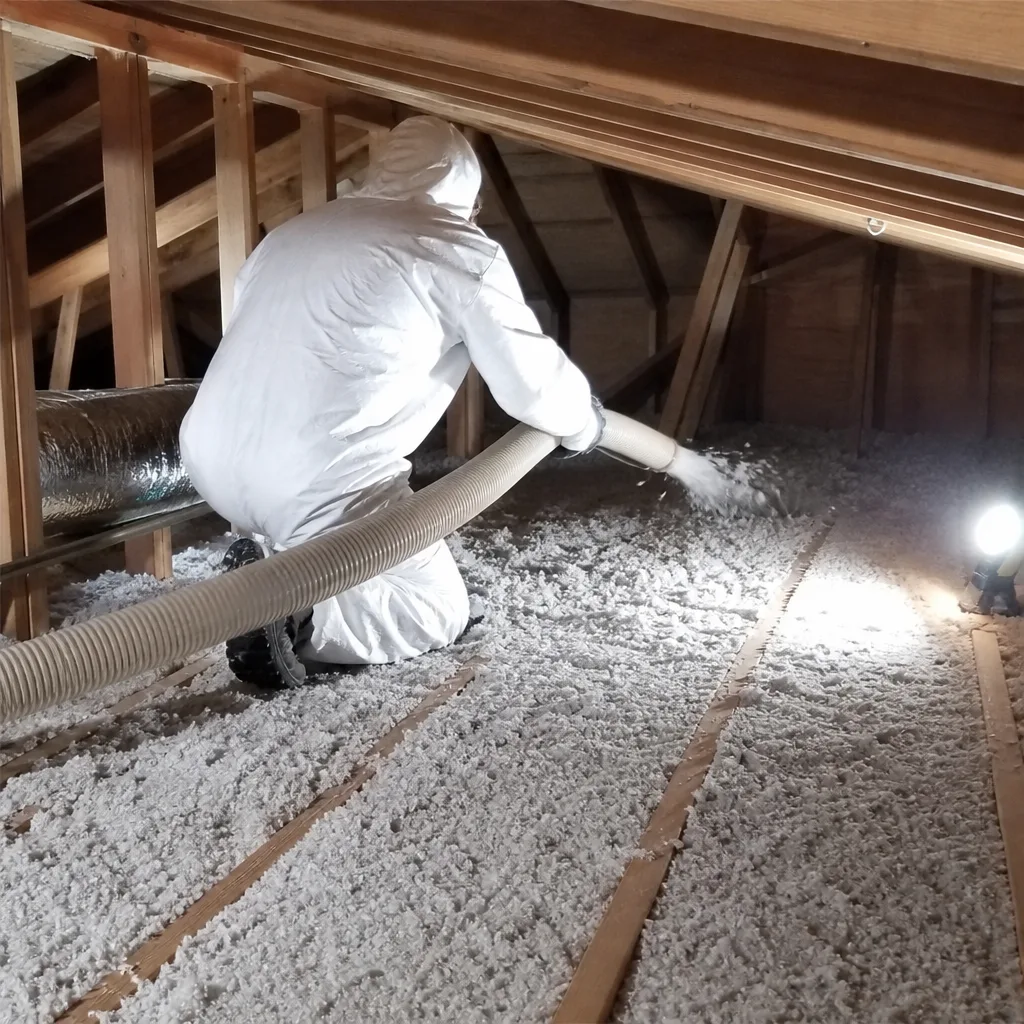
Attic insulation in Wrightwood isn’t a summer cooling upgrade. It’s a year-round shield against hard freezes, snow-driven moisture, and the rodents that move into vacant cabins. Most Wrightwood homes sit above 6,000 feet in the San Gabriels, where heating dominates the energy bill and an under-insulated attic loses heat straight through the roof for five or six months a year. Our crews work mountain lots off Highway 2 and Lone Pine Canyon Road regularly, so we know what original 1960s batts look like after fifty winters and what it takes to bring them up to a real mountain standard. If your attic needs help before the next snow, call (866) 271-1602 for a free estimate.
Why Fontana Insulation Is Wrightwood’s Preferred Attic Insulation Company
Most insulation contractors in the high desert work from the flatlands up. They know Palmdale summers and Victorville tract housing. Wrightwood is a different animal. Cabins with vaulted ceilings, exposed beams, no standard attic floor, and framing that was inspected long before current energy codes existed. Our Attic Insulation team has spent enough time poking through Wrightwood attics to know what a pack rat trail through fiberglass looks like, which 1970s cabins were built with R-11 batts in roof cavities that needed R-38, and where snowmelt finds its way into the ridge line.
Noel Arredondo started Fontana Insulation around a simple idea: carry enough brands and enough installation methods that the house itself dictates the recommendation. That matters in Wrightwood more than anywhere else we work. A newer custom build off Table Mountain Road might need closed-cell spray foam air sealing. A 1954 A-frame with exposed-beam ceilings might need baffled ventilation and blown fiberglass layered over the old stuff. We don’t have a single product to push, so we tell you what actually fits.
Attic Ventilation in Wrightwood
Attic Ventilation in Wrightwood is the difference between a roof assembly that dries out between snows and one that rots from the inside. At 6,000 feet, warm interior air leaks into the attic, hits cold roof sheathing, and condenses. That moisture soaks insulation, warps exposed-beam framing, and shows up later as a ceiling stain over the kitchen table. Proper ventilation means intake air at the eaves and exhaust at the ridge, baffled so insulation never blocks the airflow. Most Wrightwood cabins built before the 1990s have nowhere near enough of either.
A ventilation assessment with insulation work typically runs $300 to $1,200 depending on roof pitch, eave access, and how many baffles need to be installed. Steep mountain roofs and deep snow brackets push toward the higher end. It’s the least expensive part of a mountain attic retrofit and the one that prevents the most damage.
Baffled Intake on Steep Rake Lines
Wrightwood’s roof pitches are steeper than anything in the flatlands, which means rafter bays are longer and snow sits on the roof deck for weeks. Baffles keep the insulation from choking off air at the eaves, and they protect the intake path when snow drifts up against the roof edge. Without them, a well-insulated attic can still trap moisture along the lower roof plane and cause ice damming.
Ridge Venting and Snow Cover
Ridge vents work great until heavy snow buries them. In Wrightwood we account for that. Static box vents or gable-end vents often make more sense on older cabins with short ridge lines, because they keep exhausting air even when the ridge is under a foot of snow. The fix depends on the roof’s geometry, not a one-size vent product.
Radiant Barrier in Wrightwood
Radiant Barrier in Wrightwood plays a supporting role, not the star, but it earns its place on the right house. A radiant barrier is a reflective film installed under the roof deck that bounces radiant heat back out. In the flatlands it’s a cooling tool. Up here it does two jobs: it slows summer heat gain on July afternoons when the sun hammers the roof, and it reduces the attic’s surface temperature so snow melts more evenly instead of cycling through freeze-thaw at the eaves. That second part matters. Uneven snowmelt is what creates ice dams.
Radiant barrier installation in a Wrightwood attic typically runs $800 to $1,800 depending on roof size and access. It makes the most sense on south-facing roofs with direct sun exposure, and on cabins where the roof system can’t be vented easily. On a heavily shaded north-slope lot, skip it and put the money into deeper insulation.
South-Facing Slope Exposure
A cabin on the south side of Wright Mountain takes direct sun year-round. Snow melts, refreezes, and refreezes again at the eaves. A radiant barrier under the roof deck keeps the sun from superheating the attic air, evening out melt rates. It works alongside proper ventilation rather than replacing it.
Unvented Roof Decks
Some Wrightwood cabins have roof assemblies with no practical ventilation path: no soffit overhangs, no ridge access, exposed timber framing that can’t be cut into. For those, a radiant barrier plus spray foam against the roof deck is often the only practical thermal control. We pair Icynene closed-cell foam with a reflective facing to get the hot-roof assembly working as a single thermal boundary.
Trusted Brands We Service in Wrightwood
We carry eight insulation brands across four material categories, which means a Wrightwood cabin gets the material that fits its failure mode, not whatever’s on the truck. For rodent-damaged attics where the old batts are shredded and compressed, we re-layer with Owens Corning blown fiberglass, which settles into irregular rafter bays and covers exposed top plates cleanly. For air-sealing roof decks and rim joists before we insulate, we use Icynene spray foam, a closed-cell product that stops snow-driven air leakage and adds structural shear strength to old mountain framing. And for fire-hardening priorities, we stock Rockwool mineral wool, which won’t burn and adds real sound control between floors. We keep common vent, baffle, and sun-shield components on hand for Wrightwood jobs, so we’re not running down the hill mid-project for a piece of hardware.
Common Attic Insulation Problems We See in Wrightwood Homes
- Sagging and compressed original batts in vaulted, exposed-beam roof cavities. Those 1960s fiberglass batts were installed at R-11 or R-13 and have been sagging off the rafters for decades. Effective R-value in those cavities today is often below R-8, which means the roof is leaking heat all winter.
- Rodent tunneling and nesting in vacant cabins. A pack rat or squirrel doesn’t need much time to shred a batt wall and tunnel a highway through the attic. Because many Wrightwood homes sit empty during the week, the damage is often weeks old before anyone sees it.
- Snow-driven moisture and ice-dam wetting at the ridge and eaves. Warm attic air melts the underside of the snow load, water runs to the cold eaves, freezes, and backs up under the shingles. Damp insulation and ceiling stains follow. This is the most expensive problem on this list if ignored.
- Piecemeal retrofits from decades of different owners. One section of the attic has 1980s batts, another has thin blown fiberglass from the 2000s, and a third bay is empty. We see this constantly. The thermal boundary is only as good as its weakest section, and piecemeal fixes leave cold gaps everywhere.
Key Takeaways: Wrightwood attics fail from snow moisture, rodents, and old compressed batts more than from summer heat. Ventilation and air-sealing matter as much as R-value at this elevation. A cabin that sits empty all week needs different protection than a full-time home. Call before the snow loads arrive: (866) 271-1602.
Pricing for Attic Insulation in Wrightwood, CA
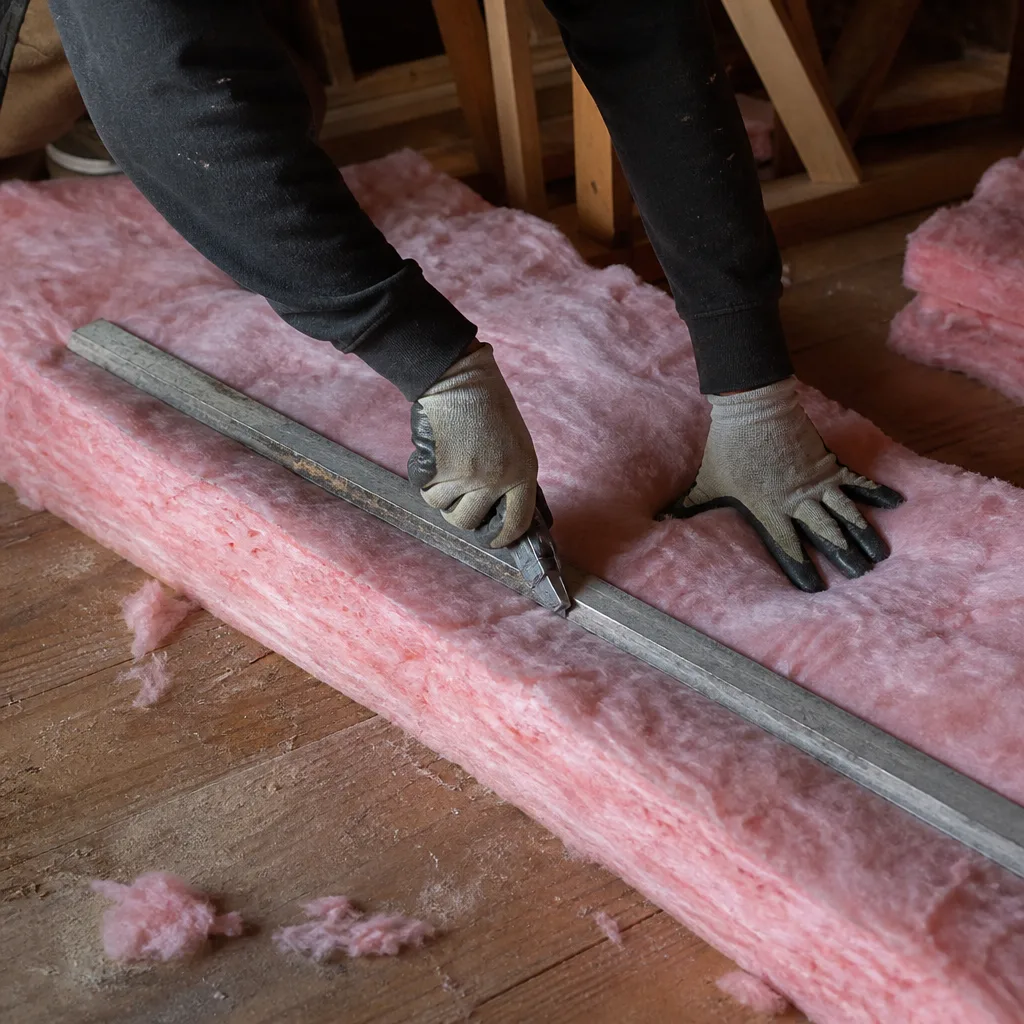
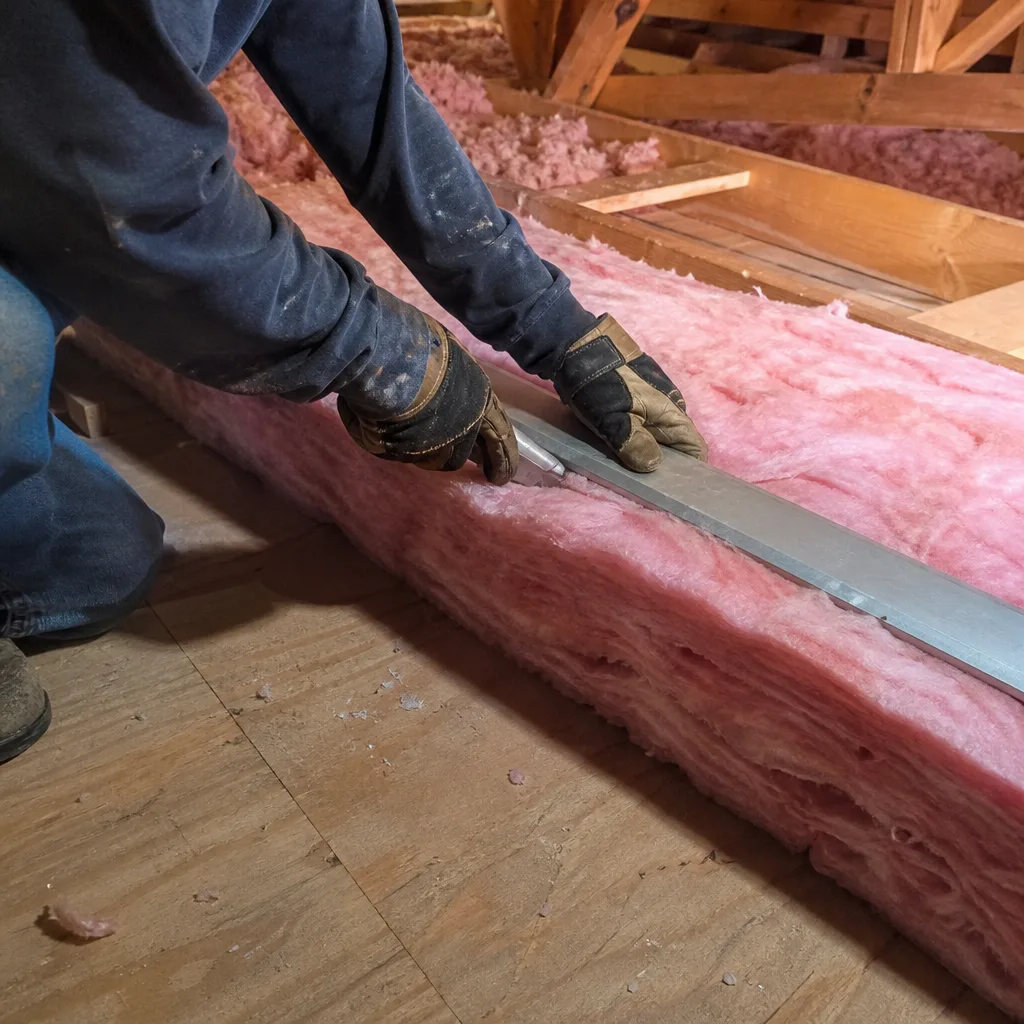
A full attic insulation install in Wrightwood typically runs $1,400 to $3,200 for a standard cabin attic, depending on square footage, access, and how much old material has to be removed first. Blown-in fiberglass over an existing attic floor runs $1.10 to $1.80 per square foot. Batt insulation for vaulted or exposed-beam roof cavities runs $1.80 to $3.00 per square foot installed. Attic insulation top-up where the existing material is clean and dry starts around $0.90 to $1.40 per square foot. Attic baffles and ventilation prep add $300 to $1,200, and radiant barrier runs $800 to $1,800. Rodent cleanup, vapor barrier replacement, and air sealing with spray foam are quoted after inspection because they vary so much cabin to cabin. Estimates are free, and the quote you get is the number you pay.
We Also Serve Cities Near Wrightwood
Our crews work the mountain communities and high-desert towns around Wrightwood regularly. For attic insulation in Piñon Hills, Phelan, Oak Hills, and San Antonio Heights, we bring the same material-agnostic approach and mountain-climate knowledge. Whether it’s a cabin in the trees or a newer build on an open lot, the insulation spec follows the house and the elevation. See our Wrightwood service page for full local details.
Serving Wrightwood, CA — Our Local Coverage Area
We’re based in the Wrightwood area and know this community well. Use the map below to see our service coverage — if you’re nearby, we can almost certainly help.
FAQs About Attic Insulation in Wrightwood
Warm air leaks into the cold attic while the heat is on Friday night, condenses on the roof sheathing, and never gets a chance to dry before the cabin cools back down on Sunday night. Over days and weeks, that cycle leaves insulation damp and framing stained. The fix is a combination of air-sealing the ceiling plane and adding proper eave-to-ridge ventilation, and it’s one of the most common upgrades we do in Wrightwood. Call (866) 271-1602 and we’ll tell you what your roof is doing after an inspection.
It depends on the roof assembly. If the rafter cavities are deep enough and you have a vented air path, blown or batted fiberglass like Owens Corning is often the right call. If the roof deck has no ventilation path and you need air sealing plus insulation in one step, closed-cell spray foam like Icynene is the better fit. We carry both and install both, so the answer comes from the cabin, not from inventory.
You can’t just add more insulation on top of rodent damage. The nesting debris has to be removed, the entry points have to be sealed, and only then do we re-insulate with fresh material. In Wrightwood, where cabins sit empty and animals have time to work undetected, we often recommend Rockwool mineral wool in vulnerable bays, because rodents don’t tunnel through it the way they do through fiberglass. We’ll also tell you where the animals are getting in.
Yes. The building code minimums are written for average California conditions, not a 6,000-foot alpine community with real heating loads. In Wrightwood we typically target R-38 to R-49 in vented attic floors, and R-30 or higher in vaulted roof cavities where framing depth allows. That’s above the code minimum and it’s what your heating bill actually wants. Every recommendation starts with an inspection, not a guess.
If the existing material is dry, clean, and still in place, a top-up is the cheapest move and usually enough. If it’s compressed, rodent-damaged, or wet from snow-driven moisture, a full removal and retrofit is the honest answer. Repairing around bad sections leaves cold gaps. In Wrightwood, where original insulation is often fifty years old and has been working against mountain winters the whole time, most cabins need more than a top-up. Call (866) 271-1602 for a free assessment and straight answer.
Written by Noel Arredondo, Owner at Fontana Insulation, serving Wrightwood and the surrounding mountain communities.