
Fast, Reliable Attic Insulation Across Tujunga
Attic insulation in Tujunga isn’t a luxury, it’s what stands between your house and a summer attic that routinely passes 140°F. Most homes here, especially the 1920s through 1970s single-family stock in ZIP codes 91042 and 91043, were built with insulation that’s now thin, settled, or simply gone. Our Attic Insulation team works across Tujunga, Sunland, and the canyon pockets above Foothill Blvd every week. We know what these attics look like inside. If you’re tired of upstairs rooms that never cool down or a ceiling that radiates heat after sunset, call (866) 271-1602 and we’ll come assess what’s actually in your attic.
Why Fontana Insulation Is Tujunga’s Preferred Attic Insulation Company
Noel Arredondo built our approach around one idea: match the material to the house, not to the inventory shelf. We stock eight insulation brands across four material categories, which means the recommendation you get for your Tujunga home is based on what your attic actually needs. That’s rare. Most insulation contractors carry one or two product lines and will push those regardless of whether they’re the right fit for a rafter-framed canyon house or a 1950s ranch on a slab.
Tujunga customers call us because we’ve seen what this specific climate does to insulation. The heat cycling, the brittle paper facings, the compressed rock-wool that once filled attics above Foothill Blvd. We don’t guess at what’s wrong; we climb up and look. And because we handle blown-in, batt, spray foam, and removal in-house, we’re not subbing your job to someone we’ve never met. The same crew that assesses the problem fixes it.
Our work across Tujunga has taught us which failures repeat in which eras of construction. That local experience means faster diagnosis and a material recommendation you can actually defend on your utility bill.
Attic Insulation Removal in Tujunga
Attic Insulation Removal in Tujunga usually comes down to one problem: the old material has stopped doing its job and has started causing other issues. We see this constantly in homes built between the 1920s and 1970s, where original rock-wool or fiberglass batts have settled, compressed, and in Tujunga specifically, baked until the paper facing shatters like dried leaves. That degraded material can clog eave vents, block the ventilation path, and leave your attic running even hotter than it should. Full removal typically runs $1,200 to $2,800 depending on attic size and access. Partial spot removal for damaged sections runs $400 to $900.
When Removal Beats Adding More on Top
If the existing insulation is wet, rodent-damaged, or so heat-degraded that the paper facing crumbles on touch, blowing new material over it doesn’t fix anything. You’re burying the problem. In Tujunga’s dry heat, the issue is usually brittleness rather than moisture, but the logic holds: the old material isn’t insulating anymore, and it’s blocking ventilation. Removal gets you back to a clean deck so air-sealing and new insulation can actually perform.
What We Remove, and How
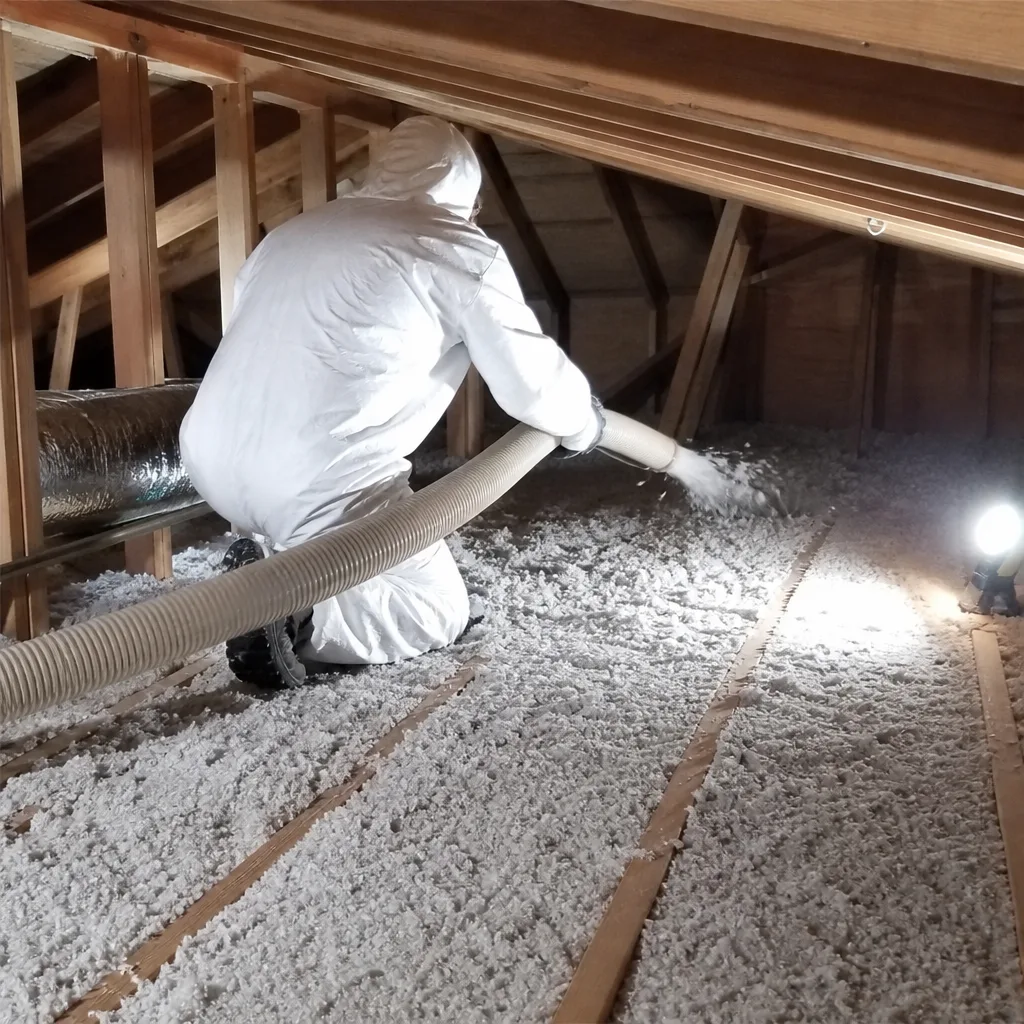
We remove old batt insulation, blown-in cellulose, rock-wool, and degraded faced fiberglass. In tight canyon attics above Foothill Blvd where access hatches are small and rake rafters leave little headroom, we hand-bag material and pass it out. No heavy equipment banging through your hallway. The goal is a clean attic ready for air-sealing and whatever material makes sense for your home: blown-in fiberglass, cellulose, mineral wool, or spray foam for specific air-sealing needs.
Insulation Contractors in Tujunga
Insulation Contractors in Tujunga are not all working from the same playbook. Many operate as generalists who’ll take an insulation job alongside roofing or HVAC work. We’re insulation specialists. That distinction matters in a place like Tujunga, where canyon homes with shallow rafter bays, hillside additions with irregular framing, and pier-and-beam construction each require different techniques. A generalist might blow fiberglass to a uniform depth and call it done. We check whether the eave baffles are keeping the ventilation path clear, whether top plates are air-sealed, and whether recessed lights have proper clearance. Those details are where Tujunga attics lose most of their thermal performance.
How We Approach a Tujunga Attic
Every job starts with a walkthrough of the attic itself, not a formula from a spreadsheet. We’re looking at what’s there, what condition it’s in, how the roof is framed, and where air is leaking. In Tujunga’s older homes, that often means finding compressed batts that test far below their original R-value, displaced blown-in around can lights, or missing insulation entirely above a room addition. We document what we find so you know exactly why we recommend what we recommend.
No Subcontractors, Ever
Our certified crew handles blown-in, batt, spray foam, and removal directly. You’ll see the same faces from assessment through cleanup. For Tujunga homeowners comparing multiple quotes, that’s a meaningful difference: the person who evaluated your attic is accountable for the work. Noel Arredondo runs our crews with a simple standard: if we wouldn’t put it in our own parents’ house, we don’t put it in yours.
Trusted Brands We Service in Tujunga
We carry brands because they earn their place, not because a distributor offers a volume discount. For Tujunga’s hot days and cold nights, Rockwool mineral wool is a strong candidate: it resists fire, dampens sound from canyon traffic, and doesn’t lose R-value as it ages. Owens Corning and CertainTeed fiberglass give us dependable, widely warrantied options when blown-in or batt fiberglass fits the budget and the attic. And for air-sealing applications where a blanket material won’t reach into irregular hillside framing, we install Icynene and Demilec spray foam. We stock materials locally for Tujunga jobs, which keeps turnaround short when you need work done before the next heat wave.
Common Attic Insulation Problems We See in Tujunga Homes
- Heat-baked paper facings that crumble on touch. In attics that spike past 140°F summer after summer, the kraft paper facing on older batts becomes brittle. It flakes, falls away from the insulation, and often clogs eave vents, choking the airflow that’s supposed to keep your attic from turning into an oven.
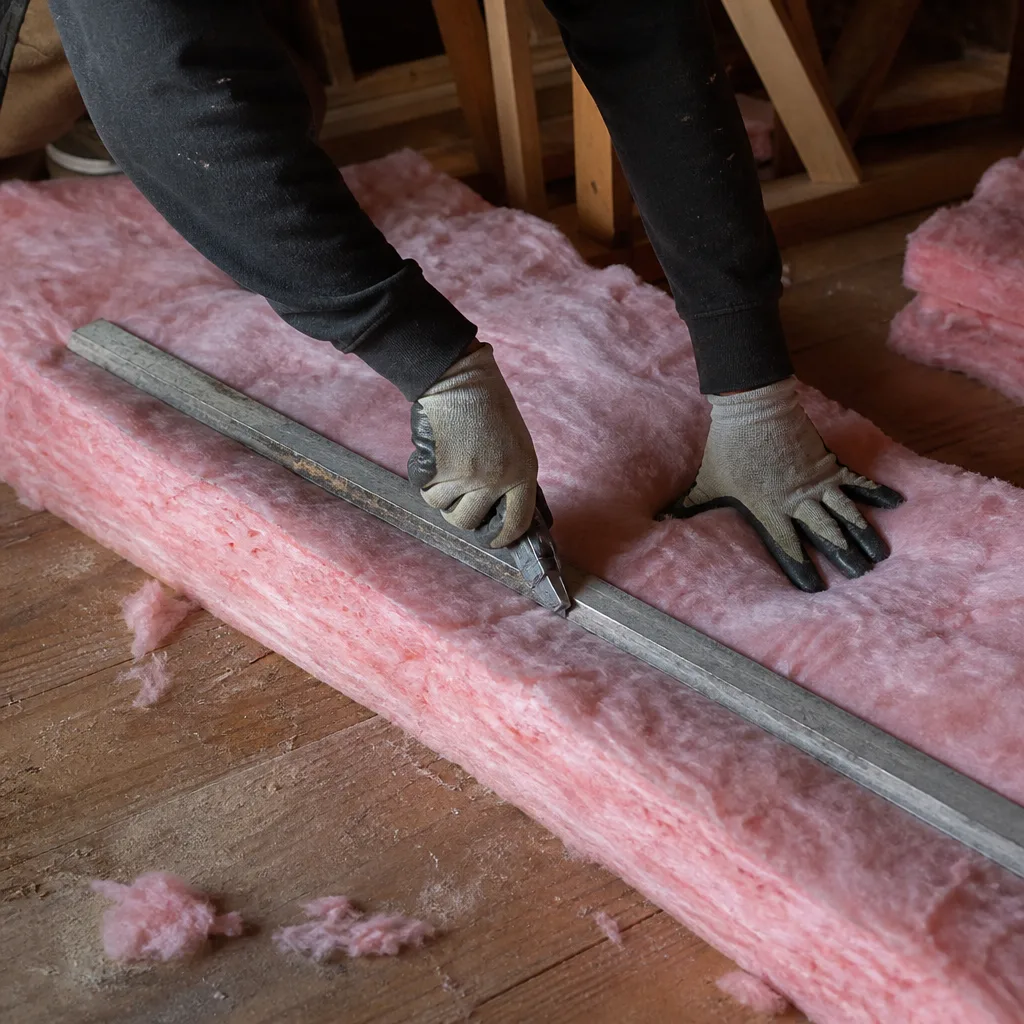
- Settled rock-wool batts testing at R-7 or worse. Homes built from the 1920s through the 1970s often still have their original rock-wool. Decades of heat cycling have compressed that material until a 3.5-inch batt is performing like an inch or less. The paper says one thing; a thermal reading tells another story.
- Displaced blown-in around recessed lights and top plates. In hillside and canyon homes with irregular framing, old cellulose or fiberglass gets pushed aside during remodels, electrical work, or simple settling. The gaps left behind become hot spots that drive cooling loads up during Santa Ana wind events when your AC is already fighting dry, hot air.
- Shallow rafter-framed attics with no baffles. Canyon homes above Foothill Blvd often have attic spaces too shallow to move around in comfortably. Original builders frequently skipped eave baffles entirely. Insulation blocks the soffit vents, the hot-roof ventilation path shuts down, and summer attics become heat traps that radiate down into living space all evening.
Pricing for Attic Insulation in Tujunga, CA
Blown-in attic insulation in Tujunga runs $1,500 to $3,200 for a typical 1,000 to 1,500-square-foot attic, depending on what R-value we’re targeting and what condition the existing material is in. Attic batt insulation runs $1,800 to $3,800 installed, with material choice (fiberglass versus Rockwool mineral wool) moving the number. A top-up over existing insulation runs $800 to $1,800, though we only recommend this when the existing material is in good shape and just under-filled. Full removal plus new insulation runs $2,800 to $5,500. Spray foam for air-sealing specific problem areas starts around $2,000 for partial applications. Attic baffles and ventilation prep typically add $300 to $700. Every job gets a written quote after we inspect the attic; call (866) 271-1602 and we’ll schedule it free.
We Also Serve Cities Near Tujunga
Our crews work throughout the Sunland-Tujunga corridor and neighboring foothill communities. We take attic insulation jobs in Attic Insulation in Tujunga, Sunland, La Crescenta-Montrose, Shadow Hills, and Burbank. The housing stock and heat patterns are similar across these foothill neighborhoods, which means our local experience carries over directly.
Serving Tujunga, CA — Our Local Coverage Area
We’re based in the Tujunga area and know this community well. Use the map below to see our service coverage — if you’re nearby, we can almost certainly help.
FAQs About Attic Insulation in Tujunga
Elevation and canyon geography are the main reasons. Tujunga sits higher in the San Gabriel foothills with more direct sun exposure and less marine influence than Burbank, which sits lower and closer to the LA basin’s coastal airflow. In Tujunga’s canyon and hillside homes, summer attic temps routinely exceed 140°F, while a Burbank attic on the same day might top out 20 to 30 degrees cooler. That sustained heat is what bakes insulation facings brittle and makes attic ventilation so critical here. It also means your R-value target and material choice should be evaluated for foothill conditions, not basin assumptions. Call (866) 271-1602 if you want a thermal assessment of what your attic is actually running.
In almost all cases, yes. When rock-wool batts from the 1950s have settled and degraded to the point that the facing crumbles on contact and the material itself has compressed, they’re no longer insulating at anything close to their original R-value. Blowing new insulation on top buries the problem without fixing it. Full removal lets us check the ceiling deck for gaps, air-seal around top plates and penetrations, install baffles if the eaves need them, and start clean. The removal cost is a one-time investment, and the performance difference after a clean install is measurable. Call (866) 271-1602 for an inspection and a firm price.
We deal with them constantly. These attics often have rake rafters, tight hatches, and very little headroom, so standard equipment doesn’t fit. Our crew hand-carries material in, works in shifts to avoid heat exhaustion during summer months, and hand-bags any debris during removal. For blown-in applications, we use extension hoses that let the installer work from outside the hatch. We also pay extra attention to eave baffles in these attics because the shallow roof pitch makes the ventilation path easy to block accidentally. The work takes longer and costs slightly more than a wide-open ranch attic, but the method stays the same: get the material in properly, keep the vents clear, and verify the result before we leave.
For Tujunga’s big day-night temperature swings and radiant heat load, the material matters less than the installation quality, but there are differences worth knowing. Rockwool mineral wool holds its R-value well, resists fire (which matters in dry foothill brush zones), and adds meaningful sound dampening if you’re near Foothill Blvd or a canyon road. Owens Corning and CertainTeed fiberglass are solid, widely warrantied options for blown-in or batt applications at a lower price point. For irregular hillside framing where air leaks are the bigger problem, Icynene or Demilec spray foam seals gaps that blanket materials can’t reach. We carry all of these so the recommendation matches your specific attic, not our inventory. Call (866) 271-1602 and we’ll walk you through the trade-offs after seeing your attic.
Yes, and in Tujunga it matters more than in most of LA. Without a clear ventilation path from the eave or soffit vents to the upper roof vents, your attic becomes a sealed heat chamber. Even the best insulation gets radiated heat from below to a point, and trapped heat plus cold winter nights at Tujunga’s elevation can create condensation on the underside of roof decks. That leads to sheathing damage over time. We include a ventilation check with every insulation job because insulation without ventilation in a 140°F foothill attic is half a solution. Baffle installation and vent prep are standard parts of our assessment, not upsells.
Ready to get your Tujunga attic working properly? Call (866) 271-1602 for a free estimate. We’ll inspect what’s up there, tell you honestly what it needs, and quote a firm price. No pressure, no brand loyalty, just the right material for your attic.
Written by Noel Arredondo, Owner at Fontana Insulation, serving Tujunga and the surrounding foothill communities.