
Fast, Reliable Attic Insulation Across Chino
Attic insulation in Chino typically runs $1.80 – $4.50 per square foot installed, with most full-attic blow-in jobs on 1,500 – 2,200 sq ft homes landing between $2,700 and $6,500. We’re Fontana Insulation, and we work in Chino every week – the 91708 Preserve neighborhoods, the 91710 corridor, the older pockets off Central Avenue. Call (866) 271-1602 for a free attic assessment, and we’ll tell you honestly whether your insulation is doing its job or quietly costing you money every August.
Why Fontana Insulation Is Chino’s Preferred Attic Insulation Company
Chino homeowners call us because we carry eight insulation brands across four material categories, and we don’t have a favorite. That matters here. Most insulation companies push one product line because that’s what they stock. We carry Owens Corning, Johns Manville, Knauf, CertainTeed, Rockwool, Icynene, Demilec, and GreenFiber, so the recommendation matches your attic, your budget, and your goal – not our inventory.
Noel Arredondo runs our crew, and he’s the reason Chino remodelers and Preserve-era homeowners keep our number. We don’t subcontract. The same team that estimates your job is the one that air-seals the plenum chase, blows the fiberglass to depth, and verifies the R-value with a depth chart before we pack up. You get one contractor accountable from estimate to cleanup.
We know Chino’s housing stock: two-story stucco tract homes from the 1980s through 2000s, plus the newer builds off Pine Avenue and Bickmore Road in 91708. Those attics have shallow trusses, crowded ducts, and the same builder-grade insulation that was code-minimum when it went in 15 or 25 years ago. That’s exactly what we fix.
Insulation Contractors in Chino
Insulation Contractors in Chino deal with a specific problem most homeowners never see: the attic deck holds fiberglass that should be 12 – 14 inches deep, but it’s compressed to four or five inches around AC plenums, recessed cans, and the garage-bay wall. Effective R-value drops. The ceiling feels warm. The AC runs longer. We correct that.
A typical attic insulation top-up or full replacement in Chino runs $2,700 – $6,500 depending on square footage and how much of the old material has to come out. Attic ventilation prep and baffle work adds $350 – $900 on most jobs. We give you a written, line-item quote before any work starts, so you know what you’re paying for.
Air Sealing Before Blow-In
On Chino homes, the biggest energy leak in the attic isn’t the insulation depth – it’s the bypasses. Recessed can lights, plenum chases, and wire penetrations let 100°F attic air pour straight into the living space. We seal those first, then blow to depth. Skipping this step is why so many Chino attics underperform even after being “insulated.”
Full Replacement vs. Top-Up
If your existing fiberglass is dry, settled, and mostly even at four to six inches, a cellulose or fiberglass top-up gets you to R-49 or R-60 same day. If it’s sweat-darkened, compressed flat, or rodent-damaged, we remove it and start clean. Removing old material costs more, but blowing fresh material over compromised insulation just hides the problem.
Attic Ventilation in Chino
Attic Ventilation in Chino isn’t a nice-to-have – it’s the difference between an attic at 120°F and one at 155°F in July. When Santa Ana winds push hot, dry air across the San Bernardino County edge through October, a poorly vented attic cooks your ductwork, superheats your ceiling, and makes the AC fight harder than it should. We install and prep for the right ventilation setup on every Chino attic job.
In Chino’s low-pitch truss attics, the ridge vent and soffit baffle balance is usually off. Soffit vents get blocked by blown-in fiberglass that was never baffled, or there simply aren’t enough intake vents to feed the ridge. That imbalance pulls conditioned air out of the house through bypasses. We fix it with rigid baffles at every bay and proper vent calculations for your roof’s square footage. Ventilation retrofit on a Chino attic typically adds $350 – $900, and it’s usually the single best money spent on a heat-load problem.
Baffles and Soffit Prep
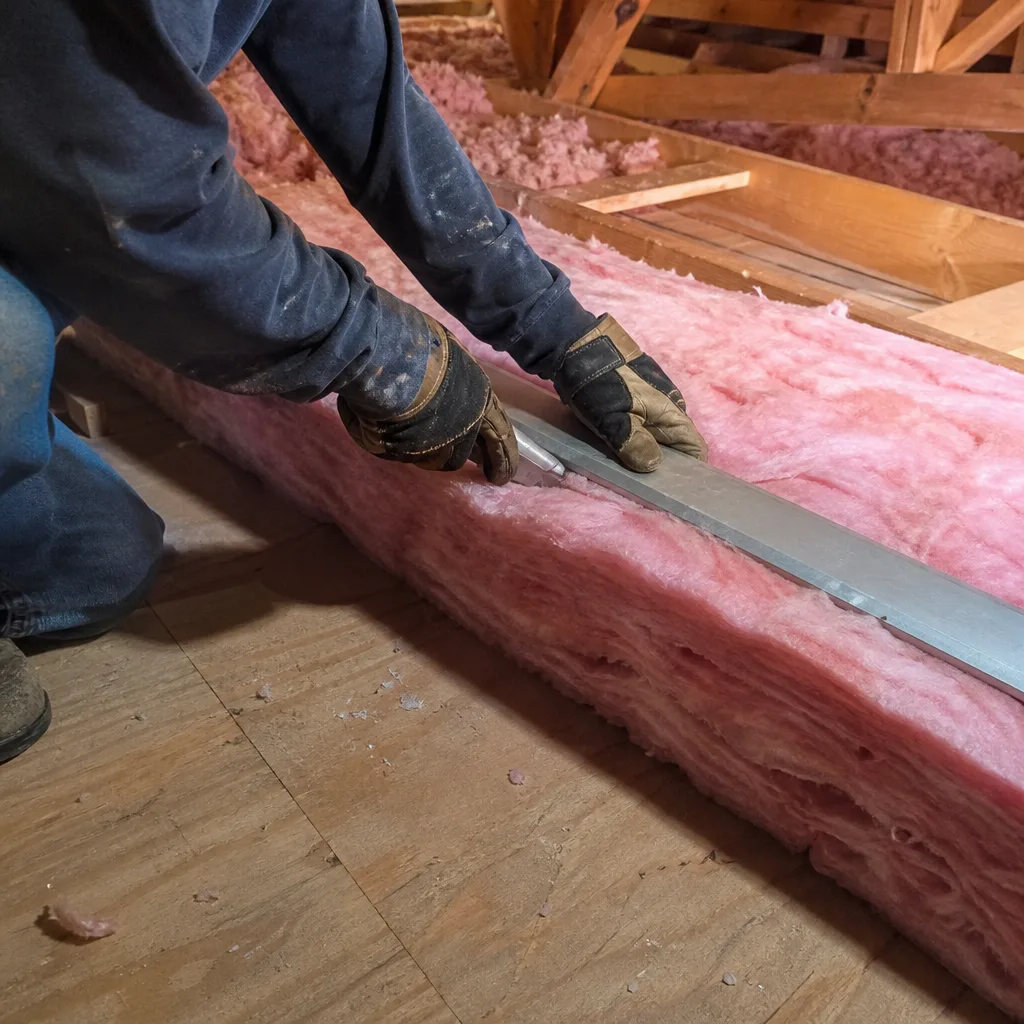
Every blow-in job in Chino should include baffle installation at the eaves. Without baffles, the first Santa Ana event or heavy rain can push loose fiberglass into the soffit area, block the intake, and start a moisture cycle in the deck. We install baffles before we blow, then verify air movement from soffit to ridge.
Radiant Barrier Realities
Radiant barrier gets marketed hard in the Inland Empire, and it does help on sun-blasted west-facing slopes in Chino. But radiant barrier does nothing for convection-driven heat if the attic isn’t vented. We’re honest about this: fix the air pathway first, then decide if the foil is worth your money. Some Chino roofs justify it. Most get more value from deeper insulation and real air sealing.
Common Attic Insulation Problems We See in Chino Homes
- Compressed builder-grade fiberglass around HVAC plenums. The original blow-in settles fast where duct chases and can penetrations interrupt the deck, and five inches of compressed fiberglass delivers maybe R-11, nowhere near what a 105°F Chino week demands.
- Sweat-darkened material on west-facing slopes. That dark staining isn’t dirt. It’s warm, moist attic air condensing in the fiberglass during cool mornings, and it means the insulation has been doing double duty as a moisture trap. R-value is gone.
- Missing insulation over garage bays. Builders routinely skip or under-fill the area over the attached garage, especially in 91708 Preserve-era homes. The garage ceiling becomes a heat radiator straight into the bedrooms above it. We fill that deck every time.
- No air sealing anywhere. Recessed cans, wire drops, and plumbing chases were never sealed when the house was built. Hot air moves through those channels like open windows. On Chino’s hottest afternoons, that bypass airflow can offset half the work the insulation is supposed to do.
Pricing for Attic Insulation in Chino, CA
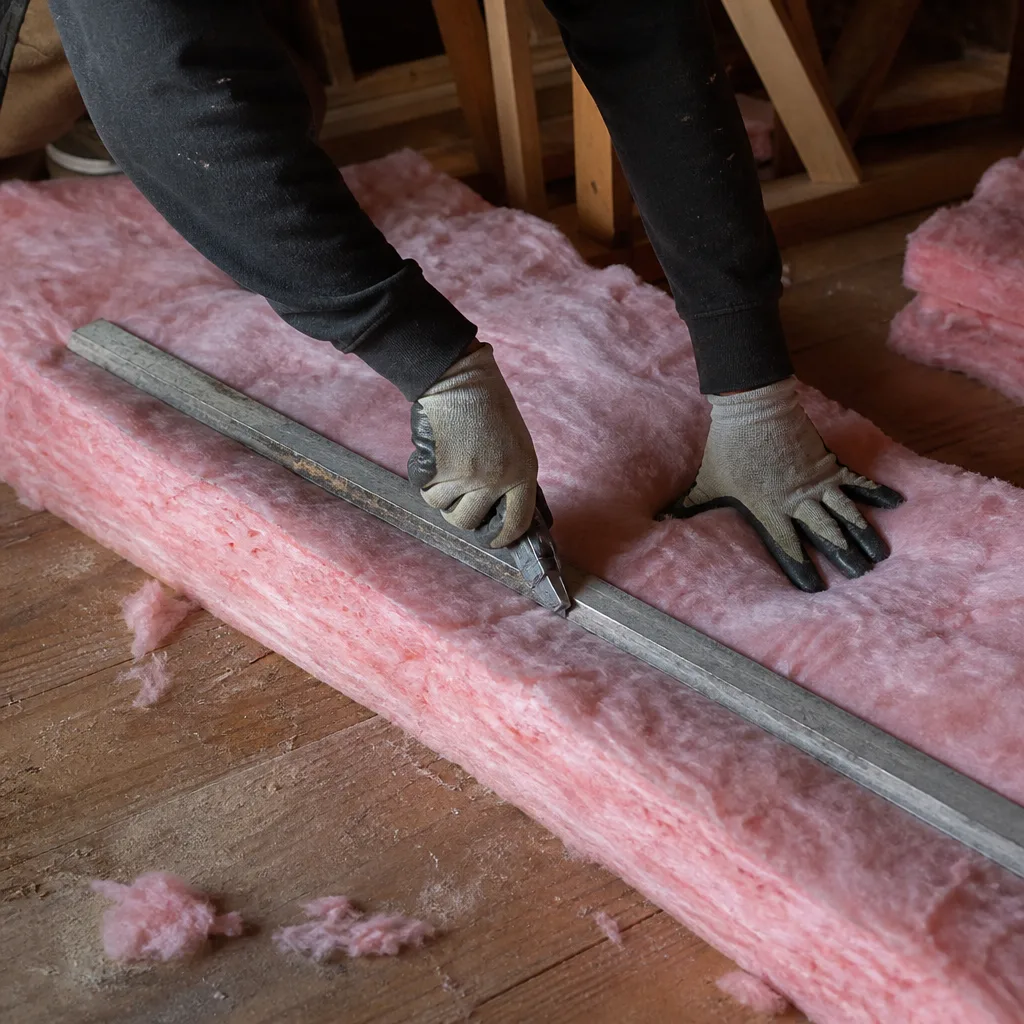
Here’s what Chino homeowners can expect to pay for our work. Blown-in fiberglass attic insulation runs $1.80 – $2.80 per square foot installed, depending on depth. Blown-in cellulose runs $2.20 – $3.50 per square foot. Batt insulation for attic or garage-bay work runs $2.50 – $4.00 per square foot. Spray foam runs $4.50 – $7.00 per square foot for the closed-cell application that actually air-seals in Chino’s heat. Ventilation prep and baffle work adds $350 – $900. We offer free written estimates, and our price is our price – no add-ons after the fact.
We Also Serve Cities Near Chino
Our Attic Insulation team regularly works in the neighborhoods around Chino, and we serve the surrounding Inland Empire communities including Los Serranos, Ontario, Montclair, and Eastvale. If you’re just outside the Chino city line, we’re likely already scheduled in your area this week. Call us at (866) 271-1602 to confirm availability.
Serving Chino, CA — Our Local Coverage Area
We’re based in the Chino area and know this community well. Use the map below to see our service coverage — if you’re nearby, we can almost certainly help.
FAQs About Attic Insulation in Chino
Because that builder-grade fiberglass was installed to code minimums for a milder climate, and it’s likely settled or compressed around your AC plenum, recessed cans, and garage-bay wall to an effective R-value well below what Chino summers demand. Most 2000s Chino attics we assess are running at R-19 to R-24 instead of the R-49 to R-60 we’d recommend. The fix is a top-up or full re-blow, and it typically pays for itself in AC load reduction over a few Inland Empire summers. Call (866) 271-1602 for a free depth check and quote.
Yes. We size Chino attics for long triple-digit spells and dry Santa Ana events, which means we prioritize soffit-to-ridge airflow and baffle depth more aggressively than we would in a coastal city. Chino’s low-pitch truss roofs trap heat at the deck, so we calculate venting for the actual roof square footage and install rigid baffles to protect intake flow from blown-in material. Without that, the attic keeps loading heat into your ductwork no matter how much insulation we add.
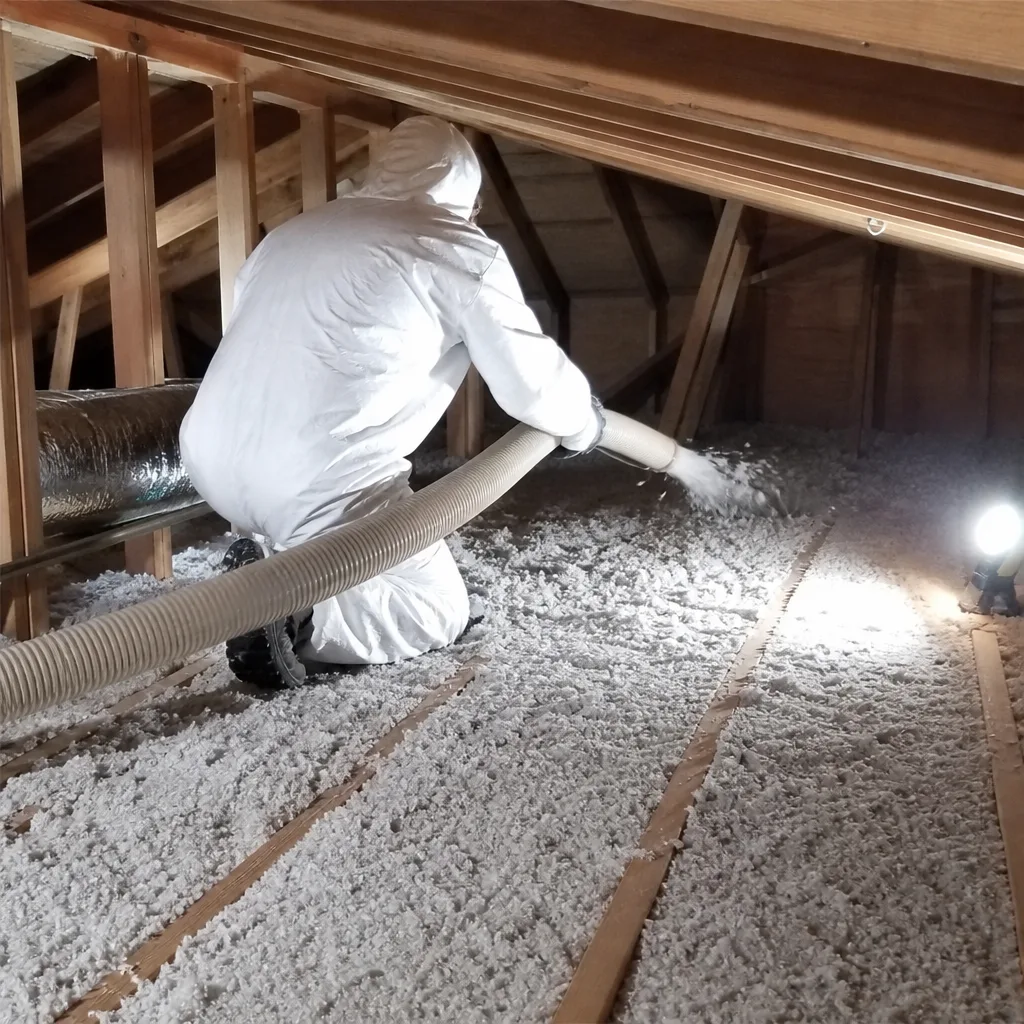
We do it every week. Chino’s 1980s – 2000s tract homes and Preserve-era builds typically have shallow truss attics with ducting, plumbing, and HVAC equipment crowding the deck. Our crew is equipped for confined-attic blow-in work, and we use a flexible hose setup that reaches the far west-facing slope without trampling your ceiling joists. We also bring disposable suits and full deck protection because those attics are dusty and tight. Expect us to air-seal the penetrations before we blow.
We install eight brands across four material categories, so the material matches your attic. For Chino blow-in work, we often recommend Johns Manville or Knauf fiberglass for value and coverage, Rockwool for fire resistance and sound dampening on party walls or garage bays, and CertainTeed where you want one of the most widely warrantied fiberglass products in the industry. We don’t push one brand – we show you what works for your home’s attic and budget.
Yes, and this is a common call we get from 91708 homeowners. The builder’s insulation spec is code-minimum, and most warranties don’t cover “the attic is too hot.” Upgrading now, before the fiberglass compresses further around your AC plenum and can lights, locks in the thermal performance before your equipment starts working harder in year two and three. You won’t void your structural warranty by adding insulation or air sealing. We can give you a free assessment and document the current R-value so you have a baseline whether you upgrade now or next year.
Get Your Chino Attic Inspected – Free
If you live in Chino and you’re wondering whether your attic insulation is doing its job, call us at (866) 271-1602. We’ll send a crew to measure your current R-value, check your ventilation, and give you a written quote in plain English. No pressure, no one pushing a product you don’t need. Noel and the Fontana Insulation team have been working in Chino attics long enough to know exactly what we’ll find – and exactly what to do about it.
Written by Noel Arredondo, Owner at Fontana Insulation, serving Chino and the Inland Empire.