
Fast, Reliable Attic Insulation Across Baldwin Park
Attic insulation in Baldwin Park usually costs between $1,800 and $4,200 for removal and replacement in a typical 1,200 – 1,600 square foot tract home, and most jobs are completed in one day. That’s the honest range we quote on the phone before we ever step foot in your attic. If you’re in the 91706 zip code and your upstairs rooms feel ten degrees hotter than the rest of the house every summer, you’re not imagining it. The problem is under your roof. Call us at (866) 271-1602 and we’ll tell you what’s actually going on up there.
We know Baldwin Park’s housing stock better than most contractors who just pass through on the 10. The low-pitch attics off Ramona Boulevard and Maine Avenue, the stucco exteriors, the 2×4 framing that was never meant to hold R-38. Those details matter when you’re deciding between topping off old insulation or pulling everything out and starting fresh. We’re Fontana Insulation, and we’ve been in enough Baldwin Park attics to know what you’re dealing with before we open the hatch.
Why Fontana Insulation Is Baldwin Park’s Preferred Attic Insulation Company
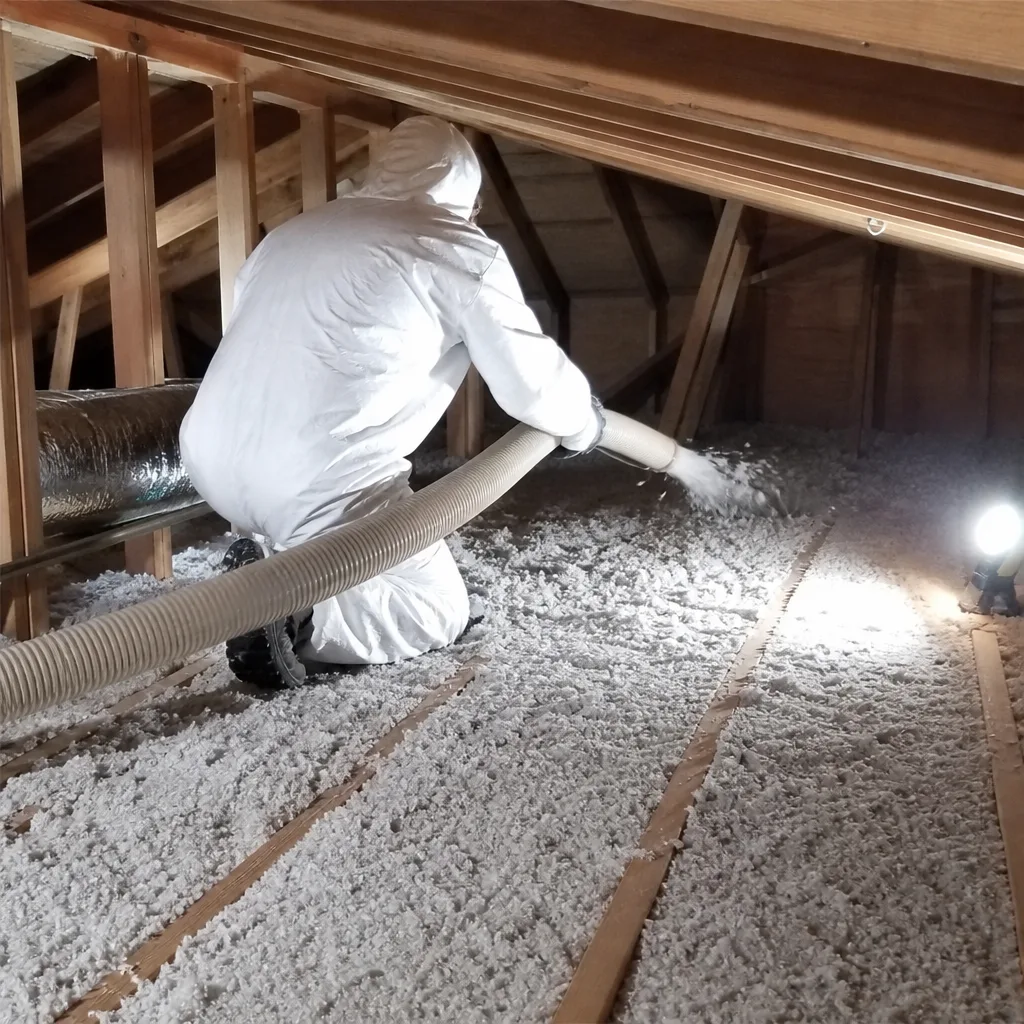
Noel Arredondo built Fontana Insulation around one principle: carry every major insulation material so the recommendation matches the house, not the inventory. That’s rare. Most contractors push whatever they stock. We stock eight brands across four material categories, which means when we tell a Baldwin Park homeowner they need Rockwool instead of fiberglass, it’s because their attic actually needs Rockwool – not because that’s what’s on the truck. Or our Attic Insulation team might recommend blown-in cellulose for a 1960s rancher where air-sealing matters more than R-value alone.
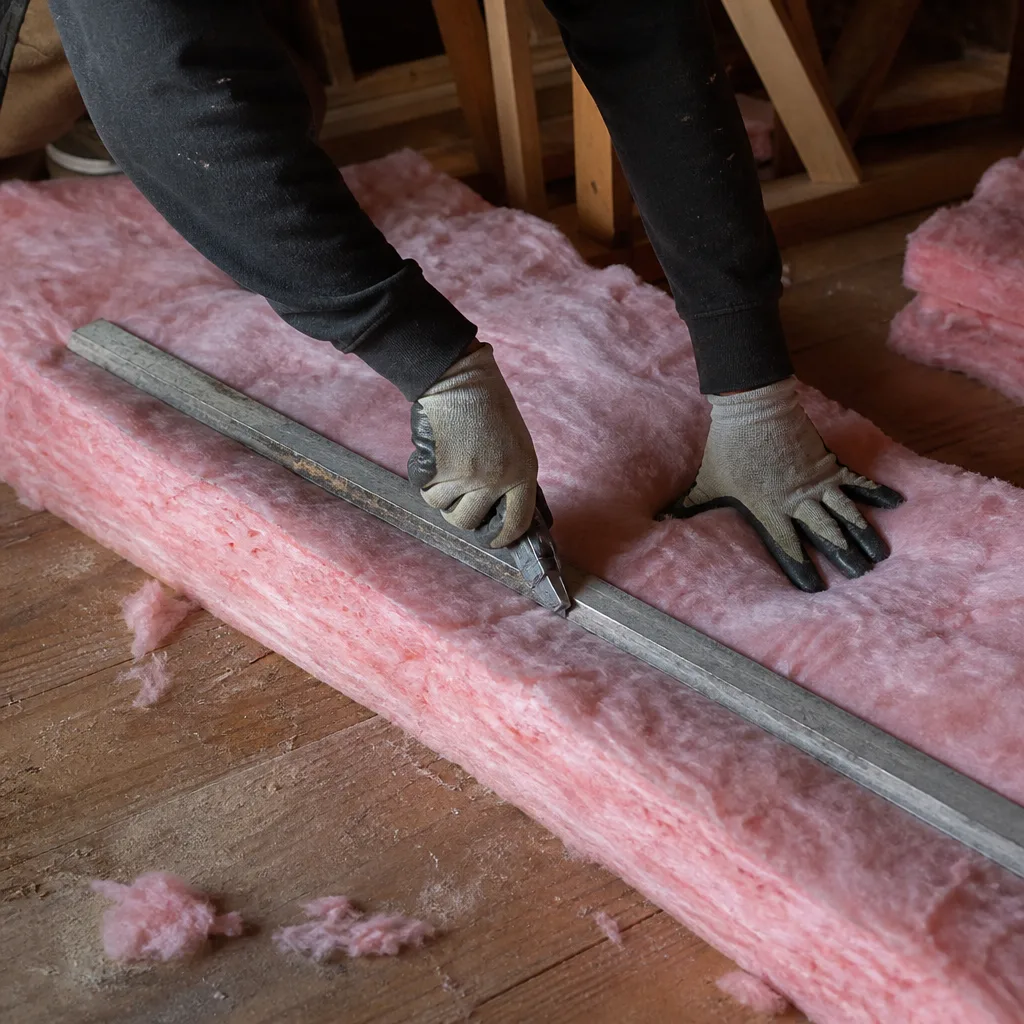
Noel’s background means you get a straight answer about trade-offs. Owens Corning batts cost less upfront and hold their shape in standard cavities. CertainTeed gives you a warranty that transfers if you sell the house. Icynene closed-cell foam air-seals and insulates in one pass, but it’s a bigger investment. We’ll walk through all of it without pushing you toward the priciest option.
Our Baldwin Park customers keep calling us back because we show up when we say we will and we don’t leave until the attic is right. We’ve worked in homes near Baldwin Park Boulevard, up toward the 605, and through the older tracts around Central Avenue. We know which houses have original insulation and which ones had a DIY blow-in job done in the 1990s that’s now failing. That local pattern recognition saves you time and money on the diagnostic side.
Attic Mold Removal in Baldwin Park
Attic mold removal in Baldwin Park is a job we see most often in homes with original 1950s and 60s roof sheathing where a bathroom fan or dryer vent was never properly terminated through the roof. Hot, dry summers don’t cause the mold – winter humidity and poor ventilation do, and then the summer heat bakes it into the framing. We remove the mold, correct the ventilation problem, and re-insulate so the issue doesn’t come back. A full attic mold removal with insulation replacement in Baldwin Park typically runs $2,800 to $5,500 depending on attic size and how far the mold has spread into the sheathing.
Removal and Surface Treatment
We scrape and HEPA-vacuum the affected wood, then apply an EPA-registered antimicrobial treatment to kill remaining spores. This is not a DIY job – the dust from moldy insulation gets into your ductwork and living space if you try to bag it yourself. We contain the work area and protect your interior while the attic is cleaned out.
Ventilation Repair Before Re-Insulating
Mold returns if the moisture source stays. We check soffit vents, ridge vents, and bathroom exhaust terminations in every Baldwin Park attic we clean. A 1963 house on Maine Avenue we worked on had two bathroom fans dumping into the attic for forty years. Once we re-routed them outside and balanced the ventilation, the mold never came back.
Attic Insulation Removal in Baldwin Park
Attic insulation removal in Baldwin Park is the right call when the existing material is compacted, water-damaged, rodent-soiled, or so old it’s no longer doing its job. In the 1950s and 60s tracts around Ramona Boulevard, we routinely find fiberglass batts that have compressed to R-7 or less – they look thick until you measure them, and then you realize they’re holding almost no heat back. Removal and replacement runs $1,900 to $3,800 for a typical Baldwin Park rancher, with the final number driven by attic size, access difficulty, and whether we’re also air-sealing and adding baffles.
Full Removal and Air Sealing
We pull everything out to the bare drywall, then hand-seal every top plate, wire penetration, and can light housing before any new insulation goes in. That air-sealing step is where the real energy savings hide. Insulation slows heat transfer, but a fist-sized hole around a vent pipe lets warm air pour into the attic all year long. Sealing first changes the math on what R-value you actually need.
Debris and Contaminant Disposal
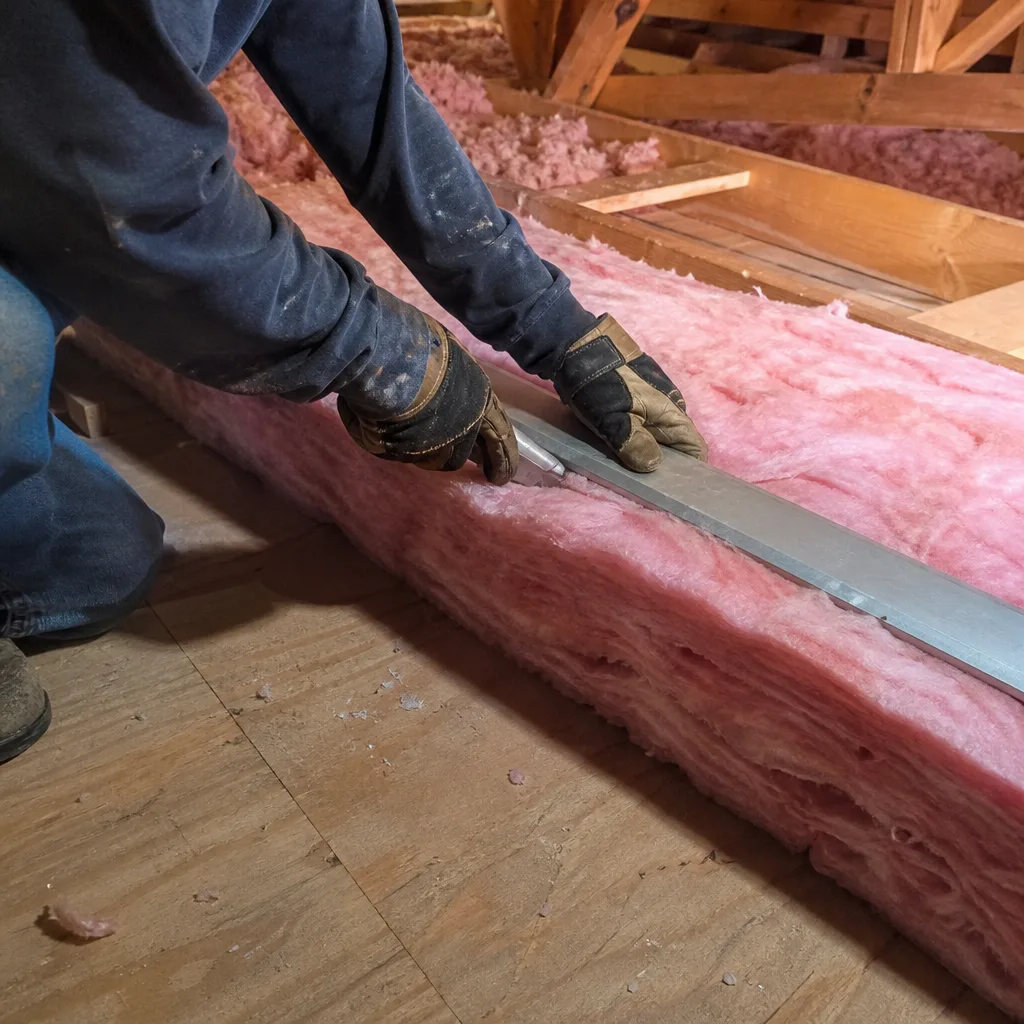
Old insulation holds dust, rodent droppings, and decades of fine particulate. We bag it in the attic, remove it through the gable or hatch without dragging it through your living room, and dispose of it properly. You get a clean deck to start fresh, not a dusty mess that settles into your carpet for the next month.
Trusted Brands We Service in Baldwin Park
We carry eight nationally recognized insulation brands because no single product solves every Baldwin Park attic. Knauf batts give us a dependable fiberglass option at a fair price for standard 2×4 and 2×6 cavities. Rockwool mineral wool is the choice when fire resistance and sound dampening matter as much as thermal performance – it’s a product most local contractors don’t even stock. Icynene spray foam handles the air-sealing applications where blanket or blown material falls short, especially in the low-pitch attics where we can’t always reach every corner with a hose. For Baldwin Park customers, we keep common materials staged and ready so your job doesn’t stall waiting on a shipment.
Common Attic Insulation Problems We See in Baldwin Park Homes
- Compacted original batts from the 1950s and 60s. The insulation installed when these tract homes were built measured R-13 or R-19 on paper, but after sixty years of thermal cycling and foot traffic, it’s often compressed to R-7 or less. That’s not enough to keep a San Gabriel Valley attic from cooking the ceiling below it.
- Settled blown-in insulation near the eaves. We see this constantly in low-pitch attics – the blown fiberglass or cellulose drifts toward the center and leaves bare drywall within two feet of the eaves. That perimeter gap is exactly where heat gain is worst in a Baldwin Park summer.
- Missing or blocked soffit vents. Older homes on Ramona Boulevard and Maine Avenue were built with minimal attic ventilation. If someone added a second layer of insulation and buried the soffits, the attic can’t breathe, moisture builds, and cooling bills climb.
- Radiant heat gain through uninsulated roof decks. Baldwin Park’s 90 to 100 degree summer days don’t just heat the attic air – they radiate heat straight through the roof sheathing onto whatever insulation is below. A radiant barrier makes a measurable difference on these older homes, especially with aluminum-framed windows downstairs that already fight the sun all afternoon.
Pricing for Attic Insulation in Baldwin Park, CA
Here’s what Baldwin Park homeowners actually pay. A basic blown-in top-up over existing insulation runs $900 to $1,600 for a 1,200 square foot attic. Full removal, air-sealing, and R-38 blown-in replacement is $1,900 to $3,800. Adding a radiant barrier to the roof deck adds $1,100 to $1,900. Attic mold removal with re-insulation lands between $2,800 and $5,500. What moves the price: attic square footage, access difficulty (some Baldwin Park hatches are in closets with no ladder), how much old material must come out, and whether we’re adding baffles or fixing venting. Call (866) 271-1602 for a free estimate on your specific attic – we’ll give you an exact number, not a vague range.
We Also Serve Cities Near Baldwin Park
Our trucks cover Baldwin Park and the surrounding San Gabriel Valley communities regularly. If you’re in Duarte, Irwindale, Bradbury, or Avocado Heights, we’ll bring the same brand-neutral Baldwin Park approach to your attic. Same materials, same crew, same straight answers about what’s actually going on up there.
Serving Baldwin Park, CA — Our Local Coverage Area
We’re based in the Baldwin Park area and know this community well. Use the map below to see our service coverage — if you’re nearby, we can almost certainly help.
FAQs About Attic Insulation in Baldwin Park
Your attic is the problem, not your air conditioner. In Baldwin Park’s 1950s and 60s tract homes, the original batt insulation has compressed to R-7 or less, and blown-in insulation has settled away from the eaves. That leaves the ceiling of your upstairs rooms absorbing full radiant heat from a 100-degree roof deck. Your AC fights that heat load all afternoon and loses. The fix is removing the degraded material, air-sealing the attic floor, and installing R-38 or better – we’ve measured attic temperature drops of 30 degrees Fahrenheit on 98-degree days in Baldwin Park. Call (866) 271-1602 and we’ll tell you if your attic matches the pattern.
If the existing insulation is dry, uncontaminated, and still loosely fluffy, topping off with another six to ten inches of blown material is fine and runs $900 to $1,600. If it’s compacted flat, water-stained, full of rodent droppings, or you can see bare drywall near the eaves, it needs full removal, which runs $1,900 to $3,800 for a typical Baldwin Park rancher. The test is simple: look at the insulation depth near the outer walls. If it’s noticeably lower there than in the middle, it’s failed. We’ll verify it with a free attic inspection.
We install Knauf and Owens Corning fiberglass, Rockwool mineral wool, Icynene spray foam, and GreenFiber cellulose, among others. For most Baldwin Park tract homes, we recommend air-sealing first, then blown-in fiberglass or cellulose at R-38 or higher. For low-pitch attics where access is tight, Icynene open-cell foam or Rockwool batts can be the better fit. We carry all of them, so the recommendation is driven by your attic, not our stock levels.
Most of the ones we work on benefit from it. Baldwin Park’s summer sun hits those low-pitch roof decks hard, and even R-38 insulation absorbs radiant heat before it can block it. A radiant barrier stapled to the underside of the rafters reflects that heat before it ever reaches the insulation. On a 1962 tract home near Ramona Boulevard, we installed R-38 blown fiberglass with a radiant barrier and dropped the attic temperature by over 30 degrees on a 98-degree day. It’s not required on every job, but in this climate it’s usually worth adding.
One day, sometimes two. A standard 1,200 to 1,600 square foot Baldwin Park rancher with a low-pitch attic takes our crew six to eight hours for full removal, air-sealing, and new insulation. If we’re also remediating mold or adding baffles and re-routing vent terminations, it might stretch to a second morning. We’ll give you a firm timeline when we inspect the attic, and we don’t leave the job half-done.
If your Baldwin Park attic is making your house uncomfortable and your energy bills look ridiculous, get a straight answer. Call Noel and the Fontana Insulation crew at (866) 271-1602. We’ll inspect for free, tell you exactly what’s up there, and quote you an honest number whether it’s a simple top-up or a full removal and replacement. No pressure, no brand loyalty – just the right material for your attic.
Written by Noel Arredondo, Owner at Fontana Insulation, serving Baldwin Park and the San Gabriel Valley.