
Fast, Reliable Spray Foam Insulation Across Walnut Park
Spray foam insulation in Walnut Park is most often the fix for two problems: attics that hit 130°F during late-summer heat spells, and houses sitting so close to neighbors that street noise and conversation bleed through shared walls. We’ve worked the 90255 blocks for years, and the jobs here rarely look like what insulation contractors see in newer suburbs. The bungalows are small, the attics are shallow, and getting a foam rig into a zero-lot-line gap takes planning. If you’re dealing with a hot back bedroom off Pacific Boulevard or a party wall that carries every footstep from the apartment next door, call (866) 271-1602. We’ll come out, walk the property, and tell you what’s actually worth doing.
Why Fontana Insulation Is Walnut Park’s Preferred Spray Foam Insulation Company
Walnut Park homeowners call us because we’re an insulation specialist, not a single-product shop. We carry eight industry-recognized brands across fiberglass, mineral wool, spray foam, and cellulose, which means we recommend the material that fits your house, not the one we happen to stock the most of. For the tight eave spaces and party-wall conditions common on the 1920s-1950s bungalows near Walnut Park Elementary, that’s often open-cell foam from Icynene or Demilec. For the 1960s stucco apartment buildings with tuck-under parking, it might be Rockwool sound batting against the shared wall and closed-cell foam at the rim joist. Noel Arredondo, who runs Fontana Insulation, built the company around this material-agnostic approach. Customers across Walnut Park have told us they appreciated the straight talk about R-value versus air-sealing versus sound control, and many of those jobs came from referrals on the same block.
Response time to Walnut Park is straightforward from our Fontana base. We’re not guessing at traffic patterns on Florence Avenue or Alameda Street; we run this route regularly. When you call, we schedule an assessment, get eyes on the attic or wall cavity, and then give you a written estimate with line-item pricing. No pressure to upgrade to something you don’t need.
Key Takeaways for Walnut Park Homeowners
- Walnut Park attics are shallow, hot, and often uninsulated. Open-cell foam plus a radiant barrier is usually the right call for summer heat, not maximum R-value.
- Zero-lot-line spacing means hose routing matters. We run lines through exterior gaps rather than dragging hoses through your living room.
- Sound control is a bigger driver here than cold weather. Party-wall sealing and eave air-sealing cut the noise from neighbors and the 710 corridor.
- We carry eight brands and won’t push one. Open-cell foam, closed-cell foam, Rockwool, cellulose, fiberglass. The home decides.
Spray Foam Attic Insulation in Walnut Park
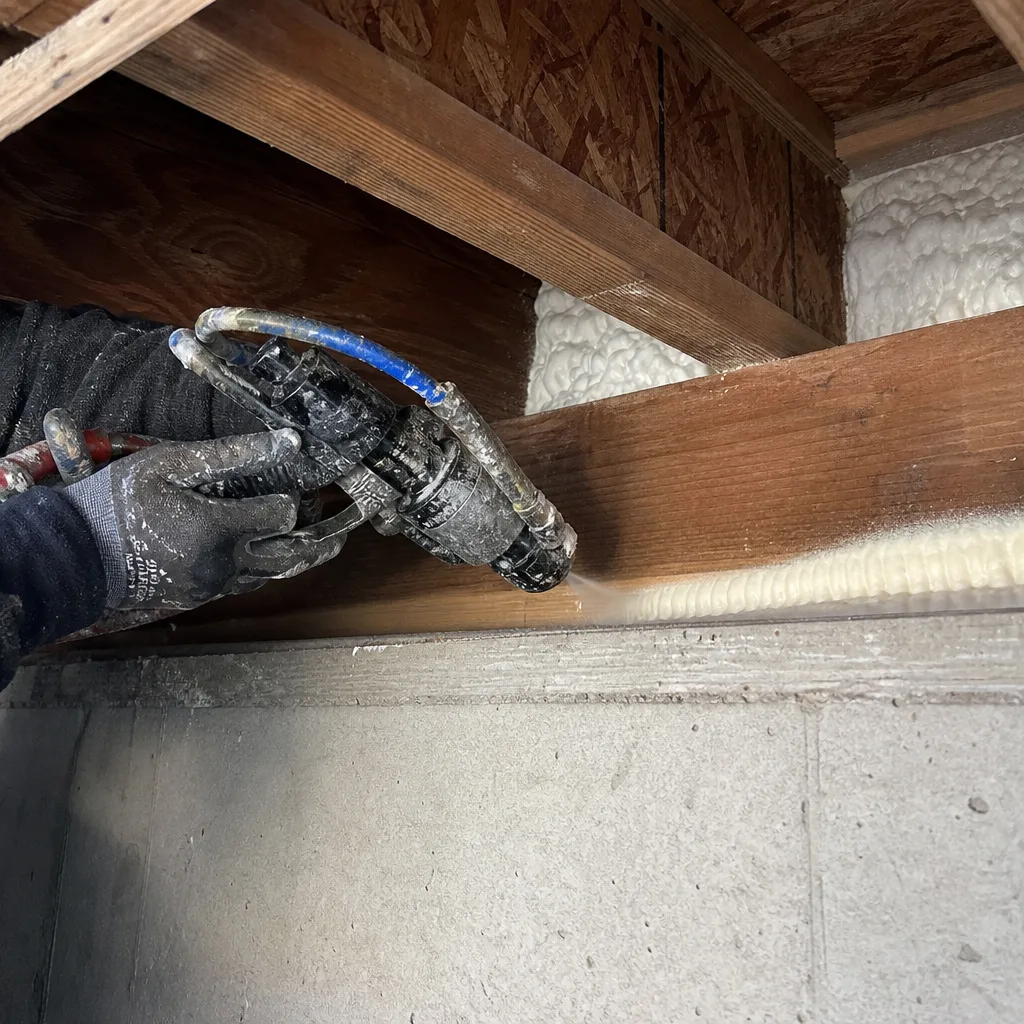
Spray Foam Attic Insulation in Walnut Park is the highest-impact job we do here, mostly because of what these attics look like. A typical 1930s or 1940s stucco bungalow near Carmelita Avenue has a vented attic with two to three feet of headroom at the peak and far less at the eaves. There’s rarely any existing insulation worth keeping. The roof deck bakes under direct sun from June through October, and on Santa Ana wind days, the attic air temperature climbs past 130°F while the second-story bedrooms cook. Open-cell foam installed at the roofline, combined with air-sealing at the top plates, makes a measurable difference in how much of that heat reaches the living space. You can expect open-cell attic foam in Walnut Park to run $2.20 to $3.80 per board foot installed, with a typical small bungalow attic falling between $2,400 and $5,800 depending on square footage and access. Closed-cell foam runs higher, $3.50 to $5.50 per board foot, and is usually overkill for a vented attic here unless you’re converting the space.
Radiant barrier as the second layer
We won’t sell you foam on a Walnut Park attic without asking about your roof’s ventilation. The real failure mode here is an unsealed attic with foam against 130°F-plus decking and no radiant barrier. The foam gets blamed for a thermal problem it was never meant to solve alone. A foil radiant barrier facing the heated roof deck reflects a large share of that radiant heat before it ever reaches the foam. For these hot, inland-adjacent blocks around 90255, foam plus radiant barrier is the combination that actually changes afternoon temperatures.
Air-sealing the top plates first
Before we shoot foam, we walk the attic and mark every gap at the top plates, around pipe penetrations, and at the eave edges. On these old bungalows, those gaps are where the freeway hum from the 710 and the neighbor’s driveway conversations leak in. Sealing them is most of the sound-control benefit. The foam then becomes the air barrier and thermal layer in one pass.
Spray Foam Wall Insulation in Walnut Park
Spray Foam Wall Insulation in Walnut Park is a different animal than what you’d see in a suburban tract home. Most of these 1920s-1950s stucco bungalows were built with minimal wall cavities, often 2×3 framing instead of modern 2×4 or 2×6, and sometimes no sheathing behind the stucco at all. That means we’re rarely filling a deep stud bay. Instead, the work is flash-and-seal: a thin closed-cell layer against the exterior, then open-cell foam where cavity depth allows, with careful attention to the party-wall seam where your bungalow meets the neighbor’s structure. For the 1960s dingbat-style apartments with tuck-under parking, we’re sealing the wall top and bottom plates and adding sound-dampening material where two units share a wall. Wall spray foam in Walnut Park typically runs $3.00 to $5.00 per board foot for open-cell and $4.50 to $7.00 per board foot for closed-cell, with smaller retrofit jobs landing between $1,800 and $6,500. The spread is wide because access through an existing stucco wall changes the labor picture entirely. Call (866) 271-1602 for a precise quote on your lot.
Party-wall retrofits in the apartment blocks
The 1960s two-story stucco apartments near Walnut Park’s commercial strips share walls, and those walls carry sound like a drum. We address this without gutting the building. Small injection holes through the wall cavity let us fill with open-cell foam and, in many cases, add Rockwool batting cut to the odd stud spacing. The combination cuts airborne sound transfer noticeably and adds a real thermal break at the same time.
Zero-lot-line access
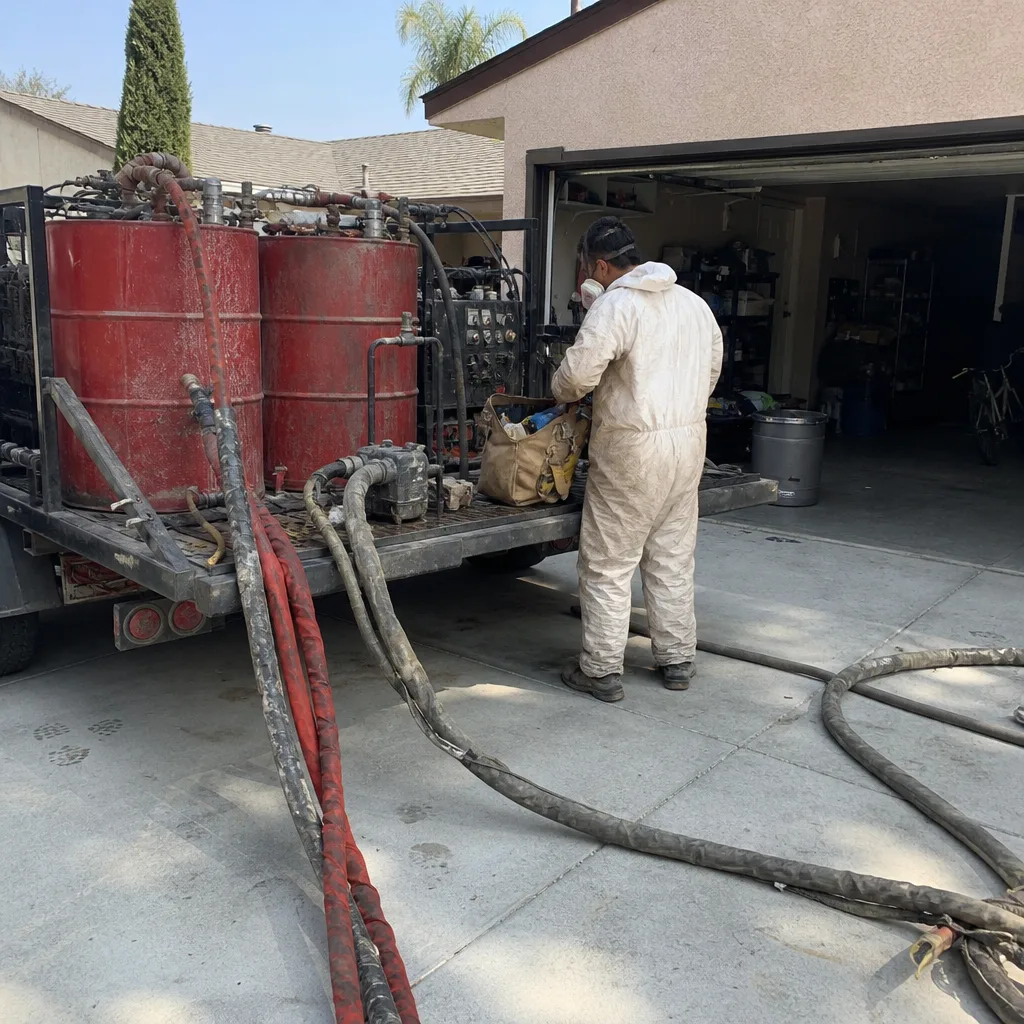
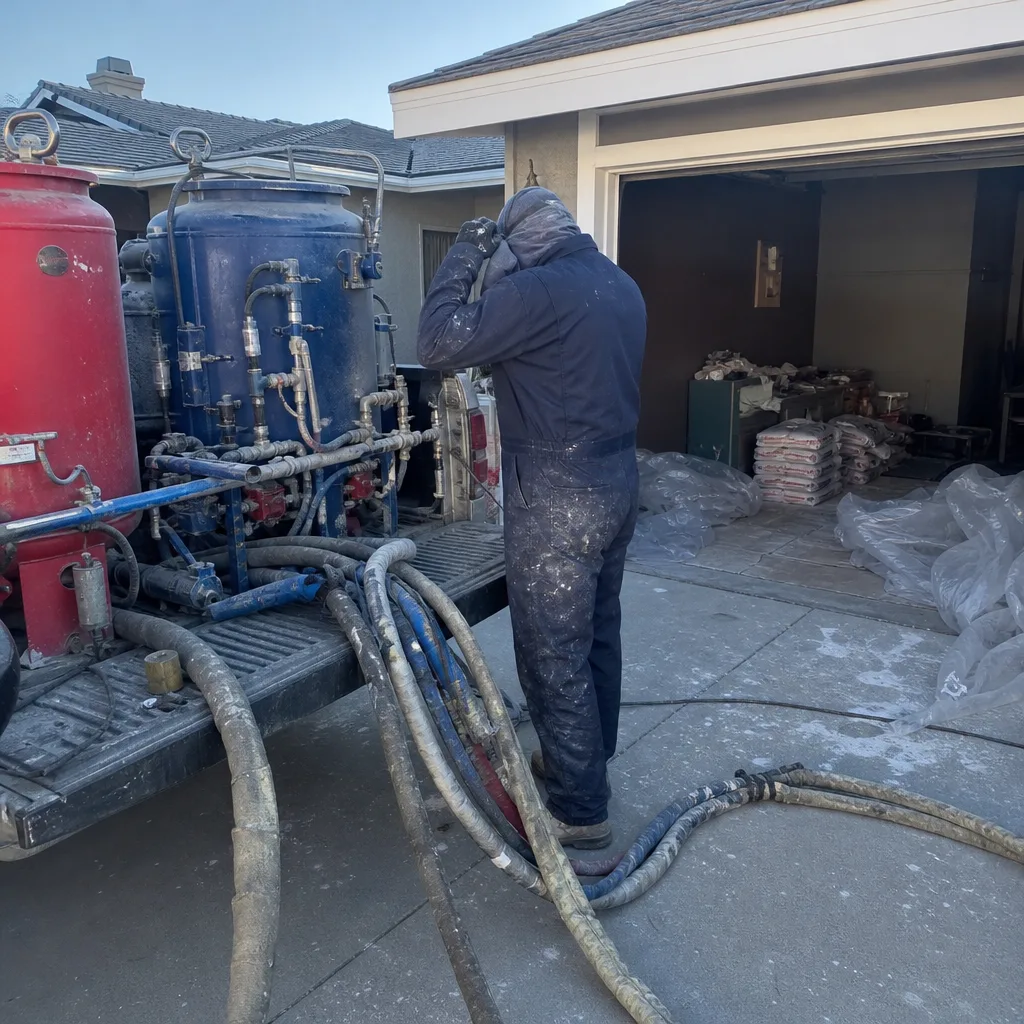
When homes sit only a few feet apart on a Walnut Park block, you cannot drag a standard foam hose assembly through the neighbor’s yard. We run the lines through the narrow exterior gap, often from the street side, and stage the rig at the curb or alley. It’s slower and takes more planning, but it’s the only way to get even coverage without overspraying the far edge. This is one reason we encourage homeowners to have a phone photo of their side yard ready when they call.
The 1940s Bungalow Off the Huntington Park Edge
On a 1940s stucco bungalow right off the Huntington Park edge of 90255, we pulled the original fiber-cement soffit vents and shot open-cell foam into a shallow attic with barely two feet of headroom. Then we air-sealed the top plates and added a radiant barrier facing the hot roofline. The homeowner’s complaint wasn’t cold. It was street noise and a second-floor back bedroom that hit triple digits by afternoon. Sealing the eave gaps and the party-wall seam cut both. We ran the foam lines through the narrow zero-lot-line gap on the outside rather than dragging hoses through the house. That job sums up Walnut Park insulation: tight lots, shallow attics, old construction, and the expectation that a contractor knows how to work around all three.
Trusted Brands We Service in Walnut Park
Fontana Insulation is an authorized installer for Icynene and Demilec, the two open- and closed-cell spray foam brands we trust for the shallow-cavity work common in Walnut Park. We also carry Johns Manville and Knauf fiberglass for situations where a vented attic retrofit with blown-in makes more sense than foam, and Rockwool mineral wool for the sound-dampening and fire-resistance jobs on shared walls. For homeowners who want a recycled-content option, GreenFiber cellulose is on the truck as well. We stock these materials because each one solves a specific problem in Walnut Park housing, not because any single brand pays us to push it. Noel Arredondo’s approach is simple: the house tells us what it needs.
For anything involving Spray Foam Insulation, the brand matters less than the application. We’d rather spend an extra hour at the eave than waste a homeowner’s money on the wrong foam in the wrong place.
Common Spray Foam Insulation Problems We See in Walnut Park Homes
- Thin coverage at the far party-wall edge. When a crew misjudges hose reach on a zero-lot-line block, the far side of the wall or roofline gets less foam. That leaves an unsealed sound-flanking path and a heat leak you can feel from the bedroom.
- Missed air-seal at top plates in shallow attics. An applicator who can’t see the far eave oversprays the decking and never seals where the wall meets the ceiling. In Walnut Park bungalows, that gap is where most of the street noise enters.
- Foam installed without a radiant barrier on hot Santa Ana days. When an unsealed attic hits 130°F-plus, foam alone can’t outrun the radiant load. The homeowner thinks the foam failed. The real gap is ventilation and a missing foil layer.
- Wrong foam type for a shared wall. Closed-cell foam in a party wall can stiffen the assembly and reflect noise instead of absorbing it. Open-cell or a Rockwool hybrid is usually the better performer when two units touch.
Pricing for Spray Foam Insulation in Walnut Park, CA
You should know the numbers before you schedule. Open-cell spray foam in a Walnut Park attic typically runs $2.20 to $3.80 per board foot installed, with most small bungalow jobs landing between $2,400 and $5,800. Closed-cell runs $3.50 to $5.50 per board foot in attics and $4.50 to $7.00 per board foot in walls, and is worth the premium when you need a moisture barrier or are sealing a rim joist. Wall retrofit work on the 1920s-1950s homes often falls between $1,800 and $6,500 because the stucco access changes the labor. What moves the price in Walnut Park specifically: zero-lot-line hose routing, attic headroom, whether we’re drilling through stucco or working from an open cavity, and whether a radiant barrier is already in place. We give line-item estimates, never a single round number with no breakdown. Call (866) 271-1602 and we’ll put a real quote on your specific roofline, not a ballpark for a house in another city.
We Also Serve Cities Near Walnut Park
Our crews cover the surrounding southeast LA neighborhoods every week. If you’re in Huntington Park, Bell, Cudahy, or Maywood, the same team handles those blocks with the same material-agnostic approach. Spray Foam Insulation in Walnut Park keeps us busy, but we keep slots open for neighbors across the city line.
Serving Walnut Park, CA — Our Local Coverage Area
We’re based in the Walnut Park area and know this community well. Use the map below to see our service coverage — if you’re nearby, we can almost certainly help.
FAQs About Spray Foam Insulation in Walnut Park
Yes, and it’s one of the most common attics we work in across 90255. We don’t need standing headroom. The crew works from the hatch and the eave edges, using open-cell foam that expands to fill the shallow cavity without requiring us to climb into the peak. A two-foot attic changes our technique, not the result. We also pull soffit vents from the exterior so we’re not fighting the roofline from underneath. Call (866) 271-1602 and we’ll assess your specific framing before quoting.
Yes, when it’s combined with air-sealing at the top plates and the party-wall seam. The foam itself is not a sound blocker in the way Rockwool is, but it closes the gaps that let noise travel from the street into the living space. On these densely built blocks, sealing the eave edges and the shared wall line typically makes a bigger difference to the homeowner than the R-value gain. If noise is your main concern, we’ll tell you if foam, Rockwool, or a blend makes sense.
In most of these hot attics, yes. Walnut Park sits in a warm, dry stretch of the LA basin where Santa Ana days push roof decking past 130°F. Foam slows conductive and convective heat, but it doesn’t stop radiant heat from the hot decking. A foil radiant barrier facing the roofline handles that. We recommend the pairing on nearly every vented attic retrofit here. It’s the difference between an attic that’s tolerable at 3 p.m. and one that still cook the back bedrooms.
We usually start with a thin closed-cell layer against the exterior for air and moisture control, then open-cell where the cavity allows. The original framing is often 2×3 with inconsistent depth, so a single closed-cell pass is sometimes the only option that fits. For party walls between units, we lean toward open-cell or a Rockwool hybrid because the goal is sound control more than thermal performance. We’ll show you what’s in the wall before we spray.
Yes. We stage the rig at the curb or in an alley and run the hose lines through the narrow side-yard gap or over the roof. It’s more labor than an open suburban lot, which is why we ask for a photo of your side yard when you call. But we’ve done these zero-lot-line jobs for years and we don’t ask to drag equipment through your living room. The work gets done from the outside whenever the structure allows.
Call Fontana Insulation for Walnut Park Spray Foam Work
If your Walnut Park attic is cooking the upstairs, or your party wall carries too much of the neighbor’s life into your house, we’ll send a crew that knows the 90255 blocks, the shallow attics, and the tight side yards. Noel Arredondo built Fontana Insulation around the idea that the right material is the one that fits the home, not the one that’s easiest to stock. That’s why we carry eight brands and three installation methods in-house. Call (866) 271-1602 for a free estimate. We’ll walk your property, answer straight questions about foam versus Rockwool versus blown-in, and give you a price you can compare line by line.
Written by Noel Arredondo, Owner at Fontana Insulation, serving Walnut Park and surrounding southeast LA neighborhoods.