
Fast, Reliable Spray Foam Insulation Across Studio City
Spray foam insulation in Studio City costs between $2,100 and $5,800 for a typical attic or wall retrofit, with hillside cathedral-ceiling jobs running $4,200 – $9,600 depending on access. Those aren’t national averages; they’re what we see on the ground in 91604 and 91614, where post-and-beam construction and wildfire-zone requirements change how foam gets specified. Our crews know the difference between a Ventura Blvd stucco ranch and a Coldwater Canyon mid-century, because the job is never the same.
We’re the Spray Foam Insulation team that treats Studio City as its own animal. Call (866) 271-1602 for a free assessment.
Why Fontana Insulation Is Studio City’s Preferred Spray Foam Insulation Company
We carry eight nationally recognized brands across four material categories, including Icynene and Demilec spray foam, CertainTeed fiberglass, and Rockwool mineral wool. That matters in Studio City because one home needs closed-cell foam against an ember-exposed roof deck while the house two streets over needs open-cell in a standard attic. Most contractors only stock one or two products. We keep the full toolbox, so the home dictates the spec, not our inventory.
Noel Arredondo runs our team the way a real insulation specialist should: by application-matching, not by brand loyalty. A hillside post-and-beam off Laurel Canyon gets a different recommendation than a 1950s ranch in the flats. The geology, the heat, the wildfire exposure, the wiring age, the absence of an attic cavity. All of it informs the material.
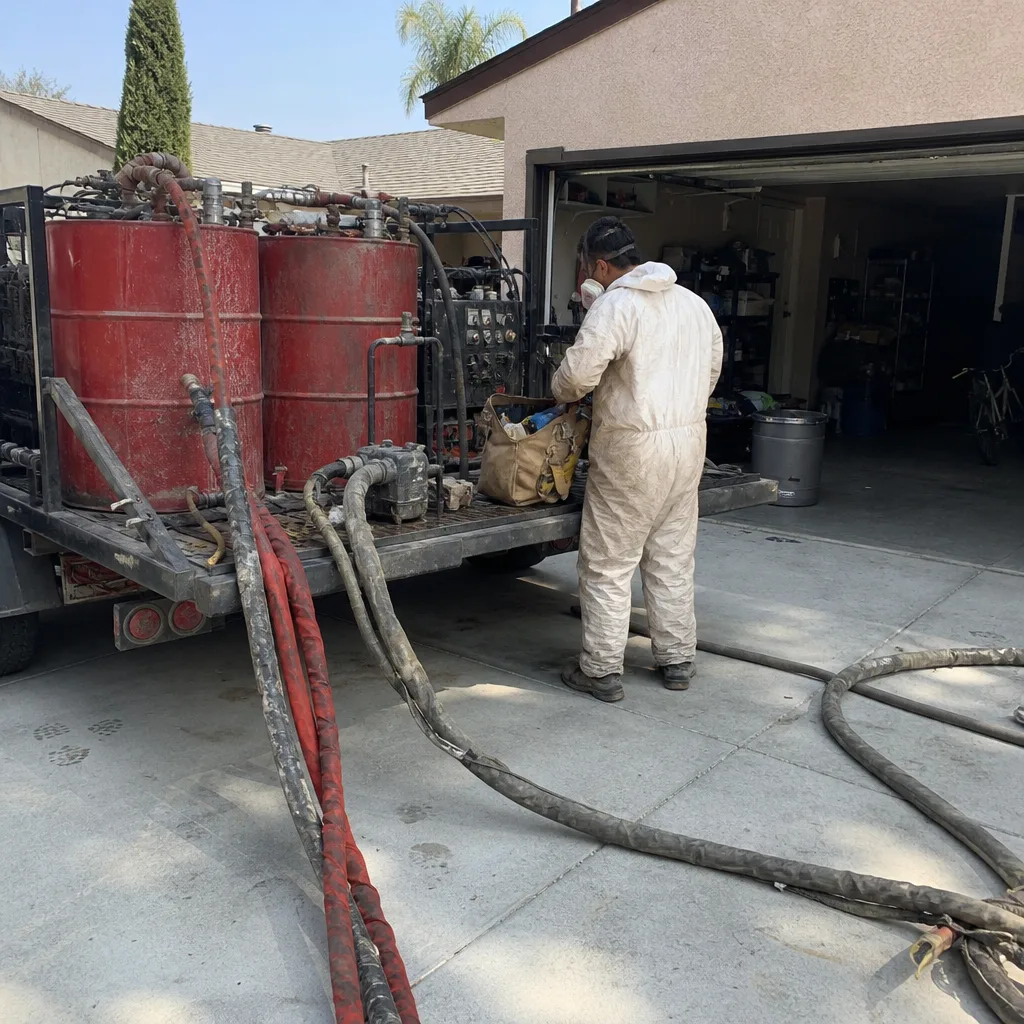
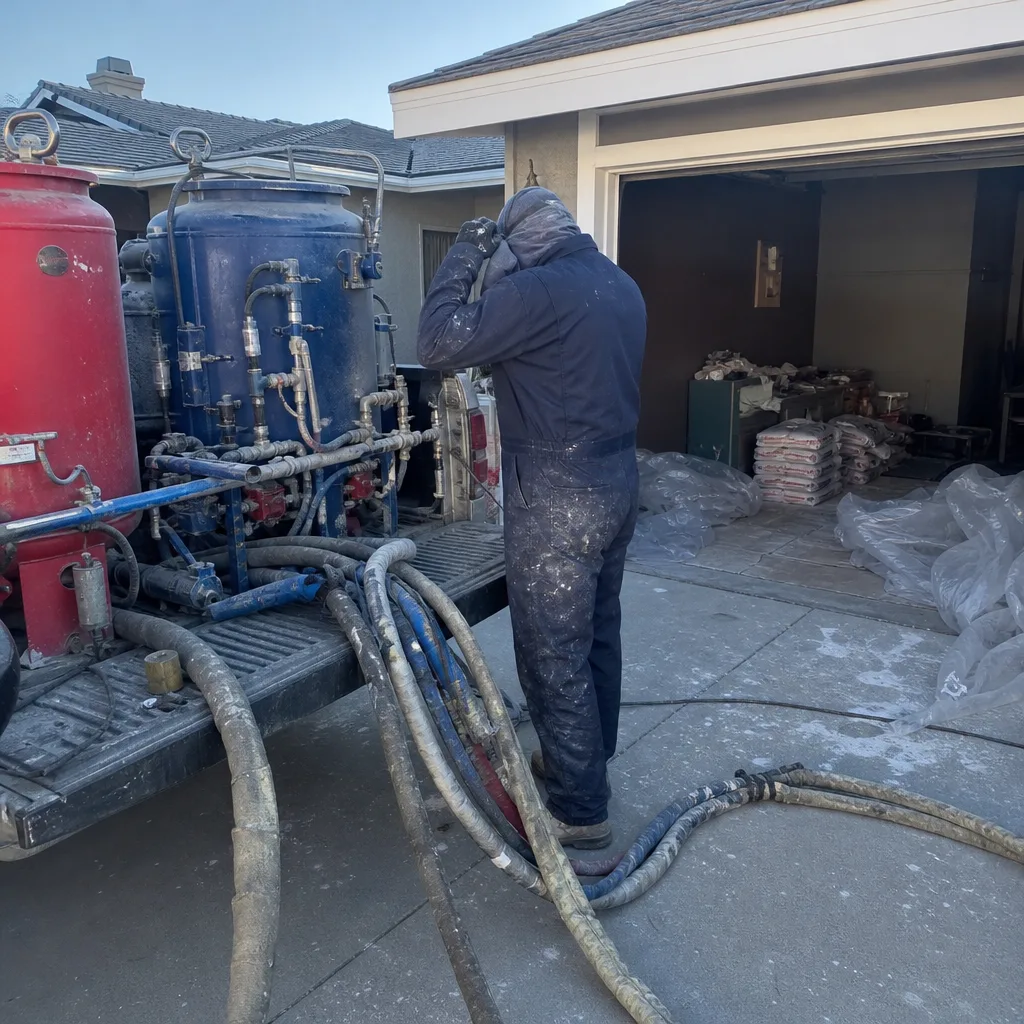
And when Studio City homeowners call, they talk to someone who knows the streets. We’ve worked homes along Coldwater, Mulholland, and the narrow canyon roads where parking a rig is half the battle. We schedule around it.
Spray Foam Attic Insulation in Studio City
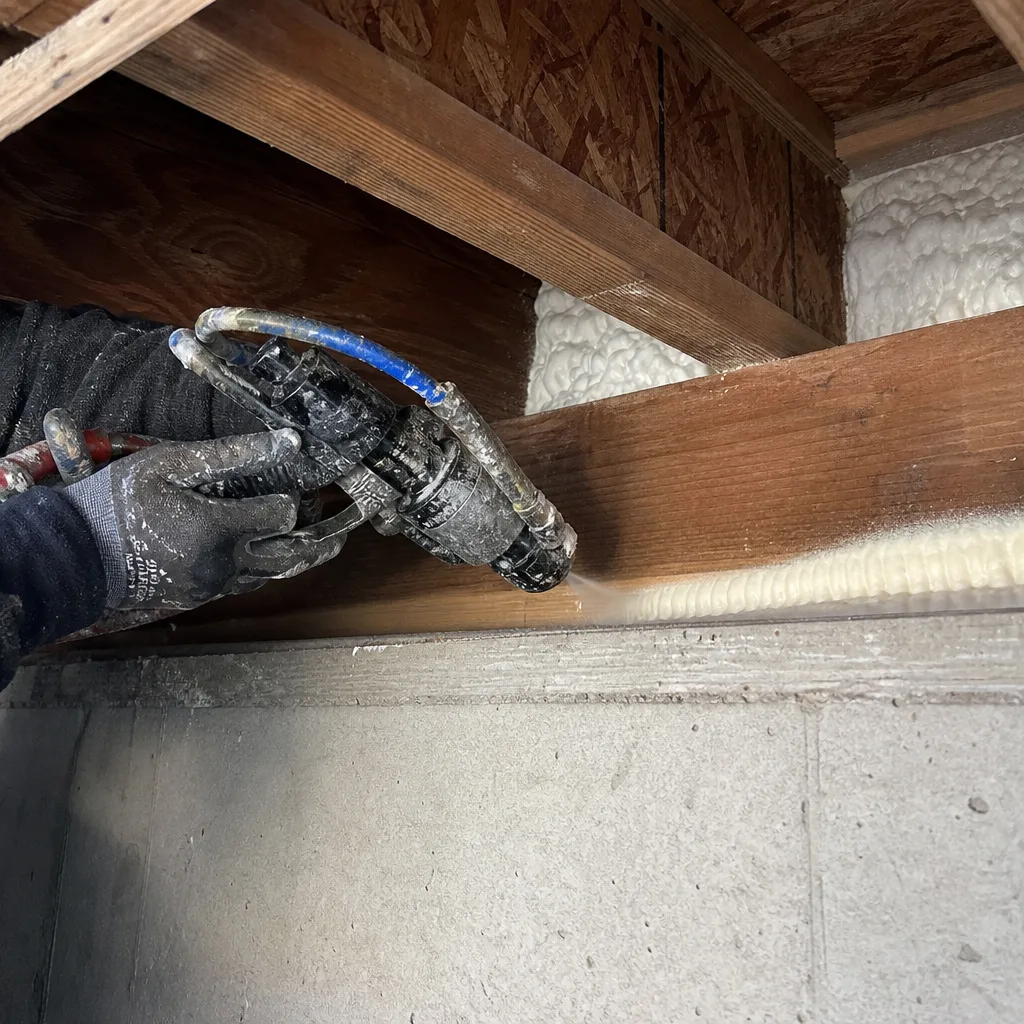
Spray Foam Attic Insulation in Studio City usually means working in a space that isn’t there. The flats around Ventura Blvd have conventional attics in 1940s – 60s stucco ranches and postwar bungalows, where open-cell foam at R-38 to R-49 will air-seal and insulate a vented attic. But climb south of Ventura into the hills, and “attic” becomes a sloped ceiling cavity with exposed rafters and maybe a skylight well. We apply foam from scuttle access and skylight openings because there’s nothing to stand in.
Typical attic jobs in Studio City run $1,800 to $4,600. Homes with vaulted ceilings and no attic cavity often run higher because access drives labor.
Cathedral Ceiling Retrofit
Post-and-beam homes from the 1950s and 60s have ceilings that follow the roofline. Closed-cell foam goes against the roof deck or ceiling cavity from below. The thermal break sits at the rafter line, which is where the heat actually moves. That’s the difference between a foam job that works and one that just fills space.
Roof Deck Applications
When there’s no interior access, we set foam over the roof deck from above. In the south hills’ wildfire severity zones, this is where closed-cell foam earns its place. The assembly gets a continuous air barrier plus resistance to ember contact at the deck line, not just the R-value label.
Spray Foam Wall Insulation in Studio City
Spray Foam Wall Insulation in Studio City splits into two scenarios: retrofit work in the older stucco walls of the flats and new construction or gut-renovation work in the hills. For 1940s – 60s stucco ranch walls, we typically inject open-cell or blow in a hybrid assembly depending on what the wall cavity can handle. For hillside remodels where stud bays are open, closed-cell foam gives R-7 per inch and adds structural shear, which matters on a hillside.
Wall retrofit pricing in Studio City generally lands between $2,300 and $6,800. New-construction wall foaming inside opened stud bays runs on the lower end per square foot.
Remuddled Hillside Additions
Many Studio City hillside homes have been expanded over decades, often with mismatched framing and inconsistent cavity depths. We see walls where the 1961 original meets a 1987 addition and a 2005 bump-out. The foam spec has to account for those transitions, or the air barrier breaks at the seam.
Stucco Wall Injection for the Flats
On the Ventura Blvd flats, stucco ranch walls from the 1940s and 50s rarely have decent insulation. We inject slow-rise open-cell through small ports drilled in the exterior. The ceiling is sealed. The wall cavity is filled. The energy profile changes immediately, and we don’t have to open the wall.
Trusted Brands We Service in Studio City
We stock and install Icynene and Demilec spray foam, the two brands we trust most for closed-cell performance in wildfire-adjacent assemblies. CertainTeed covers the fiberglass side when a hybrid attic spec makes more sense. Rockwool mineral wool stays on our trucks for Studio City clients who want fire resistance and sound dampening alongside thermal performance, because those homes sit in high severity zones where ember-resistant material choices are part of the conversation. No brand loyalty. Just the right material for the wall or ceiling in front of us.
Common Spray Foam Insulation Problems We See in Studio City Homes
- Foam over knob-and-tube wiring. Older hillside homes still have knob-and-tube-era circuits in cathedral ceilings. Spray foam encasing that wiring becomes a code and safety issue in a cavity with no attic to inspect later. We flag it every time before foam goes in.
- Unsealed recessed can gaps. Studio City’s mid-century homes have recessed cans everywhere. Foam sprayed over unsealed can gaps traps heat around the fixture and cuts the thermal break. We seal the gaps first, then foam.
- Open-cell foam in wildfire-zone assemblies. The south hills push toward closed-cell foam for ember resistance and ignition resistance at the deck line. Some contractors spec open-cell because it’s cheaper, but that’s the wrong wall for a fire-exposed hillside home.
- R-value-only foam jobs on awkward geometry. Flash-and-fill or spray jobs that hit a flat R-value target without addressing the rafter, skylight, and beam framing leave thermal bridges that radiate San Fernando Valley heat straight into the living space. The framing details are the job in Studio City.
Pricing for Spray Foam Insulation in Studio City, CA
Attic foam retrofits in the flats start around $2,100 and climb to $5,800 for larger ranch homes. Cathedral-ceiling work in the hills runs $4,200 – $9,600 because access, scaffolding, and the closed-cell product all cost more. Wall injection jobs land between $2,300 and $6,800. The exact number depends on cavity access, the foam type (closed-cell runs about $1.25 – $2.50 per board foot installed, open-cell about $0.55 – $1.15), and whether we’re working from scuttle access, skylight openings, or roof-deck placement. Call (866) 271-1602 and we’ll give you a straight quote for your specific roofline.
We Also Serve Cities Near Studio City
From Studio City, our crews work the surrounding neighborhoods: North Hollywood, Universal City, Sherman Oaks, and West Hollywood. A lot of those homes share the same mid-century bones and the same attic-less hillside problems. If you’re in one of those areas, we’ll bring the same multi-brand, application-matched approach we use across Studio City.
Serving Studio City, CA — Our Local Coverage Area
We’re based in the Studio City area and know this community well. Use the map below to see our service coverage — if you’re nearby, we can almost certainly help.
FAQs About Spray Foam Insulation in Studio City
Yes. We work from scuttle access, skylight openings, or the roof deck directly. Closed-cell foam is typically set against the cathedral ceiling cavity from below, after we flag any knob-and-tube-era wiring and seal recessed can gaps. The job is slower, but it’s standard practice for us in the south hills. Call (866) 271-1602 to walk through your roofline.
Closed-cell spray foam does. It creates an air barrier at the roof deck and resists ember contact better than open-cell or blown-in fiberglass in a fire-exposed assembly. For homes off Coldwater, Laurel Canyon, or Mulholland, we lean toward closed-cell for the deck line and pair it with fire-resistant detailing where the roof meets the wall.
Blown-in fiberglass or cellulose fills a standard vented attic quickly and cheaply. Spray foam air-seals the ceiling plane and the wall cavities, which matters in older stucco ranches with leaky framing and no vapor control. If the attic is accessible, blown-in may be enough. If the home has vaulted sections or open wall cavities, foam is the stronger thermal fix. We carry both, so we’ll spec what the house actually needs.
Yes, but only if those gaps are sealed before the foam goes in. Spray foam will fill the cavity, but unsealed can gaps and skylight wells still leak heat around the fixture. We seal the gaps first, then foam the surrounding cavity so the thermal break is continuous. It’s a detail most crews skip near Studio City, and it’s the detail that determines whether the room actually cools down.
If the roof membrane is sound and the ceiling plane is intact, a cavity-fill retrofit usually makes sense. If the roof deck has rot, the skylights leak, or the wiring needs replacing, repair comes first. We’ve foamed enough 1960s post-and-beams off Coldwater Canyon to tell you which situation you’re in after one look. Call (866) 271-1602 and we’ll come out.
Written by Noel Arredondo, Owner at Fontana Insulation, serving Studio City and the San Fernando Valley.