
Fast, Reliable Spray Foam Insulation Across Shadow Hills
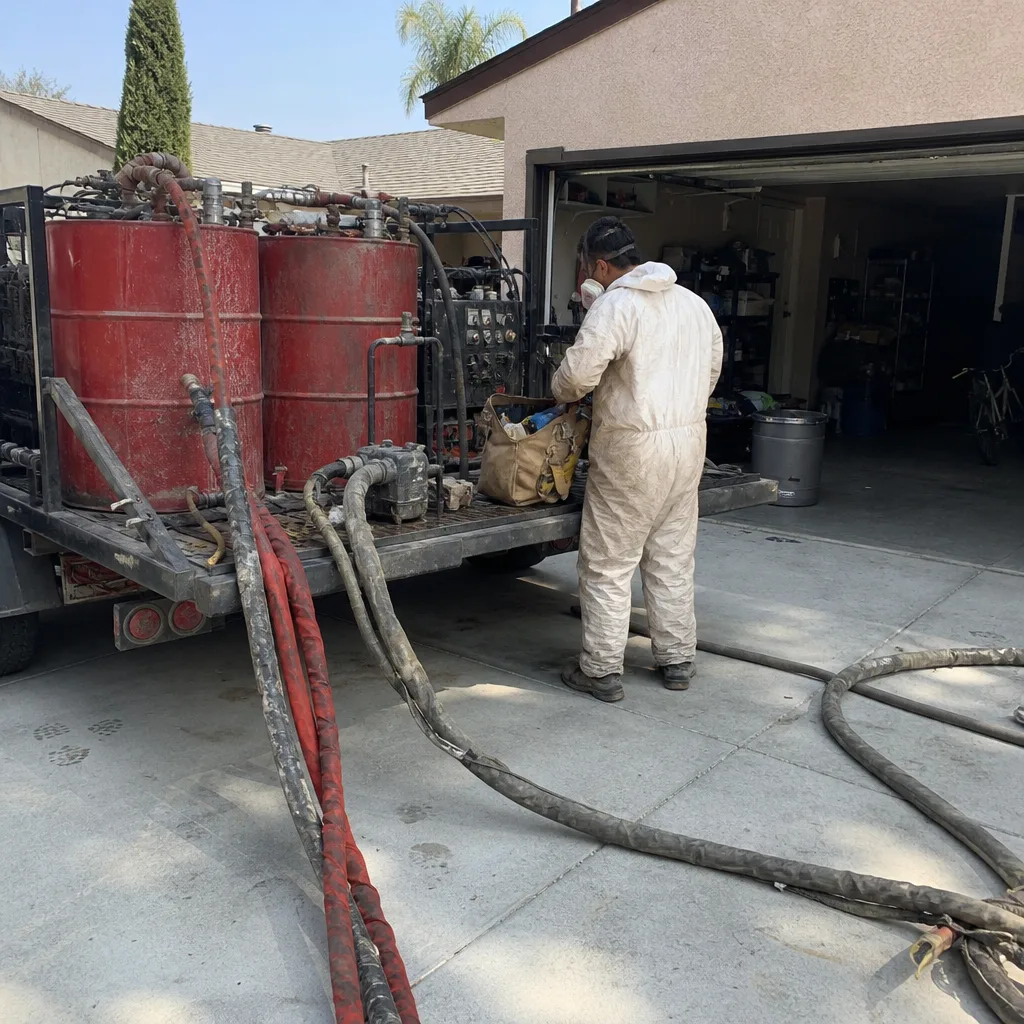
Spray foam insulation in Shadow Hills typically runs $2.40 to $7.50 per square foot installed, depending on open-cell versus closed-cell and whether we’re sealing a wall cavity, rim joist, or roof deck. Most Shadow Hills jobs are completed in one to two days because our crews stage equipment from Fontana and know the Verdugo foothills routes well. We work on ranches, mid-century custom homes, additions, and the outbuildings that most flatland contractors never bother to quote. Need a number specific to your property? Call (866) 271-1602 for a free estimate and we’ll walk the site with you.
Why Fontana Insulation Is Shadow Hills’s Preferred Spray Foam Insulation Company
Noel Arredondo built Fontana Insulation around a simple idea: carry the material that fits the job, not the material that’s easiest to stock. That matters in Shadow Hills, where some projects call for open-cell Icynene in a vaulted ceiling and others demand closed-cell Demilec around rim joists. We don’t push one foam chemistry on every home. We look at the framing, the sun exposure, the existing insulation, and the way you actually use the building. That’s the difference between a quote and a recommendation.
We’ve worked on properties off Stonehurst Drive, along Wheatland Avenue, and throughout the 91040 corridor long enough to know the housing stock. A 1960s ranch on a horse lot isn’t the same job as a 1980s addition on a hillside. Neither is a tack room with unvented rafters. Our crews have seen both, and we bring the right foam for each. Property owners in Shadow Hills call us because we quote the full scope, including detached barns and converted garages, instead of pretending those structures don’t exist.
Fontana Insulation carries eight insulation brands across four material categories. For spray foam specifically, that means Icynene and Demilec, two of the most performance-tested open-cell and closed-cell foams in North America. We’re an authorized installer for both. We also stock Rockwool, CertainTeed, Johns Manville, and Knauf for hybrid jobs where foam isn’t the whole answer. If your attic needs air sealing plus a mineral wool top layer, one crew handles it all. No subcontractors. No handoffs.
Spray Foam Wall Insulation in Shadow Hills
Spray Foam Wall Insulation in Shadow Hills is the most direct way to fix drafty walls in older ranch homes and additions that were built before continuous insulation was standard practice. Most of this work runs $2.40 to $5.20 per square foot for open-cell, and $3.25 to $7.50 for closed-cell, depending on stud bay depth and access. We spray into open wall cavities during remodels or into wall interiors using injection techniques when the drywall stays up. The goal is an air seal, not just R-value. In Shadow Hills, where afternoon temperatures on the Sunland side routinely push past 100°F, that air seal is what stops heat from bleeding through every seam and outlet.
Open-Cell for Interior Walls
Open-cell foam expands to fill irregular cavities and does a better job dampening sound between rooms. That’s why we recommend it for bedroom walls, home offices, and any wall shared between living space and a garage. In Shadow Hills, we’ve used Icynene open-cell in converted garage walls where the original framing left gaps you could see daylight through.
Closed-Cell for Exterior Walls and Flood Zones
Closed-cell foam adds structural rigidity and acts as a vapor retarder. For exterior walls, unvented attics, and any area where moisture from irrigation or the foothill drainage could be a concern, we lean Demilec closed-cell. It’s denser, and it holds its R-value even if the wall cavity gets damp. On a hillside lot in Shadow Hills, that extra resilience is worth the higher material cost.
Rim Joist Spray Foam in Shadow Hills
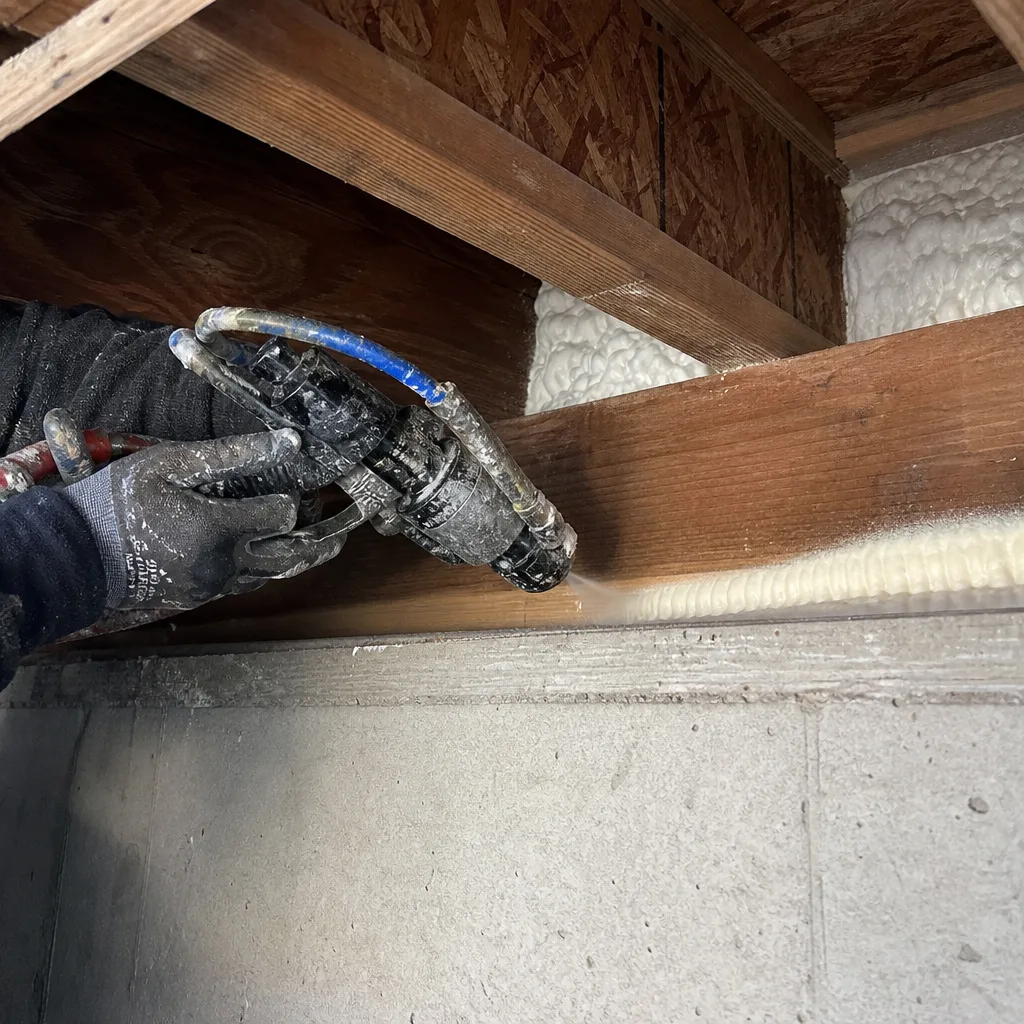
Rim Joist Spray Foam in Shadow Hills targets the band board where your floor framing meets the foundation, which is the single biggest air leak in most of the ranch homes and raised-foundation houses here. A typical rim joist job in Shadow Hills runs $1,200 to $3,800 for a full perimeter, depending on crawlspace depth and accessibility. When we seal rim joists with closed-cell Demilec, we’re stopping the stack effect that pulls hot valley air into your crawlspace in summer and cold air through your floors in winter. This one job usually fixes the rooms that never hold temperature.
Closed-Cell on the Band Board
Closed-cell foam is the right choice for rim joists because it won’t absorb groundwater splash or wick moisture from the soil. In Shadow Hills, where many properties sit on sloping lots with crawlspaces that run from 18 inches to four feet tall, the material has to perform in intermittent damp conditions. A 2-inch pass of Demilec gives you about R-14 and a complete air seal.
Pairing Rim Joist Sealing with Crawlspace Work
If the crawlspace is vented and your floors feel cold in December, we often recommend sealing the rim joists first and then evaluating whether the crawlspace itself needs encapsulation or a vapor barrier. That sequencing saves money. There’s no point conditioning a crawlspace that’s leaking air through every joist bay. We’ve done this often enough on Wheatland Avenue and the streets running off La Tuna Canyon that we can usually quote it from photos before we even schedule the site visit.
Trusted Brands We Service in Shadow Hills
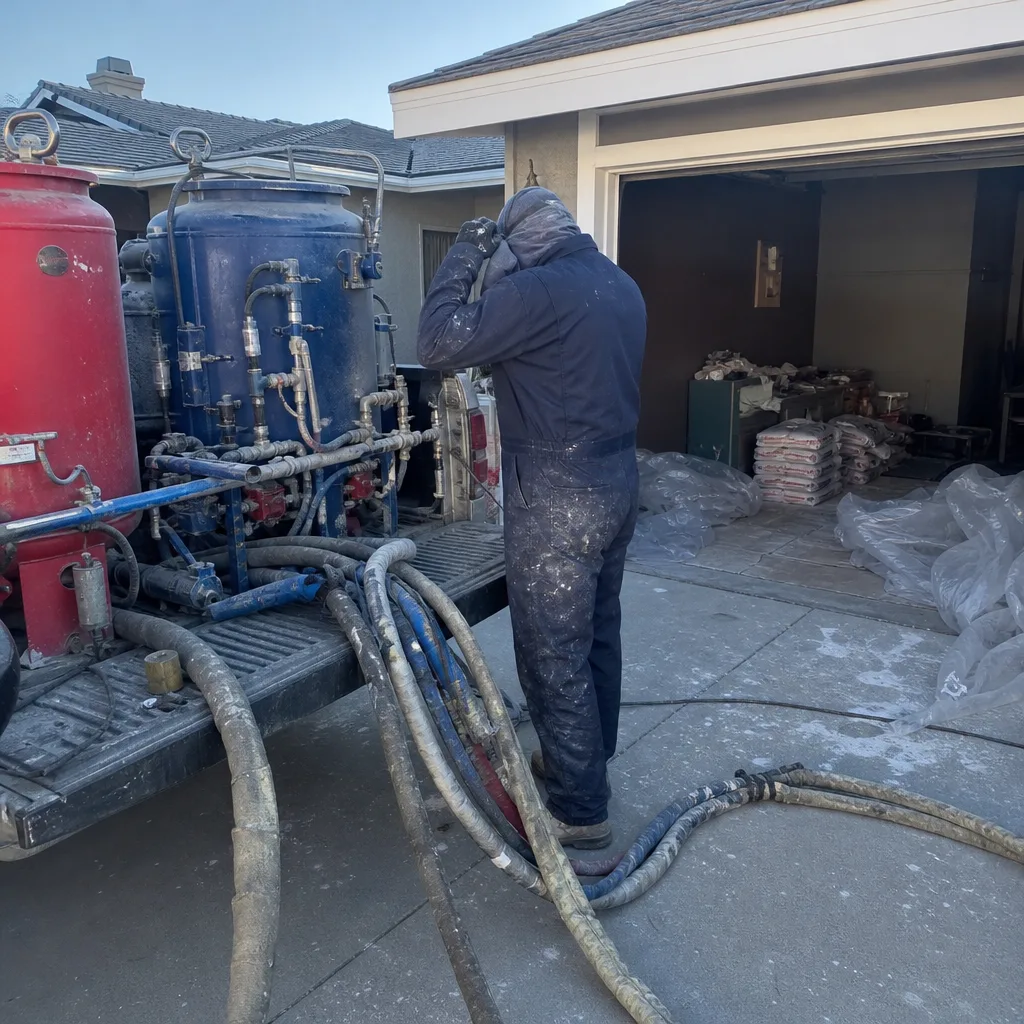
We carry Icynene and Demilec spray foam because they’re two of the most field-tested foam brands on the market, and we stock supporting materials from Rockwool, CertainTeed, Johns Manville, and Knauf. For Shadow Hills customers, that means we’re not waiting on a distributor to ship product when we hit a material switch mid-job. We keep open-cell and closed-cell kits on our trucks, along with the thermal barrier coatings required for foam left exposed in attics. If your project calls for a hybrid approach, like spray foam in the rim joists plus Rockwool in the stud bays, we can complete it in one trip. More on our full material lineup is on the Spray Foam Insulation page.
Common Spray Foam Insulation Problems We See in Shadow Hills Homes
- Foam delamination in old barns and tack rooms. Dust, hay residue, and years of animal oil settle into the wood. If the substrate isn’t prepped, the foam peels away within a season or two. We clean and dry every surface before spraying, and we use closed-cell Demilec for outbuildings because it bonds more aggressively than open-cell.
- Unvented attics sprayed without a thermal barrier. In Shadow Hills, an unvented attic can hit 140°F in August. Foam left exposed without a proper ignition barrier is both a safety problem and a durability problem. We always apply a thermal barrier coating when foam remains exposed in an attic space.
- Thin foam in vaulted ceilings. Mid-century ranches here often have vaulted ceilings with shallow rafter bays. A contractor spraying a thin pass to save material leaves thermal bridging along every rafter. We can notch-spray or use a combination of closed-cell foam plus rigid board to hit the R-value the climate actually demands.
- Skipped rim joists on raised foundations. Most Shadow Hills homes built before 1980 sit on raised foundations, and the rim joists were never sealed. We see this on nearly every retrofit. Closing that gap with spray foam is the highest-return air-sealing step on the property, and it’s usually the one the last contractor ignored.
Pricing for Spray Foam Insulation in Shadow Hills, CA
Here’s where the numbers land for most Shadow Hills jobs. Wall cavities: $2.40 to $5.20 per square foot for open-cell, $3.25 to $7.50 for closed-cell. Rim joist perimeter: $1,200 to $3,800. Unvented attic or roof deck: $4.00 to $8.25 per square foot depending on rafter depth and whether a thermal barrier is needed. Tack rooms and barns: $1,800 to $6,000 depending on surface area and how much prep the wood needs. The big cost drivers in Shadow Hills are access on hillside lots, prep work on aged dusty wood, and the need for closed-cell rather than open-cell in moisture-prone spaces. We never quote a foam job without seeing the framing, because guessing on thickness wastes your money. Call (866) 271-1602 and we’ll give you a written estimate based on the actual structure.
We Also Serve Cities Near Shadow Hills
Our crews run the 210 and Foothill corridors daily, so we also handle spray foam projects in Sunland, Tujunga, La Crescenta-Montrose, and Burbank. If you’re in Shadow Hills or one of these neighboring communities, the same materials and the same in-house crew apply. You can find broader coverage details on our Shadow Hills service page, or call us directly for site-specific scheduling.
Serving Shadow Hills, CA — Our Local Coverage Area
We’re based in the Shadow Hills area and know this community well. Use the map below to see our service coverage — if you’re nearby, we can almost certainly help.
FAQs About Spray Foam Insulation in Shadow Hills
Yes, but only if the foam is closed-cell and applied at the correct thickness to serve as both the air barrier and the vapor retarder. In Shadow Hills’s climate, we aim for a minimum R-22 closed-cell layer on the underside of the roof deck for unvented attics. That prevents warm, moist air in the home from reaching the cooler roof sheathing and condensing. Open-cell foam shouldn’t be used as the only line of defense in an unvented attic here. Call (866) 271-1602 and we’ll tell you exactly what your roof framing can support.
We spray closed-cell Demilec foam between the rafters and studs of tack rooms and barns, then seal any rim joist or sill plate gaps. In a ranch off Stonehurst Drive, we sprayed Icynene in a tack room that had been baking in the afternoon sun and causing feed to spoil. We also sealed the converted garage rim joists with Demilec, and the owner reported the tack room stayed 15°F cooler and the garage lost its drafts. Feed, leather, and metal equipment all last longer when the temperature stops swinging between 100°F days and 40°F nights. Give us a call at (866) 271-1602 for a site-specific quote on your outbuildings.
Usually, it’s a combination of closed-cell spray foam against the roof deck and a layer of open-cell or mineral wool inside the rafter bays, depending on depth. The vaulted ceilings in mid-century Shadow Hills ranches often have 2×6 or 2×8 rafters that can’t hold enough open-cell foam to hit the R-value needed for this sun exposure. We can also install a radiant-barrier-facing product under the foam for the strong roof sun load. The exact assembly depends on whether your ceiling is already finished or the roof is being replaced. Call us at (866) 271-1602 and we’ll review your framing with you.
In most converted garages we see in Shadow Hills, the old insulation is either missing entirely or it’s settled fiberglass batts from decades ago. If there’s old batt insulation in the wall cavities, we remove it before spraying so the foam can bond directly to the sheathing, which is essential for both air-sealing and for preventing moisture traps. If the old material is contaminated with rodent droppings or has been wet at some point, removal isn’t optional. We handle removal, disposal, and the foam application in one job so you’re not coordinating multiple contractors. Call (866) 271-1602 and we’ll inspect what’s in the walls before we quote.
Direct, brutal sun on roof decks is one of the reasons spray foam is the right material for Shadow Hills. Closed-cell foam applied under the roof deck stops radiant heat before it ever reaches the attic or the living space. The sun exposure here, especially on the south- and west-facing slopes off La Tuna Canyon, will age a fiberglass batt installation noticeably within five years. Foam is not affected by UV because it’s never exposed to light once installed. If you want the roof deck to absorb less heat, we can also add a low-emissivity coating in the attic assembly. Call (866) 271-1602 to get an honest read on what your roof needs.
When you’re ready to talk about your property in Shadow Hills, whether it’s the main house, a converted garage, or a barn that needs attention, call (866) 271-1602. We’ll walk the site with you, tell you which material fits, and give you a written estimate you can actually compare. No brand loyalty, just the right insulation for the structure you own.
Written by Noel Arredondo, Owner at Fontana Insulation, serving Shadow Hills and the surrounding foothill communities with spray foam, attic, and blown-in insulation.