
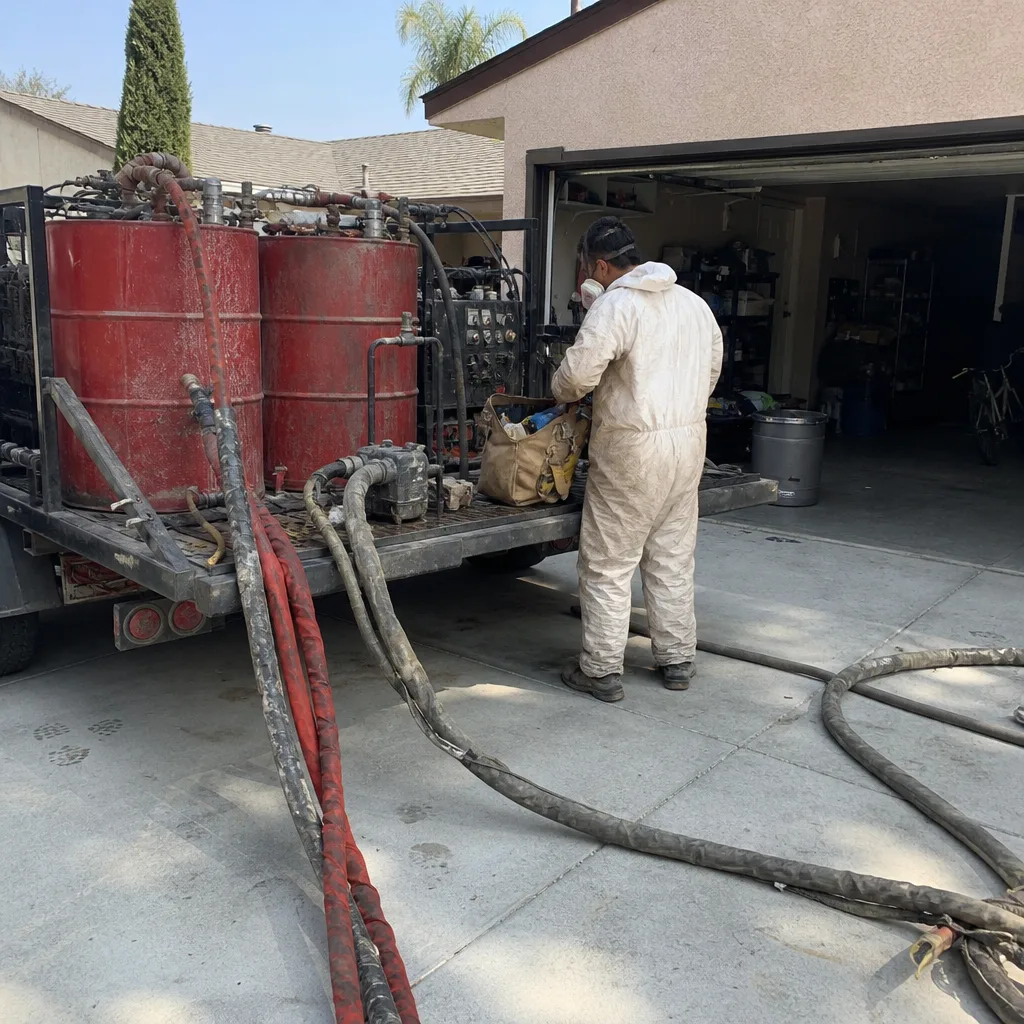
Fast, Reliable Spray Foam Insulation Across San Marino
Spray foam insulation in San Marino typically costs $2,800 – $6,400 for a full attic retrofit, with most jobs completed in one to two days. We know this market because we work in it constantly: the clay-tile roofs, the deep attics, the design-review process that every homeowner has to navigate. If you’re dealing with a hot upstairs in August or an HVAC system that cycles endlessly, call our Spray Foam Insulation team at (866) 271-1602. We’ll walk you through what your home actually needs, not what’s easiest for us to install.
Why Fontana Insulation Is San Marino’s Preferred Spray Foam Insulation Company
San Marino homeowners call us because we understand that an insulation job here is never just an insulation job. It’s a tile lift. It’s a permit review. It’s a question of whether the foam will interact with lath-and-plaster walls that have been there since 1928. Our crews have worked on homes off Huntington Drive, around Lacy Park, and through the Spanish Colonial Revival streets near the Huntington Library. None of that work was cookie-cutter, and none of it should have been.
Noel Arredondo leads every project with a simple rule: the material recommendation follows the house. We carry eight insulation brands across four material categories, so when we suggest Icynene open-cell foam for a San Marino attic, it’s because that’s what the roof deck, the tile underlayment, and the homeowner’s cooling costs actually call for. Not because it’s the only thing on the truck.
We’re authorized installers for both Icynene and Demilec, two of the most performance-tested spray foam brands in North America. That matters in a city where building inspectors check everything and a failed inspection means removing and re-spraying. We get the paperwork right the first time.
Spray Foam Insulation Contractors in San Marino
Spray Foam Insulation Contractors work on a different type of home here than they do in most of Southern California. San Marino’s housing stock runs toward large custom builds from the 1920s through the 1950s, plus a wave of later rebuilds. Many have original lath-and-plaster walls and deep, vented attics under clay tile or slate. A contractor who only knows how to spray a standard framed attic is going to make expensive mistakes on a 1930s Mediterranean off Orlando Road.
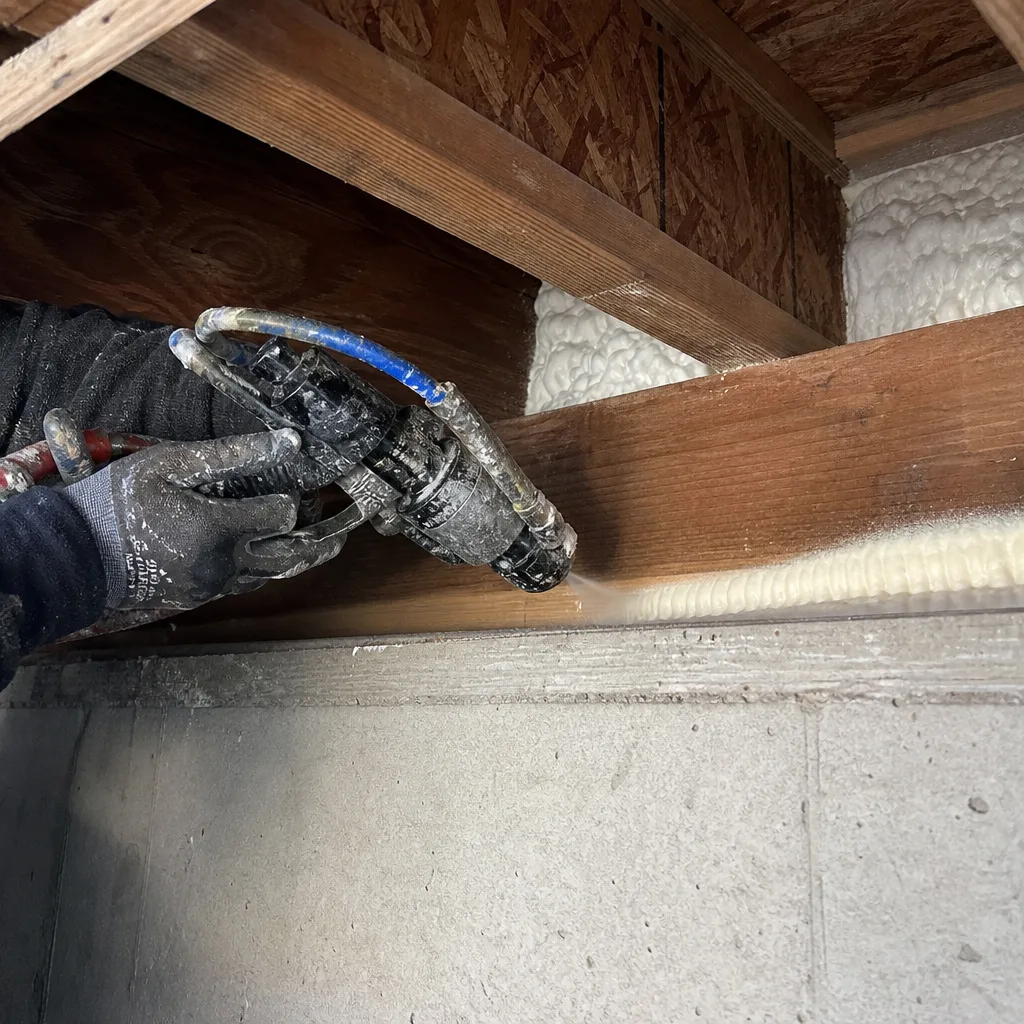
What we do: assess the roof deck, check the tile underlayment clearance, review what the city’s design-review process expects, and then recommend the right foam density and application method for your specific structure. Closed-cell for structural strength and air-sealing on rim joists. Open-cell where you need breathability and sound dampening. The call depends on the house.
Permit-Savvy Installation
Exterior penetrations in San Marino often require design review before work begins. That includes insulation vents and attic access points. We’ve handled enough of these to know what the city looks for, and we sequence the job so nothing gets sprayed until approvals are in place.
Tile-Safe Retrofit Methods
Spray foam applied too thick against clay-tile underlayment traps heat and can warp the roof deck. That’s a failure mode that almost never shows up under asphalt shingles, but it’s a real risk here. We use low-rise foam and careful lift-and-reset work to keep the original roofing intact.
Spray Foam Attic Insulation in San Marino
Spray Foam Attic Insulation in San Marino is the single most effective upgrade for the city’s hot-summer Mediterranean climate. The sun beats down on those clay-tile roofs from June through October, and the attic becomes a heat sink that pushes into upstairs bedrooms and forces multi-zone HVAC systems to work harder than they should. A properly applied roofline foam layer in the 91108 and 91118 area runs roughly $3,200 – $5,800 depending on attic volume and access.
Most San Marino attics we see are deep and vented, built for an era when nobody air-conditioned the whole house. Spray foam at the roofline converts that space into a conditioned thermal boundary. The difference in upstairs comfort is immediate, especially on streets like Winston Avenue where the afternoon sun hits the west-facing roof planes hard.
Roofline vs. Floor Application
Roofline application seals the attic and keeps the ductwork inside the conditioned envelope. Floor application is simpler but leaves the attic hot, which puts your ducts under thermal stress all summer. For most San Marino homes with attic-mounted air handlers, roofline is the smarter long-term play.
Duct and HVAC Integration
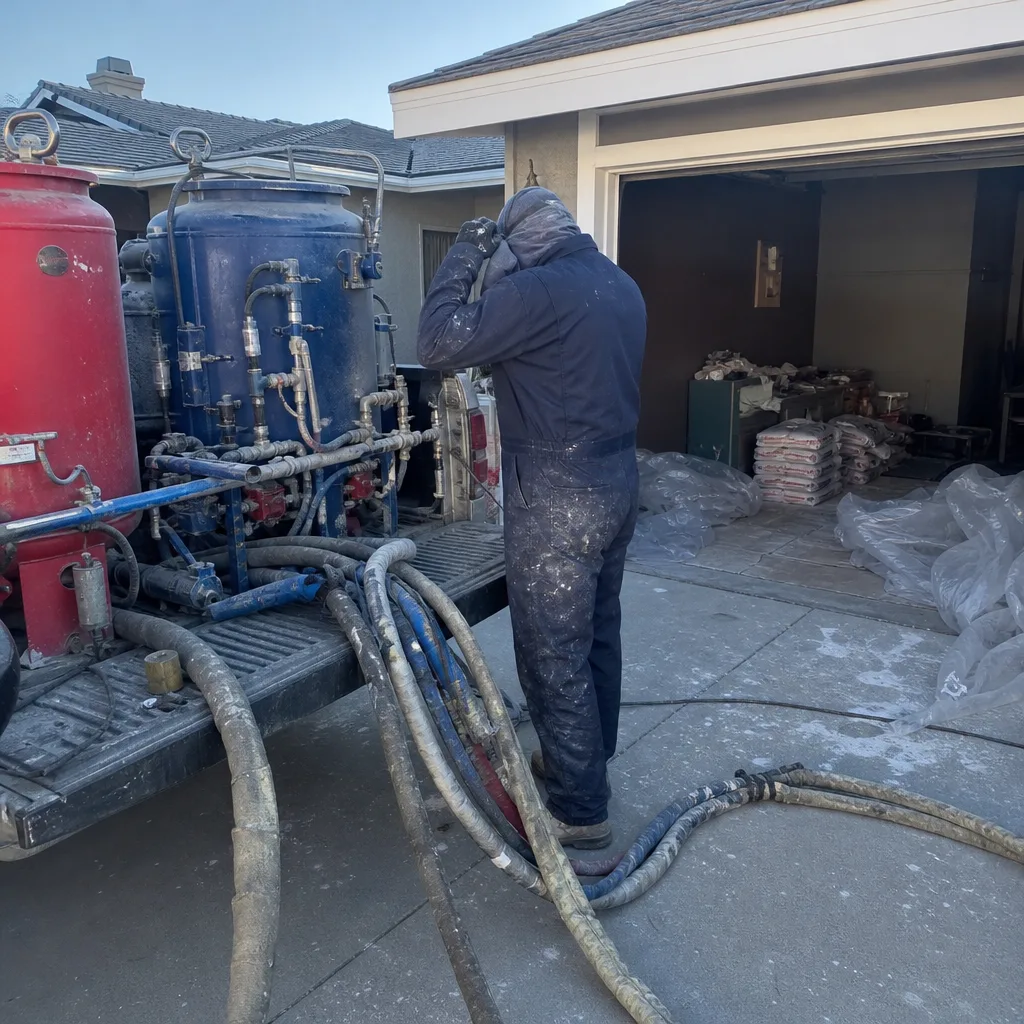
When we spray a San Marino attic, we look at how the foam connects to the existing HVAC layout. Sealing the attic often changes airflow dynamics, and the results are better when the insulation and the ductwork are treated as one system rather than two separate jobs.
Trusted Brands We Service in San Marino
We carry Icynene and Demilec spray foam because both have long track records in North American residential applications, and San Marino homeowners deserve products that have been tested in real houses over real decades. We also keep Rockwool mineral wool on hand because the foothill wildfire exposure around the San Gabriel Mountains has pushed more homeowners toward non-combustible insulation for specific wall and rim joist applications. CertainTeed fiberglass rounds out the lineup for the knee walls and areas where foam makes less sense. Local parts and materials are stocked for fast turnaround across San Marino, including 91108 and 91118.
Common Spray Foam Insulation Problems We See in San Marino Homes
- Overspray against tile underlayment: Contractors who don’t work in San Marino often spray foam too thick under clay tiles. The trapped heat can warp the roof deck, and the fix is expensive. We budget tile lifting and resetting into every quote.
- Cracked plaster keys from wall cavity foam: Lath-and-plaster walls from the 1920s and 1930s are fragile. Over-pressurized foam can pop the plaster keys and crack original finish details. Slow fill rates and low-pressure application are non-negotiable here.
- Design review rejections on vent penetrations: San Marino’s review process catches insulation vents and attic access changes that would pass unnoticed in neighboring cities. Foam that’s applied before permits clear often has to be removed and re-sprayed.
- Tile breakage on access lifts: Clay tile is brittle after 80 years in the sun. Every local installer learns to budget for breakage on the lift, because replacing a few tiles that cracked during access work is far cheaper than an insurance fight later.
Pricing for Spray Foam Insulation in San Marino, CA
The numbers you’ll see from contractors in San Marino vary more than they should. A standard attic roofline spray with open-cell foam runs $3,200 – $5,800. Closed-cell jobs, which include rim joist and wall cavity work, land between $4,500 and $7,200. Garage ceiling applications are typically $1,200 – $2,400. What moves the price: attic volume, tile lift complexity, whether the city requires design review, and whether your home has original lath-and-plaster walls that need slow-fill foam instead of standard application. Call (866) 271-1602 for a free estimate that covers your actual house, not a generic square footage chart.
We Also Serve Cities Near San Marino
Fontana Insulation handles spray foam work across the San Gabriel Valley. Our service area includes San Gabriel, East San Gabriel, Alhambra, and East Pasadena, along with San Marino itself. If you’re near the border in one of those neighboring cities, the same crew and the same material selection process apply.
Serving San Marino, CA — Our Local Coverage Area
We’re based in the San Marino area and know this community well. Use the map below to see our service coverage — if you’re nearby, we can almost certainly help.
FAQs About Spray Foam Insulation in San Marino
No, not when the installer lifts and resets tiles before spraying at the roofline. The risk comes from contractors who spray against the underside of the deck without proper clearance. We lift the tiles, access the deck, and use low-rise foam that leaves the underlayment breathing. Tile breakage on the lift is a real cost line item, and we include it in every San Marino quote rather than surprising you with it. Call (866) 271-1602 and we’ll walk through your specific roof type.
Yes, in most cases. Exterior penetrations like insulation vents and attic access changes go through San Marino’s design-review and building-permit process. We sequence the job so permits clear before any foam is applied. Skipping this step is how homeowners end up paying to remove and re-spray when the city inspects. We prepare the paperwork as part of the project, not as an afterthought.
Yes, but only with low-pressure application and slow fill rates. Original lath-and-plaster walls from the 1920s through the 1950s are prone to plaster key failure when foam expands too aggressively. Our crews use controlled flow rates that won’t pop the keys or crack the finish details. For some historic interiors, we’ll recommend mineral wool instead, which delivers solid R-value and fire resistance without the expansion pressure. Call (866) 271-1602 for a material recommendation specific to your walls.
Icynene open-cell foam handles the hot-attic problem well because it seals the roofline against radiant heat transfer from those clay-tile roofs. For wildfire exposure near the foothills, Demilec closed-cell or Rockwool mineral wool offers better non-combustible performance in select wall and rim joist locations. Neither brand is automatically right for every home. We carry both and recommend based on your specific roofline clearance, attic volume, and proximity to the foothill interface. Call (866) 271-1602 and we’ll explain the trade-offs without pushing one product.
Done correctly, spray foam raises resale value because San Marino buyers expect actual energy performance, not just architectural charm. Done poorly, it damages historic character and can trigger removal costs at inspection. The key is installing foam that respects the original structure: no visible changes to rooflines, no cracked plaster, no design-review violations. Our permit-savvy approach means the work is documented and compliant, which protects you if you sell. Call (866) 271-1602 for a free estimate and we’ll include the paperwork so the next buyer sees a properly insulated home, not a problem to fix.
Call Fontana Insulation for Spray Foam in San Marino
If your San Marino home still has the original 1940s attic insulation and your upstairs runs ten degrees hotter than the rest of the house, it’s time to talk. We’ll assess your roof deck, your tile condition, your wall construction, and the city’s expectations, then recommend the foam or mineral wool option that actually fits. Free estimates. Permit paperwork included. No brand loyalty, just the right material for your home. Call (866) 271-1602 to schedule a site visit in San Marino.
Written by Noel Arredondo, Owner at Fontana Insulation, serving San Marino and the San Gabriel Valley with material-agnostic insulation solutions since the company’s founding.