
Fast, Reliable Spray Foam Insulation Across San Gabriel
Spray foam insulation in San Gabriel typically costs $1,800 to $6,400 depending on whether we’re foaming an attic roofline, filling open wall cavities, or air-sealing a rim joist. Most San Gabriel homes we work on are 1920s to 1950s stucco bungalows and ranch houses, so the real question isn’t just price, it’s whether the existing attic has degraded rock wool, whether the exterior walls have any cavity insulation at all, and how to get our equipment where it needs to go without disturbing knob-and-tube wiring. We know those houses. Call (866) 271-1602 for a free estimate and we’ll walk the attic and walls with you before quoting a dollar figure.
Why Fontana Insulation Is San Gabriel’s Preferred Spray Foam Insulation Company
Fontana Insulation is led by Noel Arredondo, and our approach in San Gabriel comes down to one thing: we carry eight insulation brands across four material categories, so we don’t have to force spray foam where another material would do better. That matters on older bungalows, because sometimes the right fix is foam at the roofline plus dense-packed cellulose in the walls. Sometimes it’s closed-cell in the rim joist and Rockwool in the garage ceiling. We make that call based on your house, not our inventory.
San Gabriel homeowners call us because we’ve worked the 91775, 91776, and 91778 ZIPs long enough to know what we’ll find behind the stucco: original board sheathing, empty wall cavities, and attics that hit 140°F by 3 p.m. We don’t flinch at knob-and-tube wiring or tight alley access. We plan around both. Our licensed and insured crew handles spray foam, attic insulation, and blown-in work in-house, so you’re not getting a subcontractor who’s never seen a 1940s Las Tunas Drive bungalow.
Spray Foam Insulation Contractors in San Gabriel
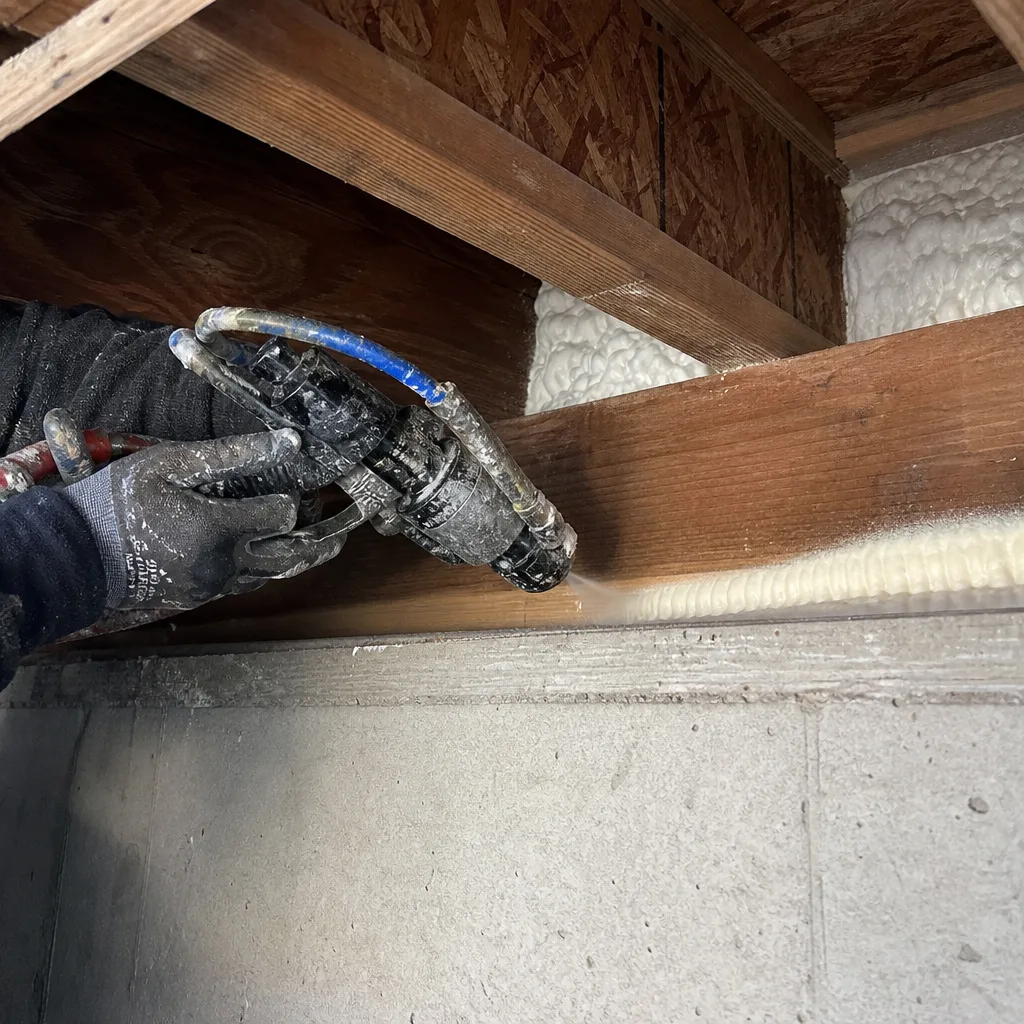
Spray Foam Insulation Contractors in San Gabriel deal with two very different jobs: new construction or gut-remodel work where walls are open, and retrofit work where we’re foaming through small access points into existing cavities. The first is straightforward. The second is where experience matters, because San Gabriel’s original board sheathing doesn’t forgive careless drilling.
A typical open-cell wall cavity fill in San Gabriel runs $1,800 to $3,200 for a single-story bungalow. Closed-cell, which adds structural strength and a vapor barrier, runs $3,500 to $6,400 for comparable square footage. The spread comes down to whether we’re dense-packing a few problem walls or air-sealing the entire thermal boundary.
Open-Cell Retrofit Work
On San Gabriel homes with original board sheathing, we often foam through small holes drilled at each stud bay and patch them to match. The foam expands into cavities that have been empty since the house was built. This is the single biggest comfort upgrade most San Gabriel bungalows will ever get.
Closed-Cell for Rim Joists and Garage Ceilings
Closed-cell spray foam costs more per board foot, but it’s the right tool where moisture and air intrusion concentrate: rim joists, garage ceilings under living space, and any area facing a crawlspace. On townhome and infill construction in 91775 and 91776, we use closed-cell where wall depth is limited and code requires higher R-value per inch.
Spray Foam Attic Insulation in San Gabriel
Spray Foam Attic Insulation in San Gabriel is the highest-impact upgrade for most of the homes we see, and the reason is simple: a 1920s to 1950s attic in the San Gabriel Valley regularly hits 140°F on summer afternoons, and that heat doesn’t stay in the attic. It pushes through the ceiling into the living space, forcing the AC to fight a losing battle all afternoon and evening.
Foaming the attic roofline in San Gabriel typically runs $3,800 to $6,000 for a 1,200 to 1,800 square-foot house. That includes air-sealing the top plates and any penetrations before we spray. The goal is a sealed attic that stops heat at the roof deck instead of letting it build up above your ceiling insulation.
Air-Sealing Before Foam, Every Time
We won’t foam over degraded rock wool and call it done. On a 1940s single-story stucco bungalow off Las Tunas Drive in 91775, our crew found zero cavity insulation in the exterior walls and only a thin, crumbling rock wool layer in an attic that hit 140°F-plus by mid-afternoon. We air-sealed the top plates and foamed the attic roofline, then dense-packed the wall cavities through the original board sheathing, dropping the homeowner’s late-afternoon cooling load without touching the knob-and-tube-era wiring runs.
Garage Ceiling Spray Foam
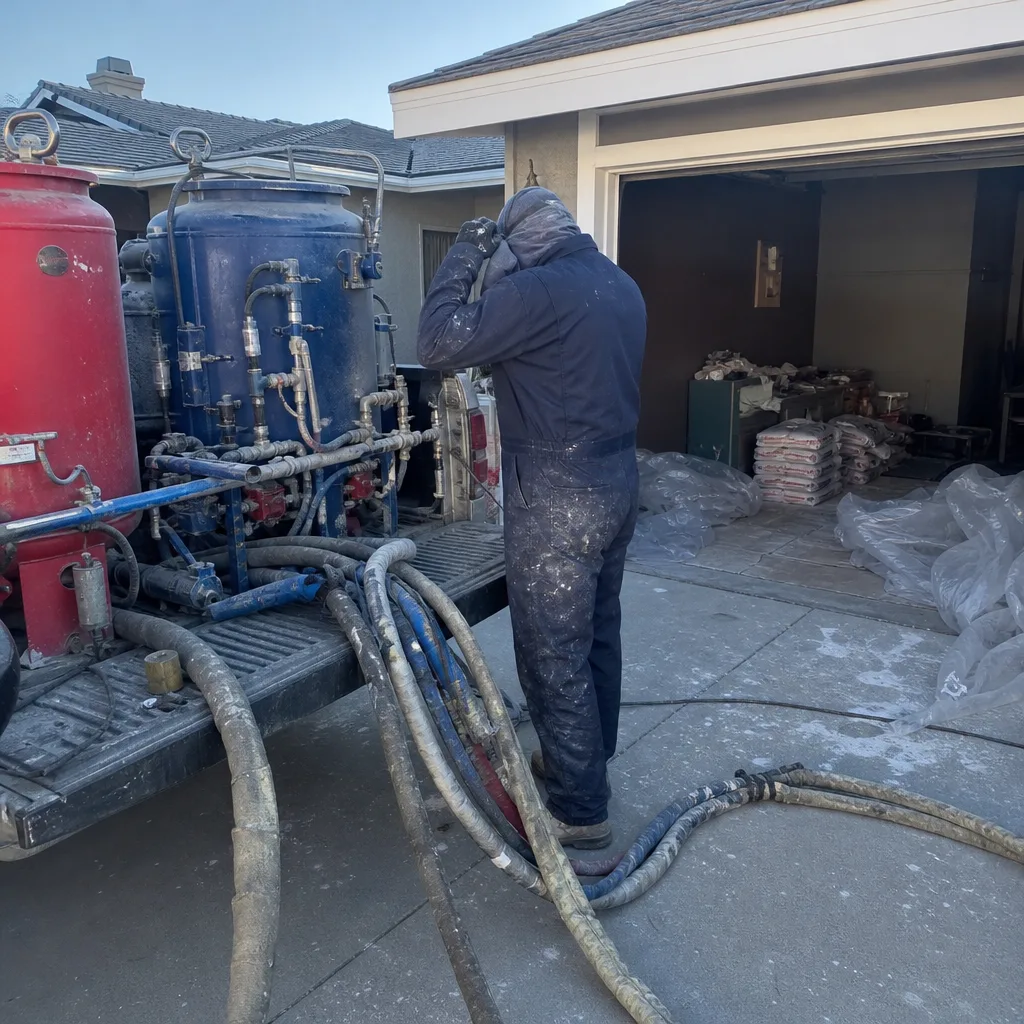
When a garage is attached or sits under living space, foaming the garage ceiling is one of the fastest ways to stop heat and fume migration into bedrooms above. San Gabriel’s older ranch homes often have this exact layout, and we handle the clearance and access issues that come with working in a tight, finished garage.
Trusted Brands We Service in San Gabriel
We’re authorized installers for Icynene and Demilec, two of the most performance-tested spray foam brands in North America, and we carry them alongside Rockwool and CertainTeed because each has a specific job in San Gabriel’s housing stock. Rockwool earns its place for garage ceilings and wall cavities where fire resistance and sound dampening matter more than maximum R-value per inch. CertainTeed fiberglass covers attic blow-in where a San Gabriel homeowner wants a strong warranty at a lower material cost. With eight brands in the lineup, the recommendation comes from your roofline, your wall depth, and your budget, not from what we happen to have on the truck.
Common Spray Foam Insulation Problems We See in San Gabriel Homes
- Foaming over degraded rock wool without air-sealing top plates first. In 91775 and 91776 attics, the old rock wool is often crumbling and uneven, but the real heat driver is the unsealed gap at the top plates. Foam without air-sealing traps moisture against the original board sheathing and still lets 140°F radiant heat push through the ceiling.
- Uneven closed-cell passes in tight alley-access garages. Many San Gabriel townhomes and infill garages have narrow alley approaches and almost no staging room. Crews not used to those constraints end up with thin spots in the foam that leak air and render the job half-effective.
- Skipping cavity checks on original board-sheathing stucco bungalows. If a San Gabriel wall was built before about 1950, there’s a strong chance it has no cavity insulation at all. A contractor who sprays only the accessible surfaces without checking the bays is doing surface work, not insulation work.
- Foaming rooflines without addressing knob-and-tube wiring. San Gabriel’s pre-WWII homes often still have active knob-and-tube runs through the attic. Foam applied directly over those conductors creates a fire hazard and code violation. The wiring needs to be assessed and routed or protected before we spray near it.
Pricing for Spray Foam Insulation in San Gabriel, CA
Here’s what San Gabriel homeowners should expect. Open-cell attic roofline foam on a typical 1,200 to 1,500 square-foot bungalow runs $3,800 to $5,200. Closed-cell rim joist and garage ceiling work runs $1,400 to $2,800 depending on the number of bays and access difficulty. Full wall cavity dense-pack on an uninsulated 1940s stucco house runs $2,400 to $4,800 depending on wall square footage and whether we’re drilling through stucco or working from inside. Every estimate accounts for San Gabriel’s specific access conditions, including alley parking, tight crawlspaces, and original board sheathing. Call (866) 271-1602 and we’ll walk the attic with you. Estimates are free.
Key Takeaways:
- San Gabriel attics hit 140°F; air-sealing the roofline matters more than adding R-value to the ceiling.
- A typical attic foam project in San Gabriel runs $3,800 to $6,000.
- Original board sheathing and knob-and-tube wiring are common here; we work around both.
- We carry Icynene, Demilec, Rockwool, and CertainTeed, among eight total brands.
We Also Serve Cities Near San Gabriel
Our crew regularly works across the San Gabriel Valley, and we schedule jobs in East San Gabriel, San Marino, Alhambra, and Rosemead the same week in most cases. If you’re on the edge of the 91775 or 91776 ZIP and wondering whether we cover your street, call (866) 271-1602 and ask. We also maintain a full Spray Foam Insulation service page with details on material selection and the brands we install.
Serving San Gabriel, CA — Our Local Coverage Area
We’re based in the San Gabriel area and know this community well. Use the map below to see our service coverage — if you’re nearby, we can almost certainly help.
FAQs About Spray Foam Insulation in San Gabriel
Attic spray foam matters more on a San Gabriel bungalow because the attic is where your house takes the biggest heat hit. A typical 1920s to 1950s attic here spikes above 140°F on summer afternoons, and that heat radiates through the ceiling into every room below. Walls deal with ambient air temperature, but the attic is a solar oven. Sealing and foaming the roofline stops that heat before it ever enters your thermal envelope. Call (866) 271-1602 and we’ll show you the temperature difference with a thermal camera.
Yes, we can spray foam a San Gabriel home with original board sheathing and knob-and-tube wiring, but the sequence matters. Wiring gets assessed and protected first, because foam directly against active knob-and-tube conductors is a fire risk and a code violation. We drill through the board sheathing at each stud bay, check the cavity, and foam from the outside or inside depending on access. The sheathing stays intact, and the foam fills what has been empty wall space for 70-plus years.
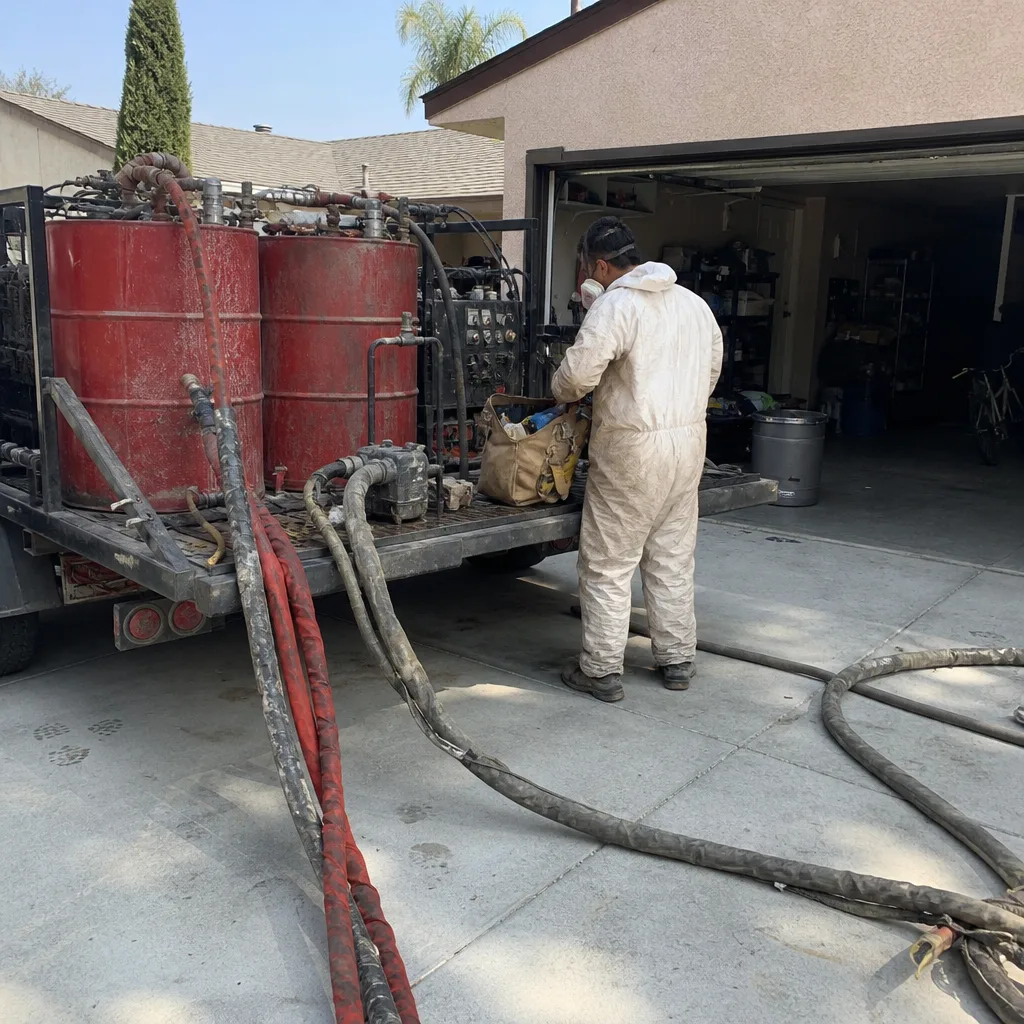
We handle tight alley access by scoping the site before the crew shows up. On San Gabriel townhome and infill jobs, we check alley width, parking restrictions, and where our truck and hose runs can physically reach. Our rigs are configured for residential alleys and narrow driveways, not just big open job sites. If parking on your street requires a permit, we’ll tell you in advance and work around it.
No, leftover rock wool in a San Gabriel attic usually does not need to be removed before spray foam, but it does need to be air-sealed over. We foam and air-seal around that degraded material rather than pulling it, which preserves the original board sheathing and stops the 140°F-plus heat migration common in 91775. Pulling old rock wool out often disturbs knob-and-tube runs and creates more problems than it solves. The correct order is air-seal first, then foam the roofline.
We install Icynene and Demilec spray foam, and we carry Rockwool and CertainTeed for the applications where they outperform foam on cost, fire resistance, or warranty coverage. That’s four of the eight brands in our lineup. The recommendation depends on your roof deck, wall depth, and whether you’re dealing with a 1920s bungalow or a newer two-story infill. Call (866) 271-1602 for a straight answer on which material fits your house.
Written by Noel Arredondo, Owner at Fontana Insulation, serving San Gabriel and the San Gabriel Valley.