
Fast, Reliable Spray Foam Insulation Across Running Springs
Spray foam insulation in Running Springs typically costs $2.60 to $5.10 per board foot for open-cell and $3.75 to $7.20 per board foot for closed-cell, with most full attic or roof deck jobs landing between $4,800 and $12,400 depending on square footage and the assembly you’re working with. At 5,000 to 6,000 feet in the San Bernardino National Forest, this isn’t a simple R-value upgrade. It’s a snow-load, ice-dam, and moisture-control decision that has to be matched to how your cabin or mountain home is actually built. We’re Fontana Insulation, led by Noel Arredondo, and we’ve sprayed foam in enough Running Springs homes to know what fails here and what holds up. Call (866) 271-1602 for a free estimate and we’ll walk you through the right foam for your specific roof, walls, and crawlspace.
Key Takeaways
- Closed-cell foam under a snow-loaded roof deck is often the right call in Running Springs; open-cell goes where drying potential matters.
- Most Running Springs homes are 1950s to 1980s cabins or full-time residences with open-beam ceilings and little existing insulation.
- Ice dams and snowmelt moisture are the #1 failure mode we fix here, not heat loss alone.
- We stock and install both Icynene and Demilec spray foam, plus Rockwool, Knauf, and CertainTeed for hybrid assemblies.
- Response to Running Springs is same-day or next-day for most jobs; call (866) 271-1602 to confirm a slot.
Why Fontana Insulation Is Running Springs’s Preferred Spray Foam Insulation Company
Running Springs homeowners call us because we don’t show up with one product and try to make it fit every job. We carry eight material brands across four insulation categories, which means the recommendation you get is based on your home’s actual assembly, not our inventory pressure. That matters up here, because a 1960s wood-sided cabin with a vaulted ceiling and a 2020 full-time residence with standard attic trusses need completely different foam strategies. Noel Arredondo has built Fontana Insulation around that material-agnostic approach, and it’s why remodelers and GCs in Running Springs bring us into their projects when they’re comparing insulation quotes.
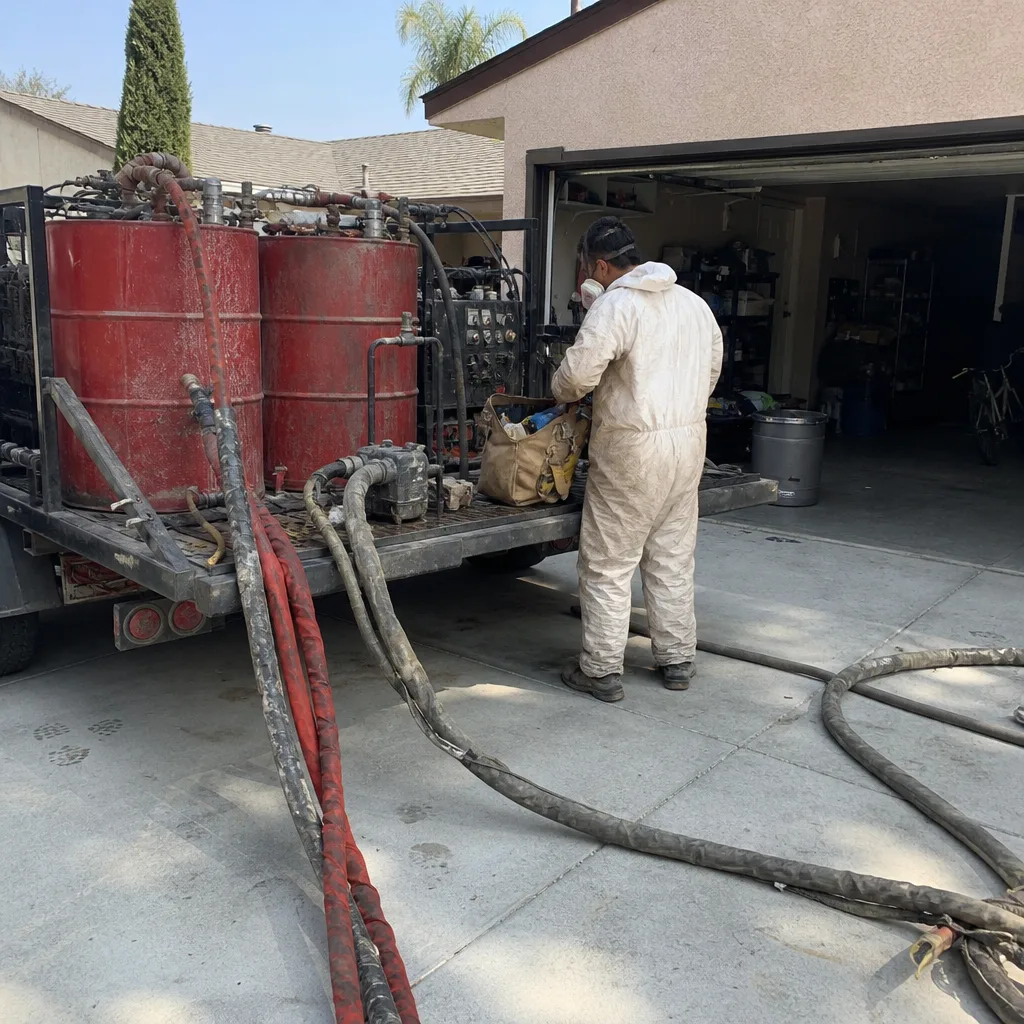
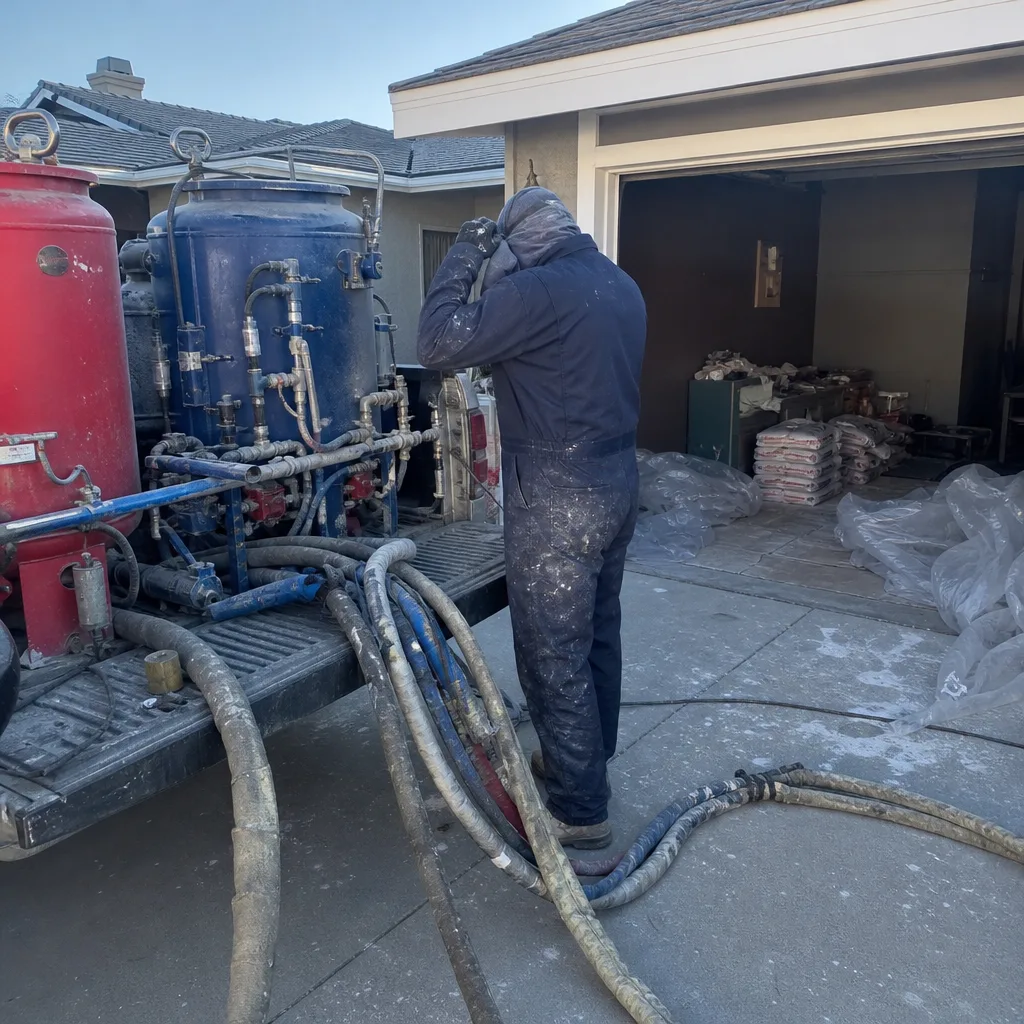
We also understand the rhythm of mountain work. Roads off Highway 330 and 18 can ice over, delivery windows shift with weather, and older cabins near the Running Springs village core often hide surprises behind the drywall. Our crew plans for that. We schedule realistic timelines, we show up with the right rig, and we don’t treat your job like a flatland production-line install. The Spray Foam Insulation team at Fontana handles the whole job in-house: air sealing, foam application, ventilation correction, and the finished details.
Open Cell Spray Foam in Running Springs
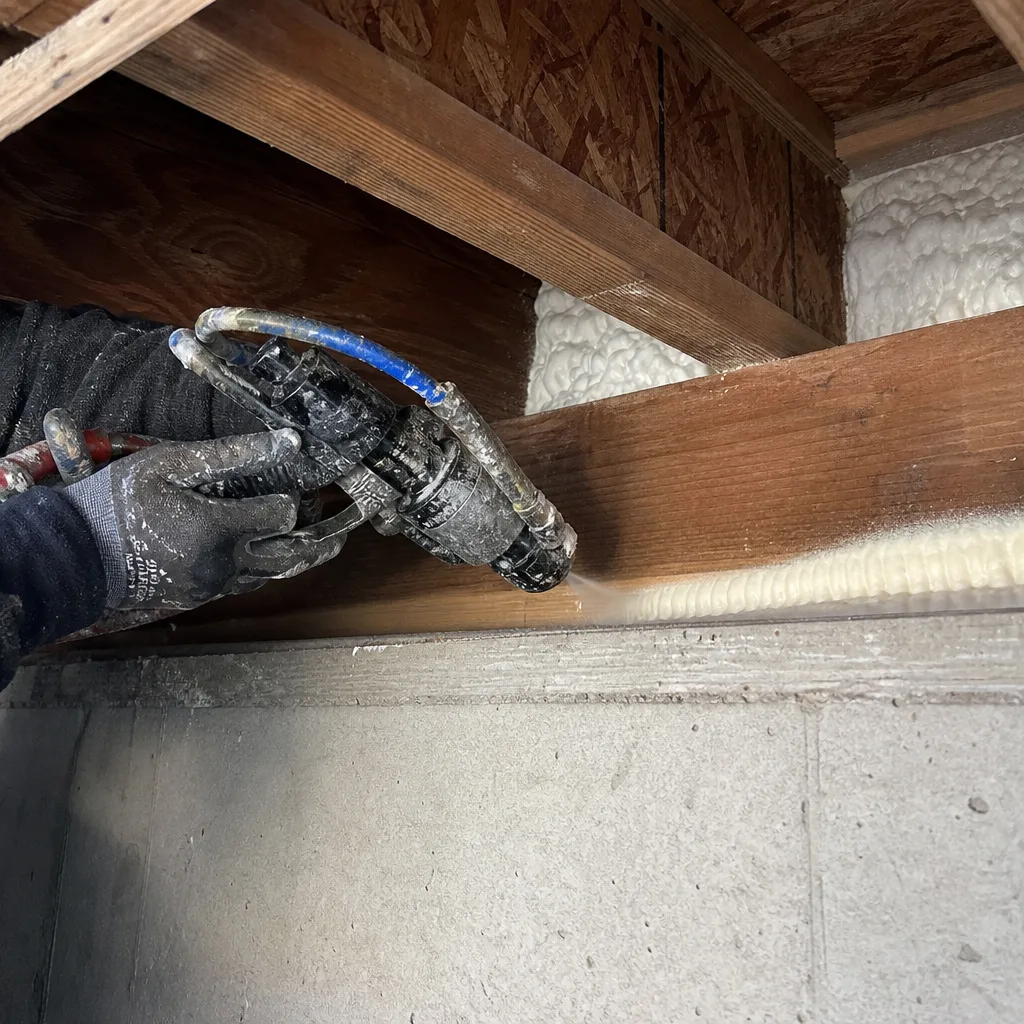
Open Cell Spray Foam in Running Springs is the right material when you’re treating interior partition walls, rim joists in accessible crawlspaces, or any cavity where you want air sealing and sound dampening without trapping moisture in the assembly. It expands to roughly 100 times its liquid volume, fills odd-shaped gaps around plumbing and wiring in older cabins, and typically runs $2.60 to $4.10 per board foot installed here. Because open-cell has a lower R-value per inch than closed-cell but far better drying potential, we reserve it for assemblies where water vapor needs a path out rather than a hard stop.
Where open-cell earns its place
In a Running Springs home, open-cell makes sense inside the heated envelope: interior walls between living spaces and unheated storage, band joist cavities above a crawlspace, or the underside of a second floor over an unconditioned garage. It stops air movement without creating a double vapor barrier, which matters in a forest climate where humidity swings between snowmelt season and dry summer fire season. We’ve used open-cell extensively in additions and loft conversions around Running Springs where the original structure had no air sealing at all.
An honest caveat about open-cell
Open-cell is not the product for a roof deck under snow load or an exterior sheathing cavity in this climate. When vapor drive pushes warm interior air into a cold assembly, open-cell can allow condensation where it can’t dry. That’s the failure mode we’ve corrected in several Running Springs cabins where a previous contractor sprayed open-cell against the roof sheathing without ventilation. The right tool for that job is closed-cell, which we’ll cover below.
Spray Foam Insulation Contractors in Running Springs
Spray Foam Insulation Contractors in Running Springs should be asking you two questions before they quote anything: what’s your roof assembly, and how is the attic or ceiling currently ventilated? Those two answers determine whether this job is straightforward or whether you’re going to need ventilation corrections before the foam goes in. We’re one of the few contractors serving Running Springs who carries both Icynene and Demilec closed-cell foam alongside open-cell options, so we don’t have to steer you toward the one we happen to stock. Jobs here typically run $4,800 to $12,400 depending on whether we’re doing a roof deck, rim joists, a crawlspace, or a combination.
Closed-cell for snow loads and ice dams
Closed-cell spray foam is the product we specify most often for Running Springs roof decks, especially on older cabins with open-beam ceilings or vaulted spans. It adds structural rigidity to the roof, acts as a vapor retarder against snowmelt moisture, and air-seals the entire plane in one pass. The cost runs $3.75 to $7.20 per board foot installed, and the extra material cost is usually justified because it solves two problems at once: heat loss and moisture damage from the snow sitting on your roof for weeks at a time.
A split-decision assembly
At this elevation, the right foam job is often a split decision. Closed-cell on the exterior-facing assemblies: roof deck, gable ends, rim joists against the foundation. Open-cell on the interior assemblies where drying potential and cost matter more than maximum R-value per inch. Most insulation companies don’t explain the difference because they only sell one type. We carry both, which means your Running Springs home gets what each assembly actually needs.
Trusted Brands We Service in Running Springs
We stock parts and materials from the brands that have proven themselves in high-elevation work. Icynene closed-cell foam has performed well on Running Springs roof decks where moisture drive pushes against the underside of the sheathing. Demilec open-cell gives us the expansion and air-sealing performance we want in interior cavities. And for hybrid jobs where foam needs to pair with batts or board material, we carry Rockwool, Knauf, and CertainTeed, so we’re not forcing a foam-only solution where a combined assembly makes more sense. Having these materials available means we don’t delay a Running Springs job waiting on a supplier shipment from down the hill.
Common Spray Foam Insulation Problems We See in Running Springs Homes
These are the failure patterns we correct most often in Running Springs, and they’re different from what you’d see in San Bernardino or Riverside. The elevation and snow load create a specific set of problems.
- Ice-dam moisture trapped against a spray-foamed roof deck. This happens when a previous contractor sprayed closed-cell foam but blocked or ignored the eave vents. Snow melts, water backs up under the shingles, and the moisture has nowhere to go. We see this on older Running Springs cabins with low-slope roofs and minimal overhangs.
- Foam sprayed over unsealed open-beam penetrations. In 1950s to 1980s cabins with exposed beam ceilings, can lights and ceiling penetrations were never sealed before the foam went in. Warm air still escapes past the foam through those gaps, and the homeowner sees no energy improvement despite the new insulation.
- Open-cell foam in the wrong assembly for a cold, humid forest climate. Open-cell in an exterior wall cavity or roof deck without a separate vapor retarder allows condensation on the cold side of the assembly. In Running Springs’ freeze-thaw cycles, that condensed moisture freezes, thaws, and rots framing over time.
- Single-pane windows and uninsulated foundations left untreated. Foam alone can’t fix a cabin that’s losing heat through 1960s single-pane windows and an open pier-and-beam foundation. We flag these during our assessment so the air-sealing work actually delivers the comfort improvement you’re paying for.
Pricing for Spray Foam Insulation in Running Springs, CA
Here’s what you can expect to pay in the Running Springs market, based on recent jobs we’ve completed at this elevation:
- Open-cell spray foam, interior walls or rim joists: $2.60 to $4.10 per board foot installed
- Closed-cell spray foam, roof deck or exterior sheathing: $3.75 to $7.20 per board foot installed
- Typical full roof deck on a 1,200 sq ft Running Springs cabin: $6,200 to $9,800
- Rim joist and crawlspace band sealing: $2,400 to $4,600
- Garage ceiling spray foam (usually open-cell): $2,800 to $5,200
What moves the number: access difficulty on steep mountain lots, how much existing insulation has to be removed, whether we need to add or correct eave ventilation, and whether you’re doing the roof deck or just the rim joists. Every estimate is free, and we give you a line-item scope so you know exactly what you’re paying for. Call (866) 271-1602 and we’ll schedule a walkthrough on your schedule, including weekends if that’s when you’re up the hill.
We Also Serve Cities Near Running Springs
Fontana Insulation covers Running Springs and the surrounding mountain and foothill communities. That includes Lake Arrowhead, Highland, Mentone, and Crestline. If you’re in any of those areas and weighing spray foam against fiberglass or blown-in, call us and we’ll give you the same material-agnostic recommendation we give here.
Serving Running Springs, CA — Our Local Coverage Area
We’re based in the Running Springs area and know this community well. Use the map below to see our service coverage — if you’re nearby, we can almost certainly help.
FAQs About Spray Foam Insulation in Running Springs
Yes. In Running Springs, closed-cell foam on the roof deck has to serve as both insulation and a vapor retarder against snowmelt moisture, and it has to be paired with correct eave ventilation to prevent ice dams. In the low desert, that moisture drive doesn’t exist, so open-cell or even fiberglass can be specified without the same consequences. Up here, the wrong foam choice can turn your roof into a moisture trap. Call (866) 271-1602 and we’ll explain exactly what your roof assembly needs.
Yes, and it’s one of the jobs we do most often here. The typical approach is to seal all top plates and can-light penetrations, then spray closed-cell foam directly to the roof deck between the exposed beams, leaving the beams visible, and finish with correct eave venting. We did exactly this on a 1970s wood-sided cabin near the Running Springs village core where snowmelt had already stained the ceiling planks. After the foam and venting correction, the staining stopped and the cabin stayed warm through the next snow season.
Closed-cell goes on exterior-facing assemblies: the roof deck, gable ends, and rim joists against the foundation. Open-cell goes inside the heated envelope: interior partition walls, floor cavities over unconditioned spaces, and band joists where drying potential matters. We don’t guess at this; we walk the house, identify each assembly, and spec the material per assembly, not per job. Call (866) 271-1602 for a free walkthrough if you’re not sure what’s in your walls and roof right now.
Yes, because spray foam’s real advantage is air sealing, not just R-value per inch. Running Springs homes lose heat in winter through gaps and penetrations, and gain heat in summer through the same paths. Closed-cell foam on the roof deck handles both directions at once, plus it stops the snowmelt moisture problem. That’s why we recommend it for most full-time Running Springs residents who are tired of high propane or electric bills in January and sweltering upstairs rooms in August.
If the foam is installed correctly, ice dams become much less likely because the roof deck stays cold and snow doesn’t melt and refreeze at the eaves. But the foam has to be paired with proper attic or eave ventilation, and that’s where a lot of cheaper installs go wrong. We inspect the existing ventilation before we spray and correct it if needed. If you’re seeing ice buildup at your eaves right now, call (866) 271-1602 and we’ll take a look before the next snow cycle hits.
Ready to talk about your Running Springs spray foam project? Call Fontana Insulation at (866) 271-1602 for a free, no-pressure estimate. We’ll walk the house with you, explain what each assembly needs, and give you a line-item scope that matches your budget and performance goals. Whether you’re up full-time or on weekends, we’ll work around your schedule.
Written by Noel Arredondo, Owner at Fontana Insulation, serving Running Springs and the San Bernardino mountain communities.