
Fast, Reliable Spray Foam Insulation Across Manhattan Beach
Spray foam insulation in Manhattan Beach runs $3.50 to $7.50 per board foot installed, and the real difference here isn’t temperature, it’s salt air and marine-layer dampness attacking your thermal boundary. We work in 90266 and 90267 weekly, from the walk streets to Manhattan Beach Boulevard, and we know what open-cell foam has to withstand a block from the sand versus up on the hill. Fontana Insulation installs Icynene and Demilec open- and closed-cell foam, and we carry Rockwool and Knauf for jobs where foam isn’t the right tool. If your attic vents are crusted with salt or your vaulted ceilings sweat in June, call (866) 271-1602 and we’ll tell you what’s actually going on.
Most Spray Foam Insulation contractors apply the same spec they’d use in Torrance or Redondo Beach. Manhattan Beach isn’t either of those places. The west-facing streets near the sand live in a different moisture environment than the hill section, and a foam job that ignores that fails early, sometimes within three or four seasons.
Why Fontana Insulation Is Manhattan Beach’s Preferred Spray Foam Insulation Company
Noel Arredondo built Fontana Insulation around a brand-neutral model, and that matters in Manhattan Beach more than most places. We carry eight insulation brands across fiberglass, mineral wool, spray foam, and cellulose, so when we tell a homeowner on 35th Street that open-cell foam is the right move, it’s because the house needs it, not because it’s the only product we stock. Our crews have worked original 1950s bungalows near The Strand where the attic framing still holds the smell of decades of salt fog, and we’ve worked post-2000 custom builds along the hill section with complex roof lines and big glazed walls.
We’re not the cheapest bid in Manhattan Beach, and we’re not trying to be. We specify foam density, thickness, and placement based on what the building envelope is actually up against: onshore wind pressure, fog-driven moisture, and salt-laden air moving through every vent and penetration. That’s the work. The estimate is free, and we’ll explain what we’d do and why before you spend a dollar.
Open Cell Spray Foam in Manhattan Beach
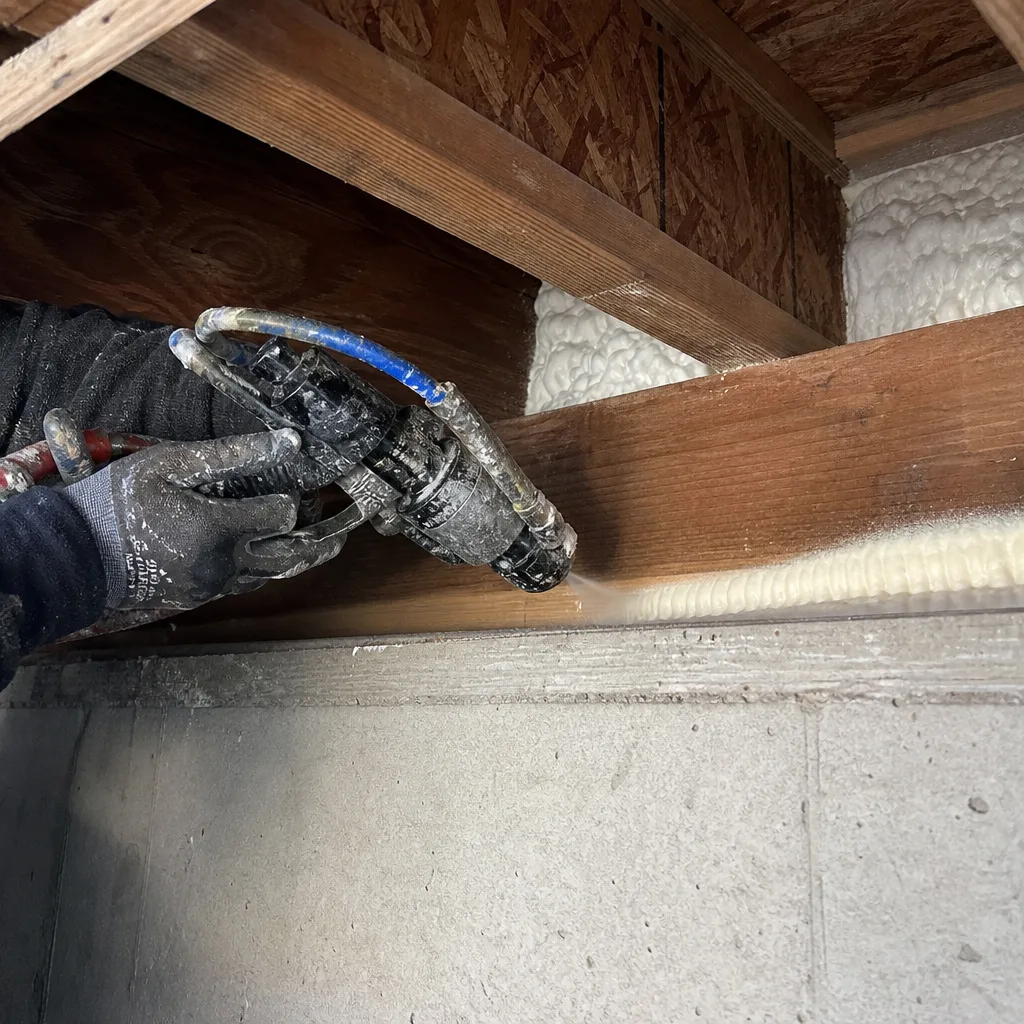
Open Cell Spray Foam is, in most Manhattan Beach homes, the workhorse product for attics, vaulted ceilings, and rim joists. It expands into cavities, fills irregular framing, and air-seals while it insulates, which is exactly what an older beach cottage with open-beam ceilings and wind-washed walls needs. A typical open-cell application on a 1,200-square-foot attic in Manhattan Beach runs between $3,800 and $6,200. Per board foot, most local jobs land at $0.75 to $1.50 for material and labor combined, though a full roof-deck application on a multistory custom build can push higher.
What matters here is vapor handling, not raw R-value. Open-cell foam is vapor-permeable, which means moisture that gets into the assembly can dry through it. That’s the correct behavior in a coastal climate where marine-layer air pushes humidity through vents and sheathing gaps. Trap that moisture behind a vapor-closed material and you get condensation, mold, and rotted framing along The Strand within a few years.
Roof Deck and Open-Beam Ceiling Work
Many original Manhattan Beach bungalows from the 1950s through the 1970s have vaulted open-beam ceilings with no continuous thermal boundary. An uninsulated or poorly insulated roof deck lets June-gray humidity condense on the ceiling surface and stain the beams. We apply open-cell foam to the underside of the roof deck, sealing the vent path and stopping the marine-layer dampness from cycling through the assembly.
Cavity Fill for Coastal Wall Assemblies
Older beach cottages often have wall cavities that were never insulated, or that had fiberglass batts installed decades ago that have since sagged, compressed, and lost their air-sealing. Open-cell foam injected into those cavities fills the void, stops wind-washing from onshore breezes, and lets the wall dry to the interior. For homes on the sand side of Highland Avenue, this is often the single biggest comfort fix available.
Spray Foam Insulation Contractors in Manhattan Beach
Spray Foam Insulation Contractors serving Manhattan Beach need to understand salt-air corrosion and fog-driven moisture intrusion, not just foam chemistry. We also handle Reflectix repair in Manhattan Beach when radiant barriers need attention alongside foam work. We see attic vents and fasteners west of Sepulveda with salt crust buildup that inland contractors never encounter. The right foam, the right thickness, and the right vapor strategy change by street. We install open- and closed-cell foam from Icynene and Demilec, and we also carry Rockwool, Knauf, CertainTeed, Owens Corning, Johns Manville, and GreenFiber for scenarios where foam is the wrong tool altogether.
Typical contractor pricing for spray foam work in Manhattan Beach runs $3,800 to $9,500 for a full attic roof-deck application, $1,200 to $2,800 for rim joist sealing, and $4,500 to $14,000 for a whole-home air-seal and insulate package on a single-story bungalow. The biggest cost driver is access: walk-street homes with tight lot lines and no staging space cost more to work around, as do multistory homes with steep roof pitches and difficult attic access.
Coastal Corrosion Inspection
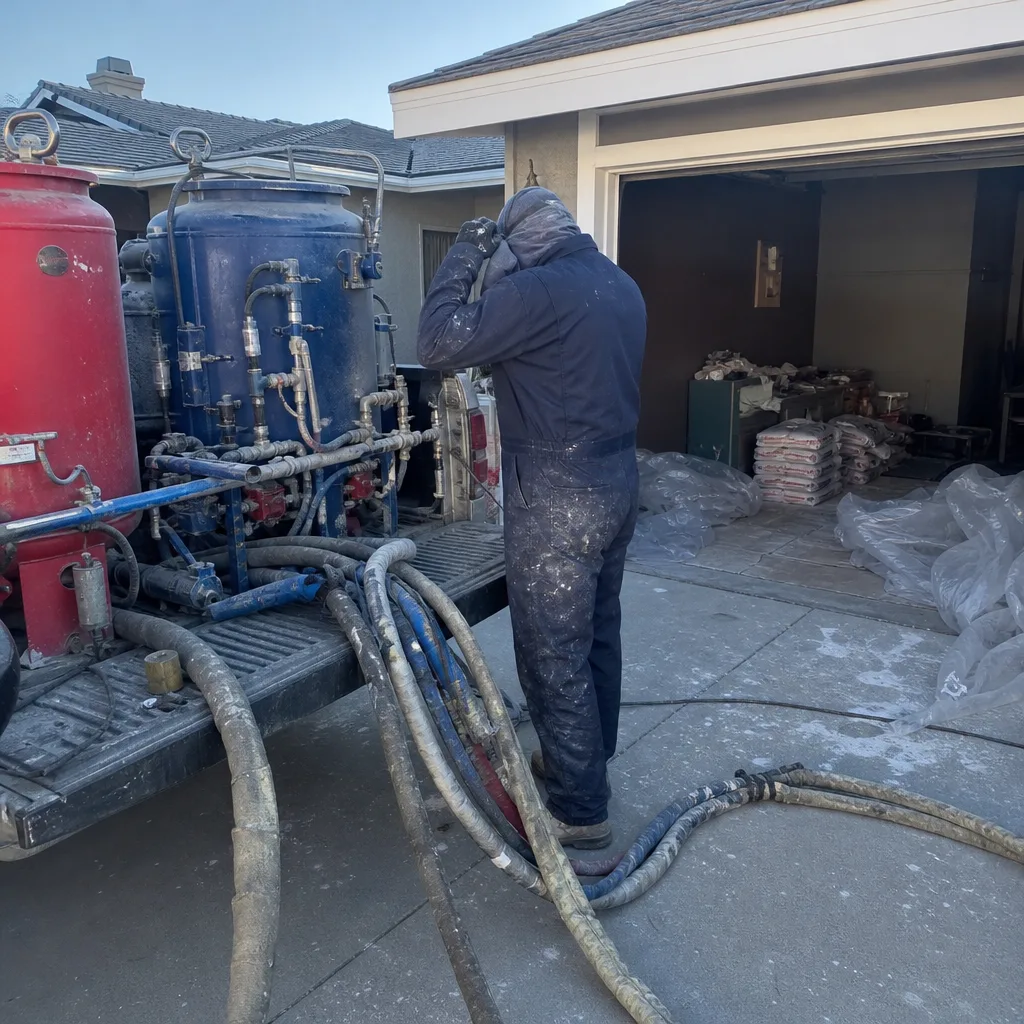
Before any foam goes in, we inspect existing attic vents, sheathing fasteners, and any exposed ductwork for salt-driven corrosion. West-facing homes closest to the water show the worst of it, especially after winter storms push salt spray through the attic vents. Replacing corroded vents and fasteners before foaming means you don’t seal a failing component inside the assembly.
Marine-Layer Moisture Strategy
Every Manhattan Beach installation either handles moisture or fails. We size foam thickness and choose open- versus closed-cell based on parge-coat details, existing vapor barriers, and whether the building faces the prevailing onshore flow. This is why we refuse to copy-paste an inland spec onto a coastal house.
Trusted Brands We Service in Manhattan Beach
Fontana Insulation is an authorized installer for Icynene and Demilec spray foam, two of the most performance-tested foam brands in North America, and we keep both in stock for Manhattan Beach projects. We also carry Knauf and CertainTeed fiberglass, Rockwool mineral wool, and GreenFiber cellulose, which means the material recommendation is driven by your house’s situation, not our inventory pressure. If a 90266 bungalow needs open-cell and a 90267 hill home needs Rockwool for fire resistance, we install both without trying to talk you out of either. Noel Arredondo set the company up this way, and it shows in the material options we bring to every Manhattan Beach estimate.
Common Spray Foam Insulation Problems We See in Manhattan Beach Homes
- Salt-crust on attic vents and fasteners. Winter storms push salt spray through west-facing attic vents along The Strand, coating vents and sheathing fasteners with a corrosive crust. We replace those components before foaming so the seal doesn’t trap a failing part.
- Sagging or compressed batts near the beach. Damp marine air forces its way through old moisture barriers, wetting fiberglass batts until they sag off the ceiling plane or compress to a fraction of their rated thickness. That’s when homeowners notice hot ceilings and condensation stains along open beams.
- Marine-layer condensation on vaulted open-beam ceilings. Original 1950s through 1970s bungalows nearly all have vaulted ceilings with no actual thermal boundary. Fog and humidity condense on the cold ceiling surface in late spring and summer, staining beams and dripping onto living spaces below.
- Wind-washing in unsealed wall cavities. Persistent onshore breezes move through gaps in older wall framing, stripping heat from the cavity even where insulation R-value nominally meets code. Sealing the cavity with open-cell foam stops the airflow and restores the wall’s real performance.
Pricing for Spray Foam Insulation in Manhattan Beach, CA
Actual numbers help more than talk of “market rates.” Open-cell attic roof-deck work in Manhattan Beach typically runs $3,800 to $6,200 for a 1,200-square-foot single-story home. Rim joist sealing runs $1,200 to $2,800 depending on crawl space access. Whole-home air-seal packages on a 1,800- to 2,400-square-foot bungalow run $6,500 to $12,000. If your home is a multistory custom build post-2000 with a complex roof line, expect the higher end and then some. We give free estimates with a full line-item breakdown, so call (866) 271-1602 and we’ll put actual numbers on your house, not a generic range.
We Also Serve Cities Near Manhattan Beach
Our crews work Redondo Beach, Rolling Hills Estates, Palos Verdes Estates, and Torrance every week, and the coastal conditions in those neighborhoods follow the same salt-air and marine-layer patterns we see in Manhattan Beach. If your home sits anywhere along this stretch of the South Bay, the same vapor-control and wind-washing rules apply. For more on how we approach coastal spray foam across the area, see our Spray Foam Insulation service page or call us directly at (866) 271-1602.
Serving Manhattan Beach, CA — Our Local Coverage Area
We’re based in the Manhattan Beach area and know this community well. Use the map below to see our service coverage — if you’re nearby, we can almost certainly help.
FAQs About Spray Foam Insulation in Manhattan Beach
Because salt-laden air and marine-layer humidity attack the assembly in ways inland air never does. In Manhattan Beach we specify for vapor handling and corrosion resistance first, then R-value. Inland, it’s mostly about temperature swing. A foam job that performs fine in Torrance can fail in a west-facing Manhattan Beach attic if the vents and fasteners weren’t addressed first.
Yes, and it’s one of the first things we look for. Salt crust on vents means winter storms have been driving salt spray into the attic, and the same moisture has likely been wetting whatever insulation is up there. We replace the corroded components before installing foam, because sealing a failing vent inside the assembly guarantees problems later. Call (866) 271-1602 and we’ll inspect it properly.
Yes, and in most cases it’s the better choice. Open-cell foam is vapor-permeable, so moisture that works into the assembly can dry through it rather than getting trapped. That matches the way older Manhattan Beach bungalows breathe, and it stops the sweating and condensation staining along vaulted open-beam ceilings. We use Icynene and Demilec open-cell products regularly for exactly this.
First, confirm whether there’s any thermal boundary above the ceiling at all. Many 1950s through 1970s Manhattan Beach cottages have none, or have batts that are now saturated and sagging. Applying open-cell foam to the underside of the roof deck seals the vent path, restores a continuous boundary, and stops condensation from forming on the beams. It’s a common job for our crews along The Strand.
Often yes, especially where big glazed walls and complex roof lines leave irregular cavities that fiberglass can’t fill well. New builds in the hill section have performance envelope requirements that spray foam meets cleanly, and the air-sealing is a significant part of that. We spec those jobs by the drawings, not by a default product, and we’ll tell you if Rockwool or another material does the job better for a given detail.
Written by Noel Arredondo, Owner at Fontana Insulation, serving Manhattan Beach’s coastal homes and the surrounding South Bay since the company’s founding.