
Fast, Reliable Spray Foam Insulation Across Lake Forest
Spray foam insulation in Lake Forest typically costs $2.50 to $6.50 per board foot installed, depending on whether you choose open-cell or closed-cell foam, and most attic projects run $3,800 to $9,200 for a typical 1970s-era tract home. Our crews know the Saddleback Valley foothill heat, the shallow rafter bays in Lake Forest’s planned communities, and the difference those details make when you’re specifying foam. Call (866) 271-1602 for a straight answer on your attic, rim joists, or garage ceiling.
Lake Forest’s housing stock is dominated by 1970s through 1990s tract builds, most of which still carry their original R-11 or R-13 fiberglass. That material sags, compresses under stored boxes, and loses its air-seal value in ways that spray foam directly addresses. We serve the whole 92630 zip code from Foothill Ranch down to the Portola Hills edge, and we can usually have a crew on site within a few days of the first call.
Why Fontana Insulation Is Lake Forest’s Preferred Spray Foam Insulation Company
Homeowners in Lake Forest keep calling us back because we stock eight brands and four material categories, which means we don’t push one foam line on every job. If your attic needs closed-cell for R-value-per-inch, we spray closed-cell. If your walls need mineral wool for fire resistance and sound dampening, we install Rockwool. The recommendation follows your home’s framing and your goals, not our inventory.
Noel Arredondo leads the team, and his approach is simple: match the material to the application. In Lake Forest, that often means closed-cell Icynene in shallow 1970s rafter bays where every inch of depth matters. We also carry Demilec for open-cell applications and CertainTeed fiberglass when a different R-value strategy makes more sense. The point is, we carry competing brands on purpose, so you hear real trade-offs, not a sales pitch.
Spray Foam Insulation Contractors in Lake Forest
Spray foam insulation contractors in Lake Forest handle a different job than what most Orange County homeowners picture. Here, the work is usually about retrofitting a shallow-pitch, low-clearance attic that was never designed for modern insulation depths. The framing is tight, the eaves are cramped, and the original batts have been stepped on for decades. A contractor who knows this market plans foam thickness around those constraints instead of spraying a one-size application.
A typical open-cell spray foam job in Lake Forest runs $2.50 to $4.00 per board foot. Closed-cell runs $3.75 to $6.50 per board foot, and in shallow rafter bays that extra R-per-inch is often the deciding factor. Our Spray Foam Insulation team specs thickness in multiple passes when the framing demands it, which avoids the bowing and drywall cracks that happen when foam gets over-filled in a single shot.
Rim Joist and Garage Ceiling Applications
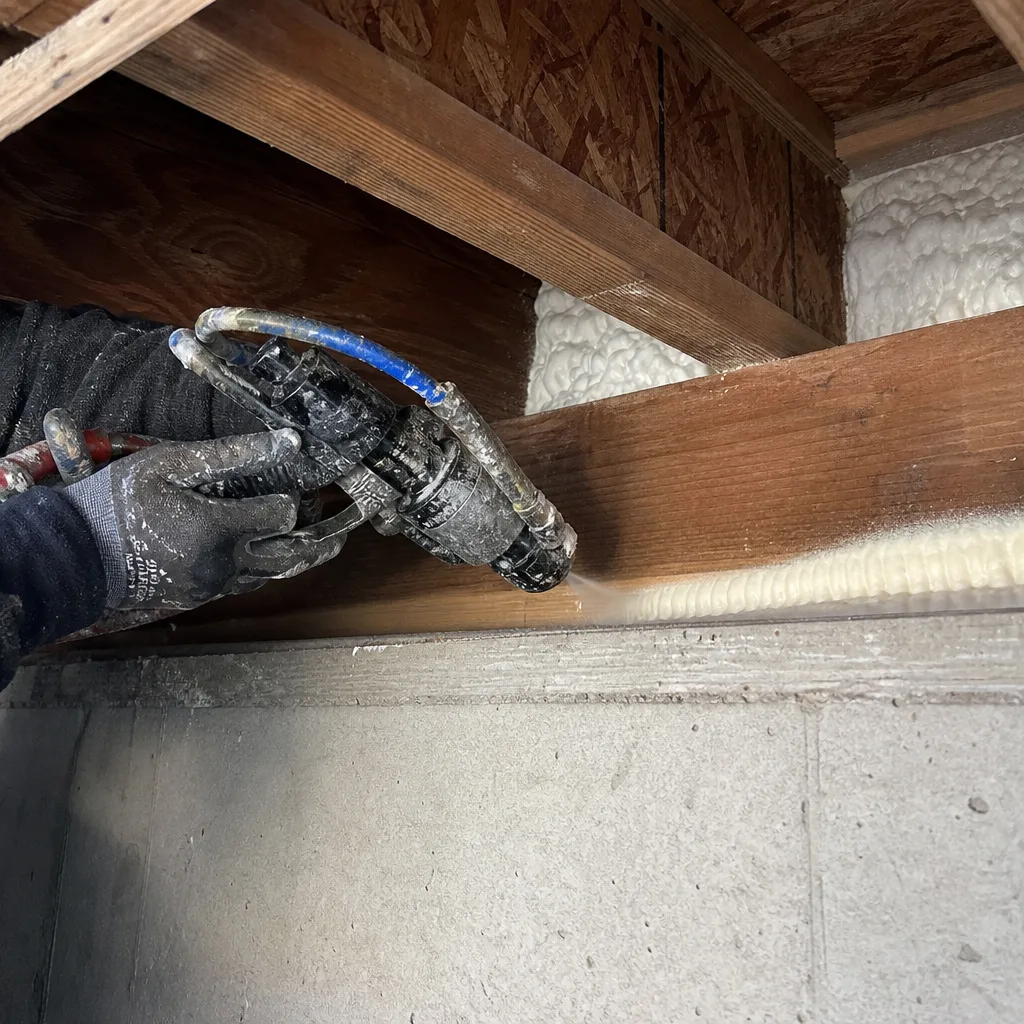
Rim joist spray foam in Lake Forest earns its keep at the band board where the foundation meets the first floor. It stops the stack effect that pulls hot attic air down through wall cavities during Santa Ana events. Garage ceiling spray foam, on the other hand, matters most when the garage sits under a conditioned room.
Both jobs run $800 to $2,400 on average, depending on linear footage and cavity depth. We always prep the surface properly, because dusty or box-covered substrate is the number one reason foam delaminates in this city’s tract attics.
Roof Deck Spray Foam
Roof deck spray foam turns the attic into a semi-conditioned space by sealing the underside of the roof sheathing. In Lake Forest’s inland foothill climate, that means the afternoon sun that bakes your roof no longer radiates straight down into the living space. It’s a bigger upfront cost, usually $6,000 to $12,000, but it takes the attic out of the cooling equation entirely.
Spray Foam Attic Insulation in Lake Forest
Spray foam attic insulation in Lake Forest usually means working inside a shallow, low-pitch attic framed in the 1970s or 1980s. Those attics weren’t built for thick insulation. The rafter bays are shallow, the eaves are tight, and HVAC duct runs snake across the joists. Our crews treat these jobs like the slow, crawl-space-style work they are, because precision matters more than speed.
A full attic spray foam retrofit in Lake Forest runs between $3,800 and $9,200 for most tract homes in the 92630 zip. The final number depends on square footage, whether you choose open-cell or closed-cell, and how much prep the existing attic demands. We quote that prep honestly, including removal of compacted batts and the cost of addressing buried duct runs before foam touches anything.
Shallow Bay Strategy
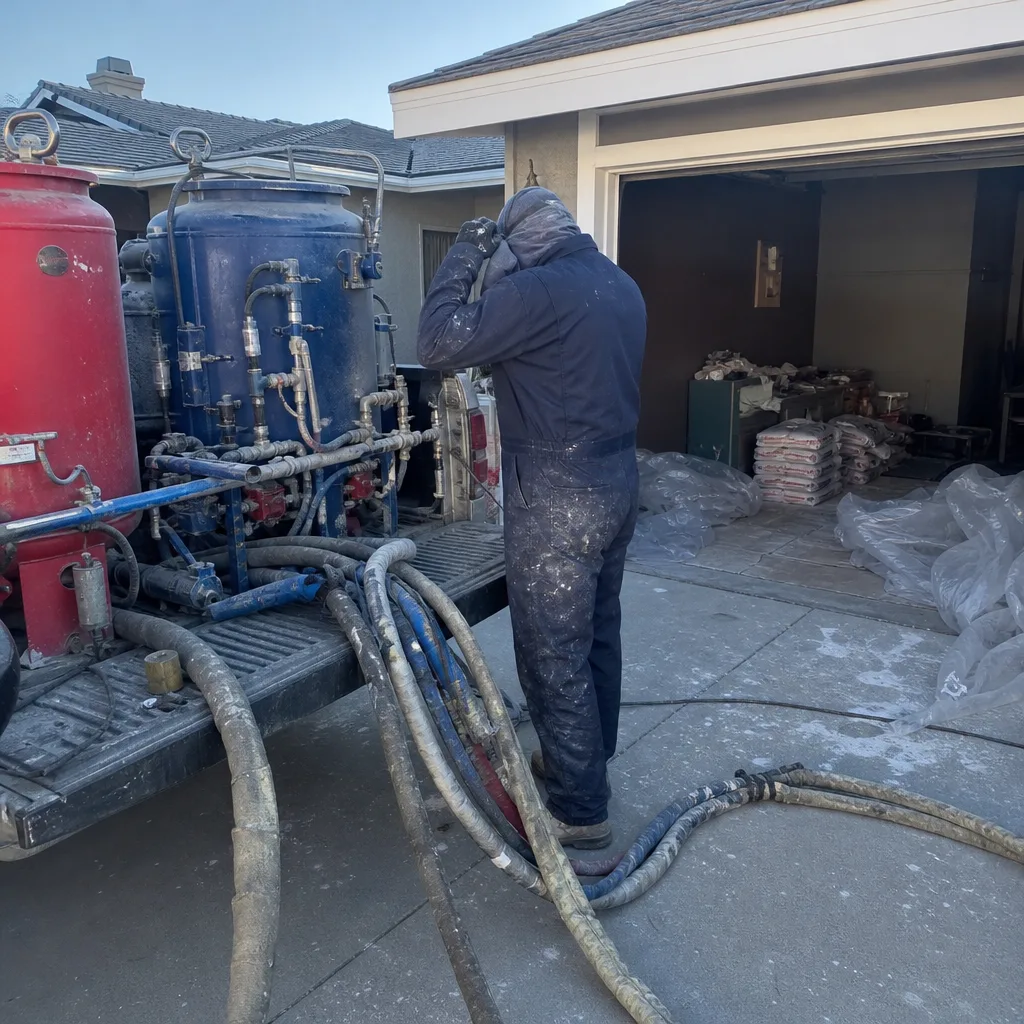
In Lake Forest’s builder-era attics, closed-cell Icynene gets specified at around 3 to 3.5 inches to hit code-level R-value without furring out the roofline. That’s the R-per-inch advantage closed-cell brings. Open-cell needs roughly twice the thickness for the same R-value, which works in standard attics but often doesn’t fit here, which is why closed-cell dominates our Lake Forest attic jobs.
Prep Before the Spray
You can’t just spray over sagging R-11 batts, compressed boxes, and dust. The old material traps moisture under the foam, which defeats the air seal and invites mold. We clear the work area, remove or bag the old batts, and inspect duct connections before any foam goes in. Skipping that step is the most common failure we see from out-of-town contractors who don’t know Lake Forest’s housing stock.
Trusted Brands We Service in Lake Forest
We carry Icynene and Demilec spray foam because those are the two most performance-tested foam brands in North America, and we stock them for Lake Forest customers specifically. We also offer Knauf fiberglass and Rockwool mineral wool for homeowners who want a different R-value strategy or better fire resistance. The brand matters less than the application, which is why we carry all of them and don’t push one.
Common Spray Foam Insulation Problems We See in Lake Forest Homes
- Over-filled rafter bays. Shallow 1970s-era framing in Lake Forest tract attics gets over-sprayed in one pass, which makes closed-cell foam bow and crack ceiling drywall. We step thickness to the actual framing depth, not a generic depth chart.
- Foam sprayed over old batts and stored boxes. Homeowners leave original R-11/R-13 batts in place to save on prep, but that traps moisture and breaks the air seal. It’s a false economy we see constantly in this city’s low-clearance attics.
- Poorly prepped dusty surfaces. Inland foothill heat and Santa Ana events leave attics coated in fine dust. Foam sprayed over dust won’t adhere, and the layer delaminates within a season. We prep every surface before spraying.
- Buried HVAC ducts left under foam. Low-clearance attics force ducts down against the ceiling joists. Encasing them in foam without checking connections locks in air leaks. We inspect and repair ducts before spraying.
Pricing for Spray Foam Insulation in Lake Forest, CA
Open-cell spray foam in Lake Forest runs $2.50 to $4.00 per board foot installed. Closed-cell runs $3.75 to $6.50 per board foot. A full attic retrofit on a typical Lake Forest tract home lands between $3,800 and $9,200, while rim joist work runs $800 to $2,400 and roof deck applications start around $6,000. What moves the number most is prep work: removing old batts, clearing stored boxes, and fixing buried duct runs before foam goes in. Estimates are free, and we quote the real number up front. Call (866) 271-1602.
We Also Serve Cities Near Lake Forest
Our crews work throughout the Saddleback Valley and inland South Orange County. When you need Spray Foam Insulation in Lake Forest, we’re the local team that knows your attic framing. We also serve Foothill Ranch, Portola Hills, Mission Viejo, and Laguna Woods with the same brand-neutral, material-agnostic approach.
Serving Lake Forest, CA — Our Local Coverage Area
We’re based in the Lake Forest area and know this community well. Use the map below to see our service coverage — if you’re nearby, we can almost certainly help.
FAQs About Spray Foam Insulation in Lake Forest
Yes, if you use closed-cell foam. Closed-cell Icynene delivers roughly R-6.5 to R-7 per inch, so a 3 to 3.5 inch application reaches R-21 to R-24 inside builder-era rafter depths. Open-cell needs about twice the thickness for the same R-value, which rarely fits in Lake Forest’s shallow-pitch tract attics. Call (866) 271-1602 and we’ll measure your actual rafter depth before recommending a foam type.
Closed-cell is the better fit for most Lake Forest homes because it delivers more R-value per inch, which matters in shallow attic framing, and it blocks radiant heat transfer more effectively. Open-cell has a place in walls and some standard-depth attics, but for the cooling-season attic heat gain that dominates in the Saddleback Valley foothills, closed-cell usually wins.
We remove or bag the old batts and clear the work area before spraying. Leaving them in place traps moisture under the foam and defeats the air seal, and stored boxes make proper surface prep impossible. It adds a bit to the prep cost, but it’s the difference between foam that lasts 20 years and foam that delaminates in two.
Yes. Lake Forest’s cooling load comes primarily from attic heat gain, not walls. The afternoon sun bakes the roof, and that heat radiates down through whatever insulation sits in the attic. Sealing the roofline with spray foam stops that load at the source, while wall insulation only addresses the smaller, secondary heat gain. Every estimate we quote for Lake Forest homes prioritizes the attic for this reason.
Yes, and we inspect every duct connection before spraying. Low-clearance attics force ducts down against ceiling joists, and encasing leaky ducts under foam locks in the problem permanently. We test, seal, and reposition ducts where needed, and we keep foam back from the tightest eaves so air can still move through the soffit vents. Call (866) 271-1602 for a free attic assessment.
Written by Noel Arredondo, Owner at Fontana Insulation, serving Lake Forest since the company’s founding.