
Fast, Reliable Spray Foam Insulation Across Highland
Spray foam insulation in Highland typically costs $2.50 to $6.50 per board foot for open cell and $3.50 to $9.00 per board foot for closed cell, with most attic jobs landing between $2,800 and $7,500 depending on square footage and access. Highland’s position at the base of the San Bernardino Mountains means Santa Ana and canyon winds punish attics in ways you won’t see in Redlands or Loma Linda. We’ve worked on homes off Baseline, near the 210, and throughout the 92346 zip code long enough to know exactly what wind-washing does to insulation here. Call (866) 271-1602 if you want a straight answer about what’s happening in your attic.
Why Fontana Insulation Is Highland’s Preferred Spray Foam Insulation Company
We earn the work in Highland by quoting honestly and explaining material trade-offs without brand loyalty. Noel Arredondo leads a team that installs spray foam, blown-in, and attic insulation across the Inland Empire, and Highland homeowners regularly tell us the same thing: nobody else talked about wind baffles or radiant heat. That’s because most contractors don’t work in Highland’s specific wind corridor. We do. We inspect attics on mid-century ranches near Baseline and east Highland stucco tracts with the same eye: where is air getting in, and what material actually stops it. Our Spray Foam Insulation team carries open and closed cell foam from Icynene and Demilec, two of the most performance-tested foam brands in North America, plus the full lineup to compare against. The result is a recommendation that fits your home, not our inventory.
Open Cell Spray Foam in Highland
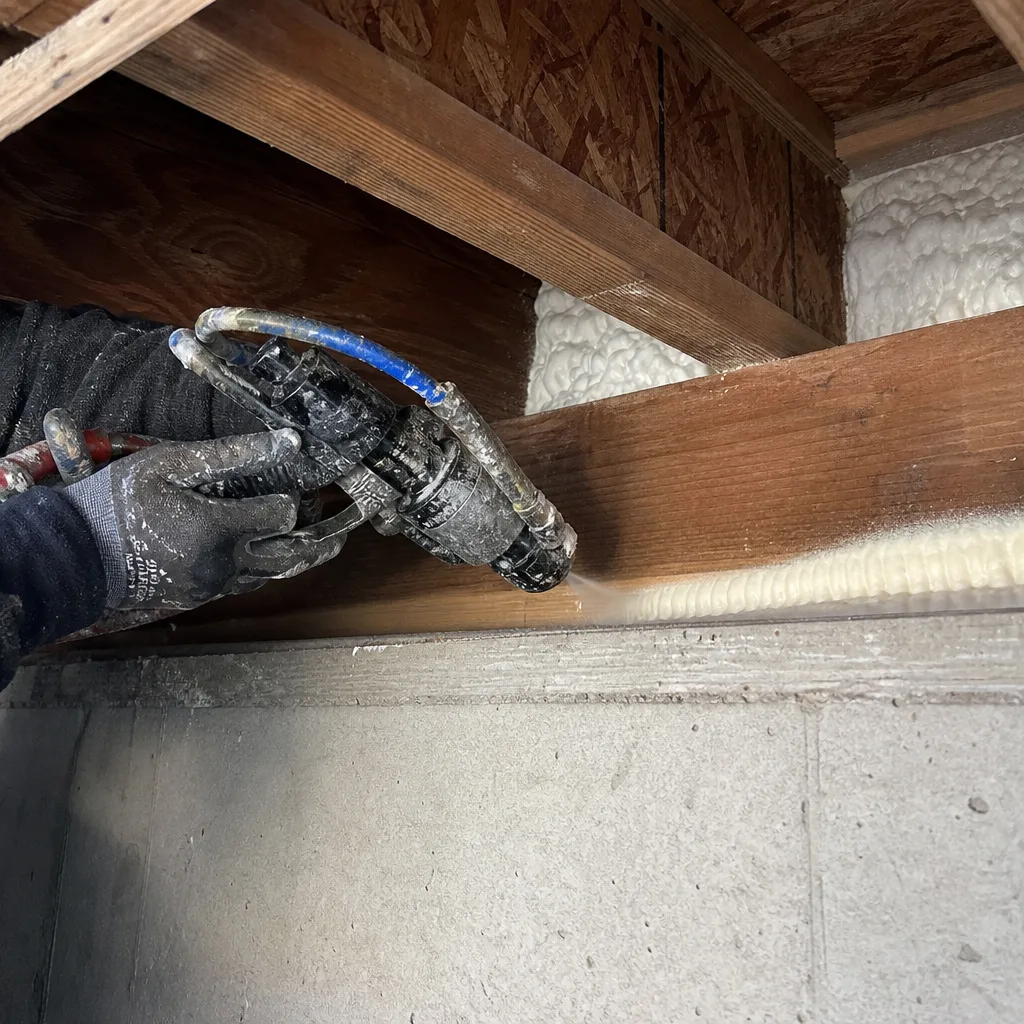
Open Cell Spray Foam in a Highland attic is usually the right call when air-sealing is the priority over extreme thermal resistance. This is the half-pound foam that expands soft, fills odd-shaped cavities near the eaves, and locks down top plates and penetrations where canyon winds push air through. In Highland’s 1950s to 1970s ranch homes, those top plate gaps and eave seams are the main infiltration route. Open cell seals them. Pricing for open cell spray foam in Highland runs $2.50 to $4.50 per board foot installed, with a typical low-pitch attic running $2,800 to $4,800 depending on square footage and how much prep the eave areas need.
Wind Baffles Before Foam
We install wind baffles at the eaves before any open cell foam goes in on a Highland home. Without them, foam applied near the eave edge gets cooled erratically by canyon winds, and the tightness gain you paid for partly disappears. This step is standard on every Highland attic we foam.
Radiant Barrier Additions
In east Highland stucco tract homes where summer attics sit above 100°F for weeks at a time, we often discuss adding a radiant barrier before or alongside open cell foam. Foam seals the air movement. The radiant barrier rejects solar heat. On a 1960s ranch with original thin insulation, one without the other still leaves comfort on the table.
Spray Foam Insulation Contractors in Highland
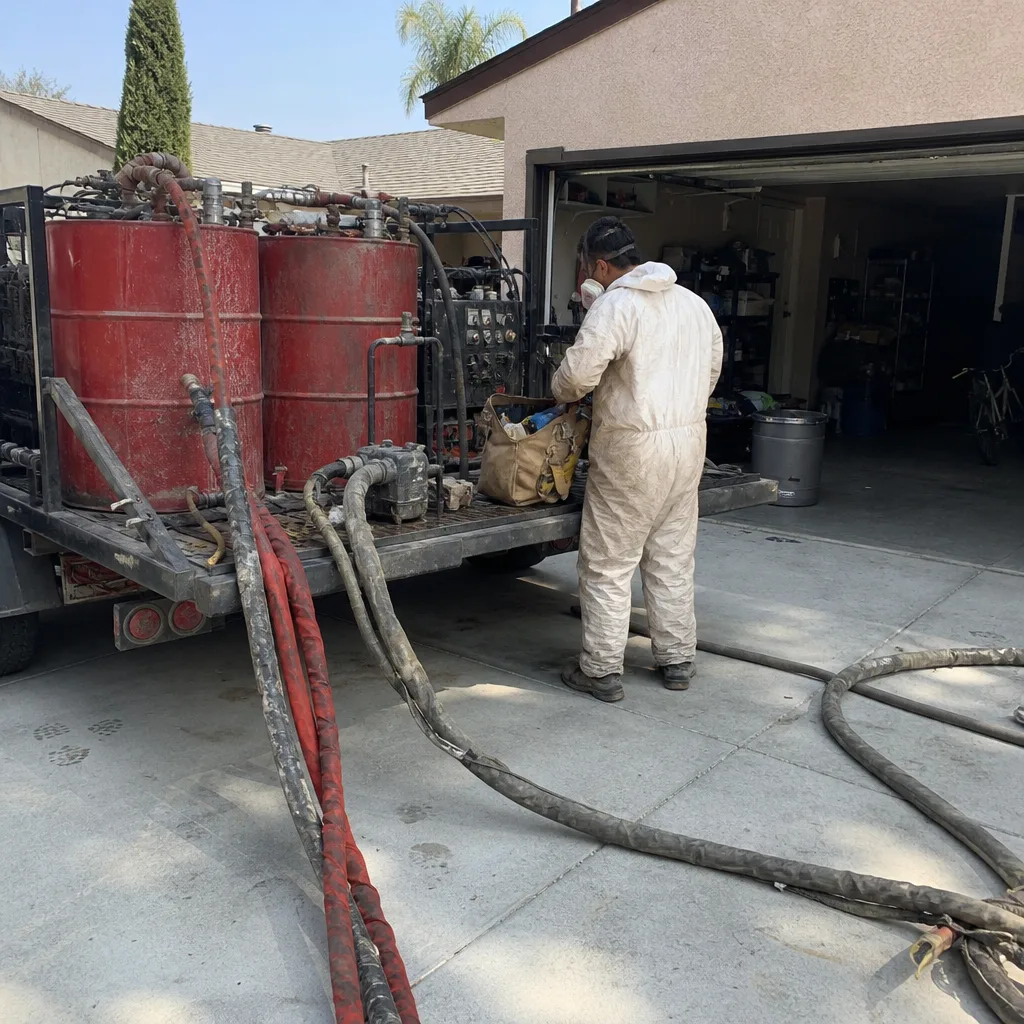
Spray Foam Insulation Contractors working in Highland have to understand low-pitch attic geometry and wind-driven air movement, not just spray technique. We’ve been in enough mid-century Highland attics to know that the eaves are often nearly inaccessible, and an unsealed cavity there means the whole assembly underperforms. Our crews handle the cramped access, the baffle installation, the top plate sealing, and the foam in one visit. Closed cell jobs in Highland run $3.50 to $9.00 per board foot, while a full attic seal with open cell and baffles lands between $3,200 and $6,800 depending on attic size and condition. No subcontractors. The same Fontana Insulation crew that starts the job finishes it.
Access and Eave Gap Treatment
On a 1960s ranch near the historic core of Highland, we found the original thin attic insulation pushed hard against the eaves by winter canyon winds, with no baffles anywhere. Our crew re-leveled the blown material, installed wind baffles at the eaves, and then sealed the top plates and attic penetrations with open cell spray foam. That job changed how we quote Highland homes: you cannot foam an attic correctly here without first addressing the wind path.
One-Crew Accountability
Fontana Insulation doesn’t send a spray tech and then a different crew for baffles or cleanup. One crew handles the full spray foam job, including prep of the eave gaps and any re-leveling of blown insulation that wind has pushed around. That’s how we protect the tightness gain on every Highland project.
Trusted Brands We Service in Highland
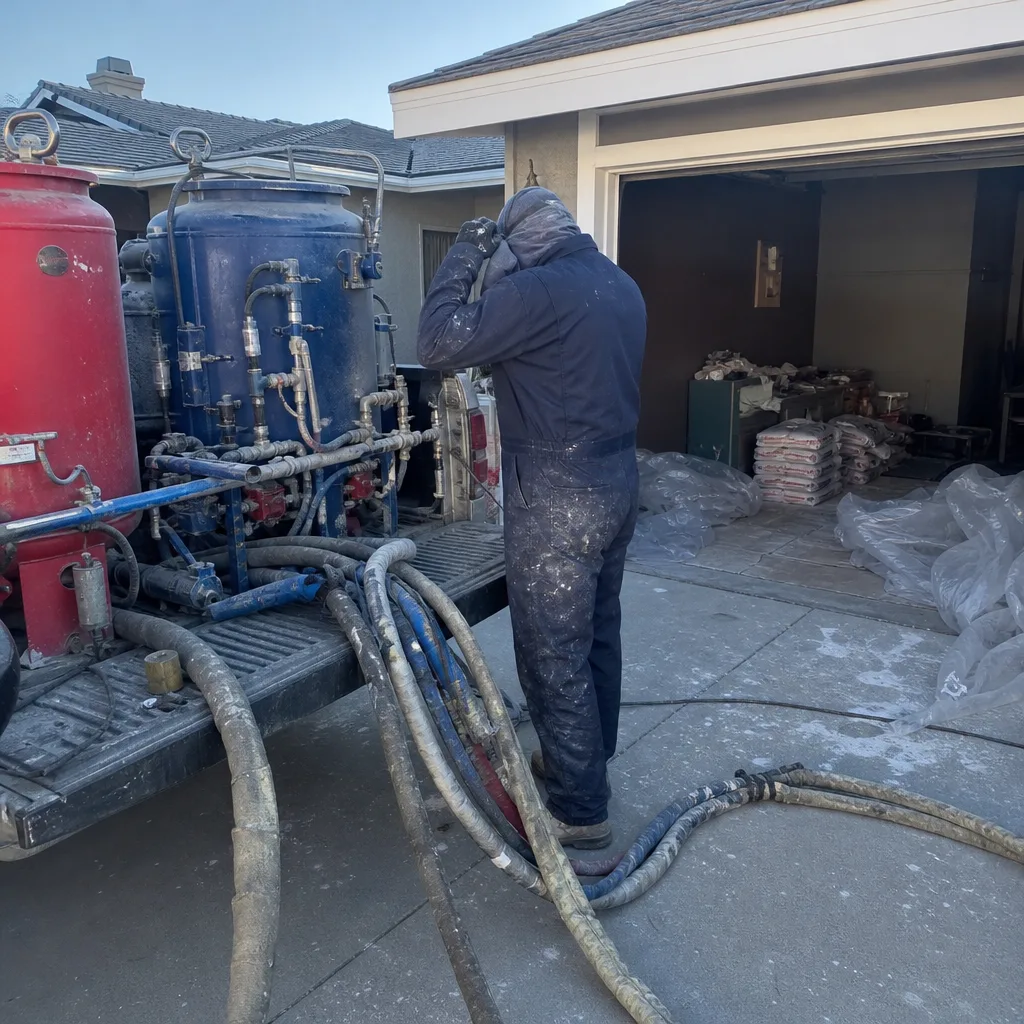
We stock and install open and closed cell spray foam from Icynene and Demilec because they’ve earned their place through performance testing, and we carry CertainTeed fiberglass and Rockwool mineral wool for the comparisons Highland homeowners deserve. No brand loyalty, just the best fit for your attic, walls, or crawlspace. When we quote a Highland home, we’re choosing from eight nationally recognized brands across four material categories, so the recommendation is driven by your attic’s wind exposure and heat load, not what’s cheapest to stock. Fast turnaround on Highland jobs means we keep the common foam kits and baffles on the truck, not waiting on a supply run from Fontana.
Common Spray Foam Insulation Problems We See in Highland Homes
- Wind-washing at the eaves: Santa Ana and canyon winds drive air through unsealed top plates and eave gaps, so foam applied without wind baffles gets erratically cooled and the tightness gain is partly lost. We address this on nearly every older Highland attic.
- Legacy mid-century attics with no radiant barrier: Original thin or missing insulation plus no radiant barrier means summer attic temps punish the foam’s performance. Foam alone without addressing radiant heat rejection leaves the attic hot and the HVAC working harder.
- Low-pitch attic geometry limiting access: 1950s to 1970s Highland ranches have shallow attic cavities near the eaves where spray foam can be applied unevenly and leave unsealed gaps. Our crews work those tight spaces deliberately, sealing what a rushed crew misses.
- Blown insulation compressed against eaves after wind events: After a Santa Ana event, we regularly find attic insulation blown to one side or compressed against the eaves in east Highland homes. Forcing us to re-level and add wind baffles before any new foam goes in.
Pricing for Spray Foam Insulation in Highland, CA
Open cell spray foam in Highland runs $2.50 to $4.50 per board foot, and closed cell runs $3.50 to $9.00 per board foot. A typical open cell attic job with baffle installation and top plate sealing lands between $3,200 and $6,800. Smaller jobs like rim joist sealing in a crawlspace run $900 to $2,200. Larger closed cell roof deck applications run $6,000 to $12,000 depending on square footage. The wind baffles, re-leveling of blown insulation, and eave access work are what separate Highland pricing from a flat-rate generic quote. Call (866) 271-1602 and we’ll walk the attic with you and give a number that includes the prep work this climate actually requires. Estimates are free.
We Also Serve Cities Near Highland
Fontana Insulation runs spray foam and insulation jobs across Highland, San Bernardino, Muscoy, Redlands, and Loma Linda. If you’re just over the line in any of those cities, the same crew and the same material-agnostic approach apply. We know the wind patterns and housing stock across the whole east valley corridor.
Serving Highland, CA — Our Local Coverage Area
We’re based in the Highland area and know this community well. Use the map below to see our service coverage — if you’re nearby, we can almost certainly help.
FAQs About Spray Foam Insulation in Highland
Highland sits at the base of the San Bernardino Mountains, so Santa Ana and canyon winds physically push air through top plates and eave gaps at a rate Redlands simply doesn’t experience. In Highland, spray foam is an air-sealing and wind-infiltration barrier first, and an R-value product second. Call (866) 271-1602 and we’ll show you where your attic is leaking.
Open cell spray foam seals the top plates and attic penetrations that let wind enter, and we install wind baffles at the eaves before foaming, so loose insulation can’t be pushed around the same way. The foam locks the air path down. If your insulation has already blown to one side, we re-level it, add baffles, then foam the gaps.
Spray foam will seal the air movement, but it won’t reject the radiant heat that builds up in a Highland attic over 100°F in summer. The honest answer: foam the top plates and penetrations for air-sealing, add wind baffles, and then address the radiant barrier as a separate layer. That combination is what actually changes comfort and energy use in a legacy mid-century Highland home.
For most Highland attics with low-pitch geometry and eave gaps, open cell is the better fit because it expands into the irregular cavities near the eaves and seals the air path that wind exploits. Closed cell adds more R-value per inch and structural rigidity, but in a tight low-pitch attic the air-sealing performance of open cell is what moves the needle. We’ll show you both and let the attic decide.
Yes, that’s standard on every Highland job. We seal the attic access hatch, install wind baffles at the eaves, and foam the top plates and penetrations before the main spray. If we skip the eave gaps, the wind-washing defeats the whole point, so we treat them first. Call (866) 271-1602 for a free estimate on the full scope.
Written by Noel Arredondo, Owner at Fontana Insulation, serving Highland and the surrounding communities with brand-neutral insulation guidance since day one.