
Fast, Reliable Spray Foam Insulation Across Compton
Spray foam insulation in Compton typically runs $2.80 – $5.50 per board foot installed, with a standard 1,200 sq ft attic job landing between $3,400 and $6,600 depending on open-cell versus closed-cell foam. Most Compton homes we work on need the work done right the first time because the real bottleneck isn’t the foam; it’s getting into the attic at all. Our crews know the hallway-scuttle layouts and low-pitch roofs in 90221 through 90224 better than any out-of-town contractor ever will. Call (866) 271-1602 for a free estimate and we’ll walk you through what your specific house actually needs.
Why Fontana Insulation Is Compton’s Preferred Spray Foam Insulation Company
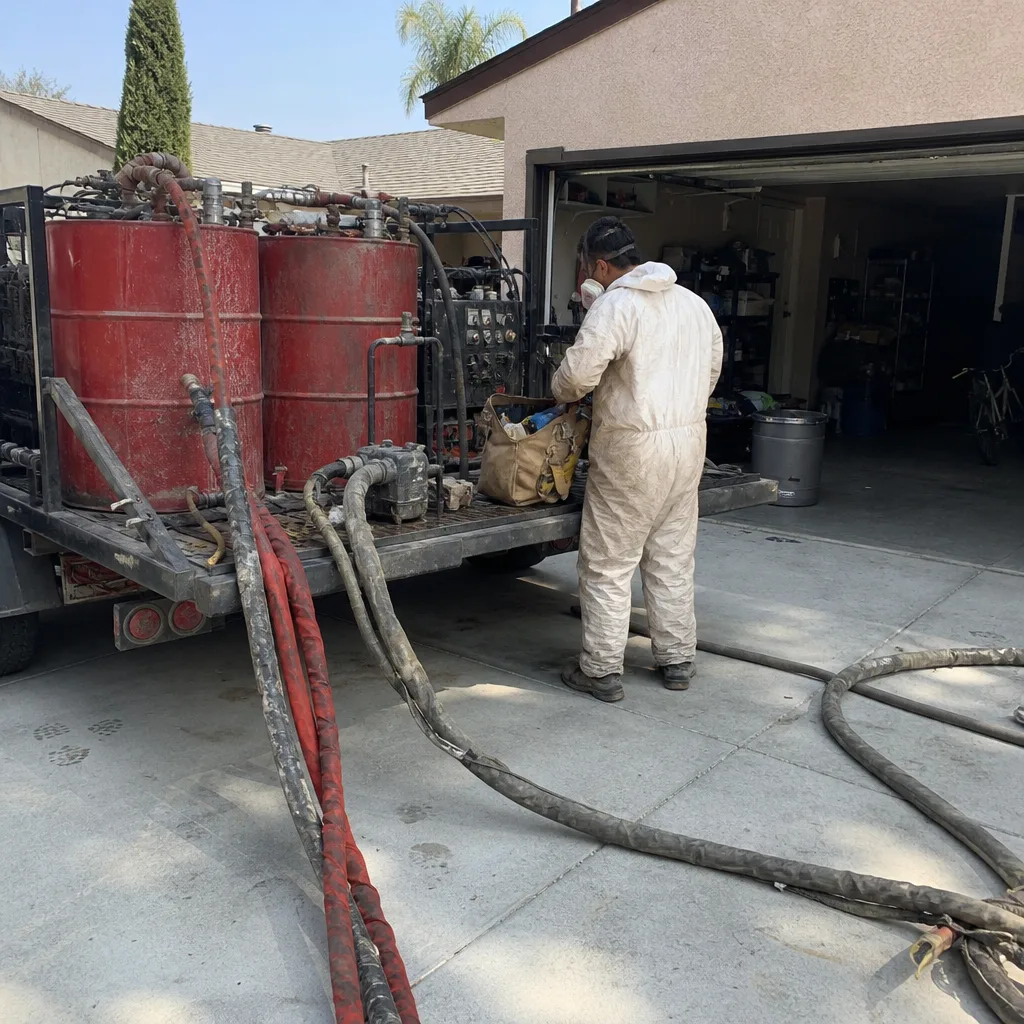
Compton homeowners call us because we show up understanding what a 1950s stucco tract house looks like inside the attic. That matters more than you’d think. A crew that assumes a pull-down stair is going to stand there staring at a 22-inch hallway scuttle and burn your afternoon. Ours doesn’t; we rig temporary hatch access and run high-lift equipment as standard practice here.
Noel Arredondo runs our Spray Foam Insulation team, and he’s the reason we stock Icynene and Demilec products specifically suited to retrofit work rather than new-construction only. We don’t push one brand because it’s what we have in the truck. We match foam to the application: open-cell for interior air sealing, closed-cell where moisture or structural rigidity matters, and always with an honest conversation about whether spray foam is even the right tool for your job.
Local reputation in Compton comes from showing up on time, quoting a real number, and not padding the job with unnecessary work. We carry Rockwool, Knauf, and CertainTeed as well, so if blown-in or mineral wool serves a Compton homeowner better than foam, we’ll say so and install that instead.
Spray Foam Insulation Contractors in Compton
Spray Foam Insulation Contractors in Compton have to deal with a housing stock that most contractors in newer cities never see: 1940s through 1960s wood-frame stucco homes with original construction details that fight against modern air-sealing work. The job here is almost always retrofit, not new-build. That means working around existing electrical, old ductwork, and attics that were never designed for anyone to be up there. We handle it regularly.
Retrofit Air Sealing for Postwar Homes
Most Compton homes we enter have zero air sealing at the top plate. That’s the gap between the wall framing and the attic floor where conditioned air escapes all year. Spray foam applied along the perimeter and around penetrations stops that loss at its source. This matters more in Compton than in coastal LA because inland summer heat pushes attics past 130°F.
Closed-Cell for Structural and Moisture Concerns
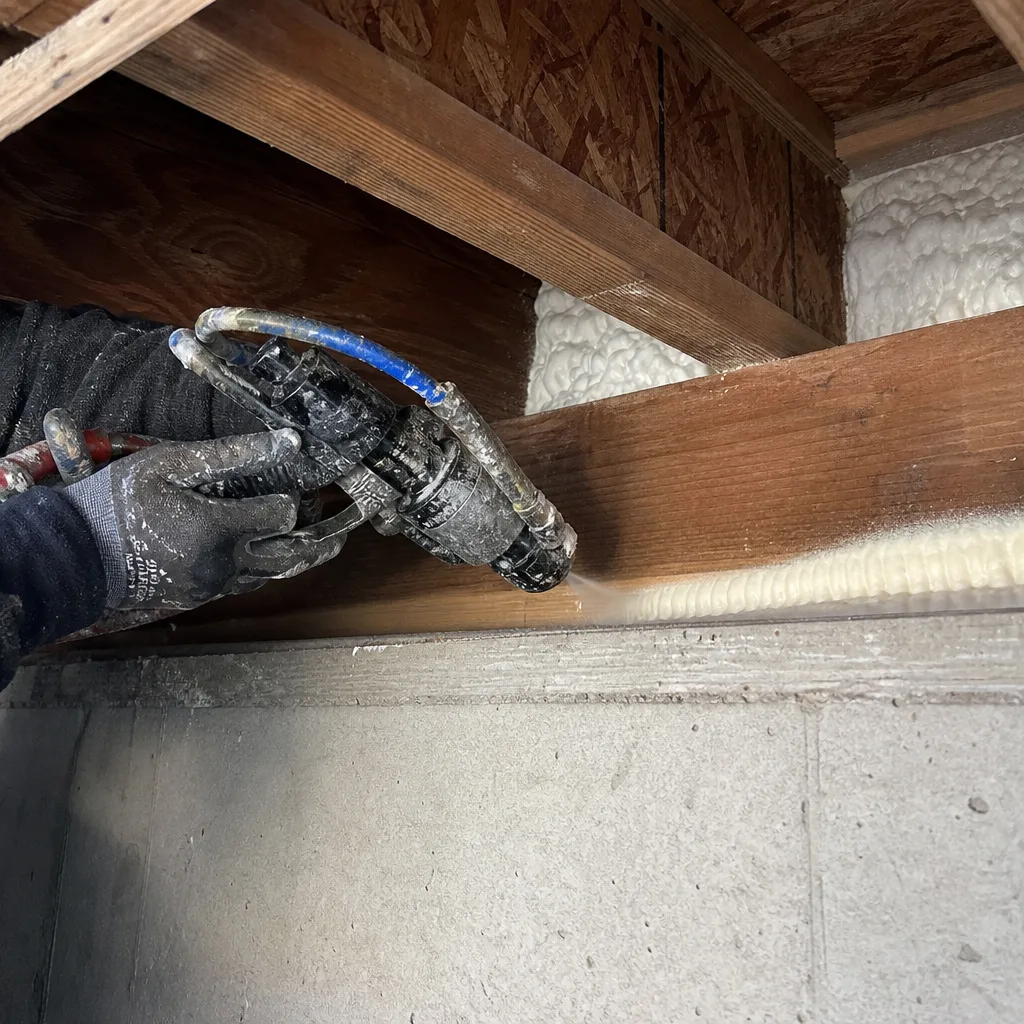
Older wood-frame homes in Compton sometimes need closed-cell foam for its added rigidity and vapor resistance, particularly around rim joists and crawlspace edges. Our team installed Icynene closed-cell on a 90221 home off Alondra Boulevard where the crawlspace was drawing moisture into the floor system. The foam solved the humidity and tightened the thermal boundary in the same pass.
Spray Foam Attic Insulation in Compton
Spray Foam Attic Insulation in Compton is the highest-value job we do in this city. A standard 1,000 – 1,400 sq ft attic with open-cell foam runs $2,800 – $4,600; upgrade to closed-cell and you’re looking at $4,800 – $7,200. The price difference comes down to R-value per inch and whether you need the vapor-barrier properties of closed-cell. Every quote we give is based on a site assessment, not a guess over the phone.
Scuttle-Access Installations
Most Compton postwar homes have a small hallway scuttle instead of a pull-down attic stair. Our crews bring the right high-lift equipment to run material through a narrow opening without damaging ceiling drywall. We’ve done enough of these to know where the trusses pinch and how to get full coverage over the living room ceiling even when the roof deck is only inches above the joists.
Air Sealing Before Foam
Spray foam on bare joists does little good if the top plates and bypasses are left unsealed. That’s the exact mistake we see from contractors who rush to spray and skip the prep. On a 1950s house in 90222 with no original attic insulation, we found bare ceiling joists over the living room and a roof deck barely three feet above the floor. Sealing the top plate and plumbing penetrations first, then hitting the deck with Icynene foam, finally pulled the summer attic temperature down from something you could bake in to something a human could actually walk through.
Trusted Brands We Service in Compton
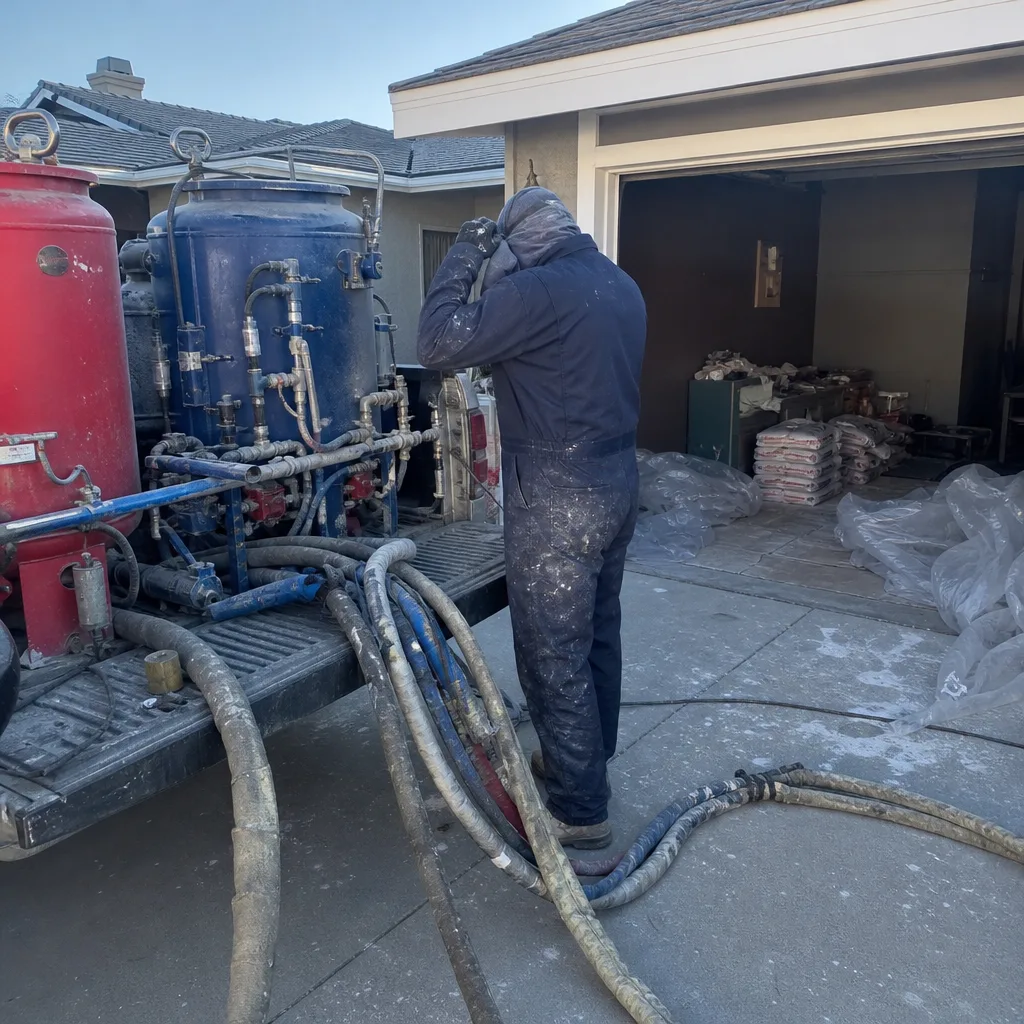
We stock and install Icynene and Demilec spray foam because these are the two most performance-tested open- and closed-cell brands we’ve worked with. For Compton homeowners who want an alternative, we carry Rockwool mineral wool for fire resistance and sound dampening, plus Knauf and CertainTeed fiberglass when a simpler attic job calls for it. Keeping multiple brands means we never have to force a product that doesn’t fit your house. No brand loyalty, just the best material for your attic, walls, or crawlspace. We keep common retrofit parts and accessories on hand for Compton jobs specifically, which means less waiting when a job needs to move fast.
Common Spray Foam Insulation Problems We See in Compton Homes
- Hallway scuttle access with no pull-down stair. Crews that assume standard attic access stall out before spraying. We rig temporary hatch access and bring high-lift equipment as standard practice in Compton.
- Thin or zero original insulation over bare joists. Many 90221 and 90222 homes were built with no attic insulation at all. Spray foam hides unsealed top plates and bypasses unless air sealing happens first.
- Low-pitch and flat-ish postwar roofs limiting working room. The roof deck sits close to the joists on many Compton homes. Thick closed-cell passes need proper cure time and ventilation; rushing this creates off-gassing complaints.
- Unsealed crawlspaces drawing moisture into the floor system. Wood-frame stucco homes with open crawl vents pull damp air upward. Rim-joist spray foam paired with crawlspace air sealing resolves the humidity and draft in one pass.
Pricing for Spray Foam Insulation in Compton, CA
Open-cell spray foam in Compton runs $0.90 – $1.60 per board foot for materials, with labor and equipment bringing the installed cost to $2.80 – $3.80 per board foot. Closed-cell foam carries a higher material cost, typically $1.50 – $2.30 per board foot, and installs at $4.20 – $5.50 per board foot. A typical 1,200 sq ft attic with 2×6 joists needs roughly 1,200 – 1,800 board feet, which is how you arrive at the $3,400 – $6,600 range. Rim joist jobs run $900 – $1,800 for a full perimeter. Garage ceiling spray foam runs $700 – $1,400 depending on size. Estimates are free, and we give you a written quote with the exact material, R-value target, and prep work included.
We Also Serve Cities Near Compton
Our Compton crews regularly run jobs in East Rancho Dominguez, West Rancho Dominguez, Carson, and Gardena. If you’re in one of those cities and dealing with a scuttle-access attic or a drafty postwar stucco house, the same team and the same Icynene and Demilec foam options are available. Call (866) 271-1602 and we’ll schedule a site visit at your convenience.
Serving Compton, CA — Our Local Coverage Area
We’re based in the Compton area and know this community well. Use the map below to see our service coverage — if you’re nearby, we can almost certainly help.
FAQs About Spray Foam Insulation in Compton
Yes. We spray foam scuttle-access attics in Compton all the time. We rig a temporary hatch opening, run high-lift equipment to reach the roof deck, and work around trusses that pinch the space. The foam still seals the same way; the access just requires different equipment and a crew that knows the layout. Call (866) 271-1602 for a quote specific to your home’s attic configuration.
It depends on your air-sealing needs. If the top plates and bypasses in your 90222 home are unsealed, spray foam solves the air leak and the insulation gap in one pass. Blown-in fiberglass or cellulose is cheaper up front but does nothing for air infiltration. For a bare-joist attic over living space, sealing first with foam is the highest-value move.
No, you don’t need to replace windows first. Attic spray foam addresses heat gain from above, which is the largest driver of summer discomfort in Compton’s inland climate. Windows matter, but a 130°F attic radiating down through uninsulated ceilings will overwhelm any window upgrade. Fix the attic thermal boundary first, then evaluate windows as a separate project.
Yes, and this is actually a common setup in Compton. We recommend treating the crawlspace as part of the same thermal boundary: rim-joist spray foam around the perimeter plus air sealing at the floor penetrations. The combination stops the stack effect where hot attic air pulls up through the house while damp crawlspace air gets drawn in from below.
Open-cell spray foam allows re-entry after about 8 – 12 hours once off-gassing clears with ventilation. Closed-cell foam requires 24 hours before we recommend occupying the space. Low-pitch Compton roofs can slow cure time slightly because there’s less air movement above the foam, so we build that into our scheduling. Call (866) 271-1602 and we’ll give you a timeline based on the specific foam and attic configuration.
If your Compton house has a hot attic, drafts, or utility bills that don’t match the size of your home, call (866) 271-1602 for a free estimate. We’ll inspect your attic access, check what’s up there now, and give you a straight answer about whether spray foam is the right fix or whether blown-in or mineral wool serves you better. No pressure, no upselling, just an honest read on your house.
Written by Noel Arredondo, Owner at Fontana Insulation, serving Compton since the company’s founding.