
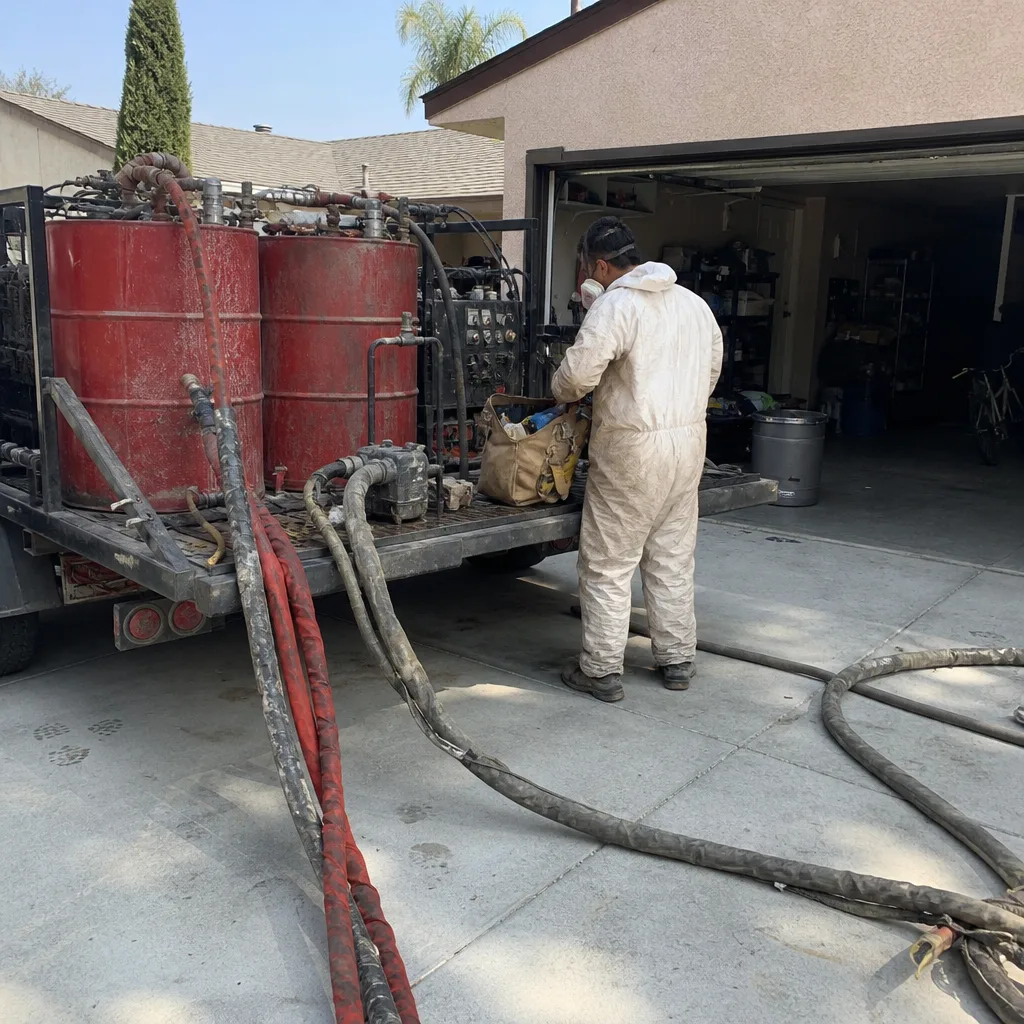
Fast, Reliable Spray Foam Insulation Across Cathedral City
Spray foam insulation in Cathedral City is the highest-performance fix for homes that bake under Coachella Valley sun. If you’re dealing with a hot second story, an AC that won’t cycle off, or walls that radiate heat after sunset, the problem is usually an under-insulated thermal boundary. Fontana Insulation installs open-cell and closed-cell foam across Cathedral City, and we stock the material options to match your specific walls, attic, and budget. Call (866) 271-1602 and we’ll schedule a site assessment before the pre-summer rush fills the calendar.
Why Fontana Insulation Is Cathedral City’s Preferred Spray Foam Insulation Company
Most insulation contractors in the Coachella Valley push one or two product lines. We don’t. Fontana Insulation carries eight brands across fiberglass, mineral wool, spray foam, and cellulose, so the recommendation you get is driven by your home’s construction and your cooling bill, not by what’s cheapest on our truck. Noel Arredondo built Fontana around a simple principle: match the material to the application. In Cathedral City’s 1960s through 1980s stucco tract homes, that usually means spray foam for air sealing, because the original insulation has long since stopped doing its job.
We know Cathedral City’s housing stock because we’ve been inside it. We see the same failures on Date Palm Drive, in Cathedral Canyon, and through the 92234 and 92235 zip codes: sagging original batts, uninsulated stucco walls, and attic temperatures that climb past 140°F by mid-June. Local homeowners call us because we can explain exactly why their house heats up at 4 p.m. and exactly what foam will do about it. When you call for spray foam in Cathedral City, you get a specialist, not a salesman.
No Brand Loyalty. Just the Right Foam for Your Walls and Attic.
We install Icynene and Demilec spray foam because both brands have decades of performance testing behind them in hot-climate applications. But we also carry Johns Manville and CertainTeed fiberglass, Rockwool mineral wool, and GreenFiber cellulose. If your Cathedral City attic needs air sealing, closed-cell foam makes sense. If you want fire resistance in a garage ceiling, Rockwool might be the better call. We sell the material your house needs.
Spray Foam Attic Insulation in Cathedral City
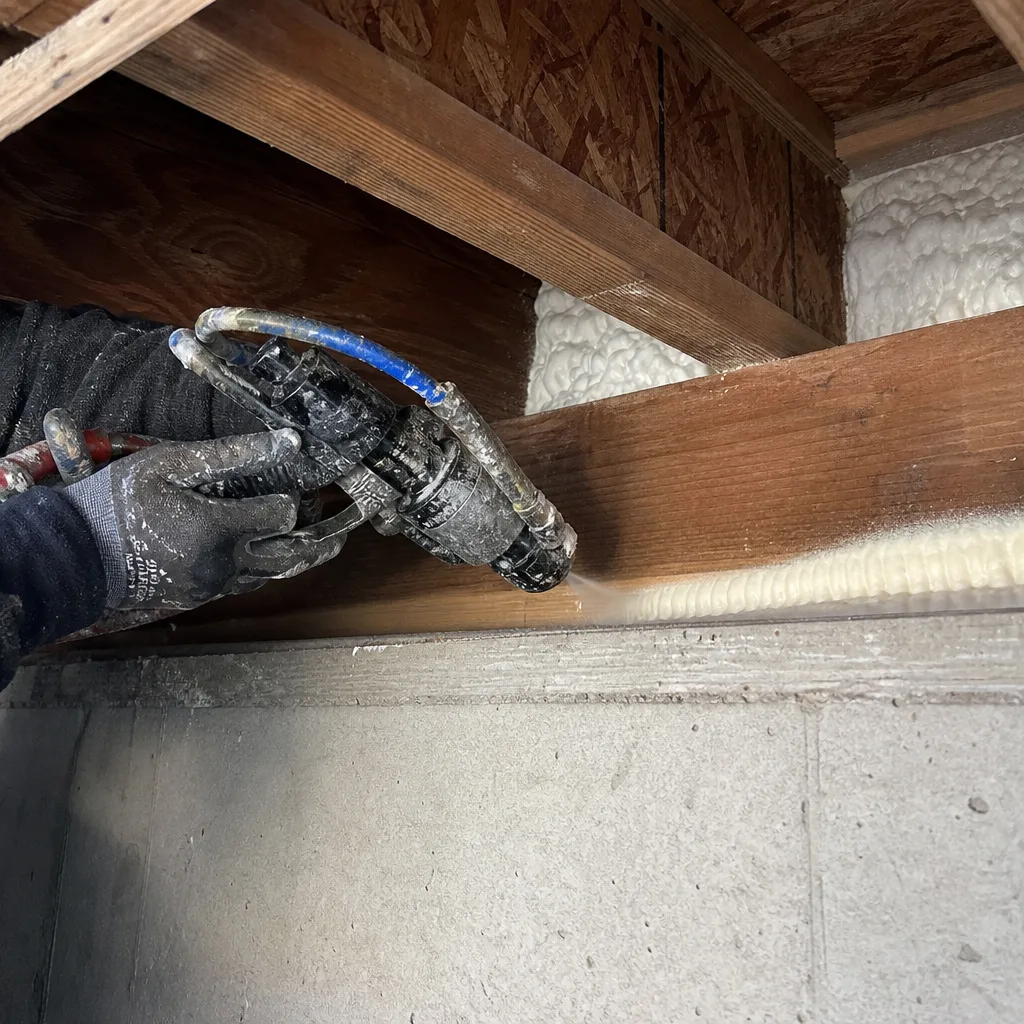
Spray Foam Attic Insulation in Cathedral City is the most direct fix for the single biggest heat source in your home: the attic. In a 1970s tract attic off Ramon Road, the original R-11 batts are often compacted to an effective R-4 and pulling away from the rafters. That means your ceiling is doing very little to stop the 140°F attic air from radiating into the living space below. We remove degraded batts where needed, air-seal the top plates and penetrations, and apply closed-cell foam to create a continuous thermal boundary. A typical spray foam attic retrofit in Cathedral City runs $3,200 to $7,800 depending on square footage, access, and whether we’re removing old insulation first.
This is the insulation method that makes sense for Cathedral City, not just another layer of batts. The foam seals the leaks that let superheated attic air press into your rooms. Batts don’t seal anything. In the 92234 and 92235 zip codes, where cooling is the entire ballgame, air sealing is the difference between an AC that cycles and one that runs from noon to midnight.
Open-Cell in the Attic: The Right Fit for Most Tract Homes
For most single-story stucco tract homes in Cathedral City, open-cell spray foam does the job in the attic. It’s lighter, expands well into tight corners and rafter bays, and costs less than closed-cell. It still provides the air seal that batt insulation can’t.
When Closed-Cell Is Worth the Extra Cost
If your Cathedral City home has a spray foam roof deck application, or if you’re insulating a garage ceiling that gets direct sun all day, closed-cell foam earns its price. It adds structural rigidity and acts as a vapor barrier, which matters in a roof deck that sees 140°F surface temperatures from May through September.
Spray Foam Wall Insulation in Cathedral City
Spray Foam Wall Insulation in Cathedral City solves a problem most homeowners don’t realize they have until they touch the wall at 6 p.m. and it’s radiating heat. Stucco-on-frame construction from the 1960s through the 1980s frequently has no wall insulation at all. That west-facing wall off Cathedral Canyon Drive has been soaking up sun since morning, and it’s dumping that heat into your living room after the sun goes down. We inject slow-rise foam through small holes drilled in the stucco, which means we restore the thermal barrier without opening up the wall. Wall injection foam in Cathedral City typically runs $1,900 to $4,500 for an average single-story home, depending on wall area and accessibility.
This is the retrofit that handles the heat you can’t see. Attic insulation helps, but if your walls are uninsulated stucco, you’re still losing the fight every afternoon. The foam fills the wall cavity completely, blocks air movement, and turns a heat sink into a thermal boundary.
Injection Foam for Existing Walls
For existing Cathedral City homes, injection foam is the practical method. We drill discreet access holes from the exterior, inject slow-rise foam into the cavity, and patch the stucco to match. You don’t lose your drywall, your siding, or a week of your life.
New Construction and Additions
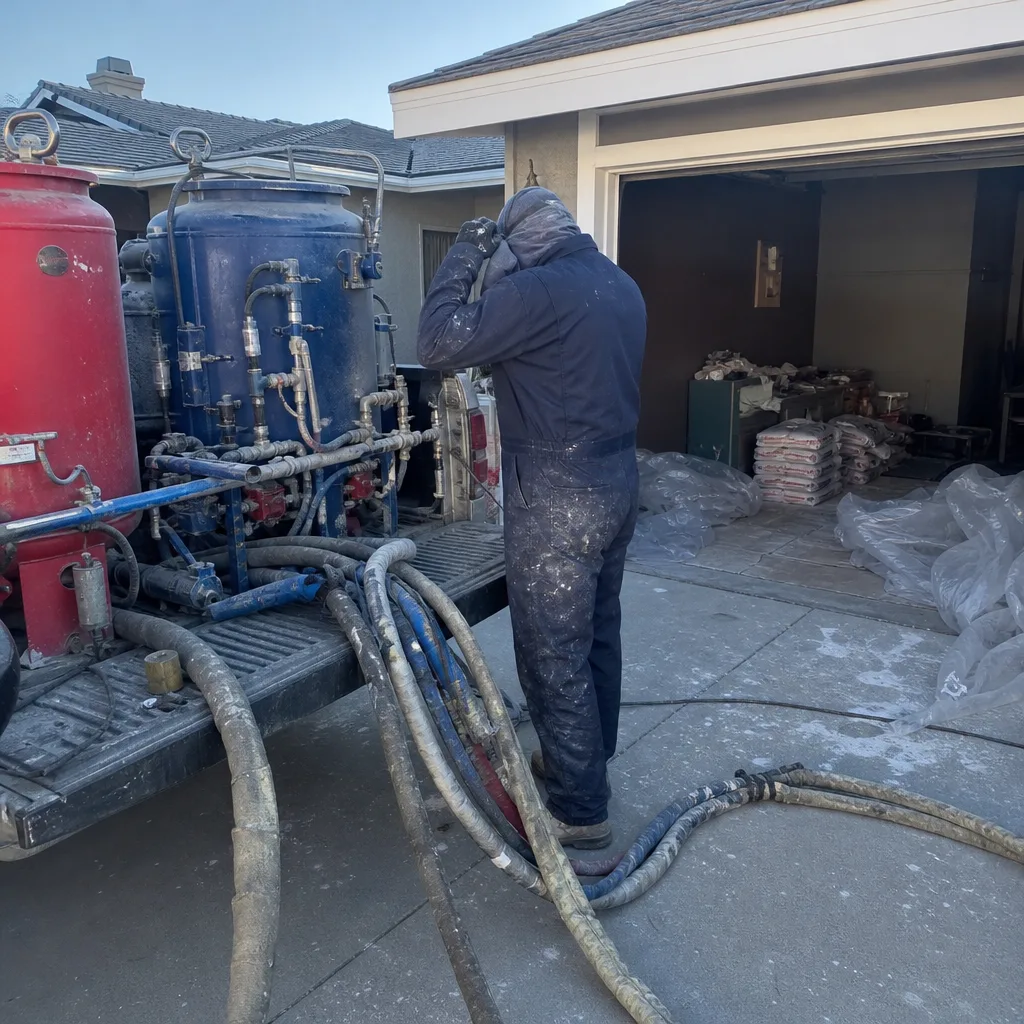
If you’re adding a room or building new in Cathedral City, spray foam applied at the framing stage is the cleanest way to hit modern energy codes. We work with remodelers and builders across the Coachella Valley to get the thermal boundary right the first time.
Trusted Brands We Service in Cathedral City
Fontana Insulation installs spray foam from Icynene and Demilec, two of the most performance-tested foam brands in North America. We also carry Johns Manville and CertainTeed fiberglass for jobs where foam isn’t the right material, plus Rockwool mineral wool for Cathedral City homeowners who want fire resistance and sound dampening in garage ceilings or shared walls. The point isn’t brand selection. It’s that we stock enough options to make an honest recommendation. If your Cathedral City attic needs air sealing, we’ll tell you why. If your walls need injection foam, we’ll quote that. And if batt insulation is genuinely the right call for your budget, we’ll install that and tell you exactly what to expect.
Common Spray Foam Insulation Problems We See in Cathedral City Homes
- Compacted original R-11 batts in 1970s tract attics. Decades of 140°F attic heat have crushed the original fiberglass in thousands of Cathedral City attics. The center of the attic is often down to R-4 effective, and the AC runs nonstop because the ceiling can’t block the heat.
- Degraded radiant barriers on older insulation. Intense Coachella Valley solar exposure breaks down the foil facings on attic insulation within a decade. The facing flakes away, reflectivity drops, and heat radiates straight through the attic floor into the rooms below.
- Zero insulation in stucco-on-frame walls. Many Cathedral City homes from the 1960s through the 1980s went up with empty wall cavities. The stucco and framing transmit heat directly into the living space, and no amount of attic insulation fixes it.
- Manufactured homes with thin, original insulation. Older snowbird park communities in Cathedral City have manufactured homes with minimal insulation from the factory. After 30 years in the desert sun, what little insulation was there has settled and degraded past usefulness.
Pricing for Spray Foam Insulation in Cathedral City, CA
Spray foam attic insulation in Cathedral City typically runs $3,200 to $7,800 for a full retrofit on a single-story tract home. Wall injection foam for stucco homes runs $1,900 to $4,500 depending on wall area. Garage ceiling spray foam usually lands between $900 and $2,200. Rim joist spray foam for the perimeter of a cathedralized attic or raised foundation runs $800 to $1,800. The big variables are square footage, access difficulty, whether we’re removing old insulation, and open-cell versus closed-cell. We give you an itemized written estimate before any work starts, and the estimate is free. Call (866) 271-1602 for an exact quote on your Cathedral City home.
We Also Serve Cities Near Cathedral City
Beyond Cathedral City, our Spray Foam Insulation crews cover Rancho Mirage, Palm Springs, Thousand Palms, and Palm Desert. If you’re in the east valley and your attic is hitting 140°F by lunchtime, we’re already working in your area. And if you’re comparing insulation contractors across the Coachella Valley, this page on Spray Foam Insulation in Cathedral City covers what makes this market different from the rest of the desert.
Serving Cathedral City, CA — Our Local Coverage Area
We’re based in the Cathedral City area and know this community well. Use the map below to see our service coverage — if you’re nearby, we can almost certainly help.
FAQs About Spray Foam Insulation in Cathedral City
No, and you don’t want it to. The degraded batts have to come out before spray foam goes in. If you spray foam over compacted R-11 batts, the foam seals the top surface but the space below the batts remains an uninsulated void, and the old insulation keeps acting like a thermal sponge. We remove the failed material, air-seal the top plates, then apply foam directly to the attic floor or roof deck. That’s the only way to restore a continuous thermal boundary. Call (866) 271-1602 and we’ll inspect what’s actually up there.
Blown-in insulation slows heat transfer, but it doesn’t stop air movement. In a Cathedral City attic that hits 140°F, the air itself is the enemy. Spray foam seals the leaks around top plates, can lights, and plumbing penetrations, so superheated attic air stops pressing into your living space. That’s the difference between adding resistance and building an actual air barrier. For Cathedral City’s cooling-dominated climate, the air seal matters more than the R-value bump.
Yes. We drill small access holes from the outside, inject slow-rise foam into the wall cavity, and patch the stucco so it blends in. No drywall removal, no interior disruption, and no week-long tear-out. In a 1980s Cathedral City condo with empty wall cavities, injection foam is the only practical way to stop the mid-day heat radiating from the west wall. Most jobs finish in one to two days.
Usually not, if the goal is cooling cost and comfort. Manufactured homes in Cathedral City’s older park communities often have thin, settled insulation from the factory and air leaks everywhere. Open-cell spray foam on the underside of the roof deck or in the floor cavity can make a measurable difference in AC runtime. But we’ll look at the structure first. In some park homes, blown-in cellulose is the more cost-effective play. We’ll tell you what the house needs, not just what sells for the highest ticket. Call (866) 271-1602 for a straight answer.
Schedule in March or April. Cathedral City’s insulation contractors book out three to five weeks ahead of the first 110°F week, and by May the calendar is full through July. The pre-summer rush is when the 140°F attics start showing up, and the longest wait is always right when you want the work done immediately. Call (866) 271-1602 now and we’ll get you on the schedule before the heat locks it down.
The Real Problem in Cathedral City: 140°F Attics and Under-Insulated Walls
Cathedral City’s housing stock was built for cheap cooling, not energy efficiency. The mid-century and 1970s through 1980s stucco tract homes that dominate the 92234 and 92235 zip codes went up with R-11 batts in the attic and nothing in the walls. That worked when electricity was cheap and the Coachella Valley was smaller. It doesn’t work now. In a 1979 stucco tract home off Date Palm Drive, our crew found the original R-11 batts sagging to R-4 in the center of the attic and pulling away from the rafters at the edges. We removed the degraded batts, air-sealed the top plates, and applied 2 inches of closed-cell spray foam to the attic floor, cutting the homeowner’s afternoon AC runtime by roughly 30%. The same week, a 1980s condo near Cathedral Canyon had zero wall insulation. We injected slow-rise foam through the stucco, stopping the mid-day heat gain that had been radiating from the west wall.
That’s Cathedral City’s insulation problem in one paragraph. Not cold. Not moisture. Heat. Relentless, 110°F-plus desert heat that turns attics into ovens and stucco walls into radiators. The fix isn’t another layer of fiberglass on top of the failed original. It’s a continuous thermal boundary that actually stops the heat at the source. For most of this housing stock, that means spray foam.
Written by Noel Arredondo, owner at Fontana Insulation. We install attic insulation, spray foam, and blown-in across Cathedral City, Palm Springs, Rancho Mirage, Thousand Palms, and Palm Desert. Call (866) 271-1602 for a free estimate on your home.