
Fast, Reliable Attic Insulation Across South Whittier
Attic insulation in South Whittier is about heat. Not the mild winters, not the occasional cold snap. It’s the weeks of 95 – 100°F+ summer days that turn a 1950s ranch attic into an oven and force your AC to run nonstop. Most homes here were built when R-19 fiberglass was considered adequate. Today that’s nowhere near enough for an inland-adjacent San Gabriel Valley summer. Our crews work South Whittier’s 90605 zip code every week, and we know exactly what these low-pitch, vented attics need before the next heat wave hits. Call (866) 271-1602 and we’ll put a real number on it.
Why Fontana Insulation Is South Whittier’s Preferred Attic Insulation Company
We’re insulation specialists, not general contractors who dabble in it. That distinction matters when you’re dealing with a South Whittier attic that’s been cooking under decades of inland heat. The original batts in these homes are often collapsed, settled, or missing entirely. We’ve re-insulated enough of them to know what we’re walking into before we open the hatch.
What sets us apart in South Whittier specifically is the material range. We carry Johns Manville and CertainTeed fiberglass, Rockwool mineral wool, GreenFiber cellulose, and Icynene and Demilec spray foam. We’re not pushing one product line because it’s what’s in the warehouse. The recommendation comes from your attic’s condition, your roof pitch, your venting setup, and what you’re actually trying to solve: a hot back bedroom, a freezing hallway, or a cooling bill that climbed every July since you moved in.
Noel Arredondo runs the operation, and the standard he’s set is simple: scope the job correctly the first time, including the LA County permit path South Whittier requires, and install material that actually performs at the R-value we quote. Not a guess. Measured.
Insulation Contractors in South Whittier
Insulation Contractors in South Whittier handle a specific kind of retrofit: taking a 1950s – 60s single-story stucco ranch home with original or degraded insulation and bringing the attic up to a modern thermal boundary. The work usually starts with an attic inspection to see what’s actually up there. In South Whittier, that often means collapsed fiberglass batts, settled blown material, and eave vents that someone stuffed with insulation years ago. A full attic retrofit here typically runs $1,800 – $4,200 depending on square footage, access, and whether we’re removing old material or topping up. Adding air-sealing or baffle work lands on top of that.
Blown-In and Batt Replacement
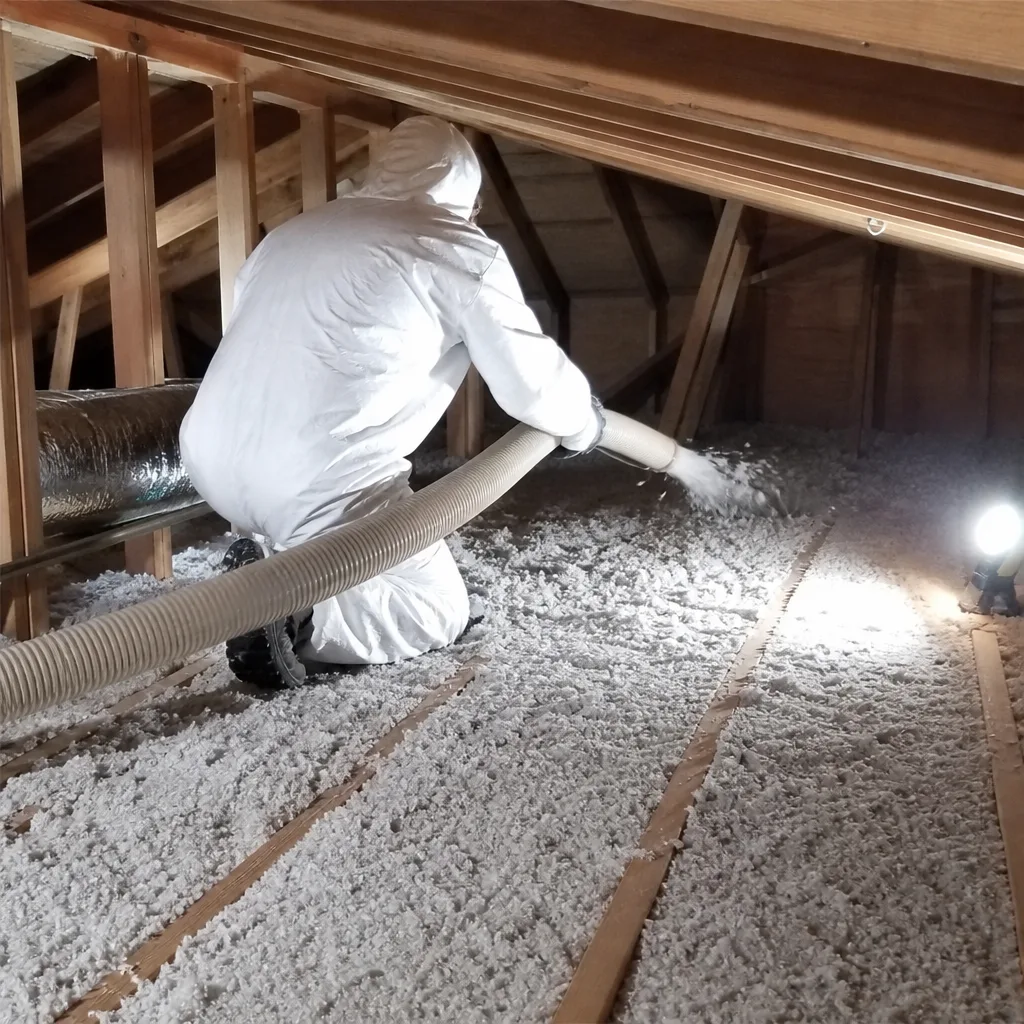
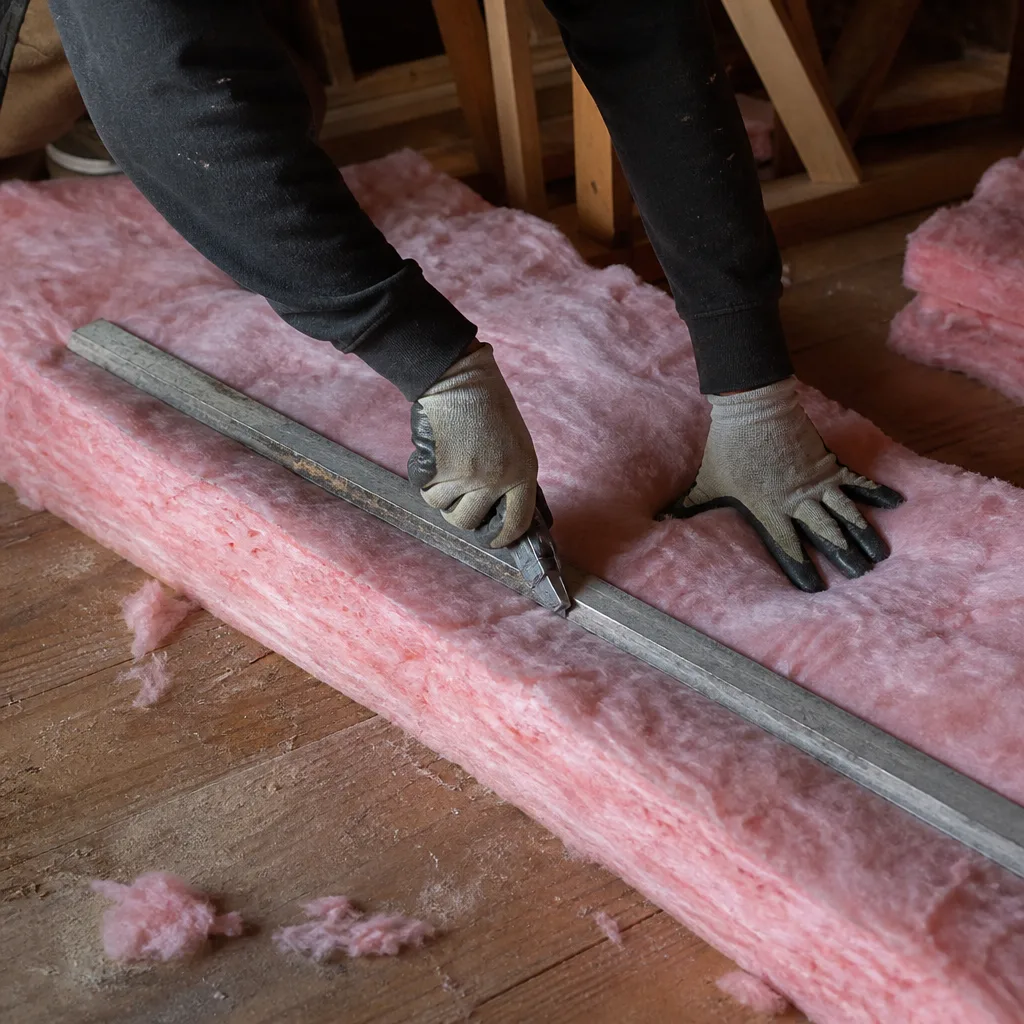
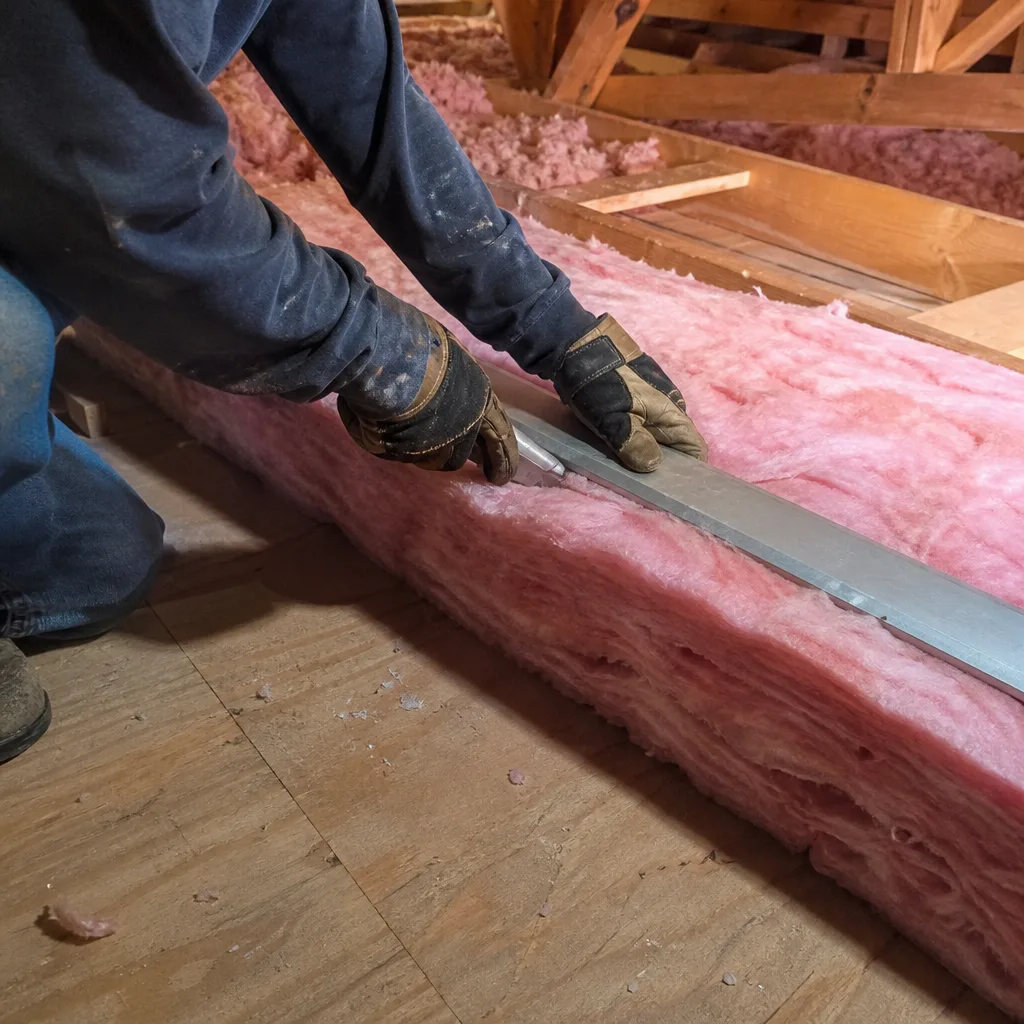
For most South Whittier ranches, we’re either re-blowing cellulose or fiberglass to a modern R-value, or pulling out the old batts and laying fresh ones. The choice depends on your attic layout. Low-clearance attics with tight joist spacing usually do better with blown material. Deeper, walkable attics can take either.
Top-Up Work and Full Replacement
If your existing insulation is dry, uncontaminated, and sitting at maybe 60% of target depth, a top-up is often the right call. That runs lower, typically $900 – $1,600. But if the old material is collapsed, rodent-soiled, or blocking your soffit vents, removing it first is the only way to get an honest R-value. We’ll tell you which one your attic actually needs.
Attic Ventilation in South Whittier
Attic Ventilation in South Whittier is the piece most contractors skip, and it’s the piece that matters most in these low-pitch ranch homes. Here’s the failure we see constantly: the original eave vents are still there, but someone blew insulation over them years ago, or they were never baffled in the first place. The ridge vent has nothing to pull from. So the attic bakes at 140°F+ all afternoon, and whatever insulation you put up there is fighting a losing battle. Proper ventilation work in South Whittier, including baffle install and soffit-to-ridge airflow restoration, typically runs $400 – $1,100 depending on linear footage and how much hand-clearing the eave bays need. It’s not optional work. Not in this climate.
Soffit Baffle Restoration
In these older attics, foam baffles are the fix. They create a channel from each eave vent up into the attic so air actually moves. We hand-clear each bay, set the baffle, and staple it in place before any new insulation goes down. Skip this step and your new R-38 is just a blanket trapping hot air underneath it.
Ridge and Eave Airflow Check
Before we blow or lay anything, we verify the airflow path. That means checking ridge vent condition, confirming the soffit vents are actually open, and measuring the net free vent area against attic square footage. Most 1950s South Whittier homes were under-vented from day one. We fix that as part of the insulation job, not as an afterthought.
Trusted Brands We Service in South Whittier
We stock Johns Manville and CertainTeed fiberglass because they’re two of the most widely warrantied batts in the industry, and they hold their rated R-value in the kind of heat South Whittier attics deal with. We carry Rockwool mineral wool for homeowners who want fire resistance and sound dampening along with thermal performance, something most local insulation outfits don’t even stock. And GreenFiber cellulose is a frequent choice here for re-blows: it settles less over time, fills irregular joist bays in older framing, and carries strong recycled-content credentials. For South Whittier homeowners, we keep common batt widths and blow material on the truck, so a standard ranch retrofit doesn’t wait on a supplier run.
Common Attic Insulation Problems We See in South Whittier Homes
- Collapsed original fiberglass batts. These 1950s – 60s ranches were built with thin batts that have been flattened by decades of heat. They’re often sitting at R-11 or worse, and topping over them never restores true depth.
- Baffle-blocked soffit vents. Someone blew insulation into the eave bays years ago and smothered the intake vents. The attic can’t breathe, so it overheats and the living space below never cools down properly.
- Settled blown-in material. In low-ceiling attics, old blown fiberglass compacts under heat and time. What started as 10 inches ends up at 4, and the R-value drops with it.
- Uninsulated attic hatches and can lights. A surprising amount of heat moves through the hatch and unsealed can light housings. In South Whittier’s summer, that’s a steady leak into your hallway and bedrooms.
Pricing for Attic Insulation in South Whittier, CA
For a typical 1,200 – 1,600 sq ft South Whittier ranch, a complete attic insulation replacement runs $2,200 – $4,200. That includes removing the old material, restoring ventilation, and installing new insulation to a modern R-value. A top-up on existing insulation typically lands between $900 and $1,600. Ventilation-only work, meaning baffles and airflow restoration, runs $400 – $1,100 depending on how much of the eave line is blocked. The biggest cost variables are attic access, how much old material has to come out, and whether we’re hand-clearing eave bays. Every estimate is free, and we give you the number before any work starts. Call (866) 271-1602 for an exact quote on your attic.
We Also Serve Cities Near South Whittier
Fontana Insulation handles Attic Insulation projects throughout the Whittier area and into neighboring cities. You’ll find us working in Whittier, East La Mirada, La Mirada, and Santa Fe Springs on a regular basis. If you’re just outside the 90605 boundary, we can still get you scheduled for an inspection and estimate. Learn more about our work across the region on our South Whittier page.
Serving South Whittier, CA — Our Local Coverage Area
We’re based in the South Whittier area and know this community well. Use the map below to see our service coverage — if you’re nearby, we can almost certainly help.
FAQs About Attic Insulation in South Whittier
Yes. South Whittier is unincorporated, so there’s no city building department. Attic insulation retrofits and any associated electrical or ventilation changes route through LA County building rules and Title 24 cool-attic compliance. We handle that paperwork and scope as part of the job, which is one reason to work with a contractor who knows the unincorporated path. Call (866) 271-1602 and we’ll walk you through what your specific address triggers.
Yes, and that’s how we prefer to do it. The vent work has to happen before the new insulation goes in, otherwise you’re burying the same problem again. On a low-pitch South Whittier ranch, we typically hand-clear the eave bays, set baffles, then blow the insulation to depth in one trip. It’s the only sequence that actually holds the R-value through a San Gabriel Valley summer.
If the original batts are collapsed, dirty, or blocking your eave vents, no. Blowing over them traps the old problems under the new material and you never reach the intended R-value. We’ll remove what’s failing, restore the venting, and install fresh insulation matched to your attic. In some cases where the old batts are still in decent shape, a top-up is fine. The inspection tells us which route you need. Call (866) 271-1602 to schedule one.
Yes. In South Whittier’s climate, a well-insulated attic with no airflow still hits 130 – 140°F in summer. That heat transfers into your ceiling, your ductwork, and your living space. Insulation slows heat transfer; ventilation removes heat. You need both working together. On these 1950s – 60s ranches, restoring soffit-to-ridge airflow is the difference between a retrofit that works and one that underperforms by August.
We carry Johns Manville and CertainTeed fiberglass for batt and blanket work, Rockwool mineral wool for fire-resistant and sound-dampening applications, and GreenFiber cellulose for blown-in retrofits in these older attics. We also install Icynene and Demilec spray foam where air-sealing is the priority. The point isn’t brand loyalty. It’s matching the material to your attic’s actual conditions. Call (866) 271-1602 and we’ll tell you what we’d put in your home and why.
Written by Noel Arredondo, Owner at Fontana Insulation, serving South Whittier and the surrounding San Gabriel Valley.