
Fast, Reliable Attic Insulation Across La Habra
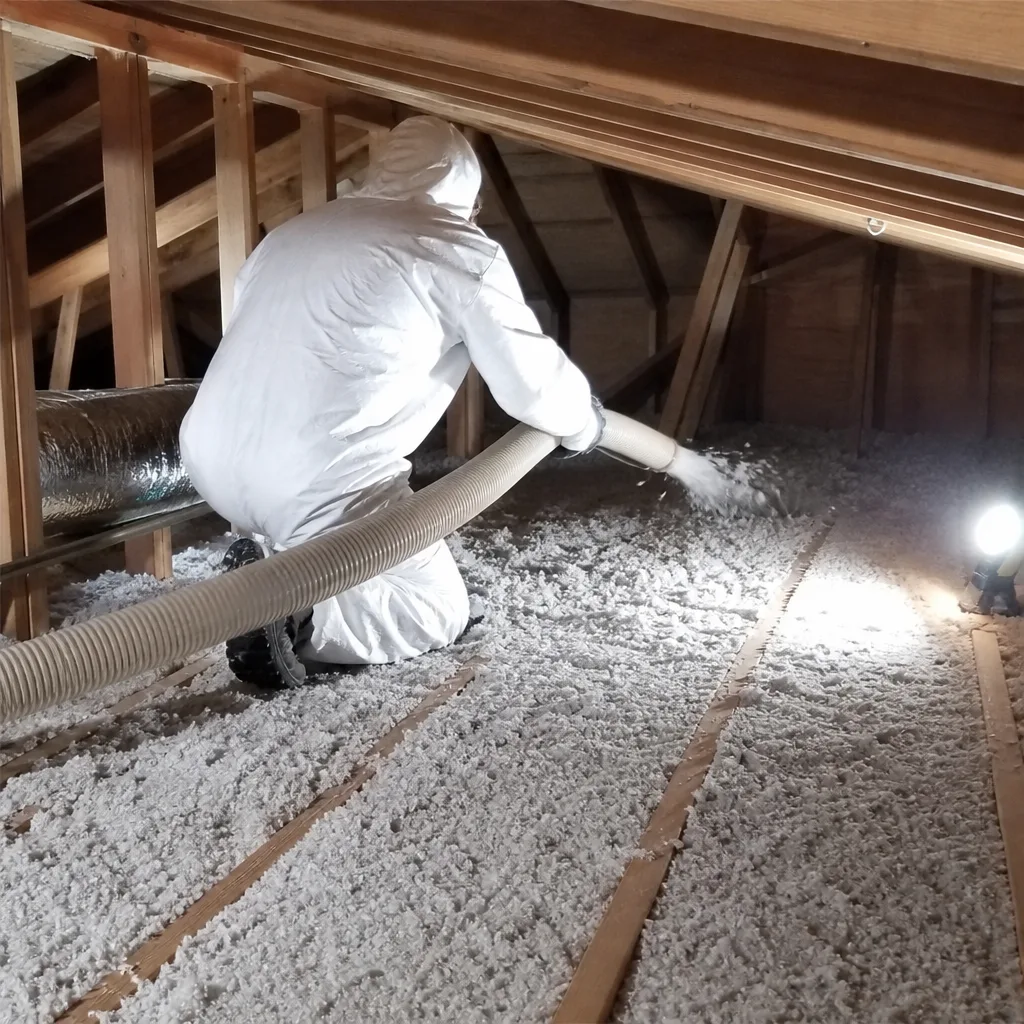
Attic insulation in La Habra typically costs $1,450 – $3,200 for a full blown-in upgrade on a 1,200 – 1,600 square foot ranch home, and most jobs are done the same day. That’s the honest range we quote on walk-throughs across 90631, 90632, and 90633. If your attic is holding 120-degree air against your ceiling every July afternoon, the fix is faster and cheaper than most homeowners expect. Call us at (866) 271-1602 and we’ll walk your attic with you, explain exactly what’s up there, and give you a line-item quote before we leave.
Key Takeaways:
- Full attic insulation replacement in La Habra runs $1,450 – $3,200 depending on square footage and attic access.
- Homes near the Puente Hills foothills need different ventilation and depth plans than flat tract blocks four blocks away.
- We carry eight insulation brands so the recommendation matches your attic, not our inventory.
- Same-day and next-day installs are standard for most La Habra attics.
Why Fontana Insulation Is La Habra’s Preferred Attic Insulation Company
We’ve been through enough La Habra attics to know exactly what’s behind the access hatch before we climb up: original batts from the Eisenhower and Johnson administrations, compressed to the thickness of a bath towel. Noel Arredondo built Fontana Insulation around a simple rule: carry every legitimate material category so nobody has to buy the wrong product just because the contractor only stocks one. That’s why we’re an authorized installer for Icynene and Demilec spray foam, why we stock Attic Insulation materials from Owens Corning, CertainTeed, Johns Manville, Knauf, Rockwool, and GreenFiber, and why we can walk a La Habra homeowner through the honest trade-offs between fiberglass, mineral wool, cellulose, and foam without a sales script pushing one line.
Work for us in La Habra is local work. We know the difference between a 1958 ranch on a hillside street near the Puente Hills and a 1972 two-story tract off Imperial Highway. We know which attics have enough plenum space for batt-and-baffle work and which need blown-in depth over an old thin layer. We know how the afternoon sun hits the western-facing roof slopes above Euclid Street differently than the shaded lots over by La Habra Boulevard. That local knowledge changes the insulation plan and the ventilation plan, and it’s the kind of thing you only get from a contractor who’s been in the attics, not just the neighborhood.
Insulation Contractors in La Habra
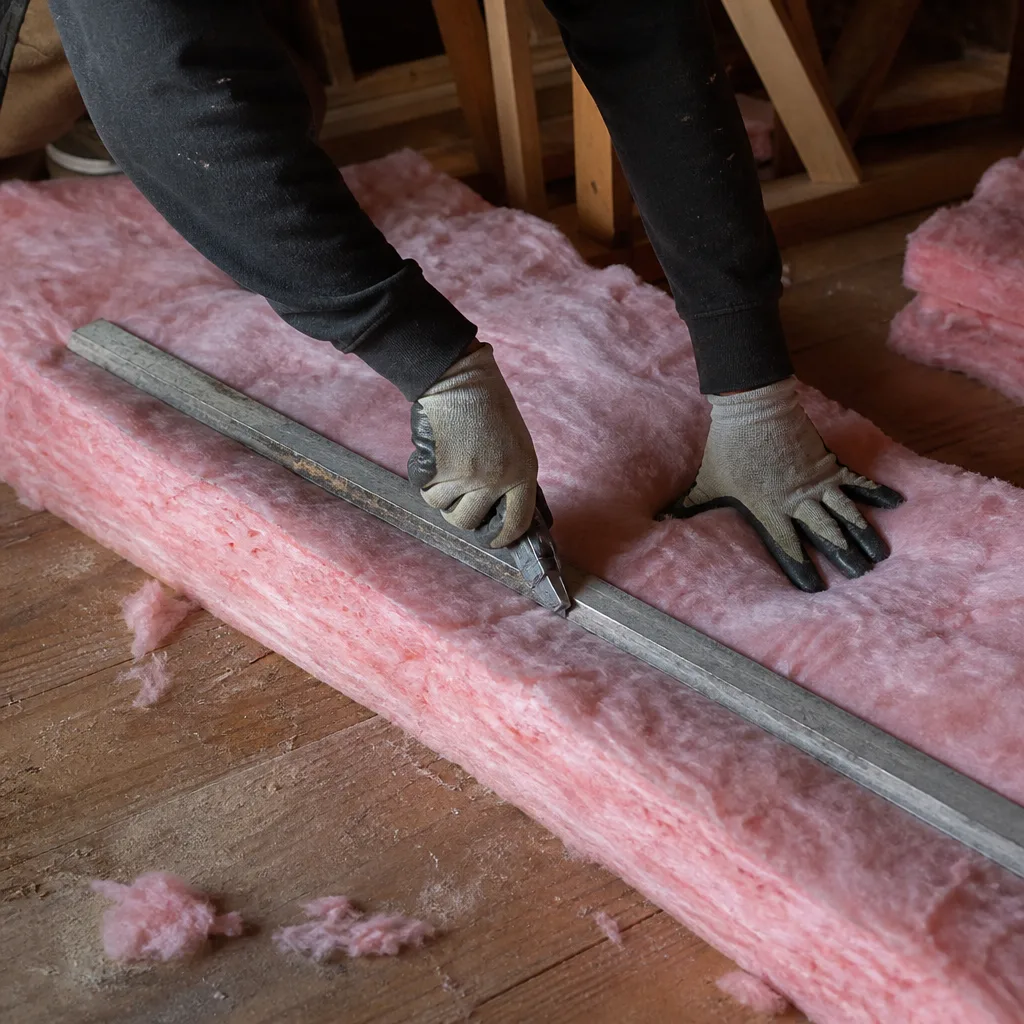
Insulation contractors in La Habra do more than blow material into a cavity. The job starts with an inspection that tells you what’s actually failing: original mid-century batts compressed to R-8 when they’re supposed to be R-30, baffles that were never installed, soffit vents sealed off by decades of dust, or a garage add-on that never had a single inch of insulation in the first place. We find that last one constantly. Walk through enough La Habra homes built between 1955 and 1975 and you learn to check the add-on room ceiling, because a lot of them were permitted as storage or patio enclosures and insulated as well as a cardboard box. A full attic insulation replacement here usually runs $1,450 – $3,200 depending on square footage, attic depth, and whether we’re removing the old material or blowing over it.
Top-Up and Replacement Work
When existing batts are still dry and mostly intact, a blown-in top-up is the economical move. We’re talking $900 – $1,600 for most La Habra attics up to 1,500 square feet. If the old material is compressed, dusty, rodent-damaged, or water-stained, replacement is the right call, and that’s the $1,450 – $3,200 range. We’ll show you the difference from the hatch before we recommend either path.
Baffles and Shallow Roof Prep
La Habra’s 1950s and 1960s tract homes often have low-slope roof assemblies with precious little eave depth. Without baffles, blown-in insulation drifts right over the soffit vents and chokes the airflow if there’s any at all. Our crews cut and install baffles around every vent before the material goes in, and for Shallow low-slope roofs we’ll map out vent placement so you get insulation depth and attic breathing in the same job. Typical baffle-and-prep work adds $250 – $450.
Attic Ventilation in La Habra
Attic ventilation in La Habra is not optional, not when summer afternoons push attic temperatures well past 140 degrees. A well-insulated attic with no airflow still cooks the roof deck and radiates heat into the living space below. The inland North Orange County pattern – hot, dry summers with regular 90-degree days and cool winter nights near the hills – means most La Habra homes benefit from a balanced system: soffit intake, baffles to protect it, and ridge or gable exhaust. Ventilation work usually runs $350 – $900 as part of an insulation upgrade, depending on whether we’re simply clearing and protecting existing vents or adding new ridge venting along the roofline.
Balanced Airflow for Low-Slope Roofs
The shallow roof pitch on many La Habra ranch homes leaves less room for both insulation depth and moving air. To get both, we’re meticulous about baffle placement at the eaves. Blocked soffits are the single most common ventilation failure we see: blown-in material from a previous job drifted over the intake, the attic stopped breathing, and the roof deck started baking. Fixing that before adding insulation is the correct sequence, and it usually involves clearing the soffits, installing new baffles, then adding exhaust higher on the roofline if needed.
Radiant Barrier in the Heat Strategy
For hillside homes near the Puente Hills foothills where summer attic heat is brutal, we often recommend a radiant barrier stapled to the underside of the roof rafters. It reflects a meaningful share of the radiant heat before it can warm the attic air. And in La Habra, unlike a cool coastal city, this isn’t a marginal upgrade; it changes what the upstairs rooms feel like at 3 p.m. in August. Radiant barrier work typically adds $800 – $1,500 depending on roof area.
Trusted Brands We Service in La Habra
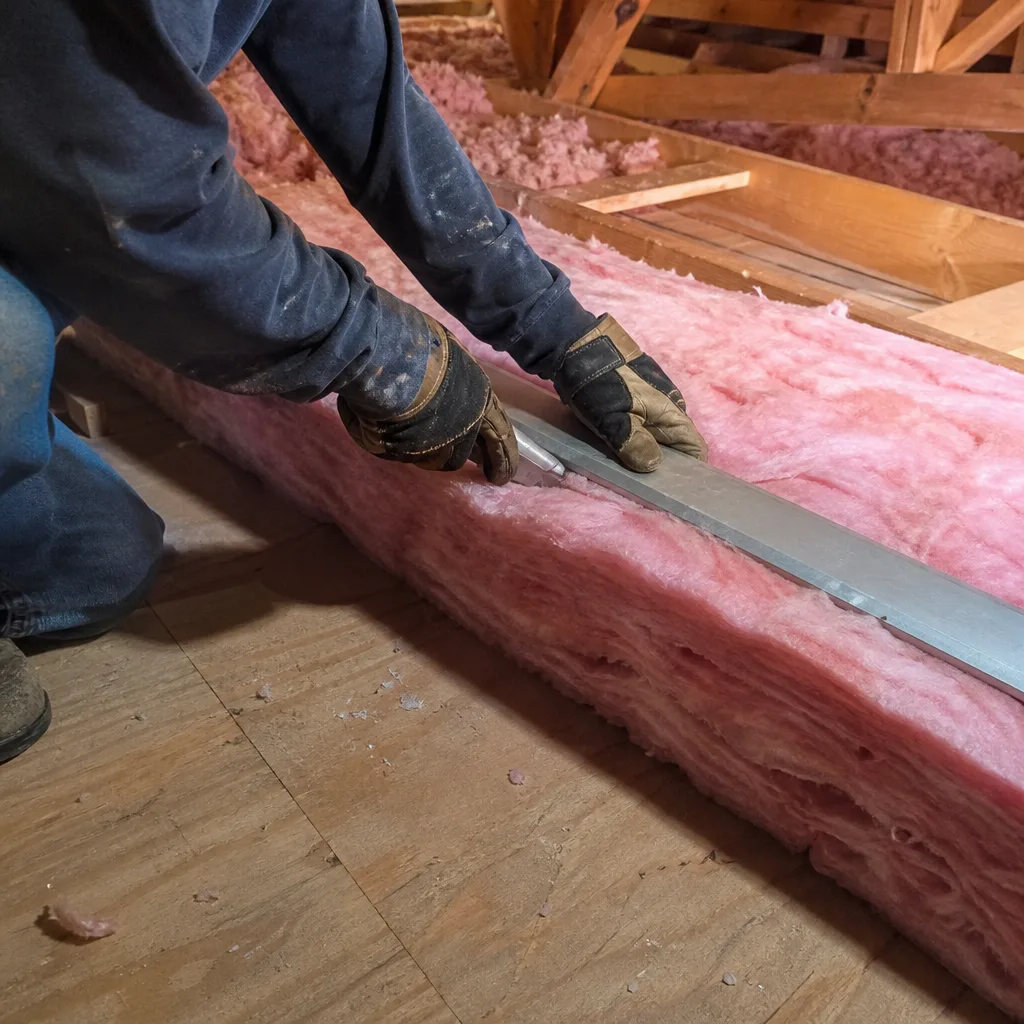
We carry Rockwool because a lot of La Habra homeowners ask about fire resistance and sound control, and mineral wool delivers both while insulating at R-15 per 3.5 inches in batt form. We carry CertainTeed because their fiberglass batt and blown-in lines have warranties that actually cover what La Habra attics throw at them, heat cycles and decades of temperature swings. And for air-sealing jobs where a shallow attic or a garage conversion needs an air barrier plus insulation, Icynene open-cell foam gives us a solution no batt can match. We stock parts and material for quick turnaround on La Habra jobs, so the brand we recommend is the one that fits your attic, not the one we need to move off the shelf.
Common Attic Insulation Problems We See in La Habra Homes
- Collapsed mid-century batts: The original fiberglass batts in 1950s and 1960s La Habra homes have usually compressed to a few inches of matted material holding maybe a quarter of their original R-value. They look insulated from the hatch, but the ceiling below is bleeding heat into the attic all afternoon.
- Blocked soffit vents from blown-in work without baffles: A previous insulation job that didn’t include baffles leaves the soffits buried and the attic stagnant. The roof deck gets hotter, shingles age faster, and the insulation underperforms.
- Uninsulated garage and add-on rooms: Walk-throughs on older La Habra properties routinely find garages, sunrooms, or enclosed patios with no insulation overhead at all. If the space was added after the original build, the odds it’s insulated drop sharply.
- Shallow roof assemblies with no room for depth: Low-slope 1960s roof framing makes it hard to get R-38 in place without careful baffle work and material selection. We deal with this on flat tract blocks and hillside lots alike, but the hillside homes also fight the extra solar load from the Puente Hills exposure.
Pricing for Attic Insulation in La Habra, CA
Here’s what we actually quote on La Habra attics in 2025. A blown-in top-up over existing insulation: $900 – $1,600 for most homes up to 1,500 square feet. Full removal and replacement with blown-in fiberglass or cellulose: $1,450 – $3,200. Batt insulation for a smaller attic or a garage ceiling: $800 – $1,800. Radiant barrier added to a hillside attic: $800 – $1,500. Attic baffles and vent prep: $250 – $450 as a separate line or folded into the job. These ranges assume standard access, no significant air-sealing, and a roof structure without major repair issues. We’ll give you a fixed price on the walk-through, not after we’re halfway through the job. Call (866) 271-1602 for a free estimate.
We Also Serve Cities Near La Habra
Our crews cover the neighboring communities of La Habra and the surrounding area, including La Habra Heights for its hillside and canyon homes, East La Mirada, Fullerton, and La Mirada. If you’re just over the city line and wondering whether we’ll come out, the answer is yes. The same eight-brand lineup and the same walk-through pricing model apply everywhere we work in this part of North Orange County.
Serving La Habra, CA — Our Local Coverage Area
We’re based in the La Habra area and know this community well. Use the map below to see our service coverage — if you’re nearby, we can almost certainly help.
FAQs About Attic Insulation in La Habra
Yes, and it’s not close. La Habra sits at the base of the Puente Hills on the inland edge of North Orange County, so summer highs run 10 to 15 degrees hotter than Seal Beach or Huntington Beach half an hour west. That means attic temperatures climb higher, stay high longer into the evening, and push more heat down into your living space. The Department of Energy’s basic attic recommendation for this climate zone is R-30 to R-49, but in La Habra we lean toward the higher end and add ventilation and often a radiant barrier, because the attic is doing harder thermal work than an attic three miles from the ocean. Call (866) 271-1602 and we’ll measure what’s up there now and what it would take to get you into that range.
Yes, but it takes more care than a steep-roof home. On shallow 1950s and 1960s ranch roofs, there isn’t always enough eave space for full-depth insulation plus a proper air channel, and that’s exactly where blown-in work clogs soffits and causes problems down the line. The standard fix is to install baffles at every soffit first, then blow material to the deepest R-value the framing allows without blocking the intake. For very tight assemblies, dense-pack cellulose or a thin layer of spray foam at the roof deck can solve depth limitations. We’ve done dozens of these in La Habra’s tract neighborhoods and hillside streets, and no two have been identical.
More often than not, yes. Garage ceilings, enclosed patios, sunrooms, and add-on rooms built after the original construction are the usual culprits. Many were permitted as storage or unheated space and never got insulation, and the drywall ceiling hides that completely. On a hillside street near the Puente Hills foothills, our crew opened an attic over a 1960s ranch and found original thin batts collapsed to a couple of inches plus a garage add-on with zero insulation. We air-sealed the top plates, added baffles to work around the shallow low-slope roof, and blew GreenFiber to a much deeper R-value, then recommended a radiant barrier against the intense summer attic heat. The homeowner reported the upstairs rooms finally holding temperature through the 90-degree afternoons. We’ll tell you what’s above every room in your house, not just the main attic.
We install fiberglass batt and blown-in, cellulose, mineral wool, and open- and closed-cell spray foam. The brands on our trucks include Owens Corning, CertainTeed, Johns Manville, Knauf, Rockwool, GreenFiber, Icynene, and Demilec. We carry multiple brands in the same category because they price differently and perform slightly differently, and we’d rather match the material to your attic than steer you to the one we happen to stock. For most La Habra attics, blown-in fiberglass or cellulose gives the best dollar-per-R-value on a full replacement, and that’s where we start the recommendation.
Insulation and ventilation are two halves of the same system. Insulation slows heat transfer through the attic floor; ventilation removes the heat that does get into the attic before it can cook the roof deck and radiate downward. In La Habra’s inland heat, a well-insulated but poorly ventilated attic still gets brutally hot, so we always check soffit intake, baffles, and ridge or gable exhaust during an insulation estimate. If airflow is poor, fixing it first, not after the new material goes in, is the only sequence that makes sense. Most ventilation work adds $350 – $900 to the typical La Habra insulation job.
Get a Fixed-Price Estimate on Your La Habra Attic
No guesses, no vague ranges after the fact. We’ll walk your attic with you, show you what’s failing, and write a fixed price for the exact scope of work before we start. Whether you’re on a hillside street above the Puente Hills or in a flat tract block off La Habra Boulevard, the approach is the same: inspect, explain, then insulate correctly. Call (866) 271-1602 or use the quote form and we’ll schedule the walk-through.
Written by Noel Arredondo, Owner at Fontana Insulation, serving La Habra and North Orange County.