
Fast, Reliable Attic Insulation Across Grand Terrace
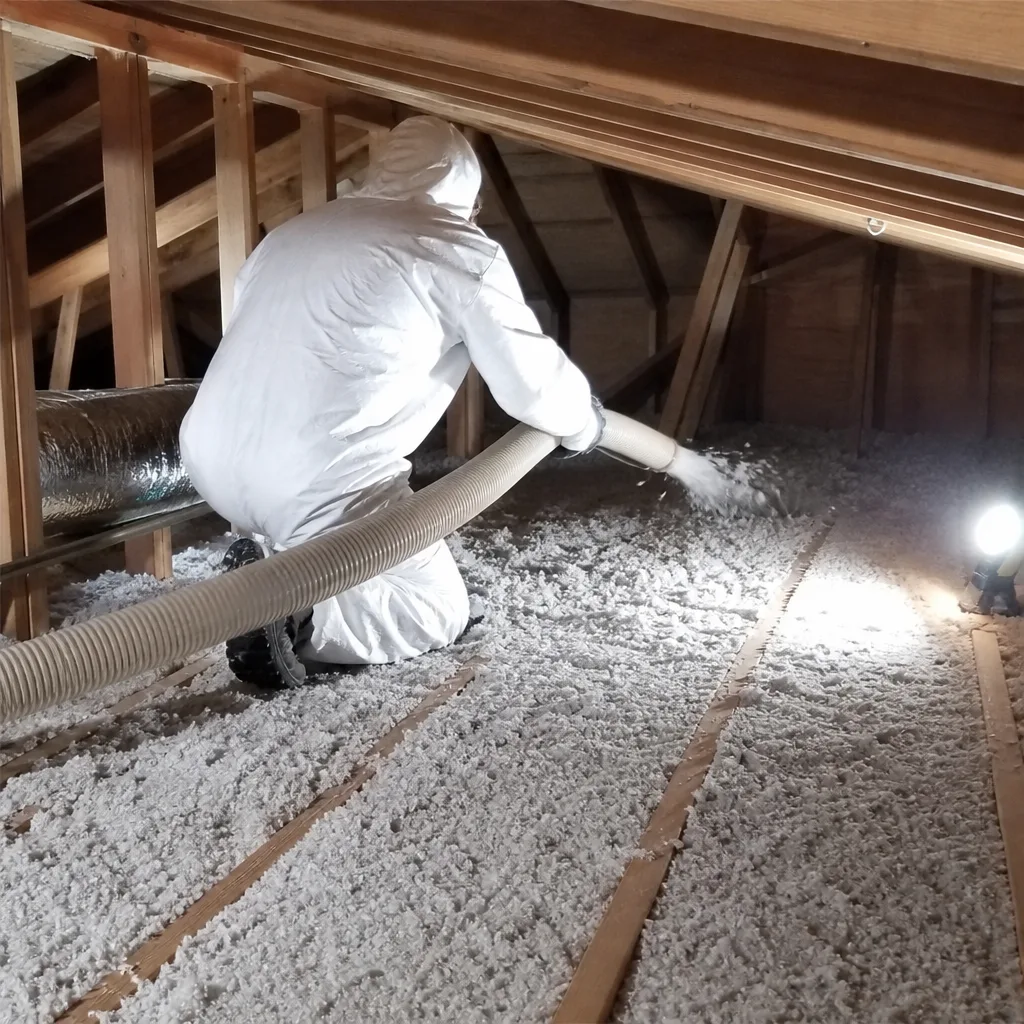
Attic insulation in Grand Terrace usually costs between $1.40 and $3.10 per square foot installed, depending on whether you’re topping up existing batts, blowing in fresh fiberglass or cellulose, or pulling out decades-old material and starting over. Most Grand Terrace homes we see were built between 1955 and 1985, and their attics are under-insulated by today’s standards. We work in Grand Terrace regularly, and our techs know the uphill canyon-side neighborhoods where wind-blown dust shortens insulation life faster than anywhere else in the area. If your AC hasn’t stopped running since May, call us at (866) 271-1602 and we’ll take a look.
Why Fontana Insulation Is Grand Terrace’s Preferred Attic Insulation Company
Fontana Insulation is the Attic Insulation specialist that Grand Terrace homeowners call when they want a straight answer about materials, not a sales pitch for one brand. We carry eight nationally recognized insulation brands across fiberglass, mineral wool, spray foam, and cellulose, so our recommendation is driven by what your attic actually needs. Noel Arredondo built the company around that principle: no brand loyalty, just the best fit for the house in front of us. For a 1970s stucco home off Barton Road, that might mean clearing clogged vents and blowing in GreenFiber cellulose. For a hillside property near Blue Mountain, it might mean a Rockwool upgrade for fire resistance and sound control. We don’t stock one product and force it into every job.
Grand Terrace homeowners tell us the same thing: they want someone who’ll explain trade-offs honestly. A blown-in fiberglass top-up costs less than full replacement, but if your original batts are dust-laden and compressed, adding more on top won’t fix the thermal bridging at your ceiling plane. We’ll tell you that plainly, then quote both options so you can decide. Noel and the crew know the difference between a house on the flats near Main Street and one hugging the Reche Canyon foothills, because the failure patterns aren’t the same.
Attic Ventilation in Grand Terrace
Attic Ventilation work in Grand Terrace is usually about restoring airflow that the canyon-mouth winds have choked off over the years. Homes along the foothill and canyon edges get wind-blown dust and debris forced into soffit and gable vents, and once those vents plug up, attic heat has nowhere to exhaust. Insulation overheats, compresses, and loses R-value. A ventilation correction on a typical Grand Terrace single-story runs $350 to $900, including clearing blocked soffits, repairing or adding baffles, and confirming that intake and exhaust balance is working. For many homes, this is the missing step that makes new insulation actually perform.
When a Grand Terrace homeowner notices the upstairs (or the single-story ceiling plane) staying hot hours after sunset, ventilation is often the first place we look. Attic temps here can climb past 140°F in August. If that heat sits trapped against your insulation all night, the insulation can’t do its job with the AC cycling constantly. We address airflow before adding material, because more insulation over a choked attic just bakes in the problem.
Soffit and gable vent clearing for canyon-side homes
On Grand Terrace’s uphill side, we routinely find vents packed solid with Reche Canyon dust. We clear them by hand, check the baffles, and confirm air can move from the soffit line up to the roof vents. This single fix can drop attic temperatures noticeably and takes a few hours at most.
Attic Baffles & Ventilation Prep before new insulation
If you’re having insulation replaced or topped up, getting baffles right first is non-negotiable. Baffles keep your new material from spilling into the soffit and blocking airflow. We include baffle inspection and replacement as standard prep on every Grand Terrace insulation job.
Radiant Barrier in Grand Terrace
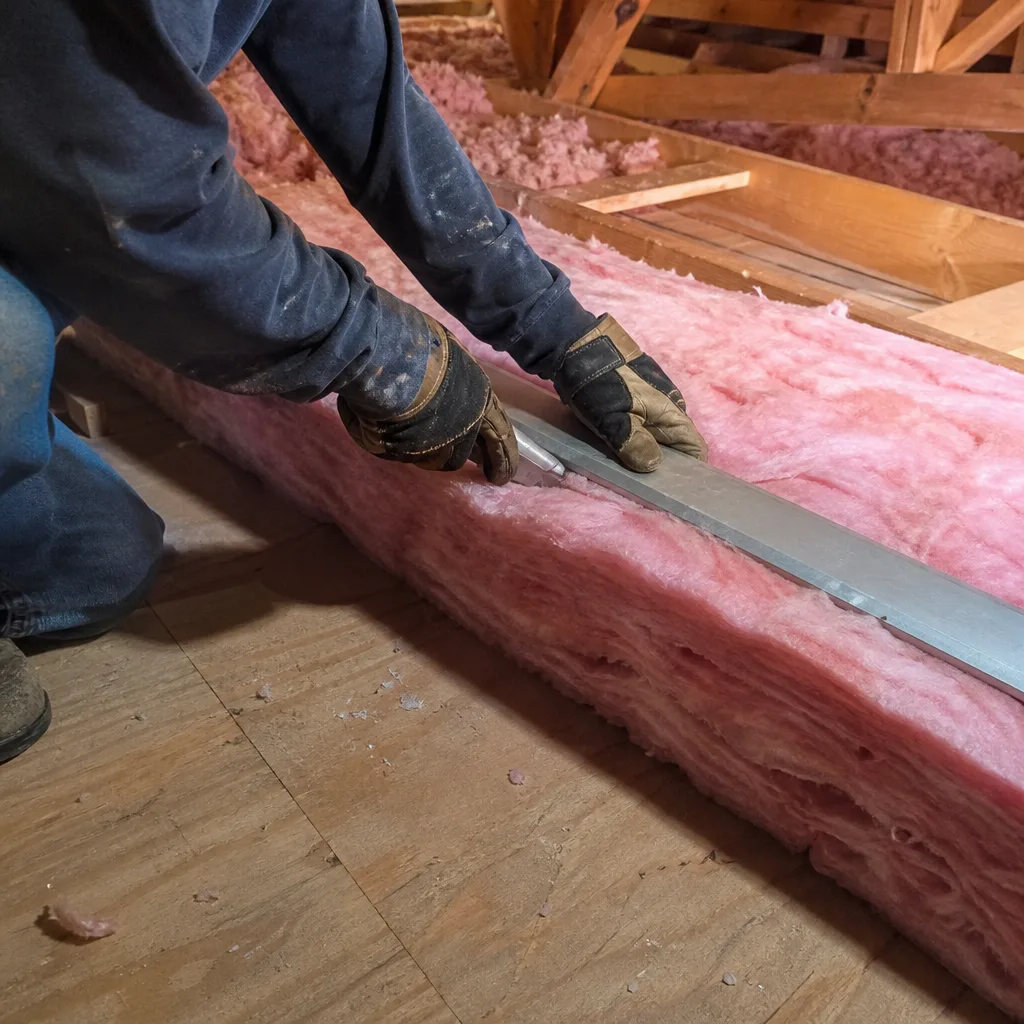
Radiant Barrier installation in Grand Terrace is a heat-reflective measure that works particularly well on the foothill and canyon-edge streets where late-afternoon sun hammers west-facing roof planes. A perforated foil radiant barrier stapled to the underside of your rafters reflects radiant heat back toward the roof deck instead of letting it radiate into the attic. For a typical Grand Terrace attic, radiant barrier runs $1,200 to $2,600 installed, and it makes the most sense when paired with proper ventilation and air sealing. On its own, foil won’t fix a leaky, dusty attic; combined with vent clearing and top-plate sealing, it meaningfully cuts attic heat gain during those 100°F-plus stretches.
One thing we see in Grand Terrace specifically: radiant barrier that was stapled up without doing the air-sealing work first. Canyon-driven air moves through the top plates and bypasses the foil entirely, so the homeowner sees almost no change in comfort. We approach radiant barrier as the second step, after sealing and airflow are corrected. The sequence matters more than most contractors let on.
Foil for west-facing and foothill exposures
Radiant barrier earns its keep on Grand Terrace’s west-facing and hillside streets, where afternoon solar load is intense. Attic temperature drops of 10°F to 20°F are common after a proper install, which reduces the load on ductwork and the AC system.
Radiant barrier and canyon-wind infiltration
In Grand Terrace, radiant barrier without air sealing fails because of Reche Canyon’s funneled breeze. Before any foil goes up, we seal top plates, penetrations, and bypass routes so the reflective surface actually sees the heat it’s meant to reflect. Anyone who skips that step here is leaving performance on the table.
Trusted Brands We Service in Grand Terrace
We carry Owens Corning and CertainTeed because their fiberglass batt and blown products are the most widely warrantied in the industry and they hold their loft well in retrofits. Rockwool mineral wool is in our truck for a reason: Grand Terrace homeowners on canyon-adjacent lots often ask about fire resistance, and mineral wool delivers that alongside strong sound dampening. For spray foam applications where air sealing is the priority, we turn to Demilec and Icynene. For Grand Terrace customers, we keep the common materials stocked and can get specialty orders turned around quickly.
Common Attic Insulation Problems We See in Grand Terrace Homes
- Wind-clogged vents and compressed insulation on the uphill side. Reche Canyon’s funneled dust packs soffit and gable vents solid, choking airflow and overheating insulation. This pattern is specific to Grand Terrace’s canyon-mouth geography; neighboring cities without that wind exposure don’t see it the same way.
- Settled or displaced mid-century fiberglass batts. Original batt insulation in 1960s and 1970s tract homes has often been pushed aside by re-roofs, HVAC swaps, or attic storage. Bare drywall and thermal bridging at the ceiling plane are common.
- Dust-laden insulation that looks fine from the access hatch. Grand Terrace’s wind-blown dust infiltrates and settles into insulation over decades, reducing loft and R-value even when the top layer appears intact. We often find material that was once R-19 performing closer to R-7.
- Radiant barrier installed without air sealing. On canyon-side streets, foil stapled over an unsealed attic does almost nothing because infiltrating air bypasses the reflective surface. We fix the sequence every time we encounter it.
Pricing for Attic Insulation in Grand Terrace, CA
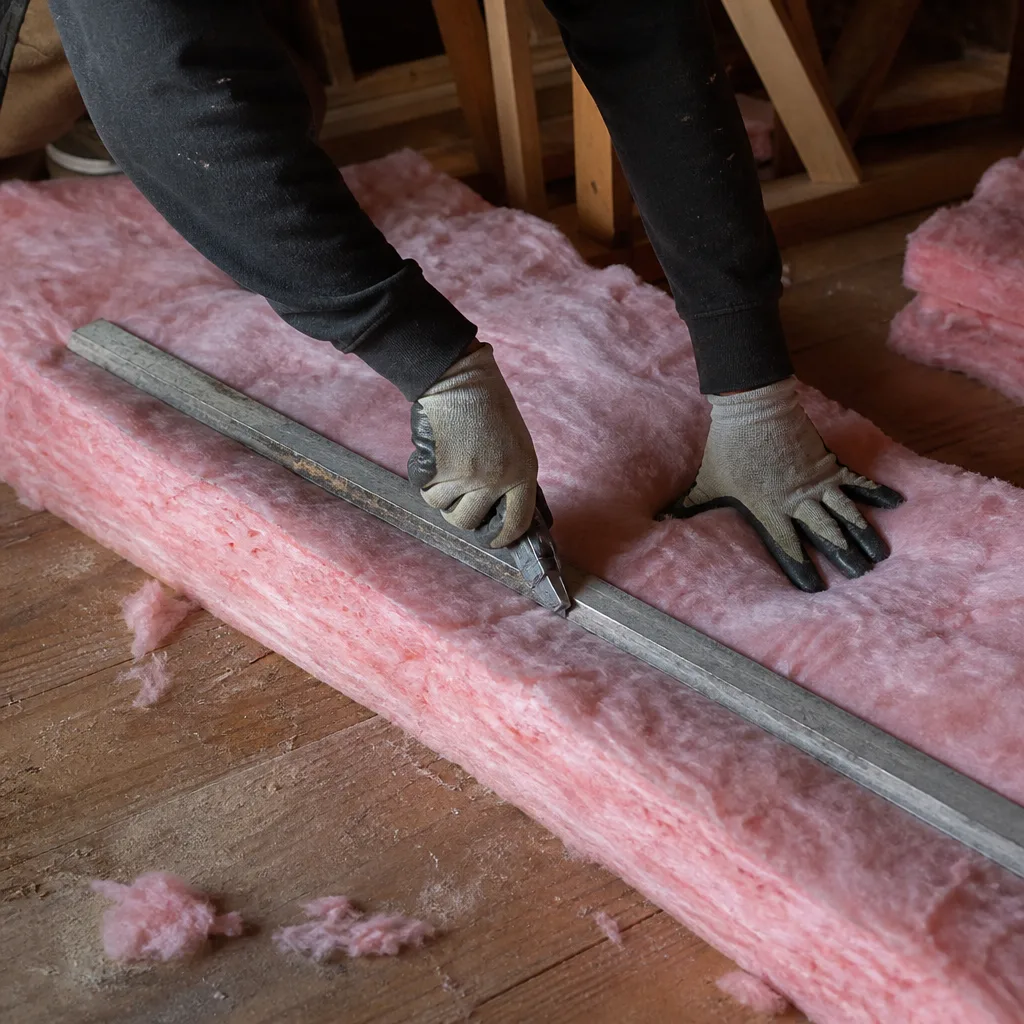
For a typical Grand Terrace single-story home around 1,200 to 1,500 square feet, blown-in attic insulation runs $1,800 to $3,600 installed to reach R-38. Attic batt insulation for the same footprint lands between $1,400 and $2,800, depending on material and whether old batts need removal. An attic insulation top-up, adding blown material over existing but serviceable insulation, is the cheapest path at $900 to $1,800. Full attic insulation replacement, including removal, disposal, air sealing, and new material, runs $3,200 to $5,000. Every estimate is free, and we’ll give you an itemized number before any work starts. Call (866) 271-1602 and Noel or a member of the crew will come out and measure the attic, check vent condition, and quote the job.
We Also Serve Cities Near Grand Terrace
Fontana Insulation serves Grand Terrace as well as the surrounding San Bernardino County communities. We work regularly in Highgrove, Colton, Loma Linda, and Rubidoux, so if you’re a few streets outside the Grand Terrace city line, we can still help. The same crew, the same eight-brand material lineup, and the same free estimate policy apply.
Serving Grand Terrace, CA — Our Local Coverage Area
We’re based in the Grand Terrace area and know this community well. Use the map below to see our service coverage — if you’re nearby, we can almost certainly help.
FAQs About Attic Insulation in Grand Terrace
Wind-blown dust and debris from Reche Canyon gets forced into soffit and gable vents, settling into the insulation and compressing it over time. This is a local failure pattern that’s strongest on Grand Terrace’s uphill and canyon-adjacent streets. The fix starts with clearing the vents, then adding or replacing insulation to restore the thermal envelope. Call (866) 271-1602 and we’ll assess the compression level and give you a straight recommendation.
If the original fiberglass batts are compressed, dust-laden, or displaced by past re-roofs and HVAC work, upgrading to a fresh blown-in material or new batts is usually the better investment than patching. You’ll gain R-value, address bare spots, and start fresh with a clean thermal boundary. For a 1970s single-story in Grand Terrace, full replacement typically runs $3,200 to $5,000 depending on attic size and access.
Canyon-driven air infiltration moves through unsealed top plates and bypasses the reflective surface, so radiant barrier without air sealing underperforms in Grand Terrace. The right sequence here is air sealing first, ventilation correction second, then foil. We quote radiant barrier with those steps included because skipping them is a waste of money on the canyon side specifically.
In Grand Terrace’s climate, we target R-38 to R-49 in the attic, with R-38 as the practical minimum for most retrofits. Summer attic temperatures here routinely exceed 140°F, and deeper insulation with proper ventilation keeps that heat from pushing into the living space. We’ll measure your existing material during the free estimate and tell you exactly where you stand.
Grand Terrace sits at the mouth of Reche Canyon, which funnels wind-blown dust into soffit and gable vents. Homes on the uphill and foothill edges get the worst of it, and vents can pack solid within a few years. That’s a condition specific to this pocket of San Bernardino County; Colton and Loma Linda don’t see the same funneled wind exposure. We clear vents as part of every Grand Terrace attic insulation job, and we recommend checking them annually on canyon-side streets.
Written by Noel Arredondo, Owner at Fontana Insulation, serving Grand Terrace and the surrounding Inland Empire communities.