
Fast, Reliable Attic Insulation Across Citrus
Attic insulation in Citrus usually costs between $1,800 and $4,600 for a full removal-and-reinstall job on a mid-century home, and the work typically takes one to two days. If your attic is hitting 150°F in July and your upstairs rooms won’t hold a comfortable temperature, the insulation you have isn’t doing its job. Fontana Insulation has worked on Citrus homes along Citrus Avenue, through the 91702 zip code, and across the San Gabriel Valley’s hot interior long enough to know exactly what’s failing in these attics. Call (866) 271-1602 for an assessment and a straight answer about what your home actually needs.
Why Fontana Insulation Is Citrus’s Preferred Attic Insulation Company
Noel Arredondo built Fontana Insulation around a simple idea: carry every major insulation type so the house dictates the material, not the warehouse. That matters in Citrus because the housing stock isn’t uniform. You have 1950s ranches with vented attics and original batts. You have split-levels with unsealed duct chases. You have the occasional newer addition that was never properly insulated at all. A contractor pushing one product can’t serve all of those honestly. We stock eight brands across fiberglass, mineral wool, spray foam, and cellulose—including Reflectix repair in Citrus—so the recommendation comes from what your attic actually needs.
Our Attic Insulation team knows the specific failure patterns in Citrus homes: settled batts, missing radiant barriers, duct boots that leak conditioned air into a superheated attic. We don’t just blow in new material and call it done. We identify why your home is uncomfortable, then fix the root cause. That approach has earned us a strong reputation across Citrus and the surrounding San Gabriel Valley.
Attic Insulation Removal in Citrus
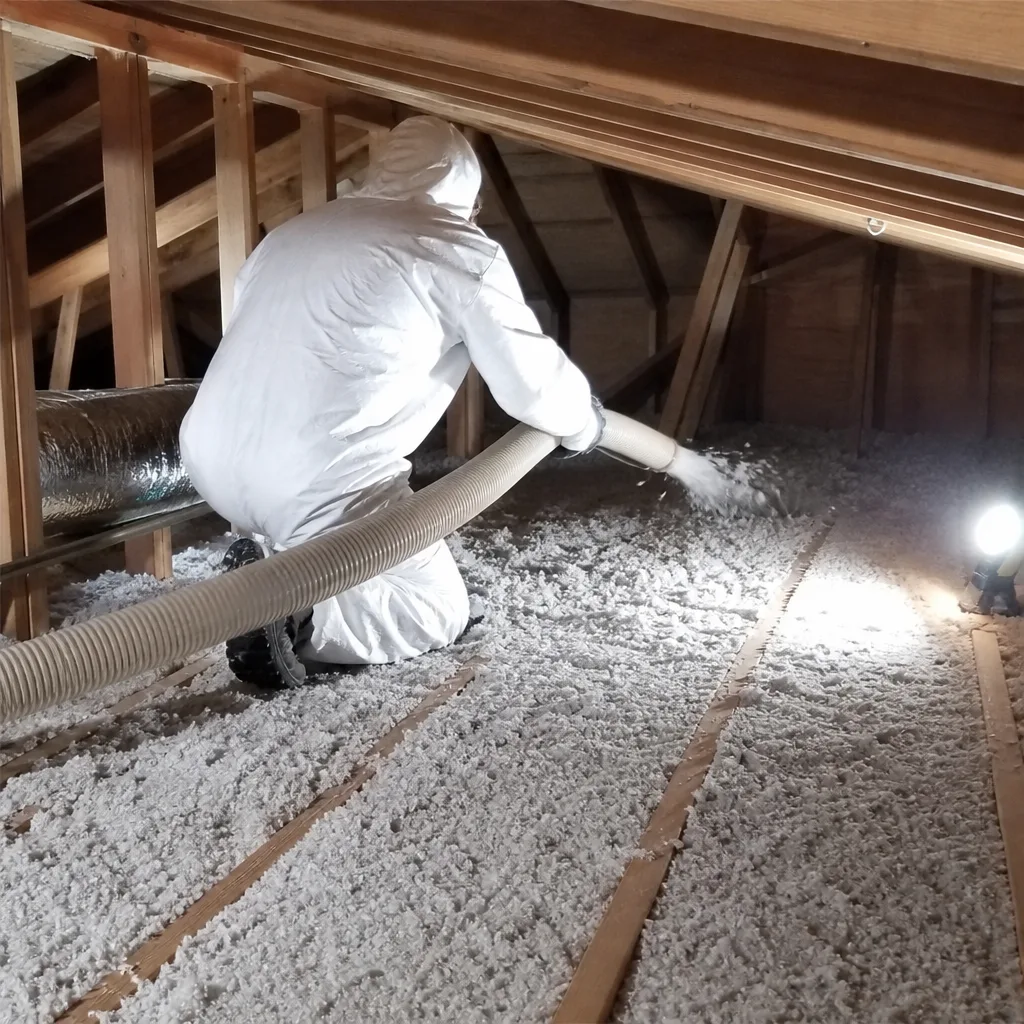
Attic Insulation Removal in Citrus is not a cosmetic task. It’s the necessary first step when original fiberglass batts from a 1950s or 1960s build have compressed to half their rated R-value, or when rodents, moisture, or decades of dust have contaminated the insulation. In Citrus specifically, removal is often non-negotiable: you cannot air-seal top plates, duct boots, and wiring penetrations through a layer of old, settled material. Leaving it in place means your new insulation sits on top of a leaky thermal boundary.
Full Removal and Air-Seal Prep
We vacuum out the existing insulation to bare deck, then air-seal every penetration with spray foam: top plates, electrical boxes, duct boots, plumbing stacks, and the attic hatch. This is the step most Citrus homes have never had done. Air-sealing alone can cut the stack effect that pulls 150°F attic air into your living space through gaps you can’t see from below.
Why Citrus Homes Need Removal More Often
Mid-century wood-frame construction in Citrus often means an attic floor built with 2×6 or 2×8 joists and no subfloor. Years of foot traffic, storage boxes, and service visits compress fiberglass batts against the drywall below. We regularly remove batts in Citrus homes that test at R-9 to R-13 when the label on the kraft facing still says R-30. That’s not a product failure. That’s material lifespan and compression.
Insulation Contractors in Citrus
Insulation Contractors in Citrus aren’t all the same, and the difference shows up in whether they diagnose the problem before quoting a solution. The tell: a contractor who quotes new insulation over the phone without asking about your attic’s age, current R-value, duct layout, or ventilation pattern. That’s not an assessment, it’s a guess. Our process starts with an attic inspection where we measure existing insulation depth, check for air leaks at the thermal boundary, and document what’s actually happening before recommending any material.
What a Proper Citrus Attic Assessment Covers
We check settled fiberglass depth against the Department of Energy’s R-38 to R-49 recommendation for the San Gabriel Valley. We look at whether a radiant barrier exists and how it’s attached. We trace duct runs and test for leaks at boots and takeoffs. We evaluate the existing ventilation to make sure soffit and ridge vents are actually moving air. Then we give you a material recommendation matched to the application: blown-in fiberglass for open, vented attics; spray foam for air-sealing and irregular cavities; Rockwool where fire resistance and sound control matter.
When to Retrofit Instead of Replace
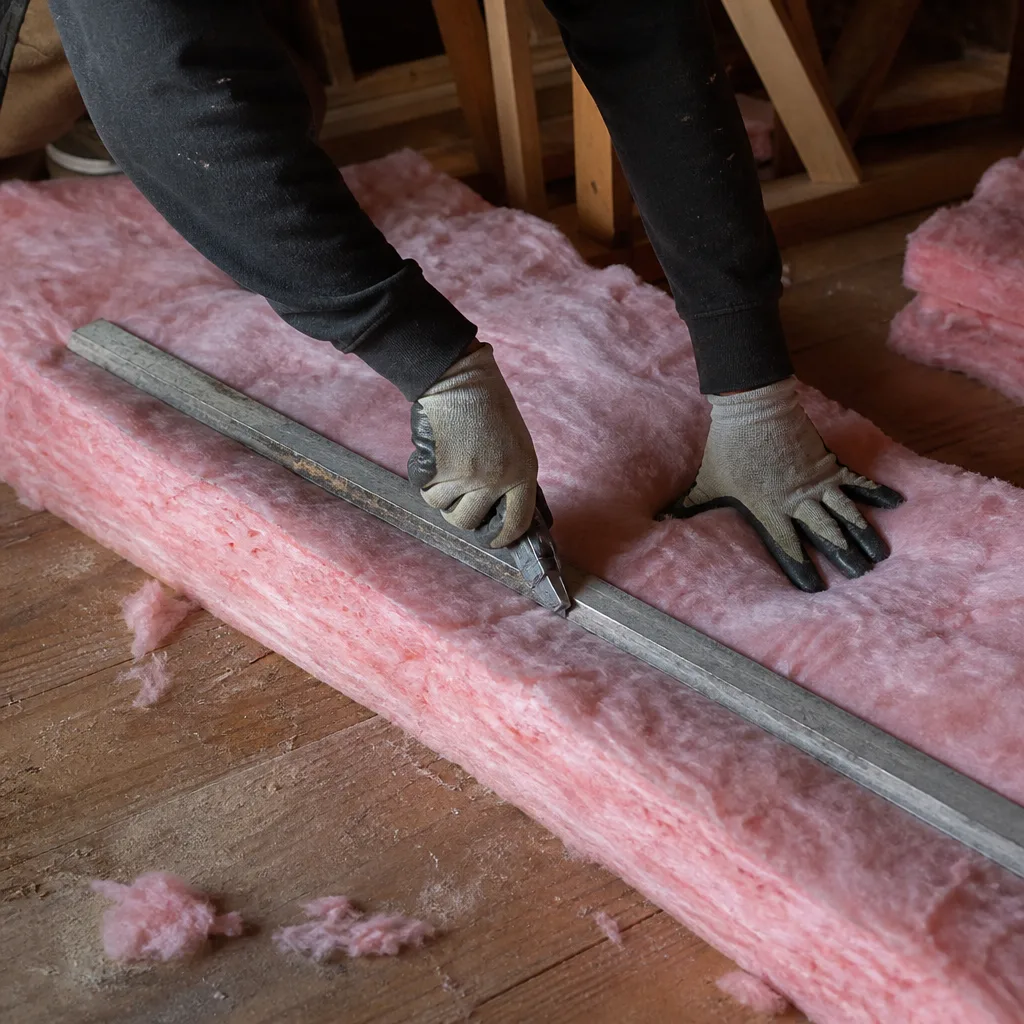
Some Citrus attics have perfectly serviceable insulation that just needs a top-up. If your batts are dry, clean, and uncompressed, adding blown-in fiberglass to reach R-49 may be the right call. If the attic is vented and the ducts are partially sealed, a radiant barrier facing the roof deck can drop surface temperatures dramatically without a full removal. We’ll tell you when a retrofit makes sense, because carrying multiple material types means we’re never forced to oversell a removal job.
Trusted Brands We Service in Citrus
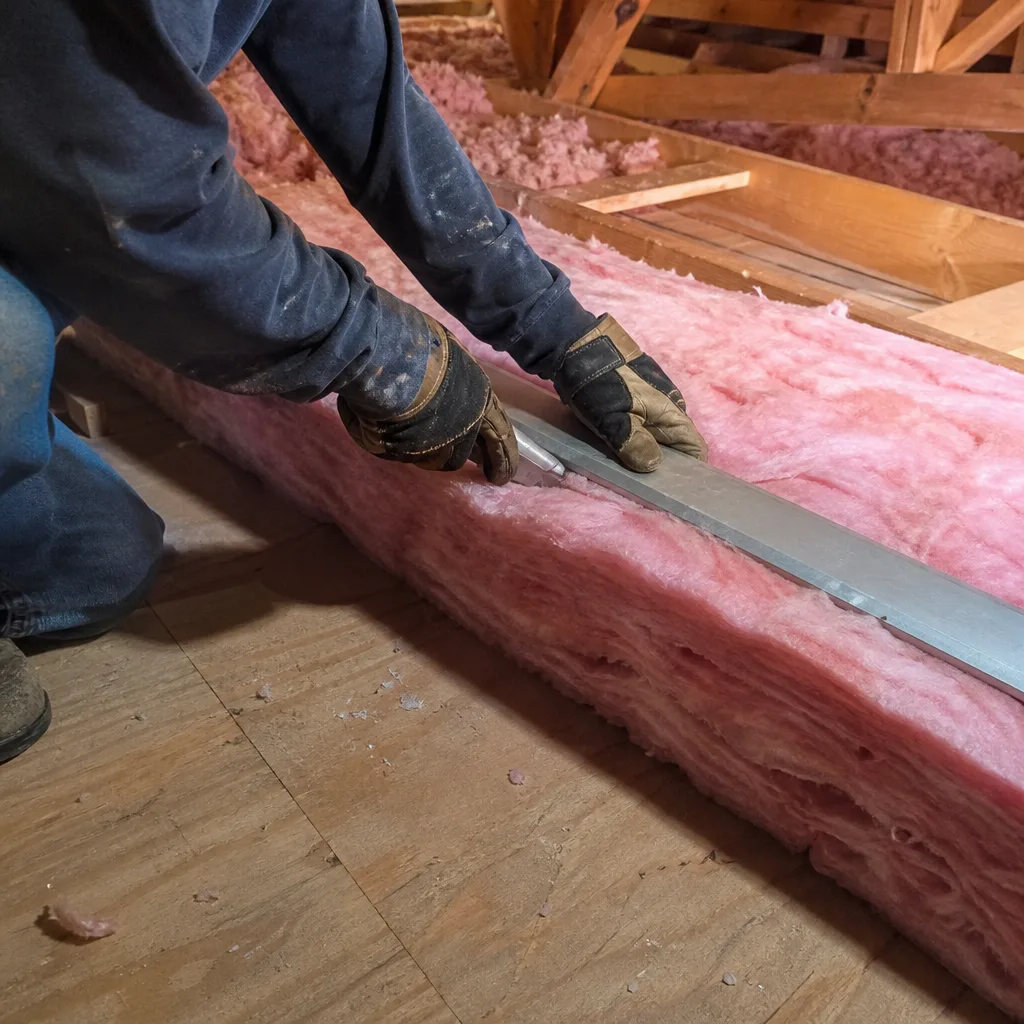
Fontana Insulation is material-agnostic by design. In Citrus, that means we stock CertainTeed and Knauf fiberglass for attic applications where cost-per-R-value matters, Icynene open- and closed-cell spray foam for air-sealing and hard-to-reach cavities, and Rockwool mineral wool for homeowners who want fire resistance and sound dampening alongside thermal performance. We carry these brands because they earn their place, not because of inventory pressure. Fast turnaround on Citrus projects comes from keeping local stock of the materials these homes actually need rather than waiting on a regional supply order.
Common Attic Insulation Problems We See in Citrus Homes
- Settled and compressed original fiberglass batts: Mid-century Citrus homes often have kraft-faced batts that have collapsed to half their rated R-value. The result is an attic floor with uneven thermal coverage, so some rooms bake while others stay tolerable.
- Missing radiant barrier: Without a radiant barrier, intense San Gabriel Valley solar gain drives attic temperatures above 150°F. That heat radiates through the ceiling drywall and overwhelms even new insulation.
- Unsealed ductwork and attic bypasses: Older Citrus homes frequently have leaky ducts and unsealed penetrations that push conditioned air into the attic. This wastes cooling energy and creates pressure imbalances that pull hot outdoor air into the house.
- Inadequate ventilation paired with new insulation: Some Citrus attics got new insulation added years ago without addressing soffit or ridge vent airflow. The attic becomes a stagnant heat trap, and the new material degrades faster than it should.
Pricing for Attic Insulation in Citrus, CA
Typical attic insulation work in Citrus runs $1.50 to $3.25 per square foot depending on material, depth, and whether removal is required. A straightforward blown-in top-up on a 1,200-square-foot attic falls between $900 and $1,600. Full removal of settled original batts, air-sealing, and new CertainTeed or Knauf blown-in fiberglass to R-49 for the same footprint averages $3,200 to $4,600. Spray foam runs higher because of material cost and application time. The biggest cost drivers are attic accessibility, the condition of ductwork we’re working around, and whether a radiant barrier is part of the scope. Estimates are free, and we give you the numbers in writing before any work begins. Call (866) 271-1602.
We Also Serve Cities Near Citrus
Our crews work throughout the San Gabriel Valley, including Attic Insulation projects in Azusa, Irwindale, Covina, and Glendora. If you’re in Citrus or any neighboring city, the same material-agnostic approach applies. Call (866) 271-1602 to schedule an attic assessment wherever you are in the area.
Serving Citrus, CA — Our Local Coverage Area
We’re based in the Citrus area and know this community well. Use the map below to see our service coverage — if you’re nearby, we can almost certainly help.
FAQs About Attic Insulation in Citrus
Because insulation alone doesn’t stop radiant heat transfer. In Citrus, the roof deck absorbs direct solar gain all afternoon, and without a radiant barrier to reflect that heat, the attic air temperature climbs past 150°F regardless of how much fiberglass sits on the attic floor. You need the thermal boundary addressed from above as well as below. Call (866) 271-1602 to have your attic evaluated for a radiant barrier retrofit.
Sometimes, but only if the existing batts are dry, clean, and uncompressed, with no evidence of rodent activity or moisture. In most of the pre-1980 Citrus homes we inspect, the original batts are compressed or contaminated enough that top-adding would trap problems under the new material. The right call depends on what’s actually in your attic, which is why we inspect before quoting.
Look for kraft-faced batts with a yellow or pink fiberglass appearance and paper backing stapled to the joists. If the facing is brittle, darkened, or covered in ancient dust, and the depth measures under six inches, it’s almost certainly original to a mid-century build. Original insulation in Citrus homes routinely tests at half its labeled R-value.
The Department of Energy recommends R-38 to R-49 for attics in San Gabriel Valley climate zones. Given Citrus’s 100°F+ summer highs and intense solar gain, we recommend targeting R-49 for maximum cooling-season performance, paired with a radiant barrier where the attic is vented. Exact requirements depend on your attic’s current condition and ventilation setup.
Yes, when removal is warranted. We remove old insulation in Citrus attics where the existing material is compressed, contaminated, or blocking access to air-sealing points. Full removal typically adds $800 to $1,400 to a project depending on attic size and accessibility. Call (866) 271-1602 for a free assessment and a precise number for your home.
Written by Noel Arredondo, Owner at Fontana Insulation, serving Citrus and the San Gabriel Valley.