
Fast, Reliable Attic Insulation Across Bellflower
Attic insulation in Bellflower, CA typically runs $1,800 to $4,600 for a full retrofit on a postwar bungalow, and most jobs are completed in a single day. The houses here, mostly 1940s and 1950s wood-frame tract homes off Bellflower Boulevard and Artesia Boulevard, were built when insulation was an afterthought, often just a thin layer of rock wool that has long since settled. We know these attics because we’ve worked in dozens of them across 90706 and 90707. Call (866) 271-1602 and we’ll get a crew out to look at yours.
Why Fontana Insulation Is Bellflower’s Preferred Attic Insulation Contractor
We’re not a franchise operation sending a salesman with a binder. We’re an insulation specialist led by Noel Arredondo, and our crews have spent enough time in Bellflower to know what to expect before the ladder even goes up. The tight lots around the older residential grid near Bellflower High School mean limited attic access and careful work around yards, fences, and shared driveways. Homeowners here have told us the same thing for years: the upstairs or back bedrooms bake in summer while the living room stays tolerable. That’s a thermal boundary problem, not a thermostat problem.
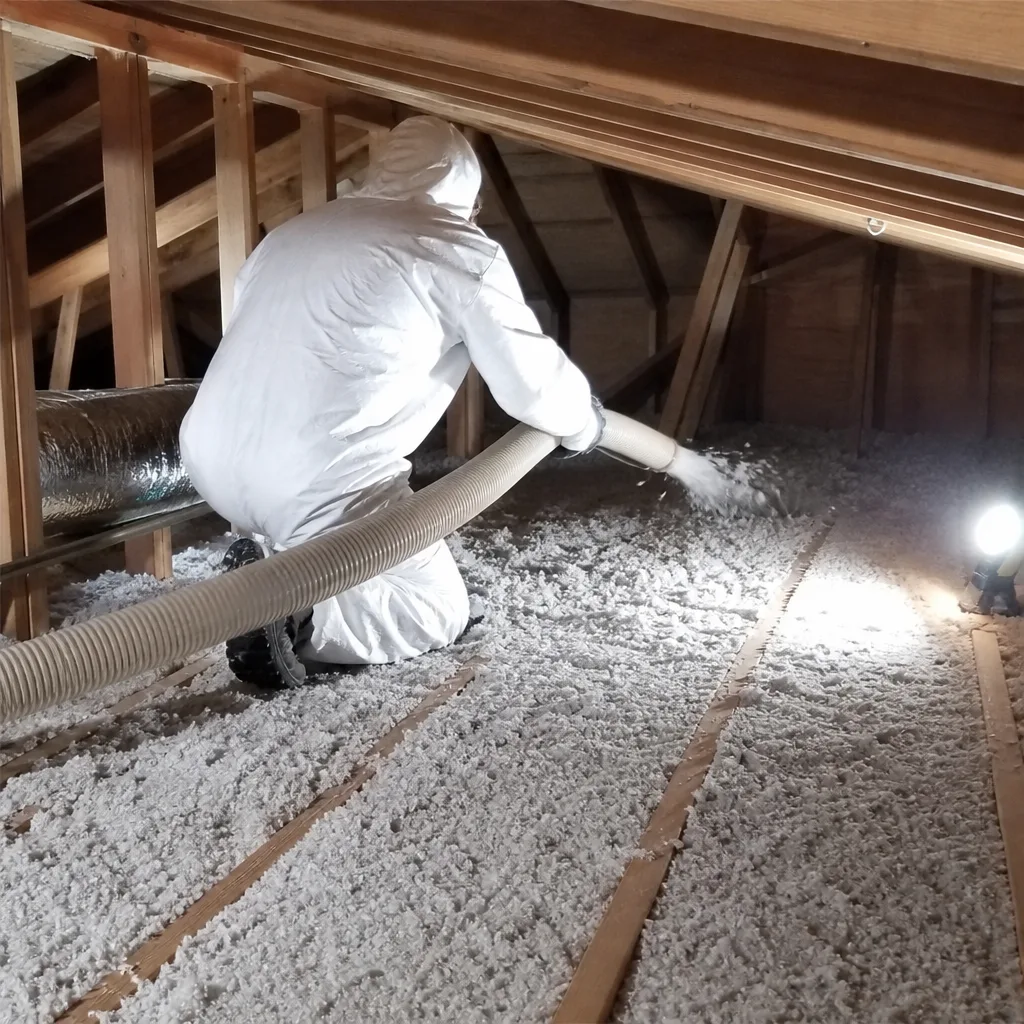
Because we carry eight insulation brands across fiberglass, mineral wool, spray foam, and cellulose, we match material to the house rather than pushing whatever’s cheapest to stock. In Bellflower, that usually means blown fiberglass over air-sealed top plates, but sometimes a Rockwool batt makes more sense for fire resistance near an older furnace flue. The point is we explain the trade-offs on your actual attic, not in a brochure.
Attic Ventilation in Bellflower
Attic ventilation in Bellflower matters more than in most of southeast LA County because the marine layer off Long Beach brings morning damp into roof assemblies that then bake all afternoon. A low-pitch 1950s roof with blocked soffit vents traps that moisture against the sheathing, and within a few seasons you’ve got condensation, mold, and plywood delamination. Ventilation here is not an add-on. It’s part of getting the insulation to do its job.
Soffit Baffles and Low-Slope Roof Prep
Most Bellflower bungalows have shallow eaves and minimal soffit venting. Before we blow insulation, we install foam baffles at each rafter bay to keep intake airflow open. On a typical 1,100 square foot house, expect to pay $450 to $900 for baffle installation, depending on how many bays and how much old debris needs clearing. This step prevents the new insulation from choking the only ventilation the roof has.
Marine-Layer Moisture Checks
Morning fog rolling up from the coast doesn’t just wet the lawn. It raises the dew point inside unconditioned attics, especially from May through July. We check for existing condensation stains on the sheathing before adding insulation, because sealing moisture in makes the problem worse. If we find active moisture, we correct the ventilation path first, then insulate. That’s the sequence, and skipping it costs more later.
Radiant Barrier in Bellflower
Radiant barrier in Bellflower addresses the biggest attic problem here: radiant heat gain through low-pitch asphalt shingle roofs. When the sun pounds a 1950s roof all afternoon, the underside of the sheathing can hit 130 degrees, and that heat radiates down through whatever insulation is below it. A radiant barrier stapled to the underside of the rafters reflects most of that heat back upward before it ever reaches the insulation layer. Expect to pay $1,200 to $2,600 for radiant barrier on a typical Bellflower attic.
Low-Slope Roof Heat Rejection
Bellflower’s flatish roofs hold heat differently than steep-pitch roofs in the foothills. With only a few inches of clearance between roof and ceiling joists, the radiant path is short and direct. A barrier foil installed with a half-inch air gap cuts the radiant transfer significantly. Our crews install it in the rafter bays where clearance allows, and we’re candid when an attic is too shallow for safe access. If we can’t get in safely, we won’t pretend otherwise.
Pairing Barrier With Blown Fiberglass
Radiant barrier works best as the first layer, with blown fiberglass below it. Together they attack both radiant and conductive heat. In Bellflower, where summer attic temperatures routinely exceed 120 degrees, this combination gives a measurable comfort gain in the rooms directly under the ceiling. We recommend it most often for west-facing bedrooms over detached garages, which catch full afternoon sun with no shade cover.
Trusted Brands We Service in Bellflower
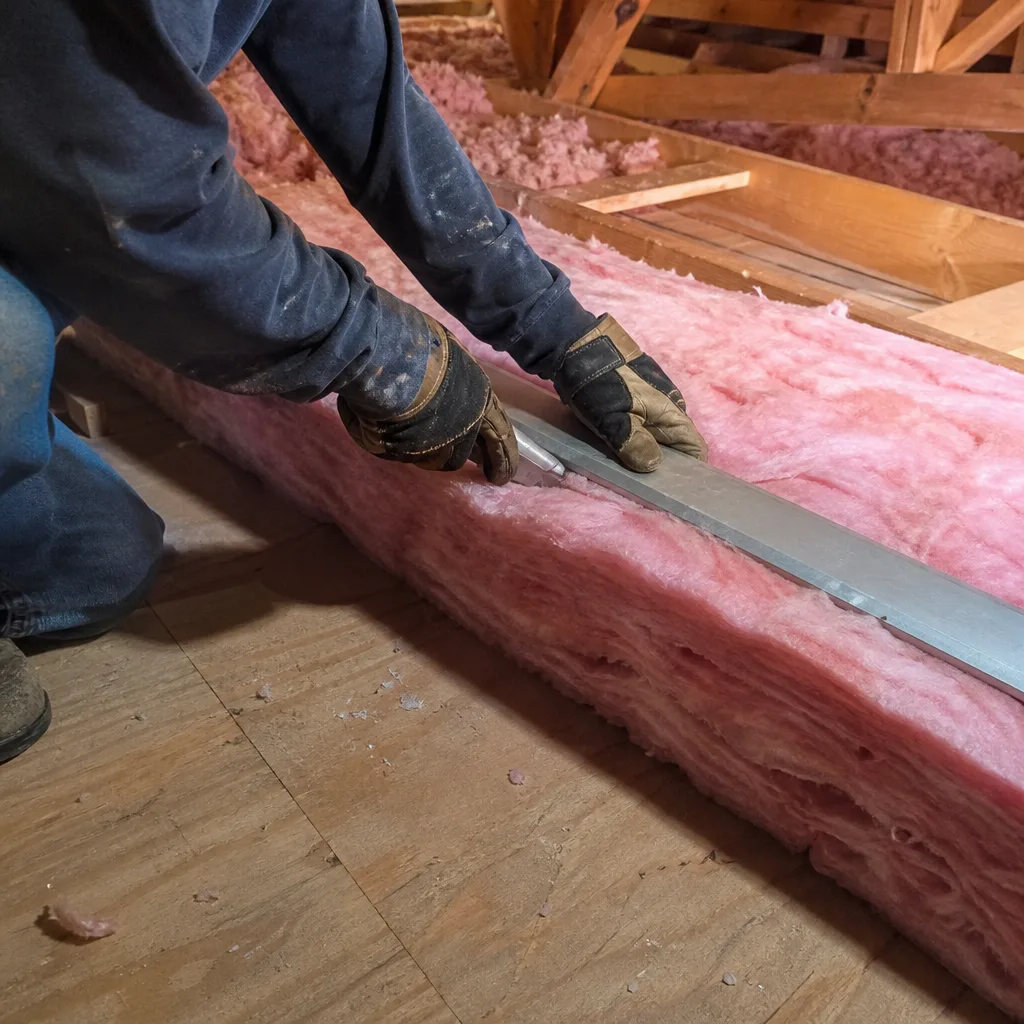
We stock and install Owens Corning, CertainTeed, and Rockwool, among others, for Bellflower attic work. We carry Rockwool because it’s the best mineral wool batt on the market for fire resistance and sound dampening, and in tight older homes where a furnace flue or chimney chase runs through the attic, that matters. We carry CertainTeed because their fiberglass batts and blown products hold up well in coastal-edge humidity, and their warranties are straightforward to administer. When a Bellflower customer needs parts or a warranty repair handled quickly, our crew already has the material on the truck, not on order.
Common Attic Insulation Problems We See in Bellflower Homes
- Settled original rock wool: Most 1940s and 1950s homes in Bellflower started with rock wool batts that have compressed to half their original thickness, leaving bare spots at joist edges and under walls. The result is uneven ceiling temperatures and window AC units that run all afternoon without winning.
- Blocked soffit baffles in low-pitch roofs: The shallow roof lines on Bellflower’s tracts leave almost no room for air to move from eaves to ridge. When original baffles collapse or were never installed, marine-layer moisture stays trapped and feeds mold on the sheathing.
- Knob-and-tube wiring in the attic: Many Bellflower homes still have active knob-and-tube circuits running across attic joists. Blowing insulation directly over live K&T wiring creates a fire hazard, so we map the circuits and keep insulation clear of them before doing anything else.
- Bare joist bays and thermal bridging: In homes where the original insulation was removed for rewiring or never topped up, the exposed joists conduct roof heat straight into the ceiling drywall. You can see hot stripes form on the ceiling in midsummer. Air-sealing and consistent coverage fixes it.
Pricing for Attic Insulation in Bellflower, CA
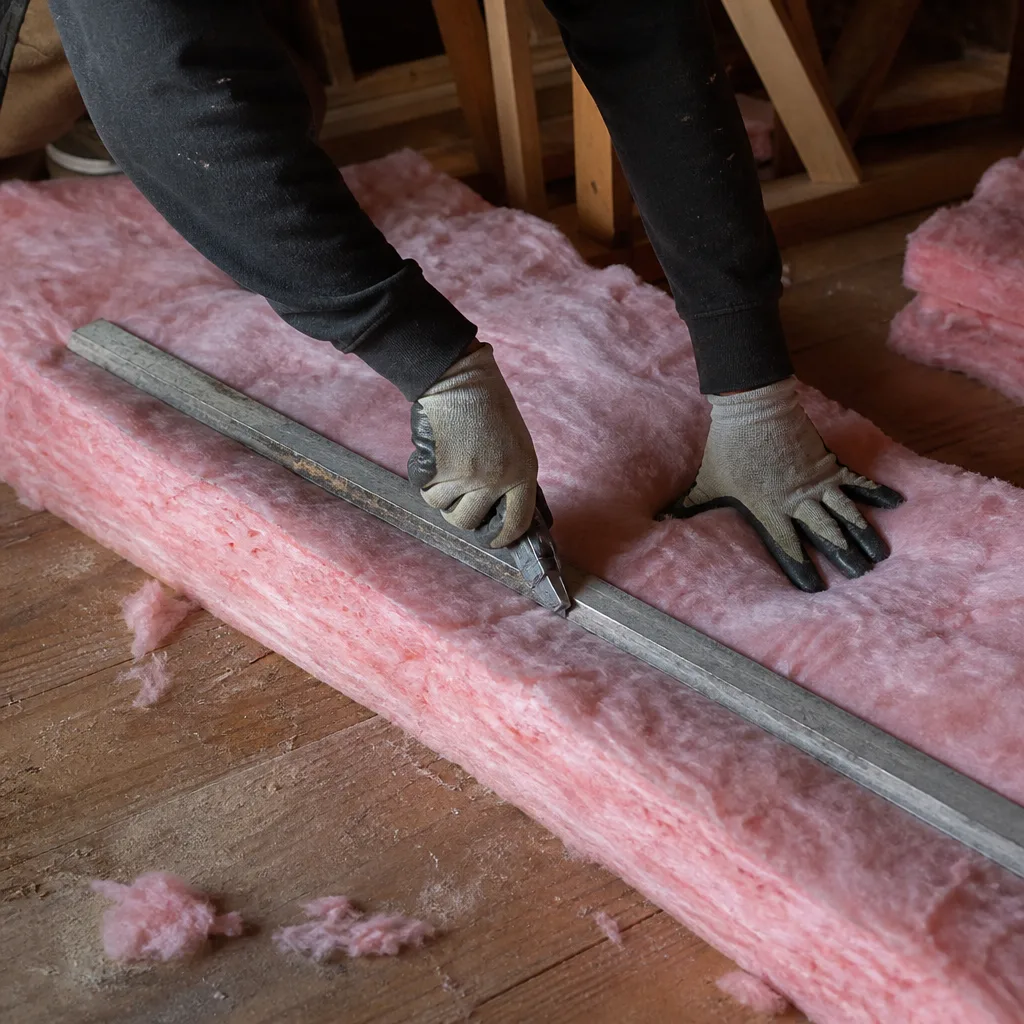
A full attic air-seal and blown-in fiberglass retrofit on a 1,000 to 1,400 square foot Bellflower home runs $1,800 to $3,800. Batt insulation in standard rafter bays runs $2.50 to $4.50 per square foot installed. Radiant barrier adds $1,200 to $2,600 depending on attic accessibility and rafter layout. Attic ventilation work, including baffles and any needed vent replacement, runs $450 to $1,400. For homes needing old insulation removal first, add $600 to $1,200. These are the ranges we quote for Bellflower’s older housing stock, and they include access, cleanup, and disposal. Call (866) 271-1602 for a fixed quote on your house.
We Also Serve Cities Near Bellflower
Our crews cover Bellflower plus the surrounding southeast LA County communities of Paramount, Norwalk, Artesia, and Cerritos. If you live just over the city line and your attic shows the same settled rock wool and low-clearance problems, the same team can help. We schedule Bellflower and nearby jobs together to keep travel time down.
Serving Bellflower, CA — Our Local Coverage Area
We’re based in the Bellflower area and know this community well. Use the map below to see our service coverage — if you’re nearby, we can almost certainly help.
FAQs About Attic Insulation in Bellflower
Yes, in most cases you can blow new fiberglass directly over settled rock wool, but only after we air-seal the top plates and confirm the old material isn’t holding moisture or rodent activity. The settled rock wool still provides some R-value, and burying it under 12 to 14 inches of new blown fiberglass is standard practice for Bellflower’s 1950s bungalows. Give us a call at (866) 271-1602 and we’ll inspect your attic to confirm the approach for your specific house.
Our crew works on hands and knees, distributing weight across the 2×4 joists to avoid stepping through the ceiling. We bring low-profile hoses and rig lighting for the shallow attics common around Bellflower. If an attic is too tight for safe access, we’ll tell you that before starting rather than risk a ceiling collapse.
Yes, especially in back bedrooms and rooms under west-facing roof planes. In Bellflower’s inland basin heat, attic temperatures regularly exceed 120 degrees, and that heat radiates through the ceiling all afternoon. Air-sealing plus blown insulation to R-38 cuts that transfer measurably. Call us at (866) 271-1602 for an assessment of your current attic conditions.
Yes, the Long Beach marine layer pushes humid air into Bellflower attics overnight, and when it hits warm roof sheathing it condenses. Proper baffles and ventilation keep air moving before new insulation traps that moisture. We won’t insulate over an active moisture problem without fixing the ventilation path first.
We typically blow Owens Corning or CertainTeed fiberglass in Bellflower attics, and we stock Rockwool batts for spots needing fire resistance or sound control. We carry eight brands total across four material types, so the recommendation matches your attic’s clearance, wiring constraints, and ventilation setup. Free estimates, no brand loyalty.
Written by Noel Arredondo, Owner at Fontana Insulation, serving Bellflower and southeast LA County.