
Insulation Company in San Fernando, CA
San Fernando’s biggest insulation story is told in its attics: thousands of 1940s and 1950s stucco tract homes across the 91340 and 91341 ZIP codes were built before insulation was a code requirement, so many still have bare attic floors under 100°F+ Valley sun. Our most-requested service here is Blown In Insulation, because it’s the fastest way to retrofill those open attics without tearing out ceilings. Fontana Insulation has served San Fernando since 2011, and we approach every job assuming the house will tell us something the last contractor missed. Call (866) 271-1602 for a free estimate from a crew that knows San Fernando’s homes specifically.
Why San Fernando Homes Are Different
San Fernando is a small, dense city in the northeastern corner of the Valley, and its housing stock is remarkably consistent: single-story stucco tract homes from the 1940s through 1960s, mostly on slab foundations, with low-pitch attics you enter through a hallway hatch or a bedroom closet. That consistency matters for insulation work. The attics have very little headroom, often with original 2×4 rafters and exposed knob-and-tube wiring that has to be addressed before anyone can safely blow in material. In the 91340 ZIP specifically, our crews regularly find homes with zero attic insulation, just exposed joists and a thin layer of dust where insulation should have been. The climate is the other half of the story. Summer days routinely pass 100°F, and the sun pounds those low-pitch roofs for hours, turning under-insulated attics into ovens that radiate heat down into living spaces all afternoon and evening. Winters are mild, so the priority in San Fernando is rarely freeze protection. It’s blocking radiant heat and building an effective thermal boundary at the roofline. That changes the material conversation: higher R-value attic blankets, radiant barriers, and air-sealing matter more here than they would in a coastal microclimate. Many homeowners in San Fernando are Spanish-speaking, and we explain material trade-offs and install steps in both English and Spanish so there’s no confusion about what’s going into the attic and why.
Our Main San Fernando Services
Two services account for most of the calls we take from San Fernando homeowners: attic insulation retrofits and spray foam applications in hard-to-reach areas. Here’s what each one looks like in this city.
Attic Insulation in San Fernando
Attic work in San Fernando usually means adding blown-in or batt insulation above a home that either never had it or has a thin, settled layer from decades ago. The local twist is the access: small hallway hatches, low 2×4 rafters, and knob-and-tube wiring that needs to be flagged before new material goes in. We inspect the attic floor condition, check for air leaks at the top plates, and recommend the right material for the existing framing and roof pitch. See the full breakdown on our Attic Insulation in San Fernando page.
Spray Foam Insulation in San Fernando
Spray foam earns its keep in San Fernando’s older homes where attics have odd angles, kneewalls, or fireplaces that leave gaps difficult to seal with blanket material. Closed-cell foam acts as both insulation and air barrier, which helps on those 100°F days when hot air tries to pull through every crack between the attic and living space. We carry Icynene and Demilec foams, both performance-tested for California heat loads. Read the service specifics on our Spray Foam Insulation in San Fernando page.
What happens when you call
- 1
A real person answersNo phone trees — you reach a local pro.
- 2
You get an upfront price rangeHonest numbers before anyone is dispatched.
- 3
A background-checked tech heads outLicensed & insured, dispatched right away.
- 4
You approve before work beginsNothing starts until you say go.
Blown In Insulation in San Fernando
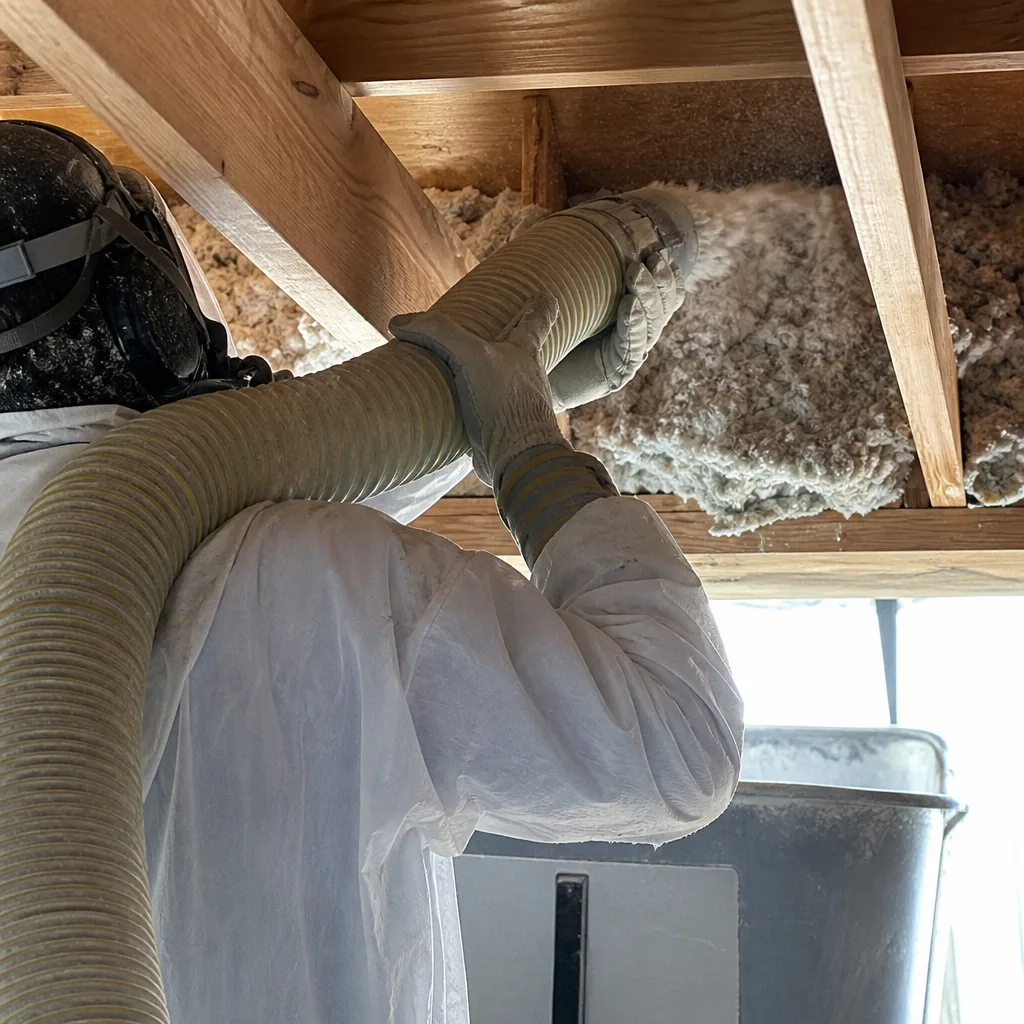
Blown In Insulation in San Fernando is the most direct fix for the city’s signature problem: bare attic floors in mid-century stucco homes that let Valley heat pour into living spaces. Loose-fill material can be installed in a single day without removing drywall, which is why so many homeowners in the 91340 and 91341 ZIP codes choose it as their first major energy upgrade. In San Fernando’s low-pitch attics with tight access, blown-in work also lets us fill irregular joist bays and odd-shaped cavities that batts can’t cover cleanly. That’s the local case for Blown In Insulation over other retrofit methods.
Cellulose Insulation
Signs you need it
You can see bare ceiling joists through the attic hatch, or upstairs rooms run 10 to 15 degrees hotter than the rest of the house on summer afternoons.
What it costs in San Fernando
Cellulose loose-fill for a typical San Fernando attic typically runs $1,200 to $2,800 depending on square footage and the depth needed to hit R-38.
How we do it
We clear any exposed wiring concerns, air-seal the top plates and plumbing penetrations, then blow in GreenFiber cellulose to a consistent depth that meets the R-value target for the attic size.
Blown In Attic Insulation
Signs you need it
The air conditioner cycles on and off constantly during the summer, and the ceiling below the attic feels warm to the touch by late afternoon.
What it costs in San Fernando
Blown-in attic insulation in San Fernando generally costs between $1,500 and $3,200 for an average 1,200 to 1,600 square foot home at R-38 depth.
How we do it
We access the attic through the existing hatch, remove or safely cover any abandoned wiring, seal the bypasses, and blow insulation evenly across the entire attic floor with extended hoses and a calibrated blower.
Blown In Fiberglass Insulation
Signs you need it
The attic has a thin, compressed layer of old fiberglass that measures under R-19, and you want a material that settles less over time than cellulose.
What it costs in San Fernando
Blown fiberglass for a San Fernando attic is priced in the $1,300 to $3,000 range depending on the depth required and the attic’s accessibility.
How we do it
We map the attic’s joist spacing and any buried junction boxes, then blow loose-fill fiberglass at a consistent density that meets the specified R-value without bridging or uneven spots.
Loose Fill Insulation
Signs you need it
You have an old attic with gaps around the chimney chase, dropped soffits, or other odd cavities that batts simply cannot fill without leaving air channels.
What it costs in San Fernando
Loose-fill insulation projects in San Fernando typically land between $1,000 and $2,600, with the final number driven by attic square footage, depth, and whether we need to remove old material first.
How we do it
We level any existing material, verify the thermal boundary at the attic floor, and blow loose-fill into every cavity and corner using a hose system that requires minimal disturbance to the living space below.
What Blown In Insulation Costs in San Fernando
| Item | Typical range in San Fernando |
|---|---|
| Cellulose insulation (R-38 in ~1,200 sq ft attic) | $1,200 – $2,800 |
| Blown fiberglass insulation (R-38 depth) | $1,300 – $3,000 |
| Loose-fill retrofit above existing thin layer | $1,000 – $2,600 |
Two things push blown-in prices up in San Fernando: older attics with knob-and-tube wiring that must be cleared or covered before work begins, and reduced headroom that makes access slower. Our quotes are always flat and upfront after we see the attic in person, so the number you’re told is the number you pay.
How long does blown in insulation take in San Fernando?
Most San Fernando attics are done in 4 to 7 hours. Tight access hatches and knob-and-tube clearance can add time, but we complete the vast majority of blown-in jobs in one day. Call (866) 271-1602 to schedule your free attic inspection.
Is blown in insulation worth it for a 1950s San Fernando house?
Yes, and these homes are usually the best candidates because so many never had insulation to begin with. Retrofitting a bare attic is the single highest-impact energy fix for a mid-century San Fernando home. Call (866) 271-1602 to get a specific recommendation for your house.
Brands We Service in San Fernando
We stock and install fiberglass from Johns Manville and CertainTeed, mineral wool from Rockwool, and cellulose from GreenFiber, all available for San Fernando jobs without special ordering. Our brands page explains why each one earns a spot in the lineup. Parts and material for common San Fernando retrofits are staged locally, so most jobs start within days of the estimate.
Pricing for Insulation Company in San Fernando, CA
| Service | Typical range in San Fernando |
|---|---|
| Blown In Insulation – Cellulose (R-38, ~1,200 sq ft) | $1,200 – $2,800 |
| Blown In Insulation – Fiberglass (R-38 depth) | $1,300 – $3,000 |
| Loose Fill Insulation retrofit | $1,000 – $2,600 |
| Attic Insulation – overall retrofit | $1,500 – $3,200 |
| Spray Foam Insulation – attic/kneewall air-seal | $2,500 – $5,500 |
| Mineral wool batt installation (walls/attic) | $1,800 – $4,000 |
San Fernando prices climb when we have to remove old, dirty insulation first, or when knob-and-tube wiring requires an electrician’s sign-off before our crew can proceed. Every quote includes a line-item breakdown, and the figure we show you before work starts is the figure on the final invoice.
Neighborhoods We Serve in San Fernando
We work across all of San Fernando, including the dense grid of older tract homes and the pockets of historic properties near the city center. Our crews know the common access patterns in each area, from hallway hatches in the 1940s neighborhoods to slightly larger attics in the newer stretches.
- Historic core / downtown San Fernando
- Residential streets of 91340
- Residential streets of 91341
- Areas adjacent to San Fernando Mission
- Southern blocks bordering Pacoima
Response for most San Fernando jobs is within 1 to 3 business days depending on the attic condition and material availability.
Service Area – Cities Near San Fernando
Fontana Insulation also serves the surrounding San Fernando Valley communities where housing stock and climate conditions are similar. If you’re in one of these nearby cities, you’ll get the same material-agnostic approach and the same eight-brand lineup: North Hills, CA, Shadow Hills, CA, Northridge, CA, and Van Nuys, CA. Each area has its own mix of mid-century tract homes and newer construction, and we adapt the recommendation to whatever the attic or wall cavity actually needs.
Serving San Fernando, CA — Our Local Coverage Area
We’re based in the San Fernando area and know this community well. Use the map below to see our service coverage — if you’re nearby, we can almost certainly help.
FAQs About Insulation Company in San Fernando
In most San Fernando retrofit cases, adding blown-in or batt insulation does not require a city building permit. If we encounter knob-and-tube wiring that needs to be addressed, that separate electrical issue may require a permit and a licensed electrician. We’ll flag it immediately during the free attic inspection and explain exactly what’s needed before any work begins.
Our San Fernando schedule typically allows us to start within 1 to 3 business days after the estimate, as long as the material is in stock locally. Larger spray foam jobs or work requiring an electrician’s clearance for old wiring can take longer to coordinate. Call (866) 271-1602 and we’ll give you a realistic timeline based on your specific attic or crawlspace.
We inspect every attic for legacy wiring before any material goes in. If knob-and-tube is present and exposed, we pause the insulation portion and advise an electrician to clear or properly cover it. Blowing insulation directly over live knob-and-tube is a fire hazard, and no reputable San Fernando insulation contractor should do it. Our crew will not cut that corner.
What happens when you call
- 1A real person answersNo phone trees — talk to a local insulation pro.
- 2You get an upfront price rangeHonest numbers before anyone is dispatched. No surprises.
- 3A background-checked tech heads outLicensed & insured, typically within 1-hour.
- 4You approve before work beginsNothing starts until you say go.
What San Fernando Customers Say
"Attic was at maybe R-11 from the 1970s and blown in over the top would have just buried the problem. They removed the old material, air sealed the top plates and penetrations first, then blew in to R-49. The upstairs is a completely different house in August."
— Sarah Fletcher"Work is good and the house is noticeably more comfortable. There was insulation debris left in the hall closet under the attic access that I had to clean up."
— Holly Mercer"Found and sealed a gap around the chimney chase that was basically an open chimney to the attic."
— Nadia Aziz