
Insulation Company in Portola Hills, CA
Blown in insulation in Portola Hills is the single most effective retrofit for homes built in the 1990s and 2000s with underperforming, compressed attic insulation. Tile-roofed tract homes throughout this hillside community trap intense inland Orange County heat, and most were built to original code levels that no longer hold up against summer attic temperatures that routinely spike past coastal readings. We install loose-fill fiberglass and cellulose in Portola Hills attics to correct that, and we do it without disrupting the tile or the tight clearances these homes are known for. Call (866) 271-1602 for a free attic assessment.
Why Portola Hills Homes Are Different
Portola Hills sits in the foothills of the Santa Ana Mountains, part of the Saddleback Valley, and the insulation work here is shaped by two conditions that don’t exist on the coast. First, the summers are brutal on attics. Concrete and clay tile roofs absorb and hold heat, pushing attic temperatures far above what the same floor plan would see in a coastal ZIP. Second, this is wildfire-adjacent terrain. Santa Ana wind season turns venting, ember intrusion points, and attic sealing from an efficiency detail into a safety concern. Homes in Portola Hills were largely built from the 1990s into the 2000s as two-story stucco tract developments, and most still have the original blown-in or batt insulation that was installed to meet building codes of that era. Twenty to thirty years of settling and compression later, that insulation is doing a fraction of the job it was designed for. Add in the HOA and hillside lot grading realities – many homes have low-slope-to-pitched roof transitions and limited attic access – and retrofit work here requires a different scoping approach than a flat-lot home in a valley floor community.
Our Main Portola Hills Services
We install three insulation types in Portola Hills, but two generate the most calls: attic insulation upgrades and spray foam applications. Here’s what each involves in this specific community.
Attic Insulation in Portola Hills
Attic work in Portola Hills almost always starts with evaluating what’s already up there – typically an original blown-in fiberglass layer that’s settled well below its intended R-value. We handle removal or topping off, air sealing, and new insulation installation while working around the tile roof constraints and tight clearances common to these 1990s and 2000s hillside homes. Radiant heat control is the priority here, not cold weather performance. See the full breakdown on our Attic Insulation in Portola Hills page.
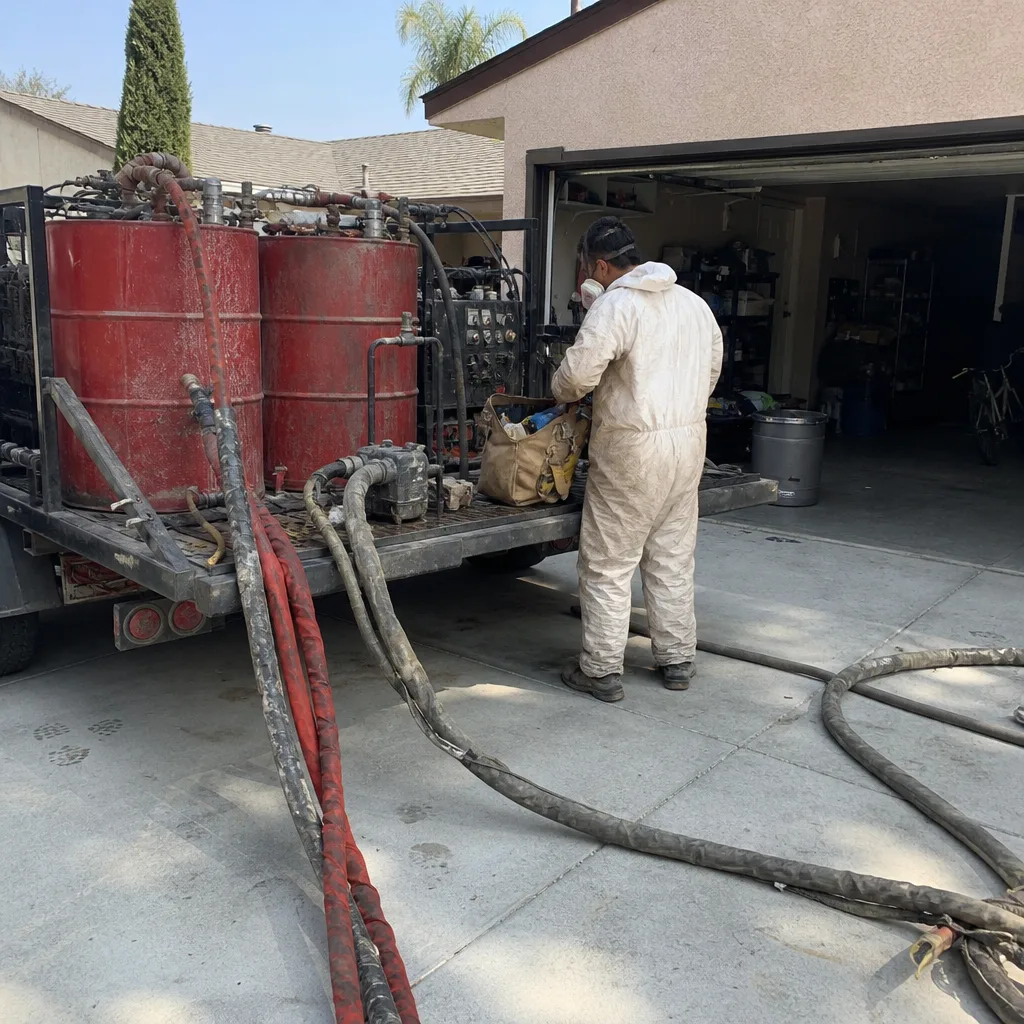
Spray Foam Insulation in Portola Hills
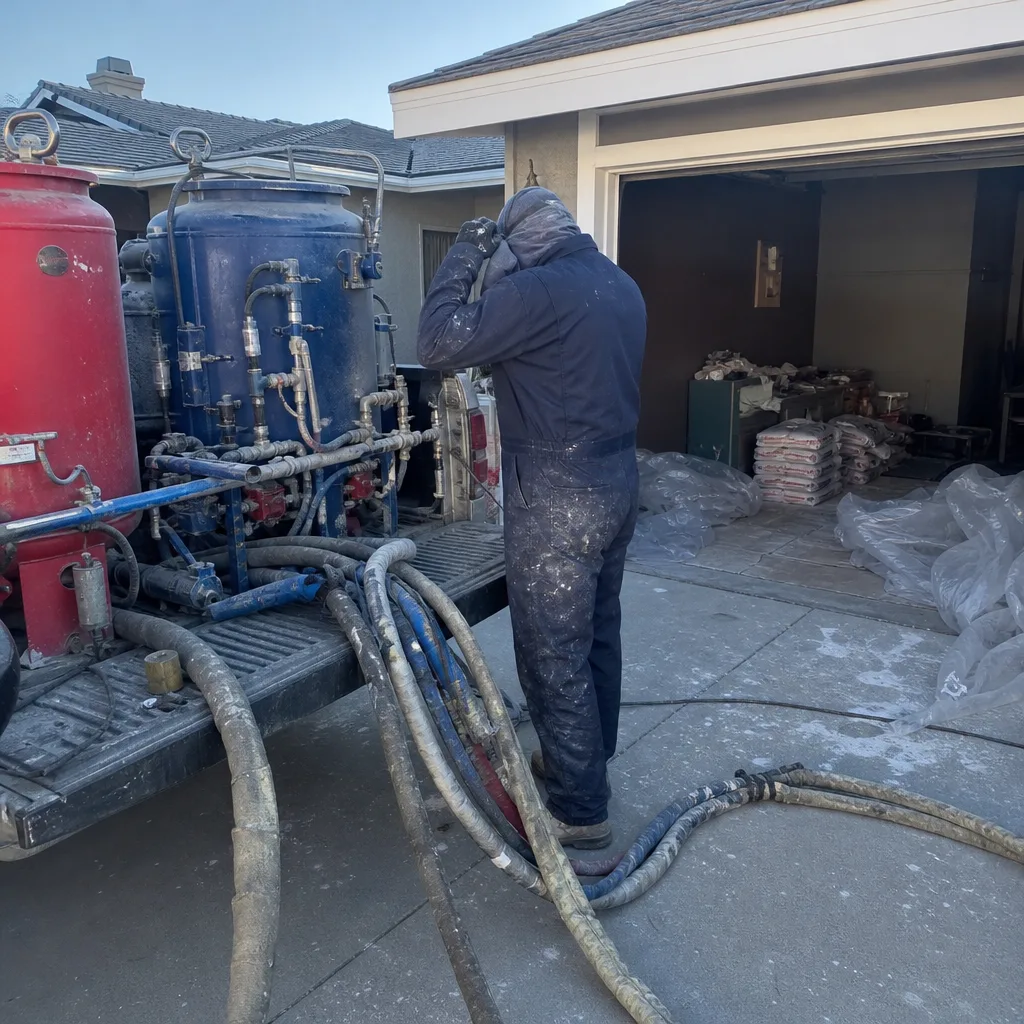
Spray foam earns its place in Portola Hills attics and rim joists because it’s the only material that insulates and air seals in one pass – a real advantage in a climate where ember intrusion and hot air infiltration during Santa Ana events matter. We install both open-cell and closed-cell foam from Icynene and Demilec, matched to the application. Tight attic clearances and complex roof transitions don’t phase our crews. See the full breakdown on our Spray Foam Insulation in Portola Hills page.
What happens when you call
- 1
A real person answersNo phone trees — you reach a local pro.
- 2
You get an upfront price rangeHonest numbers before anyone is dispatched.
- 3
A background-checked tech heads outLicensed & insured, dispatched right away.
- 4
You approve before work beginsNothing starts until you say go.
Blown In Insulation in Portola Hills
Blown in insulation is the most practical upgrade for Portola Hills attics because it fills irregular cavities, covers existing settled material, and reaches the tight spots that rigid batts can’t. Most homes here still have their original 1990s or 2000s-era attic insulation, and after two to three decades of heat cycles and compression, that layer is underperforming in exactly the season that matters most – summer, when tile roofs turn attics into ovens. We use Blown In Insulation installation to restore the thermal boundary and cut the heat load that radiates down into living spaces.
Cellulose Insulation
Signs you need it
Air conditioning runs constantly on hot days and upstairs rooms stay noticeably warmer than downstairs.
What it costs in Portola Hills
Blown-in cellulose in Portola Hills attics typically runs $1.00 to $2.50 per square foot, including air sealing where needed.
How we do it
We seal penetrations, then blow GreenFiber cellulose to a depth that achieves the target R-value for your Portola Hills home’s specific roofline.
Blown In Attic Insulation
Signs you need it
You can see the tops of the ceiling joists in your attic, meaning the current insulation is dangerously thin or settled.
What it costs in Portola Hills
Blown-in attic insulation in Portola Hills generally falls between $1,200 and $3,500 for a typical two-story tract home, depending on square footage and existing material.
How we do it
We remove or top off the existing layer, air seal, and blow fresh material to code-plus depth with baffles protecting the tile roof eaves.
Blown In Cellulose Insulation
Signs you need it
You want recycled-content insulation and better sound deadening between the attic and living areas.
What it costs in Portola Hills
Blown-in cellulose from GreenFiber costs about $1.25 to $2.50 per square foot installed in Portola Hills attics.
How we do it
We install GreenFiber cellulose at the correct density for your climate zone, which performs especially well against Portola Hills radiant heat.
Blown In Fiberglass Insulation
Signs you need it
Your attic has uneven coverage or visible gaps from the original 1990s installation.
What it costs in Portola Hills
Blown-in fiberglass in Portola Hills attics typically runs $0.80 to $2.00 per square foot, with brands like Johns Manville and Knauf available.
How we do it
We blow loose-fill fiberglass at a consistent density to the right R-value, then check coverage with a depth gauge so there are no thin spots.
What Blown In Insulation Costs in Portola Hills
| Item | Typical range in Portola Hills |
|---|---|
| Blown-in fiberglass attic insulation | $0.80 – $2.00 per sq ft |
| Blown-in cellulose attic insulation | $1.00 – $2.50 per sq ft |
| Full attic blow-in for typical 2-story tract home | $1,200 – $3,500 |
How long does blown in insulation last in Portola Hills?
Cellulose and fiberglass loose fill last 20 to 30 years, but Portola Hills attic heat accelerates settling and compression, so most homes should be inspected or topped off by year 15. Call (866) 271-1602 for an honest assessment.
Can you blow insulation over old insulation?
Yes, if the existing material is dry and not infested. In Portola Hills we commonly top off settled original insulation rather than remove it. Call (866) 271-1602 to schedule an attic check.
Brands We Service in Portola Hills
We carry Johns Manville, Knauf, CertainTeed, and Rockwool fiberglass and mineral wool products, with parts and material available for Portola Hills jobs without long lead times. Most attic blow-ins are completed within a single day. See our brands for the full lineup.
Pricing for Insulation Company in Portola Hills, CA
| Service | Typical range in Portola Hills |
|---|---|
| Blown-in fiberglass attic insulation | $0.80 – $2.00 per sq ft |
| Blown-in cellulose attic insulation | $1.00 – $2.50 per sq ft |
| Full attic blow-in for typical 2-story tract home | $1,200 – $3,500 |
| Spray foam insulation (open-cell) | $1.50 – $3.50 per sq ft |
| Spray foam insulation (closed-cell) | $2.00 – $4.50 per sq ft |
| Attic insulation air sealing | $300 – $800 |
What pushes pricing up in Portola Hills is what makes the community distinctive: tile roof work requires careful access, hillside lots mean longer material runs and sometimes tougher attic entries, and HOA requirements can add documentation steps. We quote upfront and don’t pad the number with surprises.
Neighborhoods We Serve in Portola Hills
We work throughout Portola Hills, including the hillside tracts east of Saddleback Ranch Road, the developments near Portola Parkway, and the communities backing up to Whiting Ranch Wilderness Park. Typical response for a Portola Hills insulation quote is within one to two business days.
- Portola Hills Estates
- Whiting Ranch-adjacent tracts
- Portola Parkway corridor
- Saddleback Ranch Road area
- Glenn Ranch Road communities
Service Area – Cities Near Portola Hills
Fontana Insulation serves Portola Hills and the surrounding Saddleback Valley communities. We regularly work in Foothill Ranch, CA, Lake Forest, CA, Mission Viejo, CA, and Trabuco Canyon, CA, bringing the same material-agnostic approach to each hillside and valley floor home.
Serving Portola Hills, CA — Our Local Coverage Area
We’re based in the Portola Hills area and know this community well. Use the map below to see our service coverage — if you’re nearby, we can almost certainly help.
FAQs About Insulation Company in Portola Hills
Most Portola Hills HOAs do not require approval for interior attic work, but if your project involves any exterior changes like new attic vents, check your CC&Rs first. We can help you understand what documentation your specific association may need before we start.
Yes. We pay close attention to attic venting, soffit sealing, and ember intrusion points during Santa Ana wind season. We use ember-resistant detailing and ensure your insulation doesn’t block egress or airflow in ways that could compromise fire safety. Call (866) 271-1602 to discuss your home’s specific exposure.
Most Portola Hills attics can be assessed within one to two business days, and blow-in jobs are typically completed in one day. Spray foam may take longer depending on curing conditions. Call (866) 271-1602 for current scheduling.
What happens when you call
- 1A real person answersNo phone trees — talk to a local insulation pro.
- 2You get an upfront price rangeHonest numbers before anyone is dispatched. No surprises.
- 3A background-checked tech heads outLicensed & insured, typically within 1-hour.
- 4You approve before work beginsNothing starts until you say go.
What Portola Hills Customers Say
"Attic was at maybe R-11 from the 1970s and blown in over the top would have just buried the problem. They removed the old material, air sealed the top plates and penetrations first, then blew in to R-49. The upstairs is a completely different house in August."
— Sarah Fletcher"Work is good and the house is noticeably more comfortable. There was insulation debris left in the hall closet under the attic access that I had to clean up."
— Holly Mercer"Found and sealed a gap around the chimney chase that was basically an open chimney to the attic."
— Nadia Aziz